

Simon Yorke Designs Series 9 turntable & tonearm
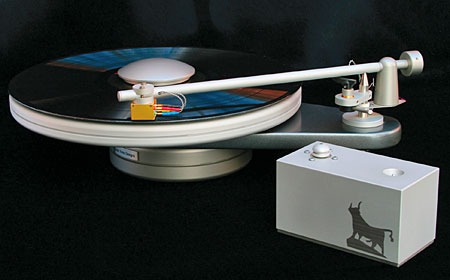
Simon Yorke is an artist, a machinist, an electronics wiz, and a political idealist. He's also an analog enthusiast who melds aesthetic and technical considerations into eye-catching, densely packed, compact record-playing devices that are ruggedly built and functionally elegant. His turntables' smooth, matte-gray, metallic finishes and efficient lines make them among the most visually pleasing ever made.
SME 10 turntable
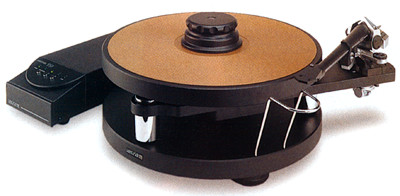
What do you want from a 21st-century record-playing device? I hear you: you want one that's compact, well-made, easy to set up, holds its setup, sounds great, and doesn't cost a lot.
SME 60 record player
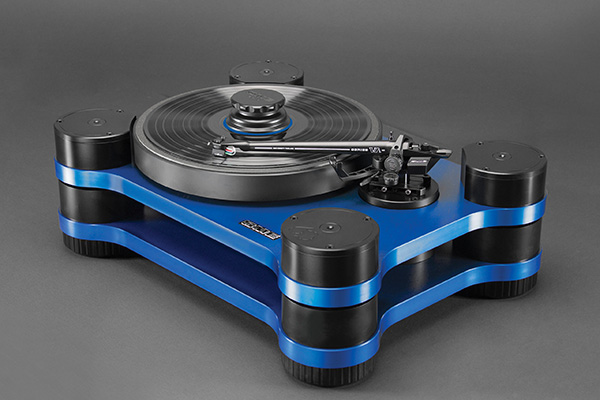
Creating a new flagship model is never an easy task for an audio company. A good designer will have already incorporated all his or her best ideas into the prior flagship. For a follow-up, you typically get a scaled-up version of what came before, incorporating the kind of improvements a bigger budget will allow.
SME's history is well-documented. The company started out, in 1946, as an engineering company for hire. In 1959, after a few years supplying parts for the scale modeling and various other high-tech industries, company founder Alastair Robertson-Aikman wanted a better tonearm for his personal use. He leveraged the capabilities of his small engineering company to create what eventually became the legendary 3009 and 3012 tonearms. The reputation of the new arms spread quickly, and from the mid-1960s through the 1970s, SME dominated the high-end tonearm market. SME's corporate slogan was The Best Pick-Up Arm in the World, and few people at the time would have challenged that claim.
SME Model 20/12 turntable & 312S tonearm
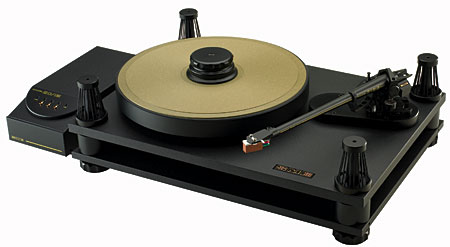
Much has happened in the analog world since I reviewedhttp://www.stereophile.com/analogsourcereviews/796">reviewed; SME's flagship Model 30/2 turntable for the March 2003 Stereophile (footnote 1). Back then, spending $25,000 on a turntable (without tonearm) was an odd extravagance intended only for those seriously committed to the format, and who already owned large LP collections. Although new LPs were being pressed in growing numbers, the resurgence of vinyl was still spotty, and the long-term prognosis for the old medium remained in question.
SME Model 30/2 turntable
Dense, compact, and built to run O-rings around the competition, SME's flagship turntable makes every other design I've encountered—with the possible exception of Rockport's">http://www.stereophile.com//analogsourcereviews/258/">Rockport's System III Sirius—look almost homemade. I don't mean to insult the many fine, well-engineered designs out there, but I've seen nothing else to compare with SME's tank-like approach to spinning a record. Comparing the Model 30/2 to a tank isn't exactly fair: the machining is done to higher than mil-spec tolerances. I don't think anyone else building turntables today is capable of this level of construction quality, never mind design ingenuity and fit'n'finish.
SOTA Comet turntable
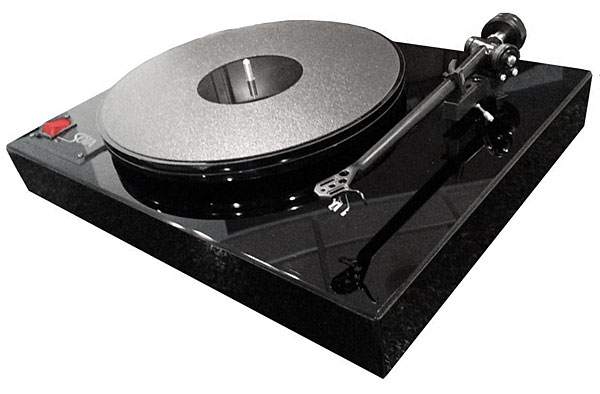
When Tom Norton asked if I'd like to review an entry-level turntable from SOTA, I responded with a resounding "Yes!" I've long felt that there's a conspicuous absence of affordable, good-sounding record players on dealers' shelves. With the AR ES-1 package deals no longer available and the Rega 3 now selling for $775, at $599, SOTA's new Comet promised to be stiff competition for the Basiks, Revolvers, Duals, and Thorenses of the world. Also, due to my tenacious embrace of vinyl, I try to encourage as many music lovers as I can to experience the satisfaction derived from LPs and the fun and excitement of collecting them. If I can point them in the direction of a competent, sanely priced analog rig, I'll consider a good part of my mission accomplished.
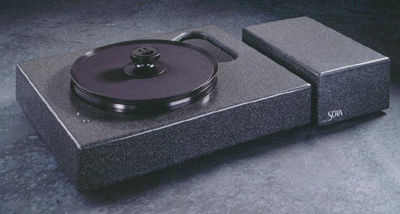
SOTA Cosmos turntable
"Which way to the four o'clock tour?" It was already 10 minutes past the hour. I was late, but this was the last tour of the day. It would be a very long wait for the next one.
SOTA Star Sapphire turntable
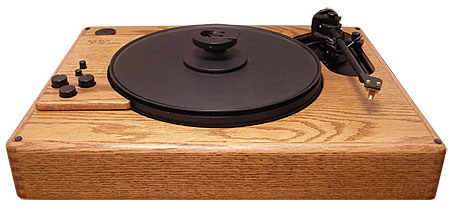
The SOTA Sapphire was the first, and the most successful in terms of sales, of the new generation of high-end American turntables. As such, the SOTA can be viewed as leading this country's resurge ence of interest in high-quality turntable production. At the time of the SOTA's introduction in 1981, it was the only high-end turntable manufactured in the US. Since then American-made turntables have appeared from the likes of AR, Mapleknoll, Sonographe, and VPI.
Spin Doctor #12: EMM Labs DS-EQ1, The Wand 14-4 Turntable, M•A Inner Sleeves
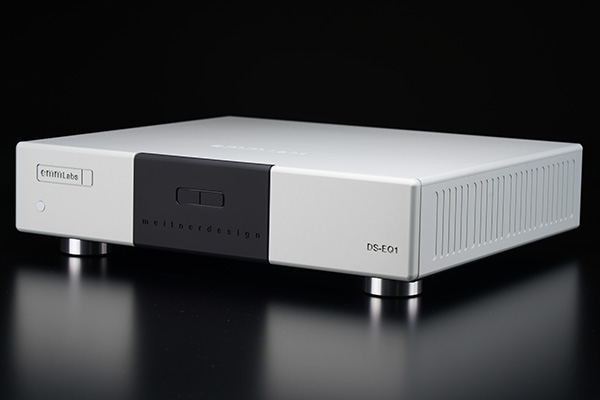
"I think both moving coil and moving magnet cartridges are terrible." That's what legendary Canadian audio designer Ed Meitner told me when I asked about the pioneering transimpedance current drive phono stage he created for his Meitner PA6 preamp some 40 years ago.
Meitner has been designing innovative hi-fi gear for the pro and consumer audio markets for more than 50 years, but for most of the last 30, he has been best known for his work with high-resolution digital audio and DSD recording. Despite this focus on digitaland despite that comment about the two leading phono cartridge technologiesdeep in his heart, Ed still loves analog and has fond memories of the Kenwood optical cartridges from the 1970s, which I discussed in last month's Spin Doctor column. So when Ed read that a company in Japan called DS Audio was bringing back an improved version of the optical cartridge using modern materials, he contacted designer Tetsuaki Aoyagi to learn more.
Spin Doctor #13: Acoustic Signature Verona NEO turntable, TA-5000 NEO, TA-7000 NEO tonearms, Ultra Carbon TC-40 record weight
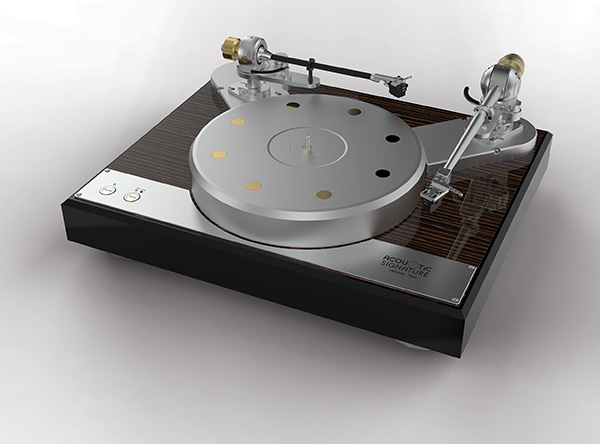
I sometimes joke about how audio designers create products that resemble themselves, not just in how they look, but also in the design approach used, and especially the way they sound. So, we have tall, cool, pragmatic Scandinavians making gear like the lean, elegant Børresen loudspeakers, while the Italians build luscious curvy equipment endowed with natural wood and leather, like Sonus Faber speakers and Unison Research amplifiers. Continuing this blatant stereotyping, we have Acoustic Signature founder Gunther Frohnhöfer, a stout German known for creating precision-built turntables that are as solid-looking as he is.
When I visited the Acoustic Signature factory in 2023, I watched as they hewed massive slabs of aluminum into beautiful, heavyweight turntables. This approach is the opposite of the lightweight-but-rigid philosophy embraced by Rega, and while the resulting performance has different strengths, I would argue that it is at least equally valid. As with Rega, Acoustic Signature products have a purposeful simplicity, in a way that would allow a nonaudiophile to instantly recognize what their function is.