

Rega Planar 5 & Planar 7 turntables
I saw it coming back in 1996. That was when Rega introduced their full-bore assault on the state of the art of record replay, the Planar 9 turntable. The P9 was and is a superb product, but because it sells for $3900—more than five times the price of the company's bread-and-butter model, the venerable Rega Planar 3—its introduction created an enormous price gap. And that's not to mention all the numbers between 3 and 9 that have languished for so long: How could you not expect Rega to fill in the blanks with Planars 4, 5, 6, 7, and 8?
Rega RP-1 record player

I tried to name a high-end audio product that's been recommended more often than the Rega Planar 3 turntable. I failed.
The closest I could come was Rega's own RB300 tonearm, surely the best-selling perfectionist tonearm of all time. After that came the Rega Planar 2 turntable, a sample of which I owned and loved in the early 1980s. Next on my list was the original Rega Elys, a moving-magnet cartridge that sounded as chunky and direct as it was cheap and magenta.
Rockport Technologies System III Sirius turntable and tonearm
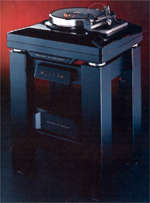
Andy Payor hurls a briefcase full of engineering and scientific mumbo-jumbo at in an attempt to justify the $73,750 price of the latest and greatest edition of his Rockport Technologies turntable, but really—isn't this all-air-driven design a case of analog overkill? After all, defining a turntable's job seems rather easy: rotate the record at an exact and constant speed, and, for a linear tracker, put the stylus in play across the record surface so that it maintains precise tangency to a radius described across the groove surface. By definition, a pivoted arm can't do that, so the goal there is to minimize the deviation. That's basically it. Right?
Schiit Audio Sol turntable
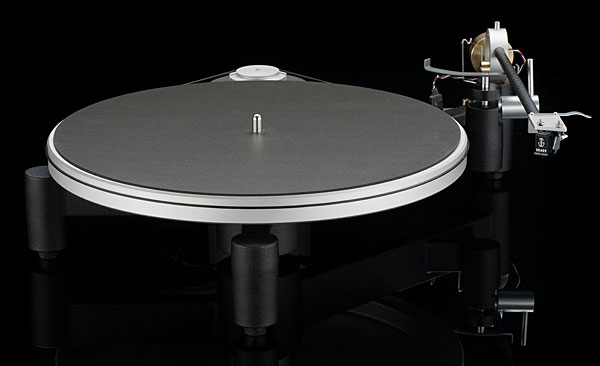
Many established audio manufacturers owe their success, at least partly, to their components' signature sound. Consider the laidback "pipe and slippers" mien of my 1978 Spendor BC-1 loudspeakers, the rich tonal palette of my Shindo Laboratory amplifiers, or the celebrated drive and timing of late-'50s era Thorens TD-124 and Garrard 301 turntables.
Simon Yorke Designs Series 7 Precision LP Playback System
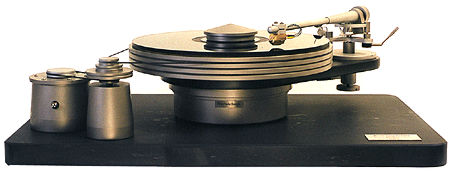
"My original goal was simply to design a better turntable than the Linn because at that time in the UK, Ivor">http://www.stereophile.com/interviews/1101ivor">Ivor Tiefenbrun was the man—he was the patron saint and all that. And all the hi-fi mags were full of Linns. He did for turntables, in a way, what Mark Levinson (the man) did for amplifiers."
Simon Yorke Designs Series 9 turntable & tonearm
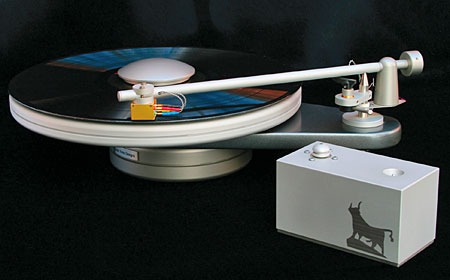
Simon Yorke is an artist, a machinist, an electronics wiz, and a political idealist. He's also an analog enthusiast who melds aesthetic and technical considerations into eye-catching, densely packed, compact record-playing devices that are ruggedly built and functionally elegant. His turntables' smooth, matte-gray, metallic finishes and efficient lines make them among the most visually pleasing ever made.
SME 10 turntable
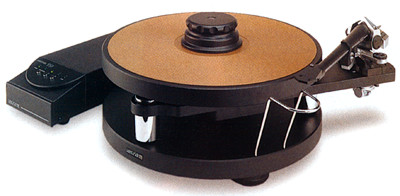
What do you want from a 21st-century record-playing device? I hear you: you want one that's compact, well-made, easy to set up, holds its setup, sounds great, and doesn't cost a lot.
SME 60 record player
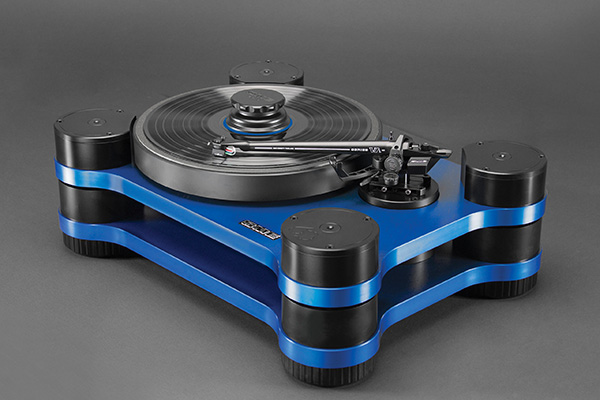
Creating a new flagship model is never an easy task for an audio company. A good designer will have already incorporated all his or her best ideas into the prior flagship. For a follow-up, you typically get a scaled-up version of what came before, incorporating the kind of improvements a bigger budget will allow.
SME's history is well-documented. The company started out, in 1946, as an engineering company for hire. In 1959, after a few years supplying parts for the scale modeling and various other high-tech industries, company founder Alastair Robertson-Aikman wanted a better tonearm for his personal use. He leveraged the capabilities of his small engineering company to create what eventually became the legendary 3009 and 3012 tonearms. The reputation of the new arms spread quickly, and from the mid-1960s through the 1970s, SME dominated the high-end tonearm market. SME's corporate slogan was The Best Pick-Up Arm in the World, and few people at the time would have challenged that claim.
SME Model 20/12 turntable & 312S tonearm
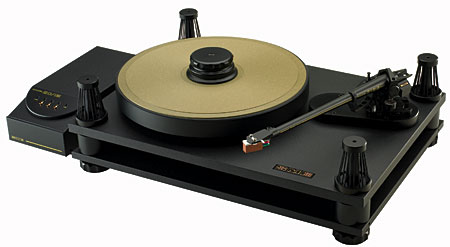
Much has happened in the analog world since I reviewedhttp://www.stereophile.com/analogsourcereviews/796">reviewed; SME's flagship Model 30/2 turntable for the March 2003 Stereophile (footnote 1). Back then, spending $25,000 on a turntable (without tonearm) was an odd extravagance intended only for those seriously committed to the format, and who already owned large LP collections. Although new LPs were being pressed in growing numbers, the resurgence of vinyl was still spotty, and the long-term prognosis for the old medium remained in question.
SME Model 30/2 turntable
Dense, compact, and built to run O-rings around the competition, SME's flagship turntable makes every other design I've encountered—with the possible exception of Rockport's">http://www.stereophile.com//analogsourcereviews/258/">Rockport's System III Sirius—look almost homemade. I don't mean to insult the many fine, well-engineered designs out there, but I've seen nothing else to compare with SME's tank-like approach to spinning a record. Comparing the Model 30/2 to a tank isn't exactly fair: the machining is done to higher than mil-spec tolerances. I don't think anyone else building turntables today is capable of this level of construction quality, never mind design ingenuity and fit'n'finish.