

SME 60 record player
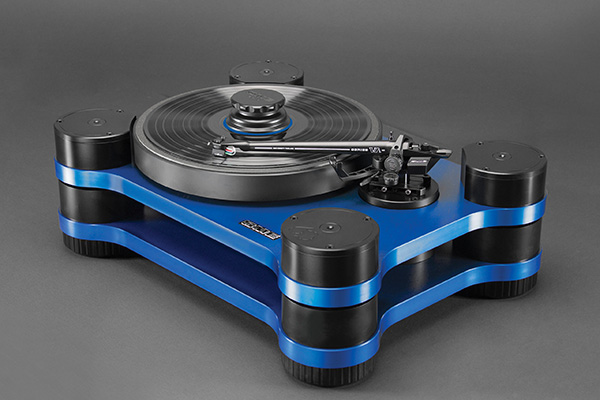
Creating a new flagship model is never an easy task for an audio company. A good designer will have already incorporated all his or her best ideas into the prior flagship. For a follow-up, you typically get a scaled-up version of what came before, incorporating the kind of improvements a bigger budget will allow.
SME's history is well-documented. The company started out, in 1946, as an engineering company for hire. In 1959, after a few years supplying parts for the scale modeling and various other high-tech industries, company founder Alastair Robertson-Aikman wanted a better tonearm for his personal use. He leveraged the capabilities of his small engineering company to create what eventually became the legendary 3009 and 3012 tonearms. The reputation of the new arms spread quickly, and from the mid-1960s through the 1970s, SME dominated the high-end tonearm market. SME's corporate slogan was The Best Pick-Up Arm in the World, and few people at the time would have challenged that claim.
SME Model 20/12 turntable & 312S tonearm
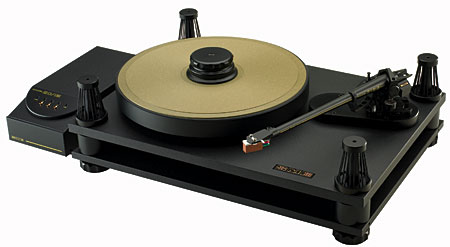
Much has happened in the analog world since I reviewedhttp://www.stereophile.com/analogsourcereviews/796">reviewed; SME's flagship Model 30/2 turntable for the March 2003 Stereophile (footnote 1). Back then, spending $25,000 on a turntable (without tonearm) was an odd extravagance intended only for those seriously committed to the format, and who already owned large LP collections. Although new LPs were being pressed in growing numbers, the resurgence of vinyl was still spotty, and the long-term prognosis for the old medium remained in question.
Snell Acoustics Type A Reference loudspeaker
The Type A has served as Snell Acoustics' flagship loudspeaker since 1974. The Type A Reference System reviewed here is the sixth update of the late Peter">http://www.stereophile.com/floorloudspeakers/378snell/index4.html">Peter Snell's original three-way floorstanding design, and is the most radical departure from Snell's">http://www.stereophile.com/floorloudspeakers/378snell">Snell's original. Gone is the pair of "upright bricks of polished wood and stretched cloth" (footnote 1) that delighted decorators because they functioned best against a wall. Today's Type A Reference $18,999 price tag (footnote 2) purchases two tall midrange-tweeter towers, two huge subwoofers, two short but heavy enclosures housing the outboard passive crossover networks, and a small electronic crossover.
Snell Illusion loudspeaker
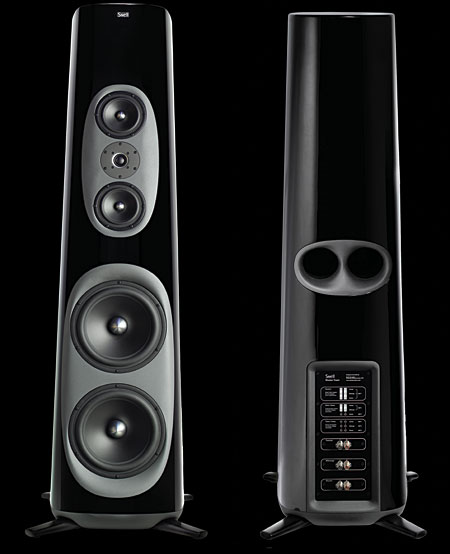
"How do you make an object common as a box iconic?" asked Bob Graffy, Snell's vice president/brand manager. He and Joseph D'Appolito, Snell's chief design engineer, were sitting in my listening room, discussing cabinet designs. Graffy noted that KEF had sought the same in their distinctive, silvery, cylindrical Muon loudspeaker ($150,000/pair). For the flagship model in their Illusion series, Snell commissioned Gerd Schmieta, former designer for Ideo, to integrate D'Appolito's wish list for an ideal enclosure: a narrow, rounded upper baffle for the midrange and tweeter, wider at the base for the woofers, holding a constant cross-sectional area while maximizing cabinet volume, and compliance with a 15° tip test.
Sonus Faber Aida loudspeaker
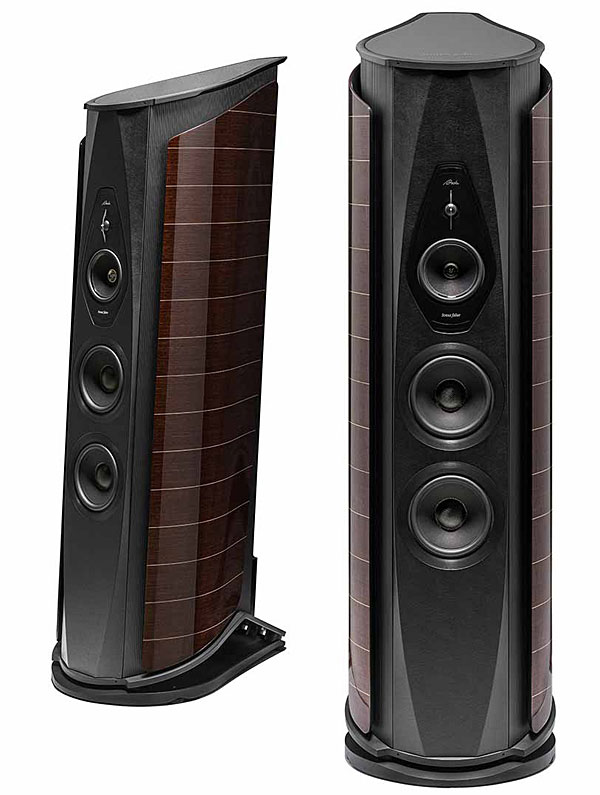
In 1959, in their musical revue At the Drop of a Hat, the British musical-comedy team of Flanders and Swann sang their "Song of Reproduction." It's not about sex. The song mocks audiophiles (you thought this was something recent?) for how we spend "all of that money to get the exact effect of an orchestra actually playing in their sitting room." Before launching into the song, Flanders quips, "Personally, I can't think of anything I should hate more than having an orchestra playing in my sitting room!"
Sonus Faber Amati Futura loudspeaker
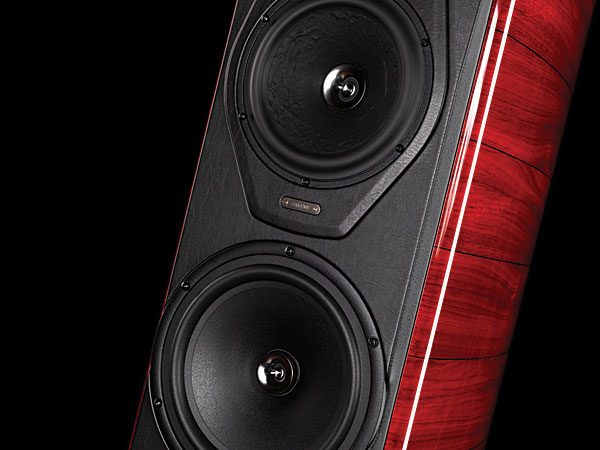
The Amati Futura is the third Sonus Faber loudspeaker to be called an Amati. The first, named simply the Amati and priced at $20,000/pair, was reviewed for Stereophile by Michael Fremer in June 1999. I reviewed the second, the Amati Homage Anniversario ($27,500/pair), in May 2006.
Sonus Faber Guarneri Evolution loudspeaker
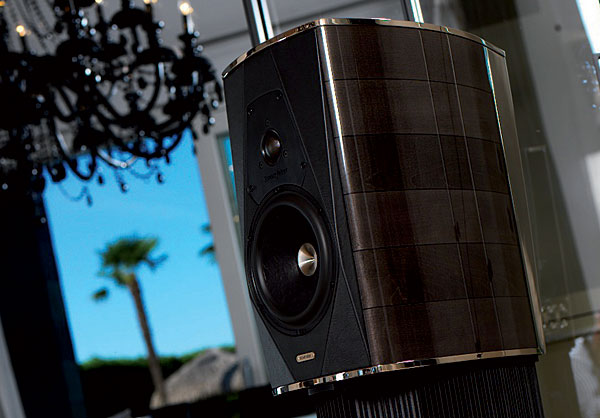
At present, my writing chores are divided between two fields: domestic audio and lutherie. Having invested considerable time in both, and having by now met a number of builders who are distinguished in one or the other, I can say with all confidence that the best share a simple, single point of view: Everything makes a difference.
Sonus Faber Stradivari Homage loudspeaker
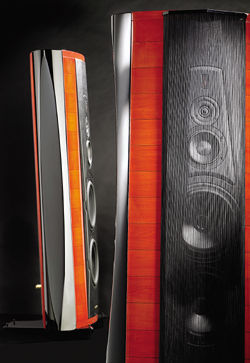
Yamaha once made a loudspeaker shaped like an ear. I felt sorry for the guy (especially if he was an audiophile) who had to write the ad copy explaining why a speaker shaped like an ear would sound better than one shaped like a shoebox or a wedge of cheese. An ear-shaped loudspeaker makes about as much sense as an eyeball-shaped television. But what about a loudspeaker that is designed like a musical instrument?
Soulution 710 power amplifier
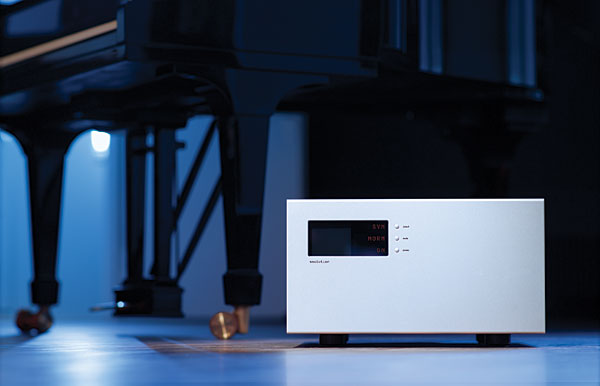
That is not a typo. The company is named Soulutionas in soul commitment to designing and manufacturing the finest audio gear it knows how, as in souldiering on in the face of skeptics who can't imagine why a power amplifier that puts out 130Wpc into 8 ohms or 260 into 4 ohms should cost $45,000, or weigh as much as a small pickup truck.
Soulution 727 preamplifier
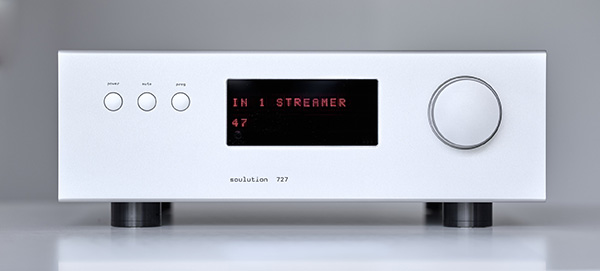
Almost 14 years have passed since a review of a Soulution product appeared in the pages of Stereophile. Given the Swiss company's steady ascent in the high-end pantheon, it is high time that we again reached into the German-speaking region of Switzerland north of the Swiss Alps to evaluate another of the reference products from a company equally renowned for its sonic achievements and refined and elegant design aesthetic.
Enter the full-function Soulution 727 preamplifier ($74,975), whose optional MC/MM phono section ($11,975) will be evaluated in a future issue. Because Soulution claims that the 727 "sets benchmarks in terms of noise, phase errors, common mode rejection and distortion," one would hope that there's far more than 62lb of classy casework and an easy-to-handle lightweight remote to account for its price.