

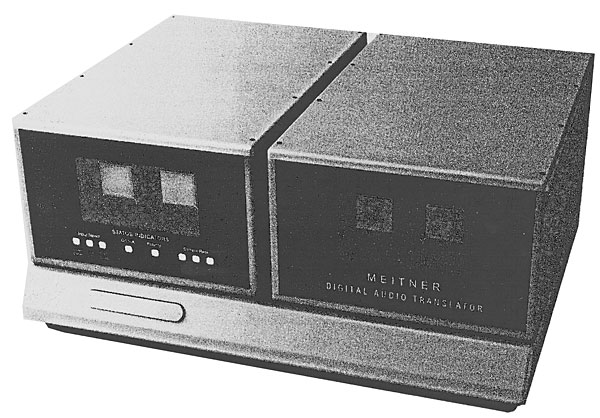
Meitner IDAT D/A processor
There are as many ways of designing a digital-to-analog converter as there are engineers. One approach is to select parts from manufacturers' data books and build the product according to the "application notes" provided by the parts manufacturers. This is the electronic equivalent of a paint-by-numbers kit.
A more creative engineer may add a few tricks of his own to the standard brew. Bigger and better regulated power supplies, careful circuit-board layout, tweaky passive components, and attention to detail will likely make this designer's product sound better than the same basic building blocks implemented without this care. Indeed, the vast range of sonic flavors from digital processors containing very nearly the same parts attests to the designer's influence over a digital processor's sound.
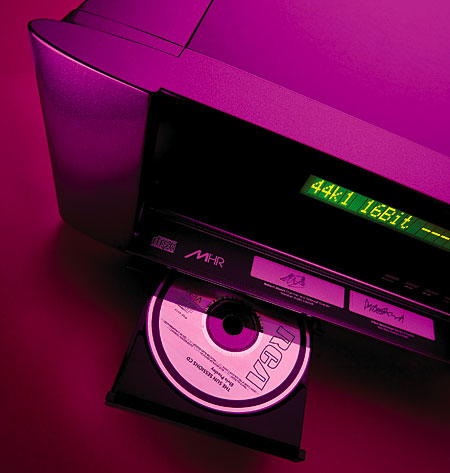
Meridian 808.2/808i.2 Signature Reference CD player/preamplifier
It's been a while since I auditioned a Meridian CD player in my system. I had enthusiastically reviewed the English company's groundbreaking Pro-MCD">http://www.stereophile.com/cdplayers/285meridian">Pro-MCD player in early 1986, and over the years had kept up with the progress they were making in digital playback, either through my own reviews or by performing the measurements to accompany reviews by other Stereophile writers. The 508-24 player, reviewed">http://www.stereophile.com/cdplayers/590">reviewed by Wes Phillips in May 1998, was one of the finest digital products of the 1990s, I thought. But when Meridian began promoting surround sound and DVD-Audio at the turn of the century, their goals became somewhat incompatible with my own. Yes, I can appreciate what surround playback can do, but my own musical life is still solidly rooted in Two-Channel Land.
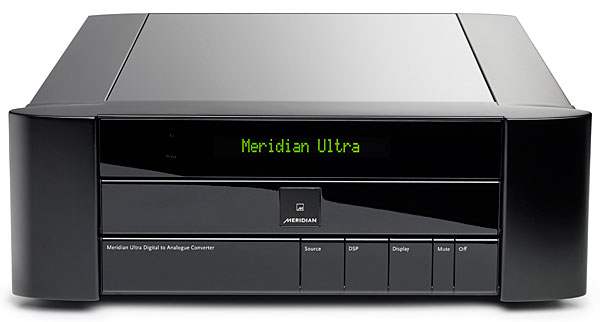
Meridian Audio Ultra DAC D/A processor
As I mentioned in my review eight years ago of Meridian Audio's 808.2 Signature Reference CD player, I have long been impressed by the British company's componentsin fact, ever since the early 1980s, when I purchased a Meridian 101 preamplifier, followed by my very positive experiences with Meridian's MCD Pro and 208 CD players, 518 digital audio processor, D600 and DSP8000 digital active loudspeakers, and, most recently, the Prime and Explorer D/A headphone amplifiers.
Mission Pilastro loudspeaker
"Is that it?" I asked.
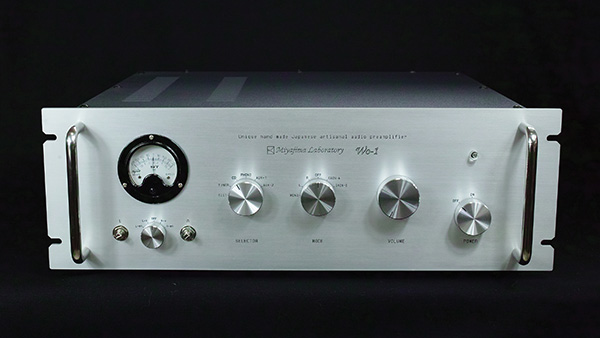
Miyajima Lab Wo-1 preamplifier
A phenomenon formerly unique to Japan, which in recent years has been emulated in cities around the world, is the jazz café (known as jazz kissa in Japan), where salarymen can find respite from their hectic lives, loosen their ties, and enjoy hi-fi jazz over coffee or a drink. Jazz kissaten are typically charming, smaller shops, traditionally furnished and paneled in beautiful wood, which serve superb artisan coffee in artful ceramic cups.
Such respect for artistry, craftsmanship, and attention to detailthe Japanese word is shokuninis reflected in many aspects of Japanese life. This is where you find double handrails to accommodate people of different heights, intricate, ornately designed manhole covers, and bento lunch boxes with hand-carved vegetable figurines. While upholding strict conformity to societal norms, the Japanese highly value creative individualism. This shokunin mindset underlies their reverence for artisanal expressionand their love for jazz.
Japanese audio, much like jazz kissaten, reflects the shokunin mindset: craftsmanship pursued with both pride and humility.
Moon 861 stereo/mono power amplifier
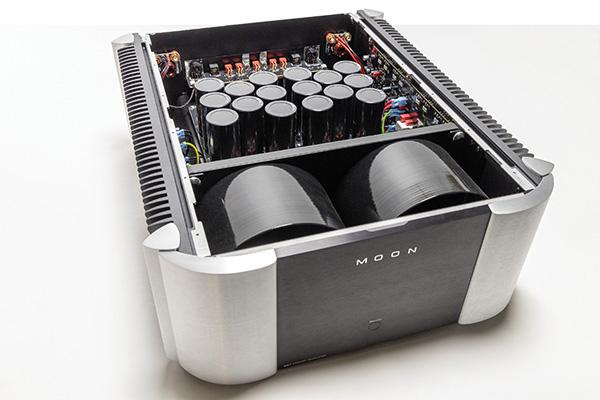
It is unusual to begin a review with a detailed discussion of setup. But setup protocol for the Moon 861 power amplifier ($22,000 each), the top-level amplifier in the North Collection from Moon, which I reviewed bridged in mono, proved crucial to its sound.
The setup saga began when Moon co-owner Costa Koulisakis traveled to Port Townsend from Quebec to help remove two 861 amplifiers from their sturdy flight cases and set them up.
Moon 891 streaming preamplifier
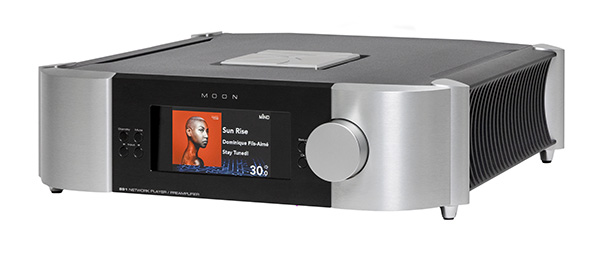
No fewer than eight boxes, powered by six after-market power cables, comprise my current reference front-end. As much as separate boxes can afford superior isolation and provide far more room for visionary engineers to work their magic, the advantages of a single box, which requires a single power cable and far fewer after-market interconnects, are obvious.
Enter Simaudio's Moon 891 network player/preamplifier ($25,000; footnote 2). Also called a "streaming preamplifier,"it includes a DAC that converts PCM and MQA files up to 32/384 (with 24-bit files upconverted to 32-bit) and DSD files up to 256. It also includes what Simaudio company co-owner Costa Koulisakis describes as "a fully configurable" MC/MM phono stage. Both theoretically and practically, it's an ideal solution for someone with space and/or budget constraints.
Moon by Simaudio 888 monoblock power amplifier

Not everyone needs a power amplifier that can deliver 888W RMS into 8 ohms or 1776W into 4 ohms. You could say that no one needs one of theseor two, if you want to listen in stereo. Most household AC systems can't even provide enough current to deliver all that power. But Simaudio does build Moon 888 monoblocks, and people do buy them, whether or not they need an amp that weighs about 250 lb each and costs $118,888/pair.
Moon by Simaudio Evolution 780D D/A processor
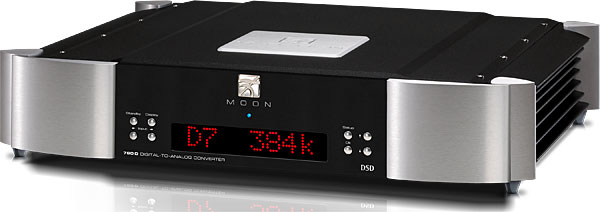
Simaudio saw disc-based digital audio in its rear-view mirror at least as far back as 2011, when it introduced the Moon Evolution 650D and 750Dtwo iterations of what it called a "digital-to-analog converter CD transport." These were actually multiple-input CD players, but Simaudio was evidently so eager to distance itself from the spinning disc that it went with a product category that, in spite of its cumbersome, run-on name, drew a clean line between the disc-reading and signal-processing functionswhile bestowing upon the former second-class citizenship.
MSB Technology Platinum Data CD IV transport & Diamond DAC IV & D/A converter

The audiophile does not pursue music reproduction because it is useful; he pursues it because he delights in it, and he delights in it because it is beautiful. If music were not beautiful it would not be worth knowing, and if music were not worth knowing life would not be worth living.
My apologies for corrupting the well-known statement by French mathematician Jules Henri Poincaré (18541912), in which he described his relationship with science and nature. But substituting audiophile for scientist and music for nature, I feel the sentiment expresses what drives many audiophiles to the extremes for which mere mortals often chide us.