

Innuos NazaréNET network switch & NazaréFLOW reclocker
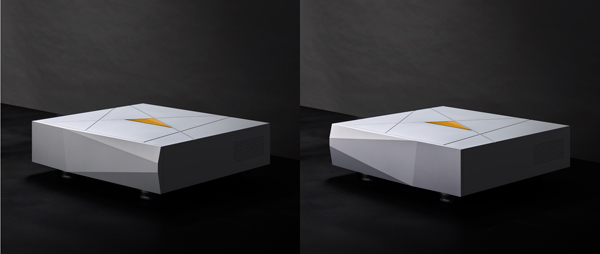
This is a most unusual review: two premium products reviewed as a set. It was intended as a short review, but the Innuos NazaréNET ($32,000) and NazaréFLOW ($32,000 base price + optional custom DAC output module) require lengthy explanations.
Innuos ZENith Next-Gen Streamer-Server
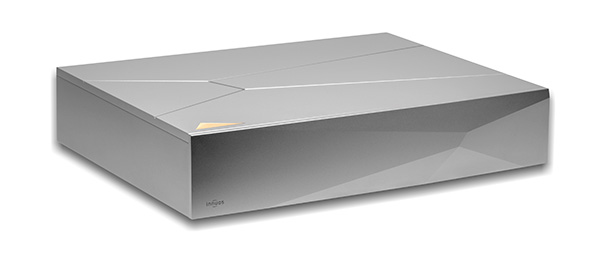
The Innuos ZENith Next-Gen ($20,700 as equipped) does what streamer-servers do: store music files, read them into memory, and send them on to a D/A converter to make music. In Innuos's complex (yet logical) lineup of streamers and streamer-servers, the ZENith Next-Gen sits just below the flagship Statement and above the ZENith Mk.3. The ZENith Mk.3 remains in the Innuos lineup for now but will be replaced at AXPONA shortly after this issue hits mailboxes and newsstands.
Though similar in many respects, with a very similar appearance, these two productsthe ZENith Next-Gen and the ZENith Mk.3are very different beasts. There is one rather obvious difference: a CD slot on the Mk.3 (with, of course, a CD drive inside), which makes it easy to rip CDs to the server's internal memory. This feature is absent from the more purist ZENith Next-Gen. But with the Next-Gen you can have your cake and eat it: Attach any USB CD ripper to one of the USB ports, and it will work just the same as the built-in ripper on the Mk.3. The other differences between the Mk.3 and the Next-Gen are less obvious, but those differences go much deeper; see the Details section in this review.
J.Sikora Standard Max Supreme turntable, KV9 Max Zirconium tonearm
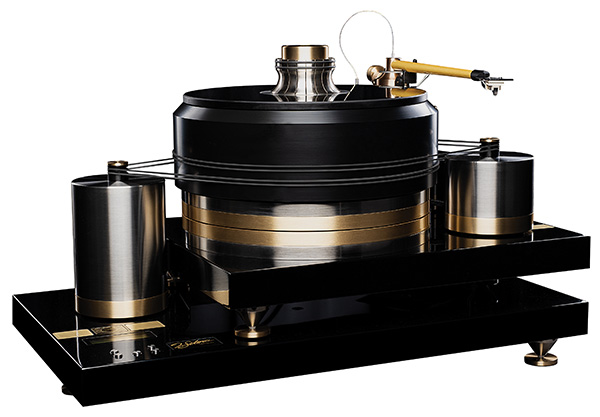
In his review of the J.Sikora Initial turntable, Stereophile's resident artist/sage Herb Reichert wrote, "Extended bathing, lighting candles, making tea, and preparing food are ritual work forms that prepare my senses to accept both pleasure and illumination."
When it comes to playing records, I too have a ritual. It involves carefully cleaning the vinyl, first on a Pro-Ject VC-33, followed by immersion in a HumminGuru Ultrasonic vinyl cleaner. Before and after, I inspect the record's grooves with a pricey VisibleDust Quasar R magnifier. Only thenblack coffee hot, glasses cleaned, stylus brushed free of contaminants, notepad at handam I ready to receive the messages ingrained in a shiny black vinyl disc.
Jadis Defy-7 Mk.II power amplifier
 Owning a powerful tube amplifier is like owning a classic automobile. Great pleasure may be had, but ownership involves a little more care and maintenance than usual.
Jadis, an audiophile company specializing in all-tube amplifiers and operating out of a small French town, has enjoyed a good reputation for some years, even if some of its models have suffered from the reliability problems that occasionally afflict the largest tube amps. Another problem area is that of power consumption and heat output. In common with class-A amplifiers and high-bias A/B types, including solid-state models, larger tube amps give off substantial heat. The Defy-7's 240W idling consumption may or may not be welcome, according to your location and the season.
Owning a powerful tube amplifier is like owning a classic automobile. Great pleasure may be had, but ownership involves a little more care and maintenance than usual.
Jadis, an audiophile company specializing in all-tube amplifiers and operating out of a small French town, has enjoyed a good reputation for some years, even if some of its models have suffered from the reliability problems that occasionally afflict the largest tube amps. Another problem area is that of power consumption and heat output. In common with class-A amplifiers and high-bias A/B types, including solid-state models, larger tube amps give off substantial heat. The Defy-7's 240W idling consumption may or may not be welcome, according to your location and the season.
Jadis Eurythmie II loudspeaker
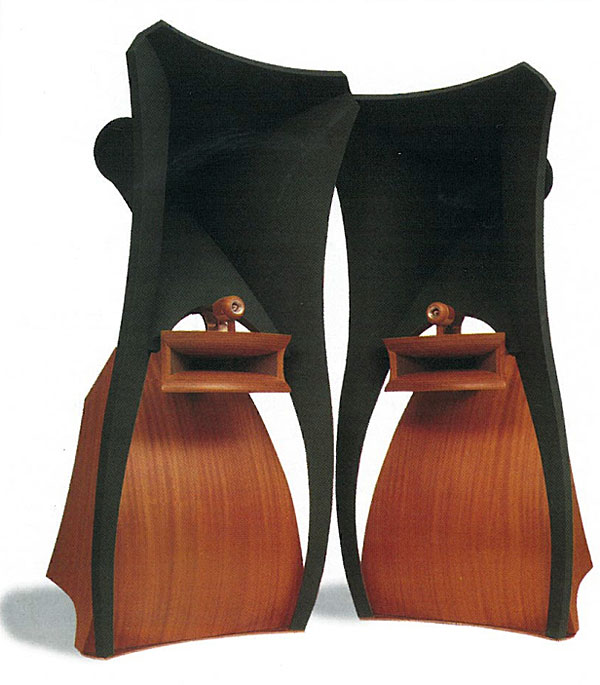
The Jadis Eurythmie speakers ($37,000/pair) arrived in a multitude of oversized boxes. Importer Northstar Leading the Way's Frank Garbie dragged them into our downstairs lobby and broke them open, elevatoring the individual modules up to our door. This happened on one of my office days, but Kathleen pushed me out the door in the morning with a "Don't worry cherie, I can handle it..." She phoned in periodic updates on Garbie's progress. Remember that old Stan Freberg routine? "I got it, I got it...I don't got it!" I arrived home just in time to hook up the amps.
Jadis JA200 Mk.II monoblock power amplifier
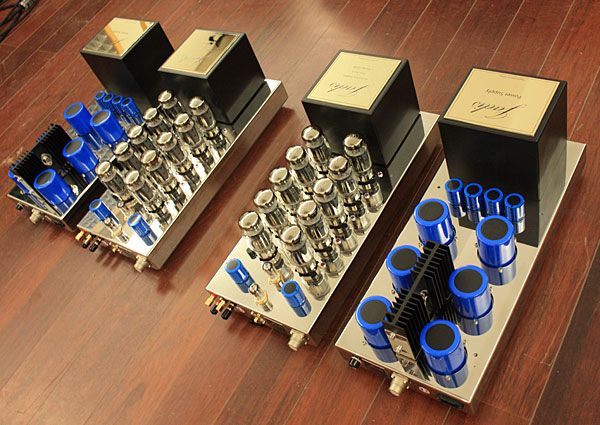
"How natural the sound," wrote Jonathan Scull in March 1994, in his Follow-Up on the original Jadis JA 200 monoblock amplifier, which then cost $18,990/pair. "How easy it was to follow the musical line and fall into the music. How deep, controlled, tight, and satisfying the bass. How magnifique the midrangethe traditional strength of the Jadis presentation. How full and satisfying the lower midrange. How open, airy, how right the highsnot at all hard, but very extended and natural. How involving their presentation. How full, how harmonically correct, how wonderfully compelling. How magical."
Jadis JPL line preamplifier
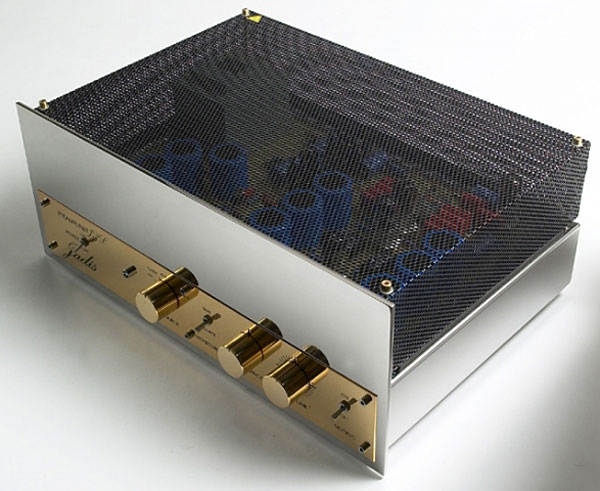
In its comparatively few years in the marketplace, the line-level preamplifier appears to have established commercial parity with its full-function big brother. That this was inevitable was clear as far back as the mid-'80s. The advent of the CD and the proliferation of digital sources argued for a modular approach to preamp design. In such an environment, line-level sources (eg, DAT, CD, even analog tape) deserve special attention.
JBL Synthesis 1400 Array BG loudspeaker
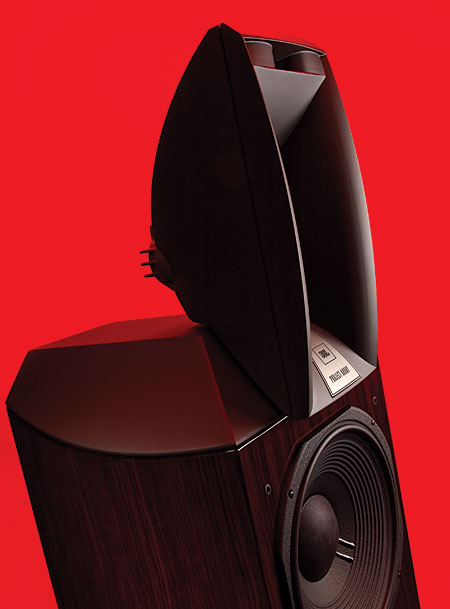
JBL was founded 60 years ago, by Jim Lansing. Its history has been amply detailed in the book The JBL Story: 60 Years of Audio Innovation, by the late John">http://www.stereophile.com/news/052107eargle">John Eargle's (JBL Professional, 2006). Although it is primarily known for its pro-audio loudspeakers, the Californian company has offered a steady stream of high-performance domestic loudspeakers to the home market, including the 1971 Paragon, the L100 bookshelf speaker, and the JBL 250Ti floorstander, all of which remained in JBL's catalog for 20 years. In 1990, JBL produced the Project K2 S9500 flagship speaker for the Japanese high-end market. The K2 Project culminated in the $60,000/pair DD55000">http://blog.stereophile.com/ces2007/010907mikeyjbl">DD55000 Everest system, with its cross-firing asymmetric horns, and the subject of this review, the Synthesis 1400 Array BG, was a spin-off from the K2 project. It features horn-loaded midrange and tweeters to attain a flat response out to a claimed 48kHz.
Jeff Rowland Design Group Model 7/II power amplifier
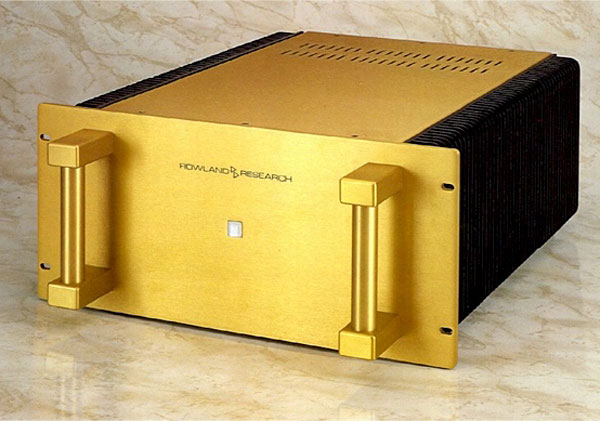
Very few products exude opulence as do the Rowland amplifiers: the massive chassis, the gold finish, those sculpted handles on the front plate. For some strange reason the amp reminds me of Brutus Beefcake, the golden boy of professional wrestling, upon whom I stumbled one night while flipping through the myriad channels of our cable TV. The visual impact is the same: beefy. And then there's the price: also beefy.
JH Audio JH16 Pro in-ear monitors
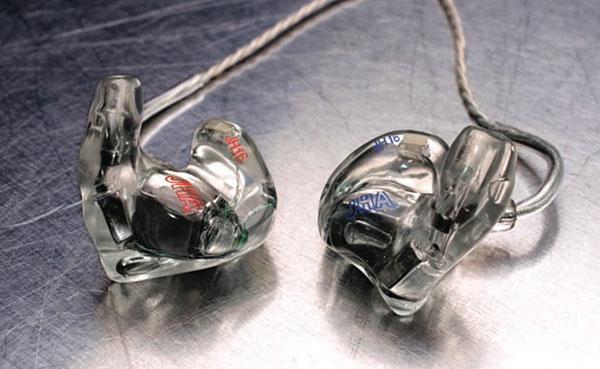
"Good grief, has he lost his hearing?"
It was the distant past, a time so long ago that the M in MTV stood for Music, and I was watching a David Bowie concert on TV. The svelte singer was wearing what I took to be hearing aids.