

Rogers High Fidelity 65V-1 integrated amplifier
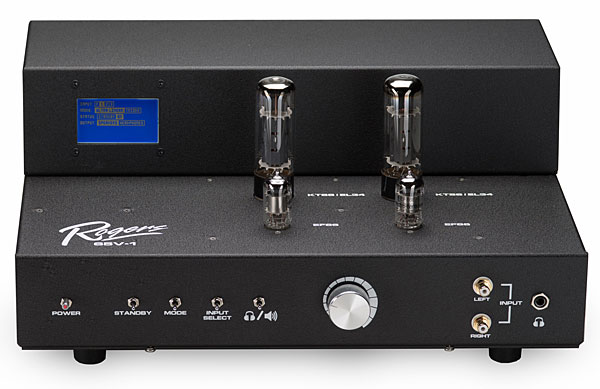
"Okay, all you high-rolling audiophile know-it-allswhat is the argument against amplifiers that operate in high-bias, class-A, single-ended mode, with the lowest possible parts count? Is there a better strategy for beauty, rhythm, color, texture, and easy-flowing musical verity? I think not. And please explain: Why has mainstream audio gone to such ridiculous and expensive lengths to avoid building and selling precisely these sorts of amps?"
Rogers High Fidelity EHF-100 integrated amplifier
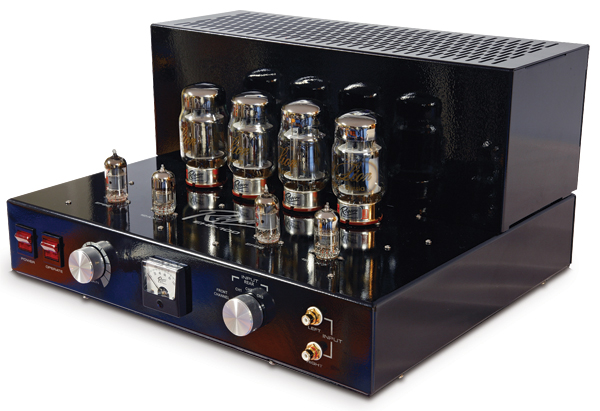
I can imagine the gaiety and mirth that filled the halls of the electronics industry in the 1950s, as engineer after bespectacled engineer realized that the transistor would soon consign to the outposts of oblivion those ancient technologies that had preceded it. Before longsurely no more than a decadethe hated vacuum tube would vanish from the Earth, along with the tube socket, the tube tester, the tag board, the high-voltage rail, and that lowest rascal of them all, the output transformer. What a jubilant time!
I can't imagine what went wrong.
Rogue Audio Pharaoh II integrated amplifier
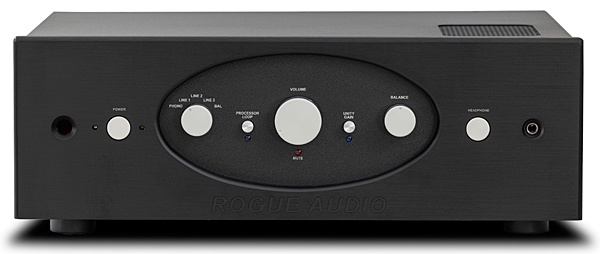
This morning, I received an email from John, my DIY friend in Europe, saying how happy he was. He had just finished building a new power amplifier using two UcD250LP class-D amplifier modules. He described the results as "quiet, clear, clean, effortless class-D power," adding, "What more could I ask for?"
Rogue Audio Sphinx integrated amplifier
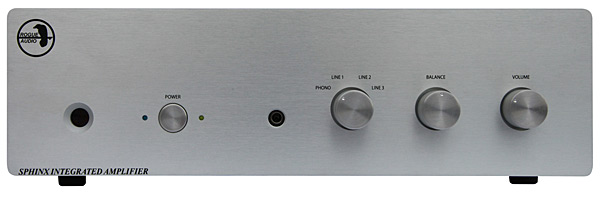
Once, on a cold, dank, soundless day deep in the Eastern bloc, I watched a man spend over a million dollars on an audio system: a turntable, a fancy horn tweeter, a few wires, and some amplification for his modified Klipschorns. I asked him what he did for a living, and he told me he was a notary public.
Rogue Sphinx V3 integrated amplifier
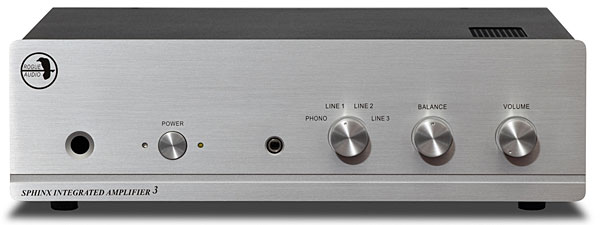
I am proud of the fact that my first review for Stereophile was of a modestly priced integrated amplifier called the Rogue Audio Sphinx. Specified at 100Wpc into 8 ohms, 200Wpc into 4 ohms (footnote 1), it played the KEF LS50s like it was made for them. It was simple and handsome and cost only $1295, phono stage included.
Roksan Attessa streaming integrated amplifier
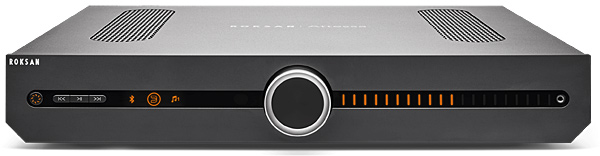
When I put together my first hi-fi system in the late 1960s, the amplifier was a Kenwood integrated. Soon I replaced the Kenwood with a Sony integrated, and then, a few years later, I bought a Lecson preamplifier and power amplifier pairing. It's been separates for me ever since.
Roksan Kandy K2 BT integrated amplifier
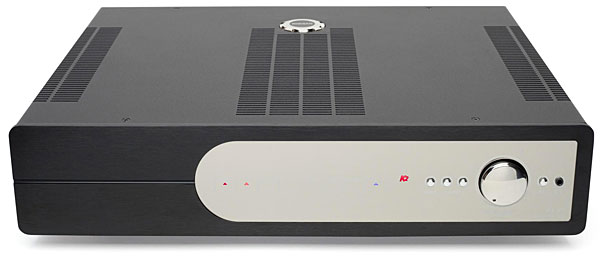
It was spring. I was planting kale and cabbage, wearing bib overalls, and listening to Pigboy Crabshaw (aka Elvin Bishop) on my iPhone. My girlfriend, "bb," came out, and just stood there laughing. "What's this? American Gigolo: The Alabama Years?"
Now, please, don't start worrying about your newest Stereophile reviewer. I've owned my share of Julie London and Jennifer Warnes records, but these days I'm more into Hazel Dickens and Maybelle Carter. It's summertime, fish are jumpin', and that dirt-road American music is getting me high.
Roksan Kandy K2 integrated amplifier
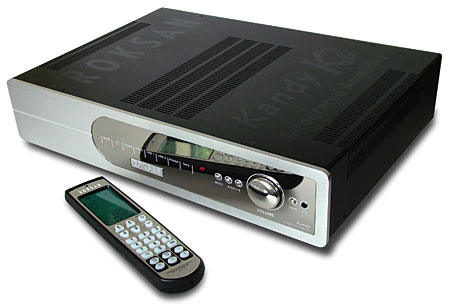
Besides my 20th wedding anniversary and the 15th anniversary of Listener magazine's first issue, this year marks the 25th anniversary of Roksan Audio Ltd., easily one of the most innovative design and manufacturing firms in British audio. Before Roksan came upon the scene in 1985, none of us had ever seen a loudspeaker whose tweeter was isolated from its surroundings by a sprung suspension. Or a commercial phono preamplifier designed to fit inside a turntable, just a centimeter away from the tonearm base. And who among us could have guessed that the Linn">http://www.stereophile.com/turntables/1103linn">Linn LP12's hegemony—among flat-earthers, I mean—would be broken by a turntable from outside of Scotland? Yet the Roksan Darius loudspeaker, Artaxerxes phono stage, and, above all, Xerxes turntable accomplished those things and more, to the genuine surprise of nearly everyone—and to the benefit of our industry at large, as other firms took those ideas and ran with them.
Rotel RA-6000 integrated amplifier
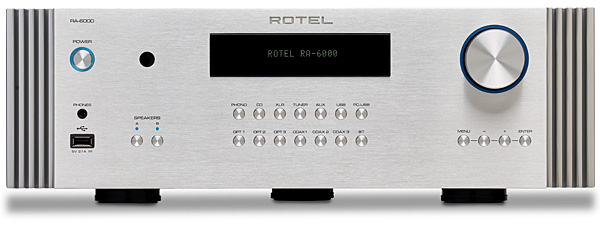
Before this month, I'd never experienced Rotel amplification in one of my own systems, but I have memories of how their amplifiers sounded back in the early 1990s. In those days, at audio shows, I would audition every Rotel amp I could find; I was especially interested in their $369, 60Wpc RB-960BX. I was curious about that model because it was the number-one competitor to the 60Wpc darling of the audiophile proletariat: Adcom's GFA 535 II. My friend Corey Greenberg compared these two popular amps in Stereophile and concluded, "The Rotel is for the budget-minded music lover who wants a good, solid little amplifier that's not going to make listening to music a trying experience."
Schiit Audio Ragnarok 2 integrated amplifier

In Herb Reichert's review of the original Schiit Audio Ragnarok integrated amplifier, he wrote, "Schiit Audio's Ragnarok [is] the first amplifier of my experience that plays earth and sky, mind and body, brown eyes and blue, speakers and headphones, with equal narcotic intensity." Herb's colorful conclusions so persuaded me of the Ragnarok's worth that, when Schiit Audio's Jason Stoddard and Mike Moffatt announced the impending release of the Ragnarok 2, I pitched a Stereophile follow-up review.