

MrSpeakers Aeon closed-back headphones
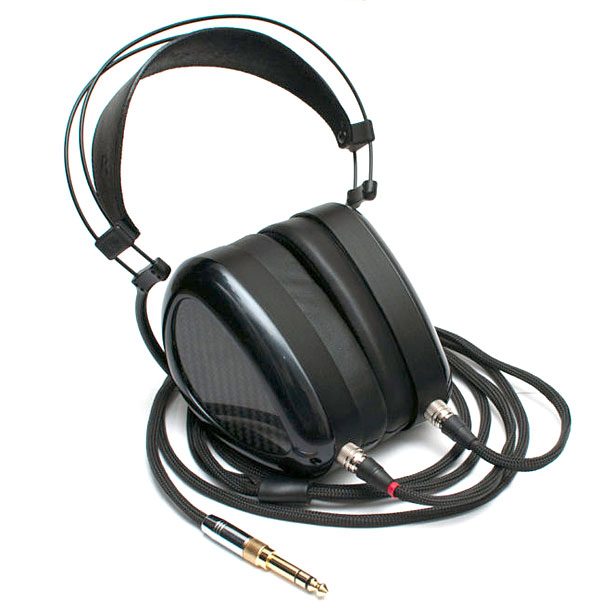
I got an e-mail last summer from my colleague Tyll Hertsens, editor of our InnerFidelity website. "Recently reviewed and really liked the new MrSpeakers Æon," he wrote. "They're a little rough-sounding as sealed headphones tend to be, but the tonal balance is superb. I got three in for review to make sure they're consistent. After measurements I asked [MrSpeakers'] Dan Clark if I could forward them to you because I like them so much and thought you should hear them. . . . I really think you may enjoy them."
MSB Link DAC III D/A converter

Prelude
I fell in love with the original Link DAC, as was obvious from my">http://www.stereophile.com//digitalsourcereviews/234/">my review in the January 1999 Stereophile. I said that "the Link redefines entry into high-quality digital sound," as it provided excellent sound and 24-bit/96kHz conversion for the remarkably low price of $349. It is as firmly ensconced in Class C of "Recommended Components" as it is in my weekend system, where it tames the digital signals from my DMX receiver and my trusty old Pioneer PD-7100 CD player.
I fell in love with the original Link DAC, as was obvious from my">http://www.stereophile.com//digitalsourcereviews/234/">my review in the January 1999 Stereophile. I said that "the Link redefines entry into high-quality digital sound," as it provided excellent sound and 24-bit/96kHz conversion for the remarkably low price of $349. It is as firmly ensconced in Class C of "Recommended Components" as it is in my weekend system, where it tames the digital signals from my DMX receiver and my trusty old Pioneer PD-7100 CD player.
MSB Technology Link D/A converter
Recently, we've seen the digital "horsepower" race accelerate with the arrival of digital sources and devices with 24-bit and 96kHz sampling capability. Much of this has been spurred by the 24/96 labels emblazoned on the newer DVD players—and, within the purer confines of the audio community, by high-end DACs with this same ability. Indeed, it's possible that the dCS Elgar DAC, near and dear to John Atkinson's heart and a perennial Class A selection in Stereophile's "Recommended Components," performs so well with standard 16-bit/44.1kHz sources because its wider digital bandwidth permits greater linearity within the more restricted range of regular CDs.
Music Hall dac25.2 D/A processor
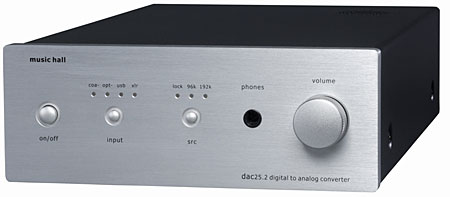
Roy Hall has been Creek Audio's US importer for more than 20 years. Did you know that all Creek gear is now made in China? Just like Cambridge Audio, Quad, and many B&W models. Just like some US speaker brands, for which virtually all parts are made in China but are assembled, it's claimed, in the US. Three cheers for brands like LFD, Rega, Sugden, and Harbethall still made in the UK. For French marques made in France. For Italian products produced in Italy. Etc.
Music Hall Ikura LP player & Ortofon 2M Blue phono cartridge
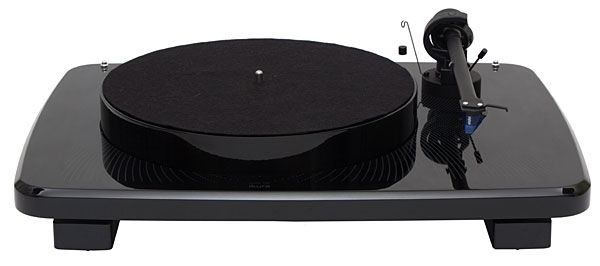
The call I received from Music Hall's Leland Leard surprised me: "Hey, Bob, I think you'd be the perfect guy to review our new Ikura turntable!"
Hmm. It had been four years since I'd reviewed a record player: Pro-Ject's Debut III, in the February 2010 issue. And with the surging popularity of vinylhell, Rough Trade NYC's enormous new record store, in the Williamsburg section of Brooklyn, even sells turntablesthe thought of a plug-and-play turntable-tonearm-cartridge combination for $1200 intrigued me. Sure, Lelandsend it on.
Music Hall Marimba loudspeaker
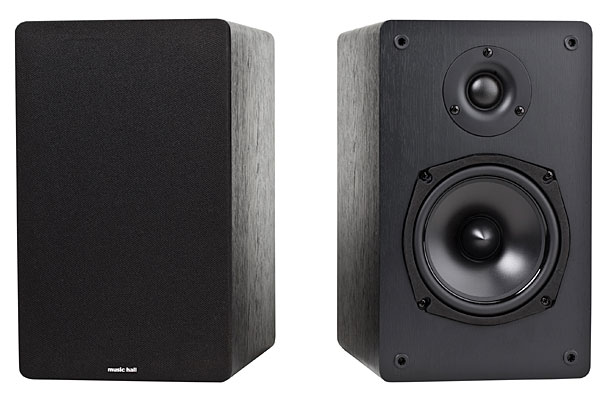
Late last year, when I first heard of the Music Hall Marimba, I was happily surprised: One of my favorite hi-fi manufacturers had finally introduced its first and (so far) only loudspeakerand it was seriously affordable at $349/pair. I wanted to review the Marimbas right away, but grumpy old Sam Tellig beat me to them.
Music in the Round #30
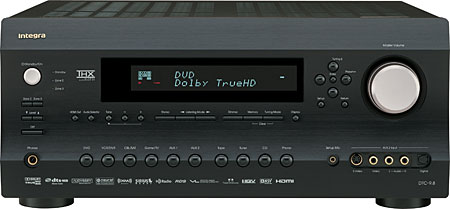
In Januaryhttp://www.stereophile.com/musicintheround/108mitr">January;, I reported on my experiences with the Integra DTC-9.8 preamplifier-processor, which I found to be outstanding with digital sources. That assessment was due, in no small part, to the performance of the Audyssey MultEQ XT room-correction system, which is included in the DTC-9.8. With only a little serious effort, MultEQ opened up the entire soundstage, making possible a better appreciation of the hi-rez sources now available on all sorts of discs. I have no doubt that any careful user can achieve similar satisfaction.
Music in the Round #41
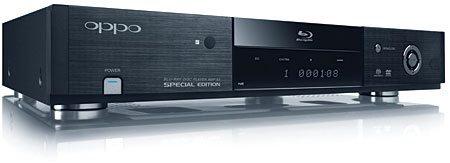
It was only a few">http://www.stereophile.com/musicintheround/music_in_the_round_37/index2… months ago that I greeted Oppo Digital's BDP-83 universal Blu-ray player as a breakthrough consumer component, and it became a Runner-Up for Stereophile's Budget Product of 2009. It now appears that Oppo is using the design as a base on which to develop similar and more advanced products, both for themselves and for a good many other manufacturers. Some may take exception to my use of the word manufacturers—if it's an Oppo under the skin, what, precisely, are these other "manufacturers" contributing? Well, that's hardly a new question.
Music in the Round #67
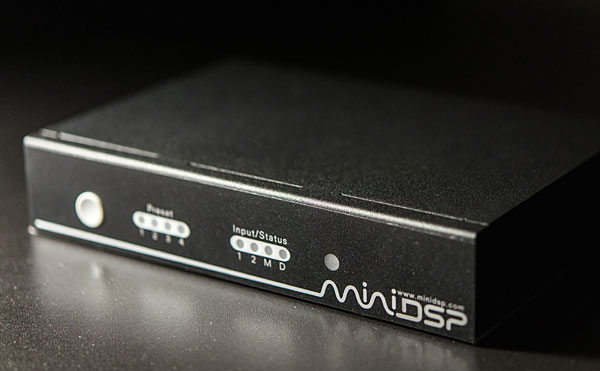
It seems more and more that I'm reviewing equalization products in this column, and that such components are less often dealt with in the magazine's formal equipment reports. But it's not as if the problems created by room acoustics affect only multichannel systems. Stereophile has not ignored the topicsee the many reviews of physical and electronic room-treatment products posted on this websitebut months can pass without publication of a review of such a component. Meanwhile, multichannel devotees such as I seem to talk about almost nothing elseand here's why.
Musical Fidelity A1 integrated amplifier
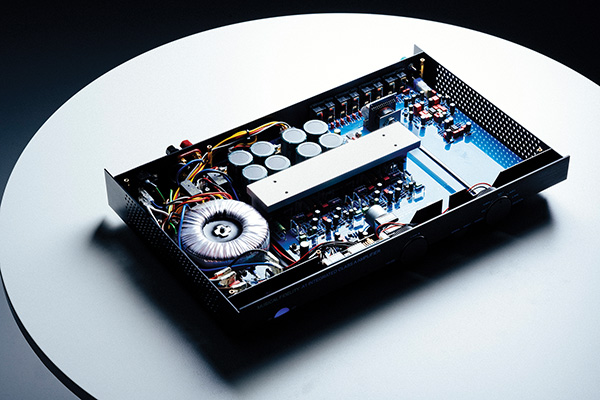
In 1989, I bought my second pair of Rogers LS3/5a's from a guy on Staten Island who had them hooked up to a Musical Fidelity A1 integrated amplifier. After playing the speakers for me, he began removing his zip-cord speaker cables and paused to show me how, at the amplifier end, his red-plastic Pomona Electronics banana plugs had partially melted from the A1's heat. We both laughed.
After it first appeared in 1985, the A1 quickly became famous for its hot top plate. The top plate got as hot as it did because it was used as a heatsink for the output transistors, which were biased highly into class-A. The A1's hot top made tabloid headlines, but for me it was its bold, sinewy, un-transistory sound and timeless, sharply drawn styling that distinguished it from cooler running Brit-fi competitors such as Audiolab's 8000A, Creek's 4040, A&R Cambridge's A60, and NAD's 3020.
Now it's back, priced at $1779, looking and feeling cooler than before.