

Meridian Explorer USB D/A processor/headphone amplifier

Those of us who groan at the appearance of every new five-figure digital source component in a massively oversized chassisand who groan in greater torment when the offending manufacturer says his customer base insists on products that are styled and built and priced that waycan take heart: The appearance of such sanely sized and affordable products as the Halide Design DAC HD ($495) and the AudioQuest DragonFly ($249) would suggest that the market has a mind of its own.
Meridian Explorer2 D/A headphone amplifier
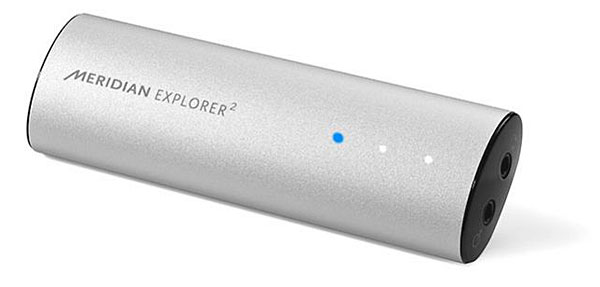
I was lying on a mattress on the floor of an empty apartment on Manhattan's Upper West Side. Not as grim as it soundsit's a nice apartment, and the mattress was new, and had just been deliveredbut it was hot (no air-conditioning), and my family and my furniture were still in my condo up in Maine, and I was lonely. I needed some cheering up. Which is how I rationalized the decision to buy an Explorer2, Meridian Audio's tiny, inexpensive ($299) digital-to-analog converter.
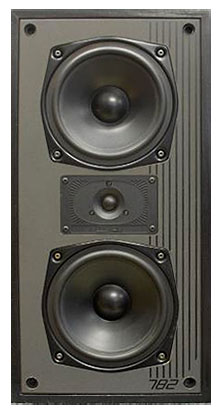
Mission Cyrus 782 loudspeaker
 Cyrus is the name given to the higher-priced line of loudspeakers made by England's Mission Electronics. The entire Mission loudspeaker line includes six products under the Mission label and three under Cyrus. Mission also manufactures a wide range of electronics and CD players. The company has a long history of audio innovations, both in loudspeaker and electronic design. Among Mission's claimed "firsts" are the first polypropylene-cone drive-unit used in a product (1978), first widespread use of MDF loudspeaker enclosures (1981), and first CD player from a specialist manufacturer. Interestingly, Mission also makes IBM-compatible personal computers.
The $900/pair Cyrus 782 is a two-way design employing dual 7" (175mm) polypropylene-cone woofers and a single ¾" (19mm) fabric-dome tweeter. The drivers are arranged in a D'Appolito configuration to simulate point-source radiation characteristics. Both woofer and tweeter were designed from scratch by Mission. The polypropylene woofer cones include a "mineral loading" that reportedly increases cone rigidity, thus decreasing cone breakup. Additional woofer design features include a shaped pole piece to increase linearity during high cone excursions, rigid steel chassis to reduce driver resonances, and a tight tolerance between the voice-coil and magnet to increase sensitivity.
Cyrus is the name given to the higher-priced line of loudspeakers made by England's Mission Electronics. The entire Mission loudspeaker line includes six products under the Mission label and three under Cyrus. Mission also manufactures a wide range of electronics and CD players. The company has a long history of audio innovations, both in loudspeaker and electronic design. Among Mission's claimed "firsts" are the first polypropylene-cone drive-unit used in a product (1978), first widespread use of MDF loudspeaker enclosures (1981), and first CD player from a specialist manufacturer. Interestingly, Mission also makes IBM-compatible personal computers.
The $900/pair Cyrus 782 is a two-way design employing dual 7" (175mm) polypropylene-cone woofers and a single ¾" (19mm) fabric-dome tweeter. The drivers are arranged in a D'Appolito configuration to simulate point-source radiation characteristics. Both woofer and tweeter were designed from scratch by Mission. The polypropylene woofer cones include a "mineral loading" that reportedly increases cone rigidity, thus decreasing cone breakup. Additional woofer design features include a shaped pole piece to increase linearity during high cone excursions, rigid steel chassis to reduce driver resonances, and a tight tolerance between the voice-coil and magnet to increase sensitivity.
Mission m71 loudspeaker
I haven't been shy in these pages regarding my love for the Mission 731i loudspeaker (reviewed in November 1996, Vol.19 No.11). It quickly became my reference standard for an entry-level audiophile speaker. Subsequent to my review, Mission significantly improved the speaker by introducing a silk-dome tweeter (see Follow-Up in April 1998, Vol.12 No.4). I bought three pairs: one for my home recording studio, one for my faux outdoor summer-home system (guest bedroom windowsills, pointing outward), and one for portable use to drag to friends' parties when their sound systems are not up to snuff.
Monarchy Audio Digital Interface Processor 24/96
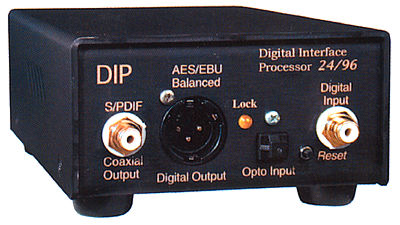
Sorry to empty your wallet this month, but here's a must-have if you want to get the most from your upsampling MSB">http://www.stereophile.com//digitalsourcereviews/276/">MSB Link DAC III: Monarchy Audio's Digital Interface Processor 24/96 (DIP for short).
Monitor Audio Monitor 7 loudspeaker
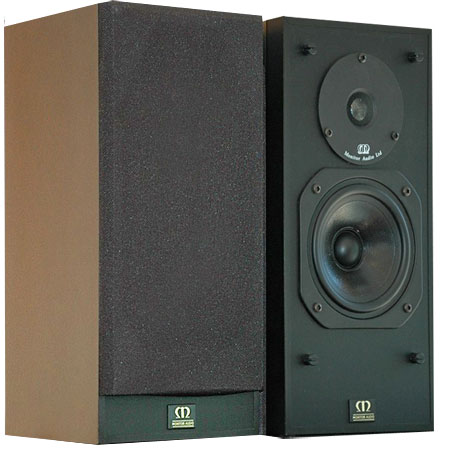
And now for something completely different.
Monitor Audio R300/MD loudspeaker
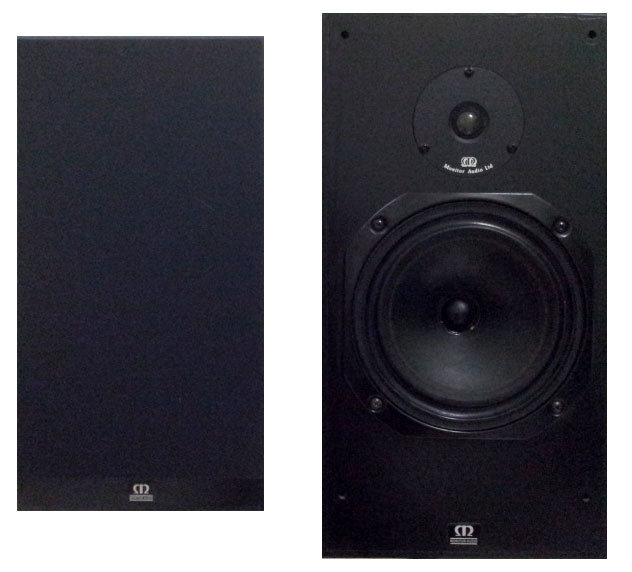
The Monitor Audio R300/MD ($669/pair) debuted at the 1988 SCES in Chicago. English company Monitor Audio is one of the pioneers in spreading the use of metal-dome tweeters in relatively low-cost loudspeaker systems. The tweeters they have designed in conjunction with SEAS and British manufacturer Elac may have now found their ways into a number of designs from competing manufacturers, but there is no doubt that Monitor leads the way. The new R300/MD features a new ¾" version of the SEAS 1" aluminum-dome unit Monitor introduced with their R652/MD (reviewed in Vol.10 No.5), in conjunction with an 8" doped paper-cone woofer.
Monitor Audio Silver S2 loudspeaker
While audio writers find the siren song of cost-no-object components an ever-present temptation, I do ask Stereophile's reviewers to be on the lookout for affordable products that sound better than they have any right to. So when I listened to an inexpensive system based on Monitor Audio's Silver S2 loudspeaker and Musical Fidelity amplification at Home Entertainment 2002, held at the Manhattan Hilton in May 2002, I followed my own instruction and asked the US distributor of this English model to send me review samples.
Monster Cable Beats by Dr. Dre studio headphones
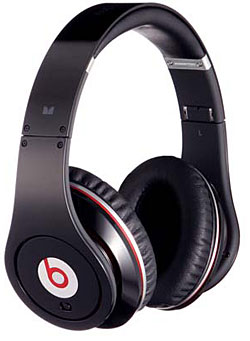
I was looking out the window. I was waiting for the plane to take off. I was wearing Monster Cable's Beats by Dr. Dre Studio headphones ($349.95). I was listening to Pens' burning, fuzzed-out, 27-minute onslaught, Hey Friend, What You Doing? (320kbps MP3; LP, De Stijl IND071). I was shouting with sudden shock and pain.
Moth Audio Cicada loudspeaker
Like most people, I'm not interested in long, windy essays about audio reviewing, having barely enough time and interest for audio itself. But I do perk up when the debate turns to the audio reviewer's purpose in life: Should I write about everything that crosses my path, or should I limit my attention to those products that interest me, and that stand a chance of being good?