

The Acoustical Standard (with follow-up)
From time to time in this column, I have alluded to what appears to be a loss of direction in high-end audio. It's not that the state of the audio art has stopped advancing; the technology is improving in many ways, as is obvious every time we listen to a new preamplifier or cartridge or loudspeaker that has better this, that, or the other thing than anything which has come before. The problem is that these improvements don't really seem to be getting us anywhere. And I believe the reason for this is that the audio community no longer agrees about where audio is supposed to be going in the first place.
The Angels' Share
It's only a CD-R with a self-adhesive label and computer-generated inserts, but it's what the major record labels are really scared of.
The Audio Centennial (+1) Revolution
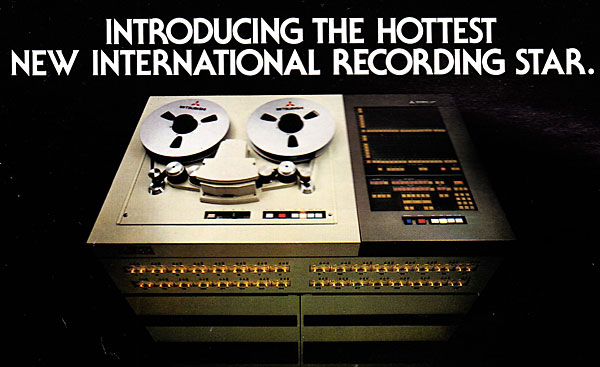
Despite the myriads of technological breakthroughs announced month after month with tedious regularity by manufacturers of pickups, amplifiers and loudspeakers, there are only five developments in the 101-year history of audio reproduction (footnote 1) that we would call truly revolutionary. We will doubtless offend many by stating that Edison's phonograph was not one of them. It was the starting point, it was not a turning point. Emile Berliner's disc was revolutionary, in that it changed the whole format of sound reproduction, and made possible true mass production of recordings (footnote 2).
The Beatles' Last Stand
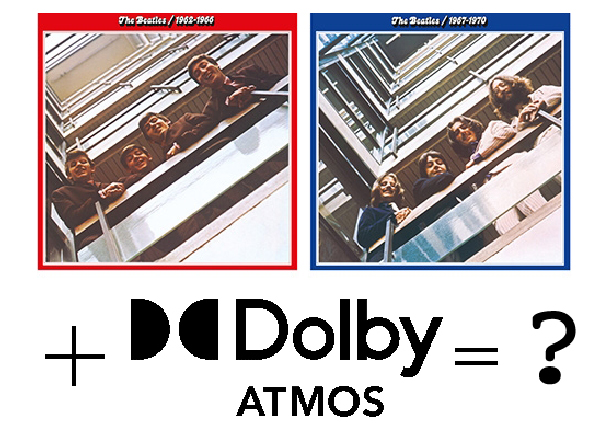
On September 27, 2023, executives from Apple Corps and Universal Music Group held a press event at the Dolby Theater in Manhattan. The event included Dolby Atmos demos of forthcoming Beatles releases. It included some big newsalthough the biggest news wasn't obvious at first.
The Best Value in Audio
Sometimes, taking what looks like the easy route turns out to be a bust. The line for cabs outside the Alexis Park Resort Hotel in Las Vegas, home of the high-end audio exhibits at the 2002 Consumer Electronics Show, must have been at least 50 people long. So much for the post-9/11 forecasts of doom that had preceded the convention: last fall's Comdex may have been a bust, but the official CES">http://www.ce.org">CES visitor count of 100,307, if a little lower than the past two years' attendances, still seemed respectable (and surpassed 1999's total of 97,370).
The Blind Leading the Blind?
The first epiphany I experienced in blind audio testing took place in the Dunfey San Mateo Hotel, in Northern California. We were stuffed into a largish, well-lit room in which dozens of listeners sat in chairs, and others stood around the back or sat on the floor. Up front were two large B&W">http://www.stereophile.com/loudspeakerreviews/506">B&W Matrix 801 speakers on tall stands spaced far apart, behind them, opaque curtains hid a small pile of audio equipment. John Atkinson and Will Hammond stood at stage left.
The Blind leading the Deaf
As the person who "invented" subjective testing, I have followed with great interest the many articles in the mainstream audio press which purport to prove that none of us can really hear all the differences we claim to hear, particularly those between amplifiers. My reaction has usually been: "Why didn't they invite me to participate? I would have heard the differences under their double-blind listening conditions." I could make that assertion with supreme confidence because I had never been involved in any such test.
The Blind, the Double Blind, and the Not-So Blind
I was once in a sushi bar in Osaka; sitting next to me was a live abalone, stoically awaiting its fate. It stuck its siphon out of its shell, the waiter tapped the tip with a spoon, the siphon withdrew. Again the siphon appeared, again the waiter tapped it with a spoon, again it withdrew.
The Case Against Show Reports
Now that Stereophile's reporting on the 1985 Summer Consumer Electronics Show has ended (I hope!), I would like to express strong dissent with its style and content. In fact, I believe that most of it should never have appeared in print.
The Chicken and the Egg
It is inarguable that the quality of magnetically recorded sound has improved immeasurably in the last 101 years. 101 years? Yes, according to a fascinating account in the May 1988 issue of the Journal of the Audio Engineering Society, it was in 1888 that the Cincinnatti-based engineer Oberlin Smith experimented with recording information on steel wire by drawing it across the corner of an electromagnet around which a coil had been wound. Smith only carried out experiments without producing a practical recording system, and it wasn't until 1898 that the Dane, Valdemar Poulsen, was granted a German patent for a "Method for the reception of news, signals, and the like."