

System Building Rules—and How to Break Them
Much has been made of the influence that Linn, Naim, and Rega have had on our ideas about music-system hierarchies: Before they and a handful of other British audio manufacturers kicked off the debate in the 1970s, the conventional wisdom worldwide was that the loudspeaker was more important than the record player, amplifier, or any other link in the domestic audio chain, and thus deserved to be the object of significantly greater care and attention, not to mention investment of cash. But the Brit-fi approach was different, and ostensibly better reasoned: Because musical information that's distorted or dropped entirely by a record player, a CD player, or any other source can't be made right by any other component in the system, it is the source that must be considered the most important component of all, and to which the majority of funds should be allocated.
Take Two Grateful Deads and Call Me in the Morning
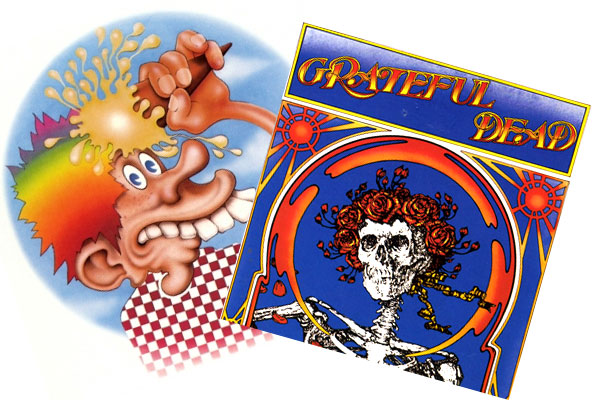
My friend was in dire straits. What had been rare occurrences of panic attacksone every year or sohad turned into a full-blown panic disorder that made it impossible for him to enjoy peace of mind..
If you've never suffered a panic attack, the idea of oneof being, in the absence of any real threat, suddenly overwhelmed by fearcan seem inconceivably strange. Try to imagine fear flooding your mind with such fierce momentum that you struggle to catch your breath, so convincing is the sensation that everything is spinning horribly out of control. Once that happens and the fear has taken over, it doesn't matter if the threat is real or not.
Taking Care of Business
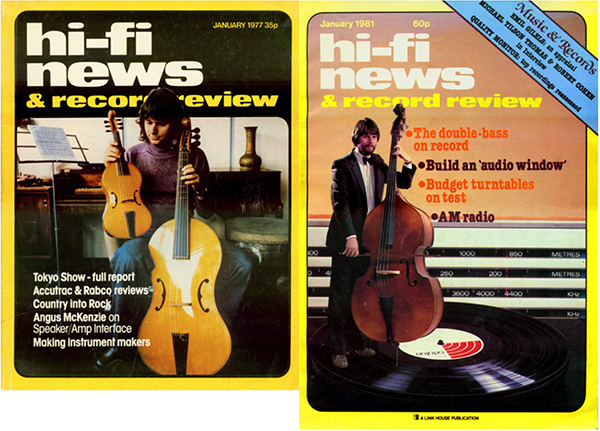
After John Atkinson joined Hi-Fi News & Record Review magazine in 1976, he appeared on two covers, in January 1977 and January 1981.
As Jim Austin wrote in this space in the December 2024 issue, following a medical procedure that he had in mid-October, he needed to take several weeks' leave to recuperate. He delegated the magazine's production to Managing Editor Mark Henninger, AVTech Editorial Director Paul Miller, and myself. The three of us worked with copy editor Linda Felaco and longtime art director Jeremy Moyler to produce the issue you hold in your hands.
As readers probably know, I was Stereophile's editor for 33 years until my retirement at the end of March 2019. However, they probably don't know that for the 10 years prior to my joining this magazine in 1986, I was first an editorial assistant, then Deputy Editor, then, in 1982, Editor of British magazine Hi-Fi News. (In a twist of fate, Paul Miller is now Hi-Fi News's Editor.)Talkin' 'Bout a Revolution
In this issue you can find a full report from the 2000 International Consumer Electronics Show, held last January in Las Vegas. By contrast to the 1999 CES, the Y2K Consumer Electronics Show was considerably more upbeat, both according to my own observations and to those experts who specialize in judging the size of Las Vegas conventions: the city's taxi drivers. Yes, there were some rooms where lonely exhibitors were more than usually pleased to welcome a visitor from the press, but to judge from the home-theater exhibits at the Las Vegas Hilton's Convention Center and the specialty audio exhibits at the Alexis Park Resort Hotel, as well as the companies exhibiting at the splinter T.H.E. Show at the St. Tropez, the joint was jumping.
That Really Sucks
Readers are constantly telling us that downloaded audio files suck. I tend to agree with them.
That's Just How the Record Sounds

It's an error commonly made in evaluating hi-fisystem performance: the failure to listen differentially. Differential as in compared to something else. "Something else" could be a different recording on the same system or (especially this) the same recording on a different system. The question is, what are you comparing it to? The point is: Do you really know what that recording sounds like?
The 1986 Winter CES
I always enjoy CES. Like the Big Apple, or the City of Angels, the Consumer Elecronics Show is stimulatingly frenetic and enjoyably fatiguing—things that would soon put me in the funny farm if I lived with them year 'round, but can easily cope with twice a year. In fact, attending CES is rather like visiting the city of my birth, a place whose culture is one with my own because I grew up there, and where half the pleasure lies in seeing once again those audio people—the Allisons, Marantzes, Frieds, Beveridges, Haflers, and Tuckers—whose durability as friends always reminds me of how rapidly time passes and how little of it we may have left.
The 2012 Consumer Electronics Show: A Better Way?

Every time I stepped from the slow elevator onto the casino floor at Harrah's, where Stereophile's editors spent their sleepless nights, my hatred for Las Vegas was revitalized. It felt like some kind of bad joke: Oh god, I'm still here. I would turn right and see the same flashing lights, the same low ceilings, the same peoplestill sitting, still smoking, still hoping, still staring blank-faced into spinning screens of cherries, spades, and jokersand I would wonder why.
The Absolute Experience
I've never lived in New York City, but I've visited often, especially the Upper West Side, where my wife's grandparents lived for many years. There's a little jazz bar there, on Broadway near 106th Street, aka Duke Ellington Boulevard.
The Absolute Sound of What?
One of the things that distinguishes a dedicated audiophile from Joe Q. Public is that he has some notion of what audio fidelity is all about.