

Audio Research SP20 preamplifier
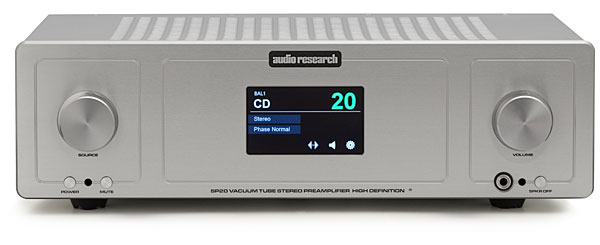
When I began my journey into audiophilia, I was in awe of the Audio Research Corporation's flagship SP preamplifiers. As I sat there in the early 1980s with my modest Apt Holman preamp, all of my friends had ARC SP6Bs. By today's standards, the SP6B was colored, did not portray a realistic soundstage, and lacked sufficient gain to amplify the low-output moving-coil cartridges of the day. But it had an intimacy in the midrange that was intoxicating. (Still considered a classic design by many, the SP6B's price on the used market has remained virtually unchanged for 30 years.) Then, still in the early '80s, ARC raised the bar with the SP-10 ($3700). It had 15 tubes and an outboard power supply, and set a new standard for delicacy, drama, and authority. (John Atkinson still has the SP10 he bought in 1984.)
Audio Research SP9 preamplifier
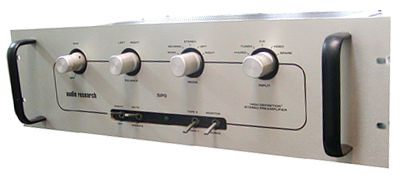
Following the introduction of their very expensive, tube/FET hybrid SP11 preamplifier, there were rumors that Audio Research was working on a hybrid tube/transistor preamplifier targeted to cost less than $2000. The rumors were confirmed when ARC showed a black-and-white photo of the SP9 at the 1987 Winter CES. Obviously, like all magazines, we were impatient to receive a review sample, but the first review of the SP9 actually appeared in the summer '87 issue of Peter Moncrieff's IAR Hotline. Peter's review was almost intemperately enthusiastic, comparing the SP9 positively with early samples of the SP11 and suggesting that its sound quality was considerably better than would be expected from its $1695 asking price. Naturally, we were anticipating good things when our review sample arrived in Santa Fe in late July.
Audio Research VS110 power amplifier & SP16L line preamplifier
For those who frequent the audio discussion groups on the Internet, the method by which Stereophile selects products for review seems to be a continuing source of fascination and conjecture. Supporters of fledgling manufacturers—whose products these Webcrawlers just happen to own—rail against the rule that products to be reviewed in the magazine must have at least five US dealers. Some suggest that Stereophile's selection of review products is all about catering to advertisers and friends in the industry, a process that seems intended to exclude their favorite products from consideration.
Audio Valve Conductor preamplifier
We audio writers have our niches. Mikey loves analog, Artie likes to play with horn speakers and assorted oddball British kit, and I really enjoy reviewing affordable speakers. There's something exciting about hearing the fruits of the labors of a creative designer who's applied his talents to meet a stringent price point and created a speaker that can entice into our hobby the financially challenged music lover.
Audio Valve Eclipse preamplifier
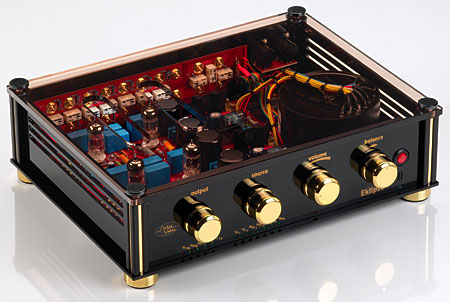
I'm not sure what motivated me to read the owner's manual for the Audio Valve Eclipse, but I'm glad I did: As it turns out, this line-level preamplifier has at least one distinctive feature that I would have missed otherwise.
Audio-GD Vacuum HE1 XLR line preamplifier
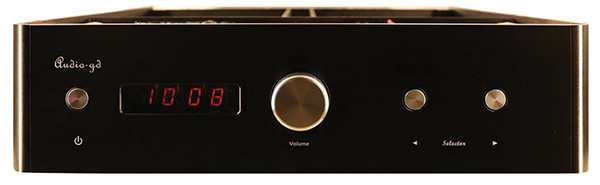
In red letters on the first page of Chinese audio manufacturer Audio-GD's website are these words: Wisdom in mind, enthusiasm at heart.
I like this goodwill greeting because it sets a mindful tone. I presume that sentiment was issued by one Mr. He Qinghua, because farther down the page, it states, "All Audio-GD's products are designed and developed under the leadership of Mr. He Qinghua." When I began my auditions, I took this salutation as an advisement, making it my plan to study Audio-GD's Vacuum HE1 XLR line-level preamp with as much wisdom as I could muster and the enthusiasm of high expectations.
AVM Ovation PA 8.2 modular preamplifier
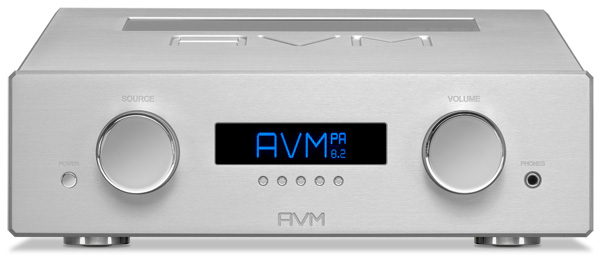
The digital ground seems to shift weekly. While firmware and software updates over the Internet somewhat slow the constant upheaval, when you do buy something, you just know that as soon as you plunk down your cash, something new will come along.
So, especially with preamplifiers, why not produce a design based on modules that the user can swap in and out, to custom-configure the preamp to that user's current needs while leaving room for later expansion? Why pay for six inputs' worth of stuff when at present you need only two? Upgrades? New features? No problemswap out a module. Or, if a circuit in one module malfunctions, you can send only that module back for repairs, not the whole thing.
Balanced Audio Technology Rex II line preamplifier
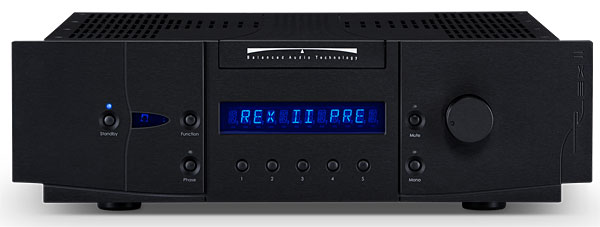
A quarter-century ago, when we were just getting into wine, my wife and I took a trip to Napa Valley. At one premium vineyard, we took a taste from the $20 bottle, then, for the hell of it, a taste from the $50 bottle. The first taste was nice; the second was alarmingan explosion of flavors, a gateway to sensory delights that we hadn't known could be had from a barrel of crushed grapes. We wobbled away, concerned that high-end wine might be a dangerous hobby.
Balanced Audio Technology Rex line preamplifier
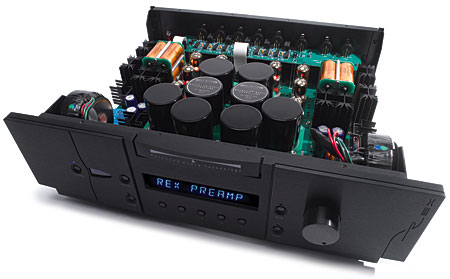
If any single link in the audio chain should be free of sonic personality, it's the preamplifier. Though a preamplifier's basic job description is "source selector with volume control," from hi-fi's earliest days preamps have been the designated dashboard: the more dials, switches, and lights, the better. All that control came at the cost of quiet, transparency, and tonal neutrality. Still, the quixotic quest for the mythical "straight wire with gain" continued to lead to minimalist designs, including impractical unbuffered "passive" preamps, in which cable length, thus capacitance, affected frequency response.
Balanced Audio Technology VK-3iX preamplifier & & VK-55 power amplifier
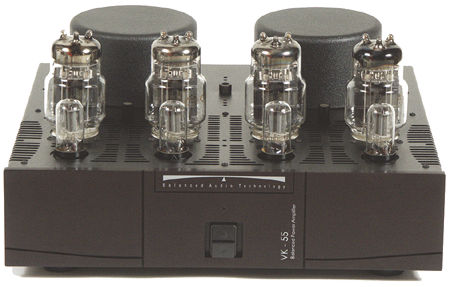
It's been 10 years since Balanced Audio Technology (BAT) introduced their first products: the VK-5 line-stage preamplifier and the VK-60 power amplifier. (I reviewed">http://www.stereophile.com/tubepoweramps/766">reviewed both in the December 1995 Stereophile, Vol.18 No.12.) The success of these and other BAT products has allowed designer Victor">http://www.stereophile.com/interviews/767">Victor Khomenko (the "VK" of the model designations) and partner Steve Bednarski to quit their day jobs at Hewlett-Packard; they were joined by Geoff Poor as a partner to handle the sales end of the enterprise. BAT's current lineup includes several preamps, phono stages, a CD player, and tube as well as solid-state amplifiers. The top of BAT's preamp range is the VK-51SEhttp://www.stereophile.com/tubepreamps/1103bat">VK-51SE;, which costs $9000; their top tube power amp is the VK-150SE">http://www.stereophile.com/tubepoweramps/536">VK-150SE monoblock ($17,000/pair); if you want their best phono stage, the VK-P10http://www.stereophile.com/phonopreamps/871">VK-P10; will set you back $8000.