

The Fifth Element #86

The CD-200 is the new CD-only player from TASCAM, the professional-audio division of TEAC (footnote 1). It has unbalanced analog outputs, and RCA and optical digital outputs. The CD-200 also has a new transport, the CD-5020A, designed by TEAC for audio use.
Unlike many affordable disc-spinning devices with slot-loading transports (eg, inexpensive DVD players starting at $29.99), the CD-200 has a traditional drawer mechanism that has been upgraded to minimize the noise of loading and clamping a disc. TASCAM also claims improvements in the internal clock function, for smoother sound and lower jitter.
The Mission System
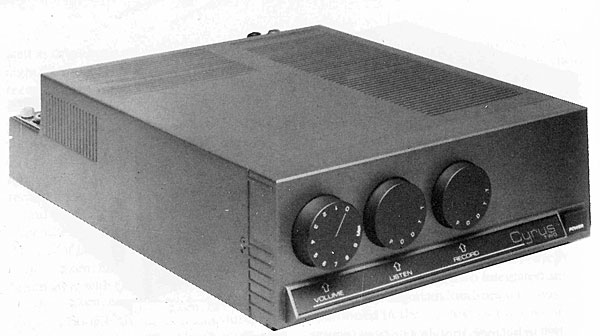
Since its founding just over ten years ago, Mission Electronics has grown to become one of the largest "real" hi-fi companies in the UK. Although their product line originally consisted of three relatively conventional loudspeakers, it rapidly grew to encompass high-end pre- and power amplifiers, cartridges, tonearms, and turntables, and, in the mid 1980s, a system concept based on CD replay and relatively inexpensive electronics: the Cyrus amplifiers and tuner.
The Mod Squad Prism CD player
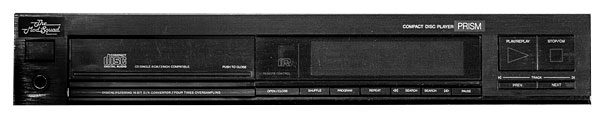
While it can't exactly be said that the folks from The Mod Squad invented the game of audiophile modifications of existing, current-production hardware, they certainly have grown to be one of the major leaguers. Their mods have a reputation for being well-thought-out, nearly always offering improvements over the originals. And while they weren't the originators of the concept, any company which brought the world Tiptoes (probably their most famous product) will probably have a niche in the 21st-Century Museum of High-End Audio.
The Mod Squad Prism II CD player
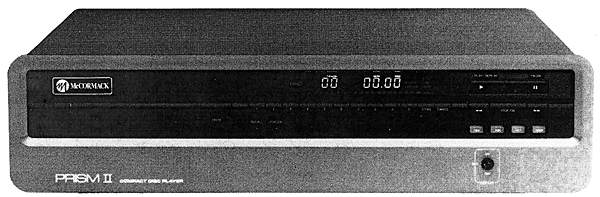
Like its Prism I predecessor, which I reviewed in May 1988, the Mod Squad Prism II is based on a Philips player: the same 16-bit, 4x-oversampling converter, the same general control layout. But The Mod Squad does their own extensive remanufacture, both on the internal circuitry and on the cosmeticsthe latter involving a handsomely sculptured case and metal front trim-panel surrounding Philips's command center.
Theta Data Basic CD transport
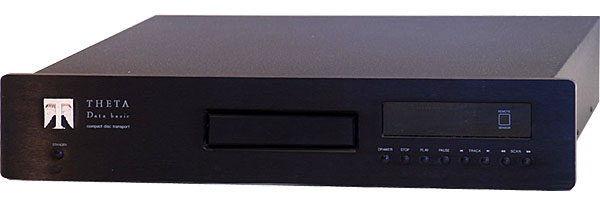 It seems to me that it should be possible to make a perfectly jitter-free CD transport without resorting to elaborate, expensive mechanical structures. This idealized transport would ignore all mechanical considerations of disc playbackvibration damping and isolation, for exampleand simply put a jitter-free electrical driver at the transport output. If such a circuit could be made, it wouldn't care about how bad the signal recovered from the disc was (provided the recovered data were error-free). The circuit would just output a perfect, jitter-free S/PDIF signal. The result would be the sound quality of the $8500 Mark Levinson No.31 Reference CD transport in $200 machines. Such a scheme would provide an electrical solution to what has been considered largely a mechanical problem.
But back in the real world there's no doubt that attention to mechanical aspects of transport design affects sound quality. Examples abound: listening to Nakamichi's 1000 CD transport with its Acoustic Isolation door open and closed; playing the Mark Levinson No.31 with the top open; and putting any transport on isolation platforms or feet are only a few of the dozens of experiences I have had that suggest that mechanical design is of utmost importance.
It seems to me that it should be possible to make a perfectly jitter-free CD transport without resorting to elaborate, expensive mechanical structures. This idealized transport would ignore all mechanical considerations of disc playbackvibration damping and isolation, for exampleand simply put a jitter-free electrical driver at the transport output. If such a circuit could be made, it wouldn't care about how bad the signal recovered from the disc was (provided the recovered data were error-free). The circuit would just output a perfect, jitter-free S/PDIF signal. The result would be the sound quality of the $8500 Mark Levinson No.31 Reference CD transport in $200 machines. Such a scheme would provide an electrical solution to what has been considered largely a mechanical problem.
But back in the real world there's no doubt that attention to mechanical aspects of transport design affects sound quality. Examples abound: listening to Nakamichi's 1000 CD transport with its Acoustic Isolation door open and closed; playing the Mark Levinson No.31 with the top open; and putting any transport on isolation platforms or feet are only a few of the dozens of experiences I have had that suggest that mechanical design is of utmost importance.
Theta Data universal disc transport
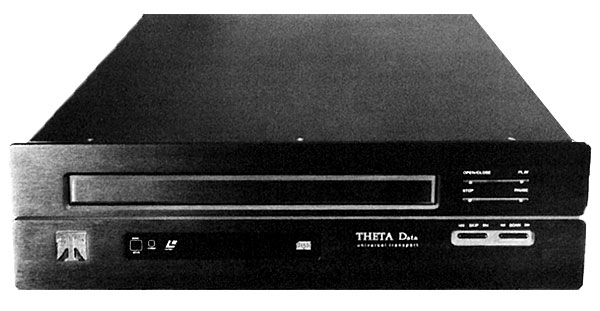
"In the fields of observation, chance favors only the mind that is prepared."
When Louis Pasteur uttered these words more than a hundred years ago, he must have speculated that they would apply equally well to future circumstances as to the events of his day. What he couldn't anticipate, however, was the technology to which his insight now seems so appropriate.
Theta Jade CD transport
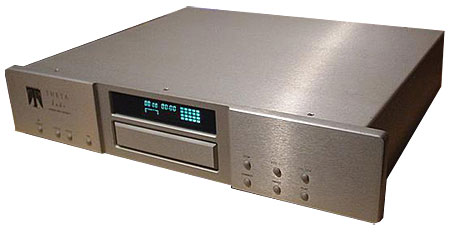
Many pundits in our industry say that CD is under threat from Super">http://www.stereophile.com/asweseeit/164">Super Audio CD, DVD-Audiohttp://www.stereophile.com/asweseeit/270">DVD-Audio;, and dual-layer CD/DVD technologies. Conflicting stories abound, and even though I'm supposed to be well-informed, I've found some of them hard to sort out! For example, Michael Fremer, concluding a fine review of the $7500 Bow Technologies ZZ-Eight integrated CD player in August, compared its notable 16-bit/44.1kHz achievement with a DVD-based disc originally mastered at 24/96kHz and replayed on an inexpensive DVD player. He found the Bow wanting in some respects. What is the world coming to?
Three December 2020 FollowUps
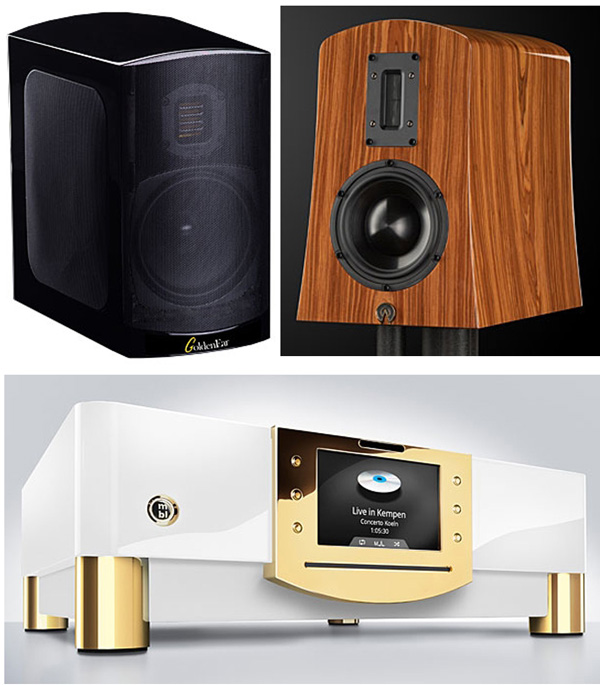
Three products are the subjects of lengthy followup reviews in the December issue of Stereophile: MBL's Noble Line N31 CD player-D/A processor, the GoldenEar BRX loudspeaker, and Alta Audio's Alyssa loudspeaker.
Three May Issue FollowUp Reviews
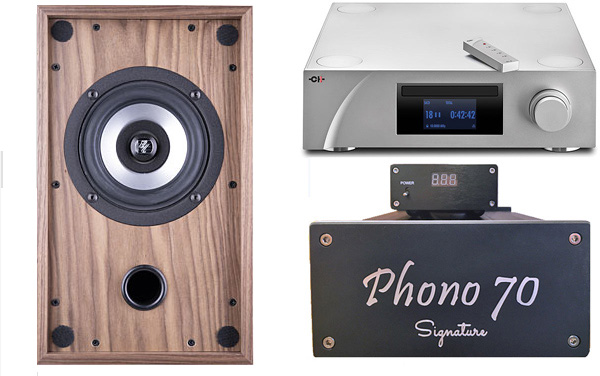
Michael Fremer wrote about the Paradox phono preamplifier in the March 2022 Analog Corner, Jim Austin reviewed the CH Precision D1.5 CD/SACD player/transport in March 2022, and Herb Reichert included the EJ Jordan Marlow standmount speaker in his April 2022 Gramophone Dreams column. All three products get further coverage in Stereophile's May 2022 issue.
Two Follow-Up Reviews: Benchmark DAC3 B & Rotel DT-6000
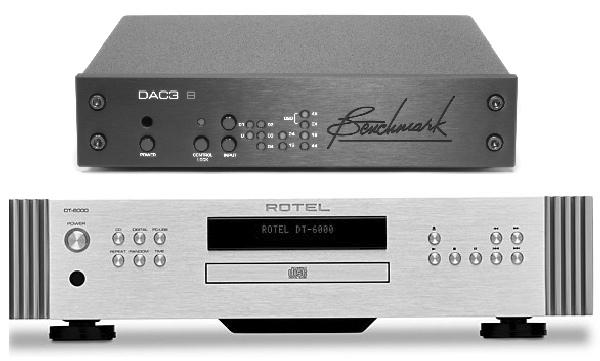
Stereophile's March 2023 issue includes two follow-up reviews of high-performance digital playback products: the Benchmark DAC3 B D/A processor; and the Rotel Diamond Series DT-6000 DAC Transport (a CD player with digital inputs).