

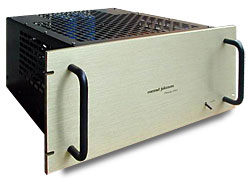
Conrad-Johnson Premier Four power amplifier
 It says something for the state of technology that, after a quarter of a century, there still is no authoritative explanation for why so many high-end audiophiles prefer tubes. Tubes not only refuse to die, they seem to be coming back. The number of US and British firms making high-end tube equipment is growing steadily, and an increasing number of comparatively low-priced units are becoming available. There is a large market in renovated or used tube equipmentI must confess to owning a converted McIntosh MR-71 tunerand there are even some indications that tube manufacturers are improving their reliability, although getting good tubes remains a problem.
Conrad-Johnson Premier Twelve monoblock amplifier
Conrad-Johnson is one of audio's "marquee" companies, and charges accordingly. The Premier Twelve tube monoblock power amplifier, rated at 140W, sells for a rather steep $3495 each, meaning that unless you listen in mono, be prepared to lay out almost $7000 just for the amplification link in your audio chain. Apparently, many audiophiles feel the money is well spent: according to Conrad-Johnson, the Twelve has been a consistently strong seller during its approximately five-year production history.
Counterpoint SA-4 monoblock power amplifier
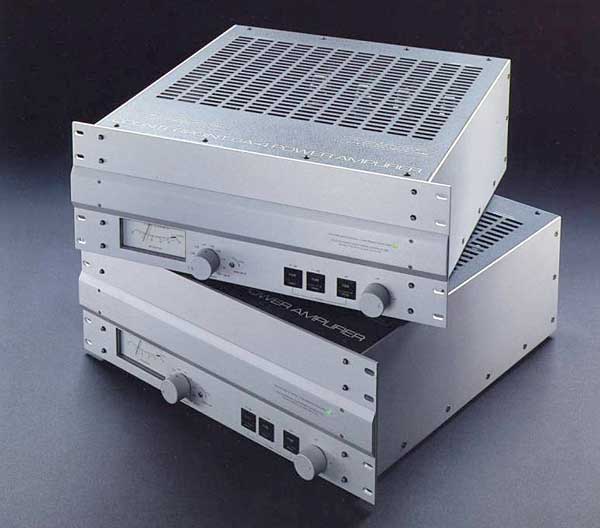
Some audio products deliver truly superb sound of a kind that really makes all the frustrations of building a high-end system worthwhile; they also require exceptional attention and care. The Counterpoint SA-4 is a case in point. With the right speakers, it competes for the title of "Most Transparent Amplifier Available at Any Price." On the other hand, this amplifier steadily loses output power as speaker impedance drops; it must be carefully matched to the right speaker. Then, and only then, can it produce one of the finest musical experiences available.
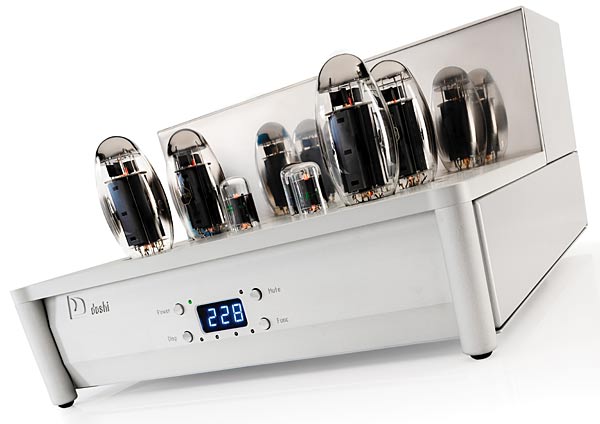
Doshi Audio Evolution Monoblock power amplifier
"Do you swear to tell the truth, the whole truth, and nothing but the truth, so help your filaments?" asked the audiophile judge of the tube.
"Since I am the truth," respondeth the tube, "I have nothing to say that is not already declared by my sound."
"But I must have the truth, and without bias!" proclaimeth the audiophile.
"What good is a tube without bias?" answereth the tube.
Doshi Audio Evolution Stereo power amplifier
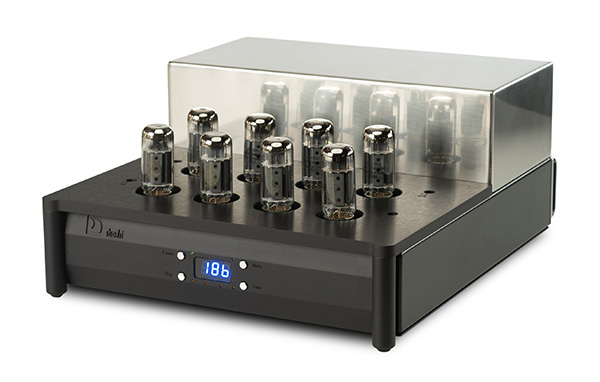
Nick Doshi is cautiously reserved when he talks about his amplifiers, preferring to let the products speak for themselves. At every show I've heard them at, from Chicago to DC to Munich, they have done exactly that: Every system I've heard featuring a Doshi amp has delivered great sound. When I pressed him as to why, he just smiled.
Doshi Audio Monoblock V3.0 power amplifier
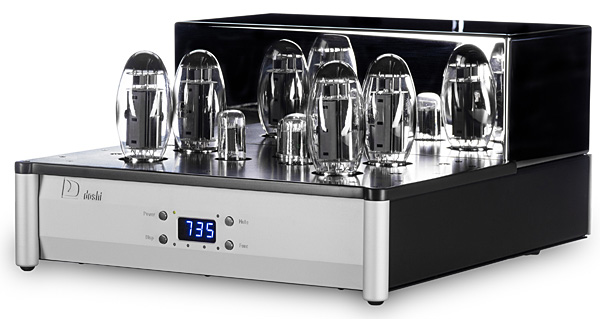
Doshi Audio first crossed my radar at the 2010 Rocky Mountain Audio Fest, where I wrote that the sound of the company's tubed monoblocks and preamp, connected to Wilson Audio Sasha loudspeakers via Transparent XL cables, "excelled in midrange strength as the system threw an exciting soundstage." After auditions of Doshi-Wilson pairings at many subsequent shows had convinced me that Doshi's products could truly sing, I contacted company owner and product designer Nishith "Nick" Doshi to inquire about reviewing one of his amps.
Dynaco Stereo 70 II power amplifier
I dig tube amps. When all's said and done, good tube amps seem to sound more like real life than most solid-state gear; even after listening to and enjoying the hell out of musical solid-state designs like the Audio Research D-240 II and the Muse Model One Hundred, once I hook up the big VTL Deluxe 225s again it's just like going home. I could go on about timbral accuracy and clearer midrange textures, but the bottom line is, music just plain sounds better when you shoot it through good tubes, and once most people experience that magic, they're hooked.
EAR 890 power amplifier
Most of us have at least some taste for gear that jumps out—for audio components whose sonic and musical distinctions are easy to hear from the start. In audio, unlike in the art of music itself, there's nothing wrong with being obvious.
EAR/Yoshino M100A monoblock power amplifier
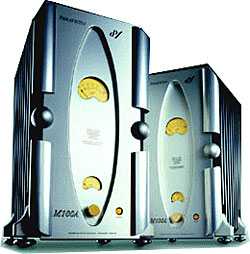
When I first laid eyes on the Paravicini M100A monoblock power amplifiers at the Consumer Electronics Show in January 2001, an audiophile in the room squinted at my badge and cried out, "Hey, J-10, these amps have your name written all over 'em!"
Elekit TU-8888 monoblock power amplifier
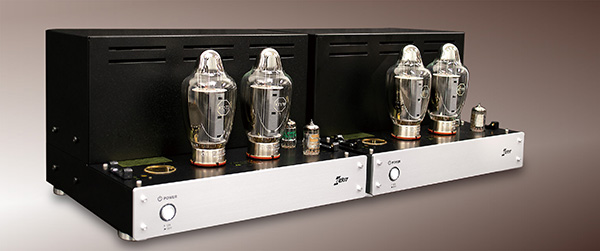
Spend as much time prowling audio websites as I do, and a pattern becomes clear. They're full of glamour shots of shiny products, promises of performance never before experienced, and cherry-picked pullquotes from reviews. The website of Japanese audio concern Elekit is a different kind of experience.