

Plinius SA-Reference power amplifier
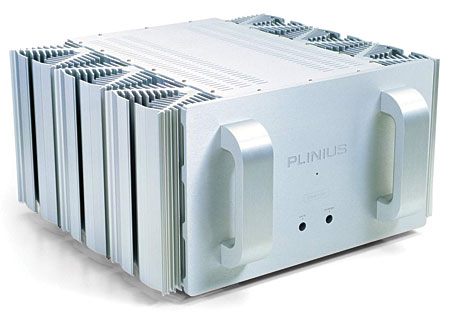
Nowadays, when most people think of New Zealand, the first things that probably come to mind are the film trilogy The Lord of the Rings, its director, Peter Jackson, or sheep. Certainly, LOTR was a great achievement in film history and, as its auteur, Jackson reaped no small fame for his efforts, as well as multiple Academy Awards and several krillion dollars. The country is also well known as a place where sheep outnumber humans by something like 12 to 1. However, New Zealand is also the source of some very fine audio equipment; both Perreaux and Plinius are proudly headquartered in beautiful, serene, friendly Kiwiland.
Portal Audio Paladin monoblock power amplifier
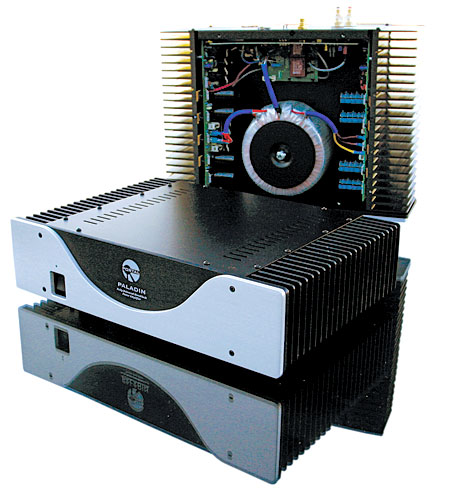
When most of us think about the folks who populate the high-end audio industry, we tend to conjure up the designers—the names above the titles, as it were. Or, in many cases, the names that are the titles: Richard">http://www.stereophile.com/interviews/688vandersteen">Richard Vandersteen, Jim">http://www.stereophile.com/interviews/221">Jim Thiel, Bill Conrad and Lew Johnson, Mike Creek, to name just a few.
PrimaLuna EVO 300 Hybrid power amplifier
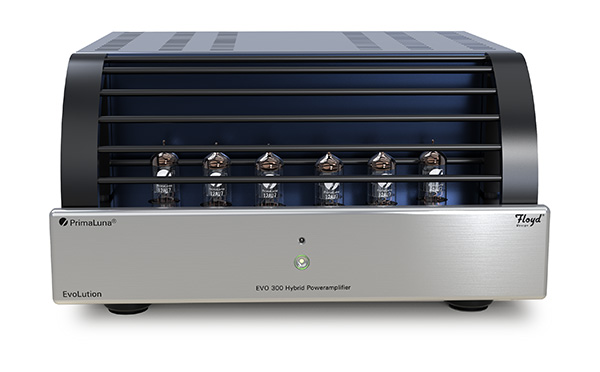
These days, listeners the wide world over enjoy hearing their music recreated for them by equipment whose origins are international; trade isolationists might consider the example of PrimaLuna. This Holland-based company's operations span three continents, with designers from Floyd Design and Durob Audio in the Netherlands, manufacturing in China, and input from California-based Harmonia Distribution.
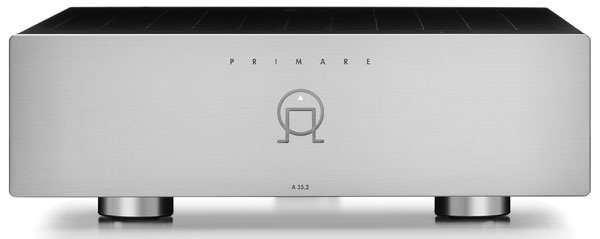
Primare A35.2 power amplifier
My writing desk looks out over a large garden with chickens, bees, and feral cats. My chair sits only six feet from loudspeakers, playing softly on my left. Between the speakers sits whatever painting I am working on. That painting hangs no more than 10 feet from the oscilloscope and drill press in my kitchen. Best of all, my desk is only six feet from squadrons of ravenous sparrows attacking the suet cage on the fence outside my window.
Primare A35.8 8-channel power amplifier

Back in 1999, while reviewing the Wazoo integrated amplifier from Bow Technologies, I learned that its designer and company founder, Bo Christensen, had previously founded another audio company. That's how I discovered Primare. Over the years, various products from Primare have appeared at audio shows but never grabbed my attention. In a recent EISA press presentation, however, Primare showcased an eight-channel amplifier that did, given my interest in multichannel audio. I was glad to be able to attend.
PS Audio 200C power amplifier
Several issues back, I mentioned a major "new wave" of power amplifiers coming along: the Adcom 555, the New York Audio Labs transistor-tube hybrids, and the latest Krells, for example. They demonstrate that major audible improvements are still possible in something as well-explored as the power amplifier. Not only that, some of these products demonstrate that superior performance can be combined with relatively low price.
PS Audio BHK Signature 300 monoblock power amplifier
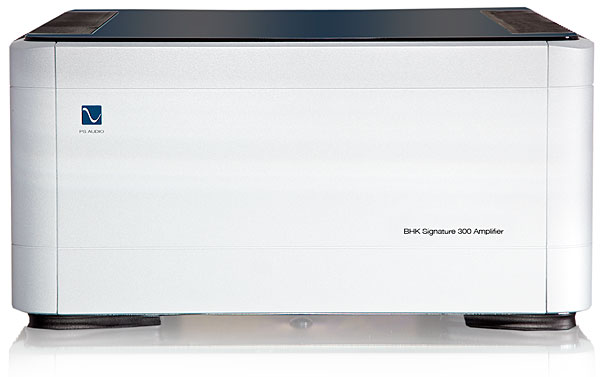
Was it more surprising that, in 2015, PS Audio would produce a monoblock class-AB power amplifier containing vacuum tubes, or that PS Audio would release a monoblock power amplifier at all? I'm not sure.
In 1974, Paul McGowan and Stan Warren founded the company to produce and market a standalone phono preamplifier, sold directly to consumers for $59.95. From there they naturally progressed to a series of line-level preamplifiers. Toward the end of the '70s, PS Audio produced the Model One, the company's first power amplifier. In the mid-1980s came the high-performance, moderately priced ($495) 4.5 and 4.6 preamplifiers. I reviewedand boughta 4.6 a few years after I began reviewing gear for The Abso!ute Sound; Tom Norton reviewed the 4.6 for the September 1988 issue of Stereophile.
PS Audio HCA-2 power amplifier
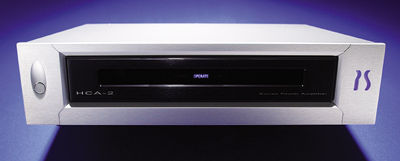
I have a way of grating on people's nerves. Ask Marina, my wife. She calls it my "mean streak."
PS Audio Stellar M1200 monoblock power amplifier
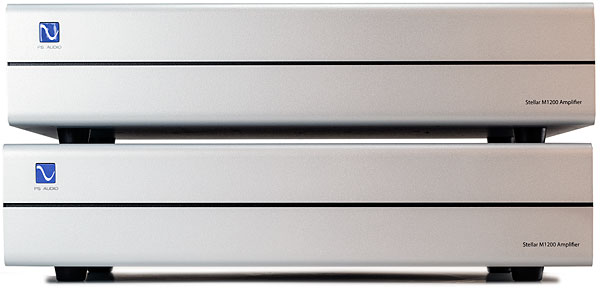
Talk about a Scarlet Letter. The term class-D amplification, which describes PS Audio's new M1200 monoblocks, exists only because another amplifier innovation had already parked in the "C" space. Soon after appearing in high-performance audio gear, class-D became synonymous with "digital amplification" in part because, like early CDs, many listeners found the sound glary, hard, and unpleasant. Besides, class-D is related to "pulse width modulation" and requires a low-pass filter to block high-frequency pulsesthat sure sounds digital. But they're not (see Bruno Putzeys sidebar).
PS Audio Stellar M700 monoblock power amplifier
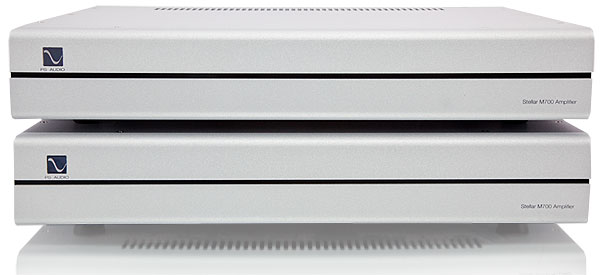
Although PS Audio's Stellar M700 monoblock power amplifier ($2998/pair) is a brand-new design from a team led by engineer Darren Myers, it draws on the company's extensive experience with class-D amplification. Sam Tellig and Kalman Rubinson reviewed PSA's HCA-2 power amp in, respectively, the October and December 2002 issues, and I reviewed their GCC-100 integrated amp in January 2006. The Stellar M700's input stage is the latest version of PS Audio's Gain Cell, which they describe as a "proprietary, fully differential, zero feedback, discrete, class-A MOSFET circuit.