

Pass Laboratories XA25 power amplifier
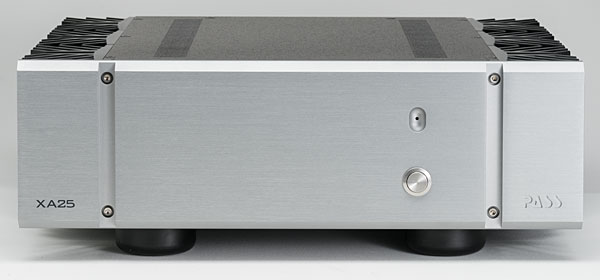
The XA25 stereo amplifier is the latest addition to Pass Laboratories' XA series of amplifiers and, at $4900, the lowest priced. It weighs only 45 lbs, has single-ended inputs only, and outputs 25Wpc into 8 ohms, 50Wpc into 4 ohms, or 100Wpc (!) into 2 ohms. According the XA25's well-written owner's manual, it will deliver 50W peaks into 2, 4, or 8 ohmsin class-A.
Pass Laboratories XA60.8 monoblock power amplifier
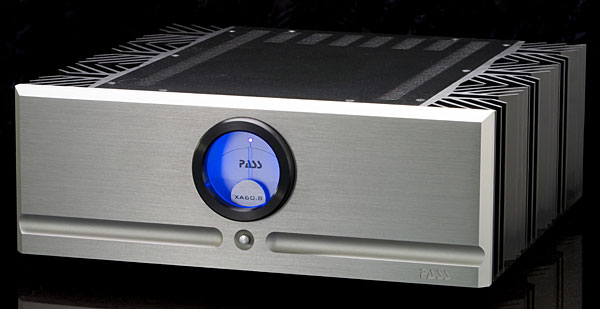
Years ago, when I was young and foolish (instead of old and foolish, as now), I was hanging out with a friend at a strip-mall strip club in a small southeastern city. A youngish lady approached our table in G-string and pasties and did a tableside dance. My friend's jaw scraped the floor; I, noting her lack of enthusiasm, was unmoved. The stripper noted my impassivity and stated, with irony that at the time I somehow missed, "You're a hard man."
John Atkinson, too, is a hard man, at least when it comes to audio gear. When, in January 2014, he reviewed the Pass Laboratories XA60.5 monoblock amplifier, he concluded, "It is the best-sounding amplifier I have ever used." High praise.
Pass Labs Aleph 3 power amplifier
Everyone's going crazy for single-ended power amplifiers. What's the big deal? What is it about these relatively low-powered contraptions that could make everybody so nutso? And has Pass Labs' Nelson Pass completely lost his marbles, selling a 30Wpc amplifier for a price that can buy a high-quality 200Wpc amp? Isn't that 200W amp seven times as loud—and seven times as good—as a 30W amp?
Pass Labs X1000 monoblock power amplifier
Pass Laboratories' X amplifier series represents the efforts of designer Nelson Pass to prove that simple linear amplifier topologies can be scaled to provide high-quality audio performance at very high power levels. The handsome X1000 monoblock under scrutiny here, the largest and most powerful amp in the Pass stable, makes 1000W into 8 ohms and a mighty 2000W into 4 ohms. The amplifier has no global negative feedback, and only two gain stages: the front-end provides all the voltage gain and feeds a high-current follower stage.
Pass Labs XA160 monoblock power amplifier
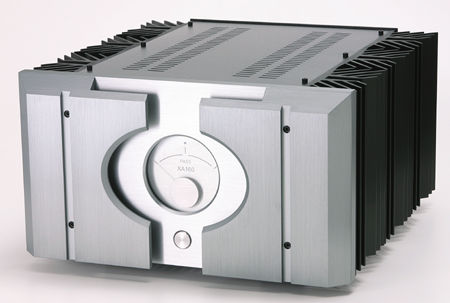
Before the advent of big-screen projection televisions, manhood was measured more conventionally: by the size of one's crate-sized, boat-anchor-heavy, brushed-aluminum-fronted power amplifiers. Those days are long gone.
Pass Labs XA30.5 power amplifier
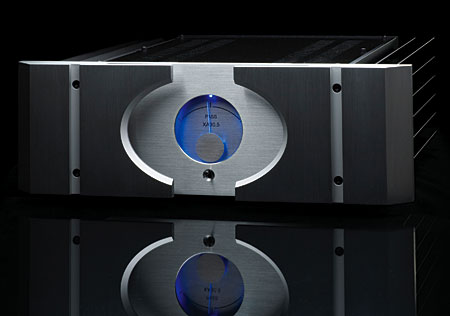
Over the course of his 30-plus years in high-end audio, Nelson Pass's designs have never been far from the leading edge. In his first Threshold amplifiers he pioneered the use of dynamically adjusting bias and cascode circuitry; then, in the later Stasis models, he switched gears to the simpler approach of pure class-A. All were innovative designs, and among the very best-sounding amps of their time, but were just warmups for what was to come. In 1991, Pass Labs introduced the Aleph 0, a class-A amplifier that was a startling departure from conventional solid-state designs and combined design elements generally thought mutually exclusive: transistors, single-ended operation, and the ability to output 75Wpc into an 8-ohm load. Not surprisingly, the Aleph 0 sounded like nothing else, and became the basis for the widely acclaimed series of Pass Labs amplifiers that evolved over the next decade.
Pass Labs XA60.5 monoblock power amplifier

Whereas the Pass Labs preamplifiers are designed by Wayne Colburn, the power amplifiers are the work of company founder and high-end audio veteran Nelson Pass, who even lays out his own circuit boards. The X-model amplifiers, beginning with the X1000 in 1998, were the first implementation of Nelson Pass's patented Supersymmetry topology (see "Nelson Pass on the Patents of Pass"). The XA series, which debuted in 2002, combined Supersymmetry with the single-ended class-A operation of the Aleph series. The XA.5 models offer detail improvements over the XAs.
Plinius Audio SA-103 power amplifier
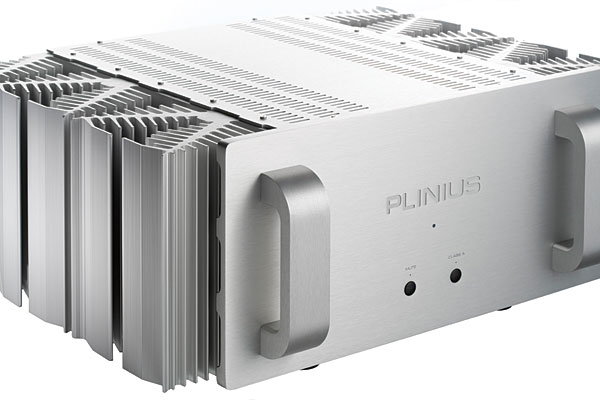
Audio reviewers are kinda slutty. Not sexually, of course, but in the way we promiscuously go through equipment. Like the most popular girl in school, or Tiger Woods, we have our choice of any hot thing we want, whenever we want it. Heck, reviewers don't even have to pick up equipment at bars or clubs: the stuff is delivered right to our homes. We use the gear for a few months, then send it packing once the next hottie comes over to play in our room.
Plinius Reference A-150 power amplifier
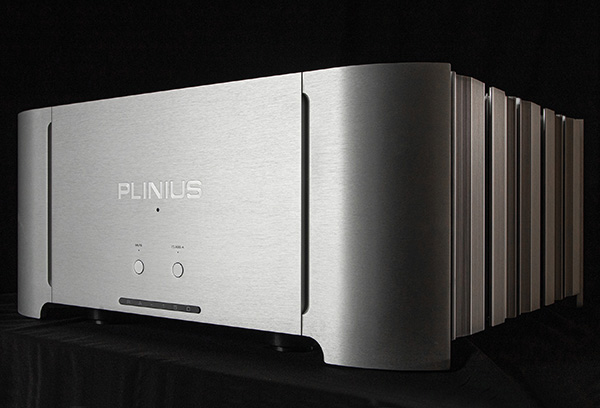
When Jim Austin offered the Plinius Reference A-150 stereo amplifier ($14,995) for review, it felt like a welcome blast from the past. Plinius has, lately, maintained a low profile in the US, likely due to several changes in US distributorship...Under the auspices of Ralph Abramo and California-based Plinius Audio Sales and Repair, Plinius's US profile seems to be rising again.
Plinius SA-100 Mk.II power amplifier
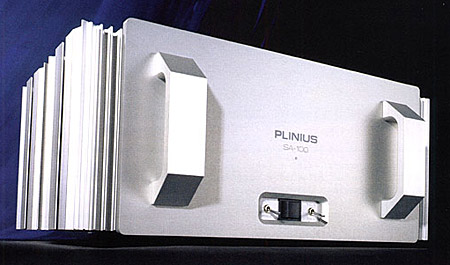
Man, you've got to watch out for those preconceived notions—they'll kill you every time. For the last several years I've seen Plinius amplifiers at hi-fi shows and—even though I didn't know the first thing about the company or its products—figured that I knew what they were all about. Spotting their brawny façades festooned with feathery heatsinks, I smugly assured myself that they were some kind of antipodean pretender to the muscle-amp throne—Krell or Threshold wannabes.