

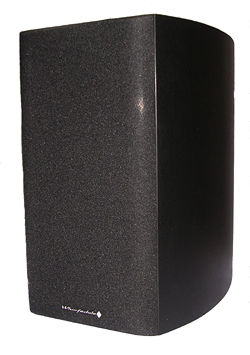
Velodyne DF-661 loudspeaker
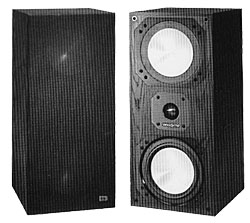 Silicon Valleybased Velodyne was founded in 1983 to develop a range of subwoofers that used servo-control to reduce non-linear distortion to vanishingly small levels. They succeeded in this goal to the extent that Velodyne is now perhaps the best-known subwoofer company in the US, currently employing 65 people. At the 1994 Winter CES, Velodyne launched the subject of this review: the DF-661 ($1800$2600/pair), their first full-range loudspeaker (the "DF" stands for "Distortion-Free").
The three-way DF-661 was designed from the ground up to continue the Velodyne tradition of ultra-low distortion. "We had developed the technology and resources to attack distortion elsewhere in the audio chain," wrote company President David Hall, "and started with the premise that, by definition...distortion in loudspeakers is wrong." (His italics.) "We went to the laboratory for a solution, with the living room as the ultimate goal." Velodyne calls this attention to technological detail "The Silicon Valley approach to sound."
Silicon Valleybased Velodyne was founded in 1983 to develop a range of subwoofers that used servo-control to reduce non-linear distortion to vanishingly small levels. They succeeded in this goal to the extent that Velodyne is now perhaps the best-known subwoofer company in the US, currently employing 65 people. At the 1994 Winter CES, Velodyne launched the subject of this review: the DF-661 ($1800$2600/pair), their first full-range loudspeaker (the "DF" stands for "Distortion-Free").
The three-way DF-661 was designed from the ground up to continue the Velodyne tradition of ultra-low distortion. "We had developed the technology and resources to attack distortion elsewhere in the audio chain," wrote company President David Hall, "and started with the premise that, by definition...distortion in loudspeakers is wrong." (His italics.) "We went to the laboratory for a solution, with the living room as the ultimate goal." Velodyne calls this attention to technological detail "The Silicon Valley approach to sound."Vivid Audio B1 loudspeaker
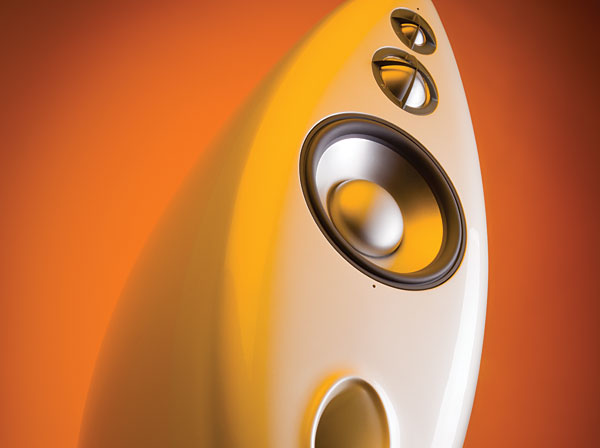
When John Marks wrote about the Vivid B1 in his column, "The Fifth Element," in February 2011, he was so excited about the sound he was getting that he asked me to drive up to Rhode Island to give a listen for myself. Not only was I impressed by what I heard at John's, I decided to do a full review of the speaker.
Vivid Kaya S12 loudspeaker
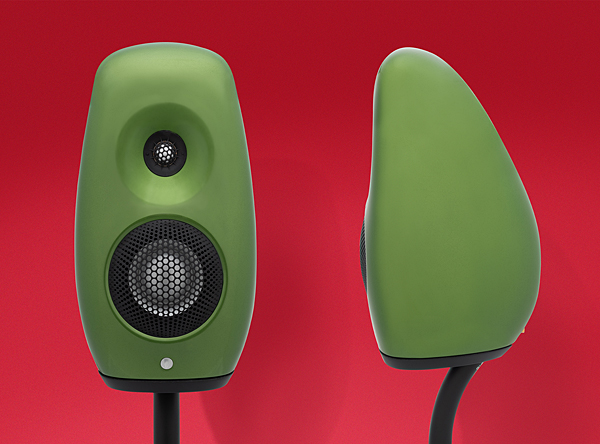
Back when Steve Urkel (in the sitcom Family Matters, portrayed by Jaleel White) was showing everybody the best way to dress (and do property damage), my friend Ken Kessler, the high-level audio scribe at Hi-Fi News & Record Review, explained to me the secret of how to write a proper audio review: "Herb, the secret of writing an effective review is not to lose the reader in the middle." I took that to mean, put all the technological meatand some tawdry storiesin the product description. Then sneak some spicy double entendre into the setup part.
Unfortunately, that strategy hasn't worked for me.
Westlake Audio Lc5.75F loudspeaker
What's a pro audio company doing at CES?
Westlake BBSM-6F loudspeaker
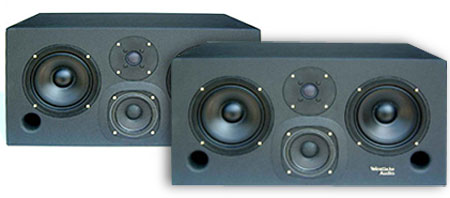
I've been musing much of late on what enables some hi-fi components to sound natural while others always seem to add an edge of artificiality to their sound. This dichotomy was examined in last month's "As">http://www.stereophile.com/asweseeit/109">As We See It," where I asked a representative group of Stereophile writers to discuss the fact that many high-end components regarded as being neutral in their sonic character, with apparently little wrong in their measured performance, can actually sound quite unmusical. This would seem to suggest that the nature of what a component does wrong is of greater importance than the level of what it does wrong: 1% of one kind of distortion can be innocuous, even musically appropriate, whereas 0.01% of a different kind of distortion can be musical anathema.
Wharfedale 507.2 loudspeaker
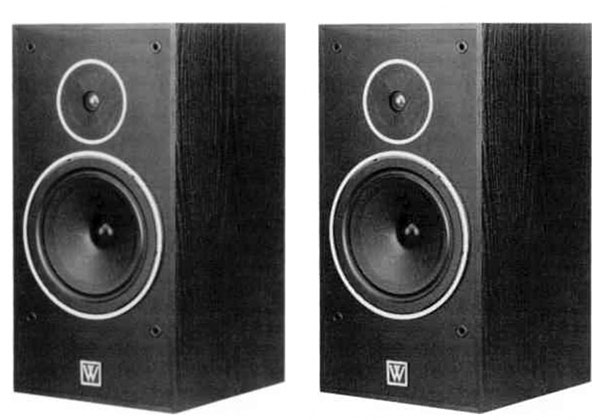
Probably best-known in recent years for their best-selling "baby" speaker, the Diamond, Wharfedale is one of the UK's oldest manufacturers of loudspeakers. The company was the subject of a management buyout earlier this year, following a rather unsettled period when it changed hands several times. Now with American distribution as of 1989 by Vector Research (footnote 1), the brand is reinventing itself in the US with two new ranges of loudspeakers, the 507.2 being one of the "audiophile" models. Both drive-units are made in-house; the first generation of Wharfedale loudspeakers to feature this 19mm aluminum-dome tweeterthe 506, 508, and 708appeared in early 1985.
Wharfedale Diamond 10.1 loudspeaker
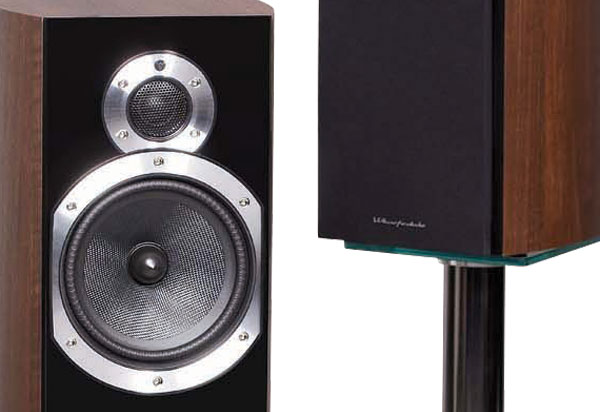
A while back, I received an e-mail from The Kid (Stephen Mejias): "I've been listening to and enjoying the Wharfedale 10.1 loudspeakers ($350/pair) for a couple of months. I wrote about them for my March and April issue columns, but they are good enough for a complete review. Are you interested?"
Hmm . . . so The Kid is now assigning me equipment reviews? "Sure, why not?"
The day after the Wharfedales arrived, The Kid sent me another e-mail: "Have you unpacked them yet? They are so pretty!"
That they are, Kid.
Wharfedale Diamond 11.2 loudspeaker
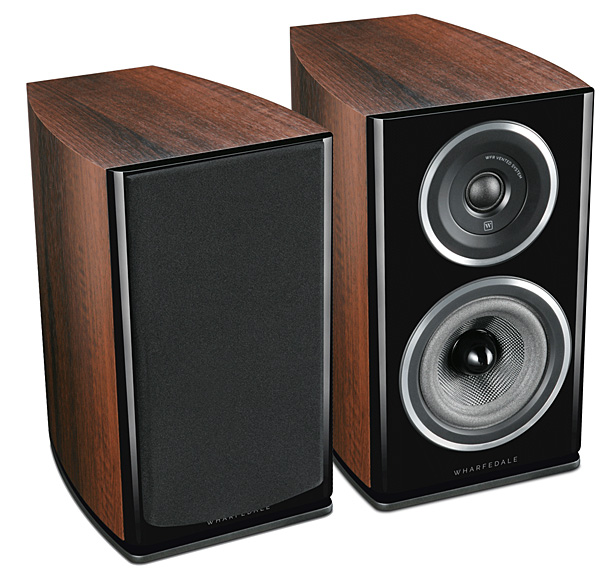
With reviews of Wilson's Alexia 2 loudspeaker ($57,900/pair) in the July issue, Constellation's Centaur 500 amplifier ($55,000) in the October issue, and Tidal's Akira loudspeaker ($215,000/pair) in the November issue, my system's been inhaling some rarefied air the past few months. Accordingly, I felt I should live with some components priced within the reach of real-world audiophiles. As it happened, I was finishing up my review of the Constellation amplifier when MoFi Distribution's Lionel Goodfield e-mailed me, asking if I'd like to review the new Diamond 11.2 loudspeaker from the venerable British brand Wharfedale.
Wharfedale Diamond 225 loudspeaker
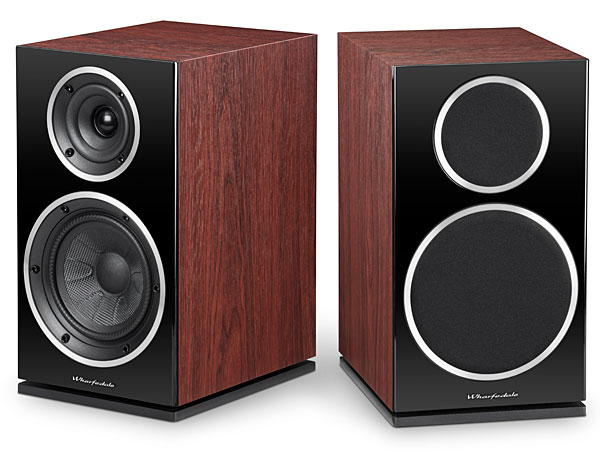
In the United Kingdom, the first seeds of perfectionism in audio separates were sown by Goodmans Industries, founded in 1925. Then, in 1930, Garrard (est. 1722) produced its first commercial gramophone. Shortly thereafter, England experienced the Great Slump, the British name for the worldwide catastrophe known in the US as the Great Depression. Near the beginning of this economic downturn, in 1932, Gilbert Briggs founded Wharfedale Wireless Worksand the first British "high-fidelity" audio amplifiers began being manufactured by H.J. Leak & Co. Ltd., founded by Harold Joseph Leak in 1934.
Wharfedale Diamond 9.1 loudspeaker
Following in the footsteps of my August">http://www.stereophile.com/floorloudspeakers/805bw">August 2005 review of the B&W DM603 S3, the second stop of the Bob Reina British Invasion Tour is the latest revamping of Wharfedale's affordable Diamond series.