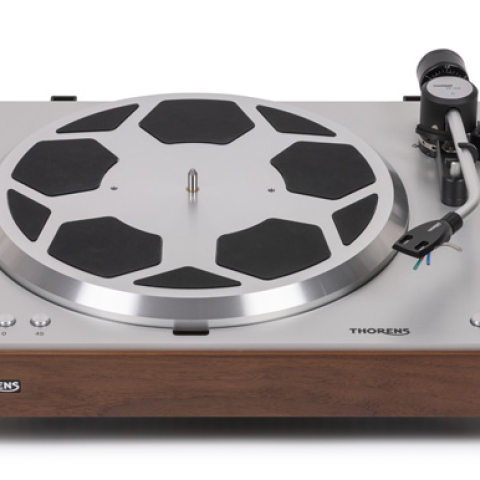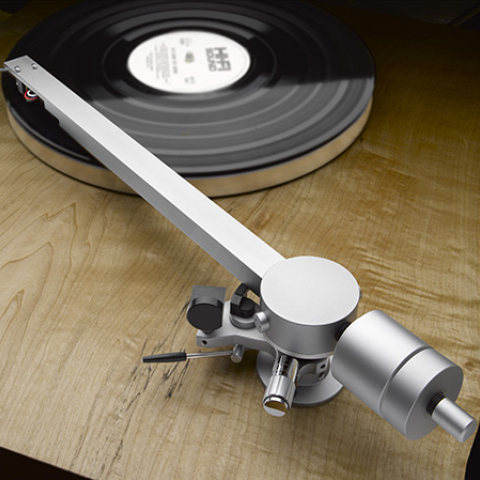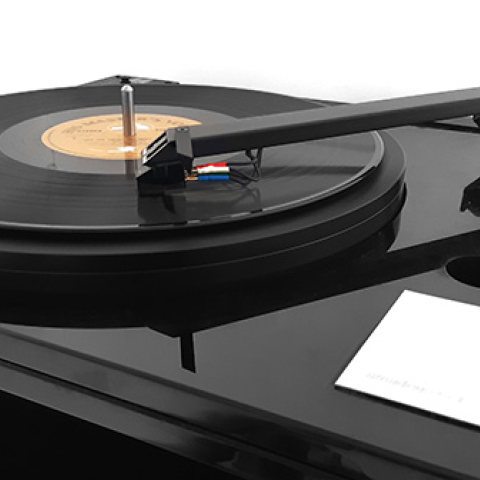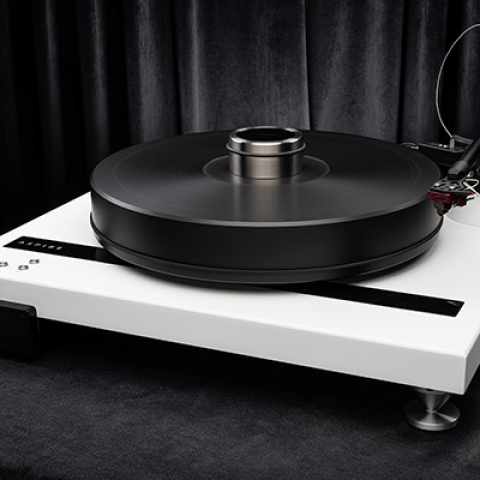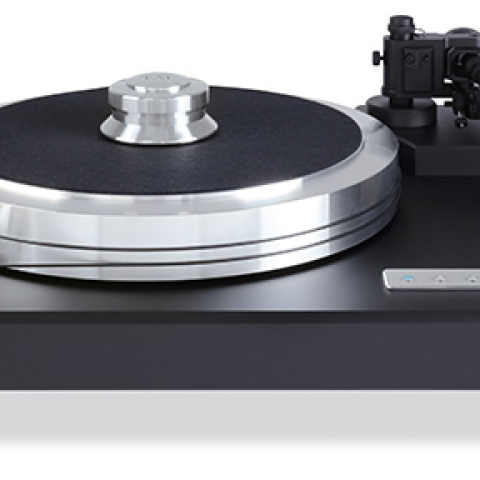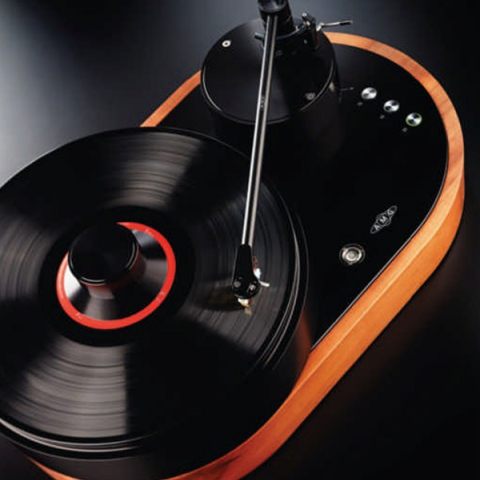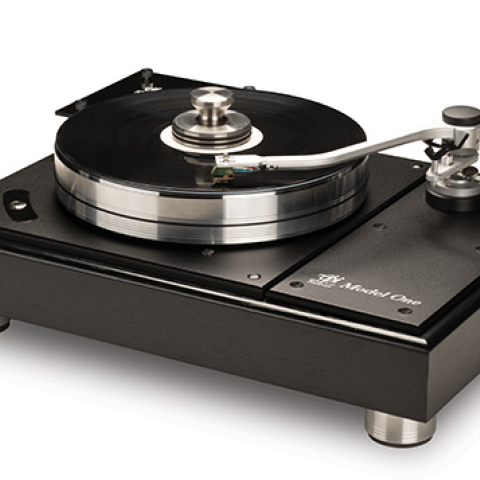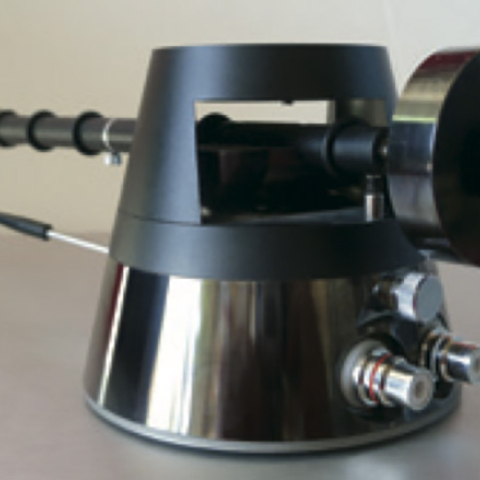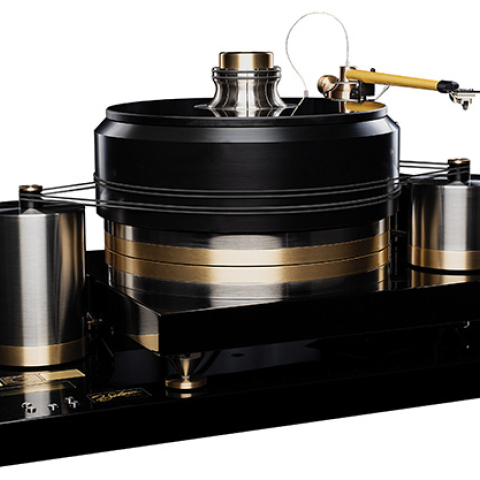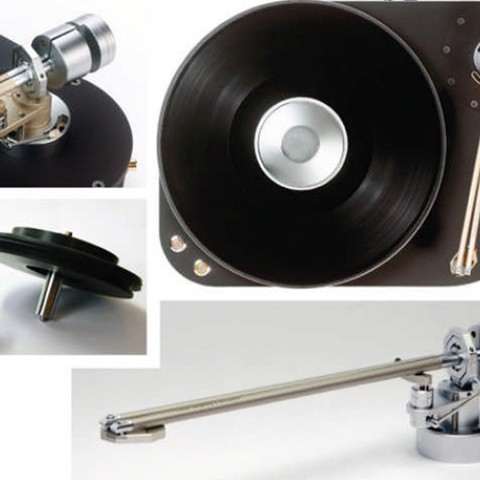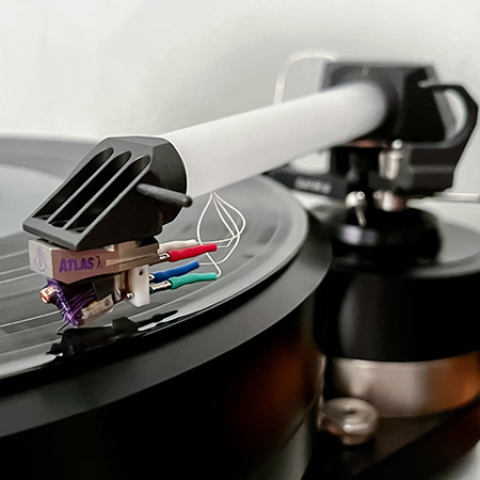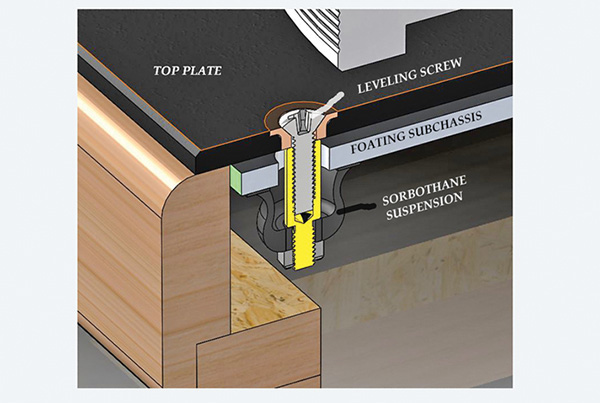
The Forever One's three-point suspension uses Sorbothane, not springs.
SetupThe VPI Forever Model One arrived complete. Its manual detailed essentials: chassis, clamp, gauge/rod, motor assembly/cover, finger lift, flash drive, belt, power cord, jig, platter, tonearm, and isolation feet. If my experience of other VPI turntables is any guide, the Forever Model One should be straightforward to assemble. By the time this review is published, setup videos should be available. VPI supplied their Goldy MC cartridge and a pair of VPI-branded, Nordost-made DIN-to-RCA interconnects for use in this review. Neither is included in the purchase price.
 Listening
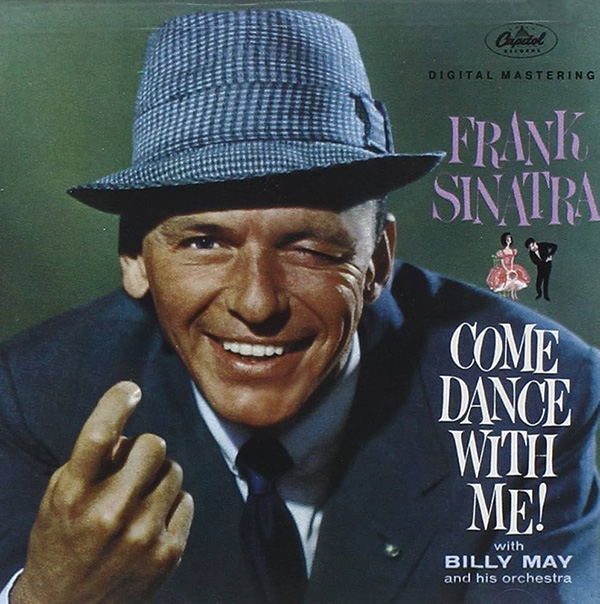
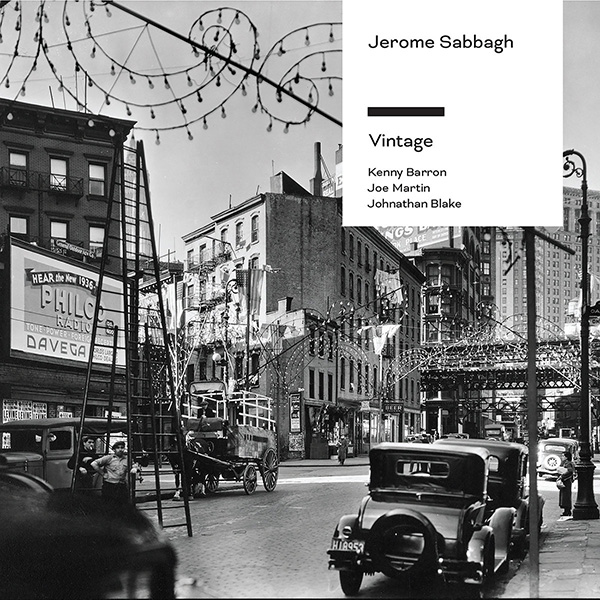
To assess the Forever One, I listened to The Great Jazz Trio's ReVisited (LP, Eastworld EWJ-90002), Jerome Sabbagh's Vintage (LP, Sunnyside SSC 1698), Art Pepper's Art Pepper Meets the Rhythm Section (LP, Craft Recordings CR00491), and Frank Sinatra's Come Dance with Me! (LP, Capitol Records W 1069), plus vinyl from my latest find, UK keyboardist Greg Foat.
 With the VPI Goldy
The F1/Goldy pairing played music with the unmistakable VPI signature: an unwavering rhythmic pulse, a wide soundstage, a gracefully unhurried pace, and palpable pleasure in playback. Its performance reminded me of The Who's Meaty Beaty Big and Bouncy: It delivered music with purpose and directness, focusing on fun and forward flow. While the F1/Goldy's soundstage was consistently broad and deep, its focus was the midrange, with airy treble. The bass, though full, was not exceptionally extended. (Was it the cartridge, the 'table, or both?)
 Cartridge comparisons
Exchanging the VPI Goldy for MoFi Electronics' UltraGold MC cart realized considerable improvement in every sonic parameter. Through the F1/UltraGold pairing, LPs acquired fresh lucid-ity, expressed through more instrumental and ambient detail. Instruments emerged with noticeable definition, creating a more vivid, dimensional soundfield. Crucially, the F1 retained rhythmic integrity, conveying tempo and momentum with agile forward flow. Nuance, subtlety, refinement, texture, and what I call "the interior life of a record" emerged more completely. This was a game-changing cartridge upgrade, the Forever One realizing the cartridge's full potential.
 Phono stage comparisons
All the listening described up to now utilized the PrimaLuna EVO 100 phono stage, a great all-rounder that allows on-the-fly loading and gain adjustments. The other phono stages I have on hand—the Allnic H-5500, the Tavish Audio Design Adagio, and the Manley Chinook—are very different beasts. The Allnic H-5500: An all-tube unit in an all-aluminum frame, the H-5500 uses Permalloy transformer cores, four NOS E180CC twin triodes, one 7233 voltage regulator tube, and no negative feedback. The Forever One took to the Allnic like my ear-brain takes to a Prestige record by Eddie "Lockjaw" Davis. The combination portrayed music with more body and liquidity, though images were smaller than through the PrimaLuna and the soundstage shrunk a little. The channels integrated better, with more treble sparkle. The sound was more intimate, palpable, and immediate. The Forever One and the Allnic H-5500 are a solid match.
A well-built, heavy-duty turntable founded on Harry Weisfeld's new suspension system and joined to an all-new aluminum tonearm, the Forever Model One turntable prioritizes playing music. Like all VPI 'tables I've heard, it boogies well, swings hard, and seems replenished with every new spin. Designed for upgrades and highly sensitive to ancillary components, the F1 offers muscle-car performance with speedster handling. Recommended.