Before the show, I’d heard rumblings about the new Swiss-made Thales Reference turntable. Art Dudley had previously reviewed the Thales TTT-Compact turntable and Simplicity II tonearm, writing: “In 34 years of writing about playback gear, I have seen no products better made than the Thales turntable and tonearm, and precious few that equal them.”
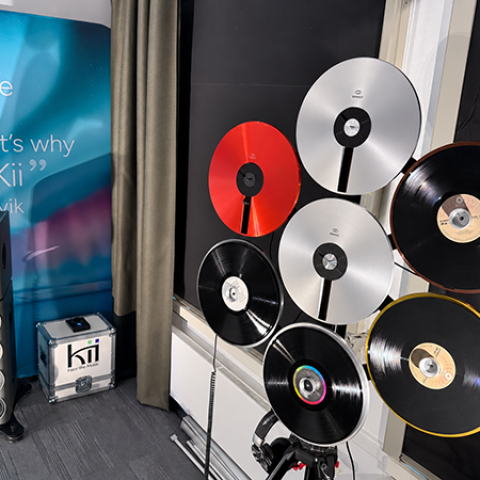
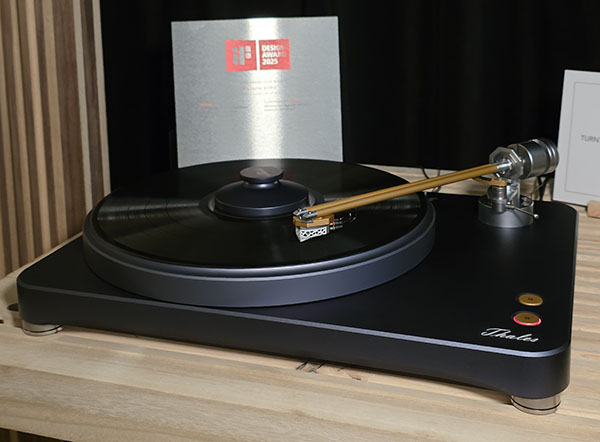
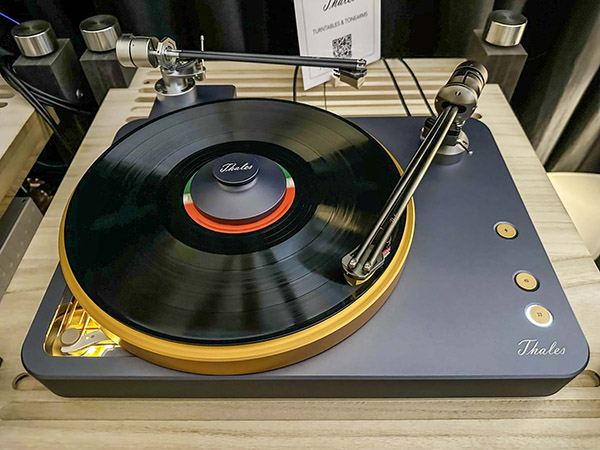 So I walked into room 4.2 F213 expecting to love the Reference model (approx. $28,500), paired with the Thales Simplicity II tonearm ($9900) and the new Thales Magnifier phono preamplifier ($42,000, all prices approximate, converted from Euros). But, as in several rooms at Munich, the turntable sat idle; streamed files had taken its place. I was politely told to return the next day for a full audition of Thales’s latest analog machine.
Also in the system were the X-quisite GT MC cartridge ($15,000), a Goldenberg Classic MC cartridge ($2100), a VORO MC cartridge ($8100); a Pink Faun Scion streamer ($20,000); and Master Fidelity electronics: the NADAC L preamplifier ($32,000), NADAC D DAC ($33,500), and NADAC C clock ($37,500).
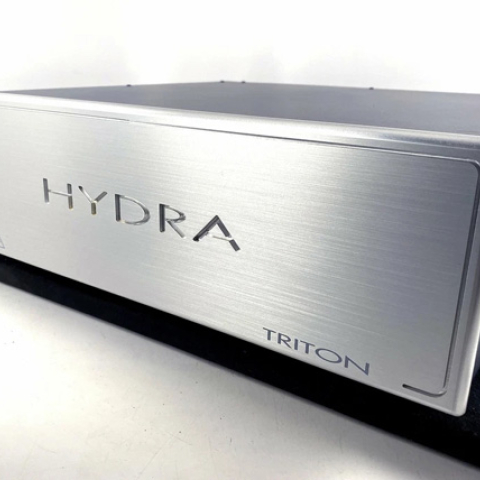
Boulder amplification included the 1110 preamplifier ($24,000), 1151 mono power amplifiers ($47,000/pair), 508 phono preamplifier ($5900), 812 preamplifier-DAC ($9450), and 861 stereo power amplifier ($9450).
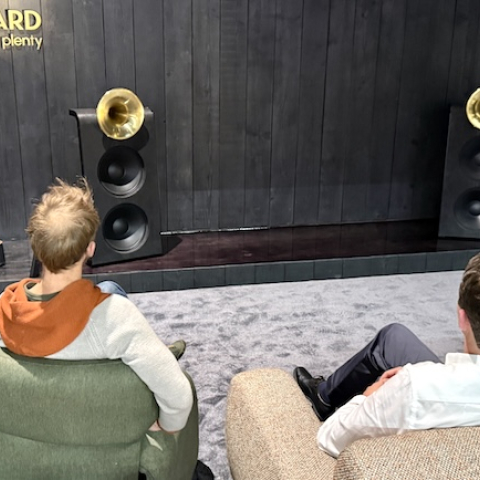
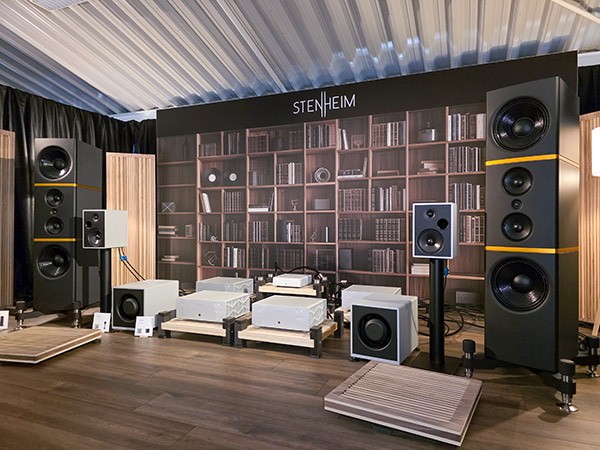
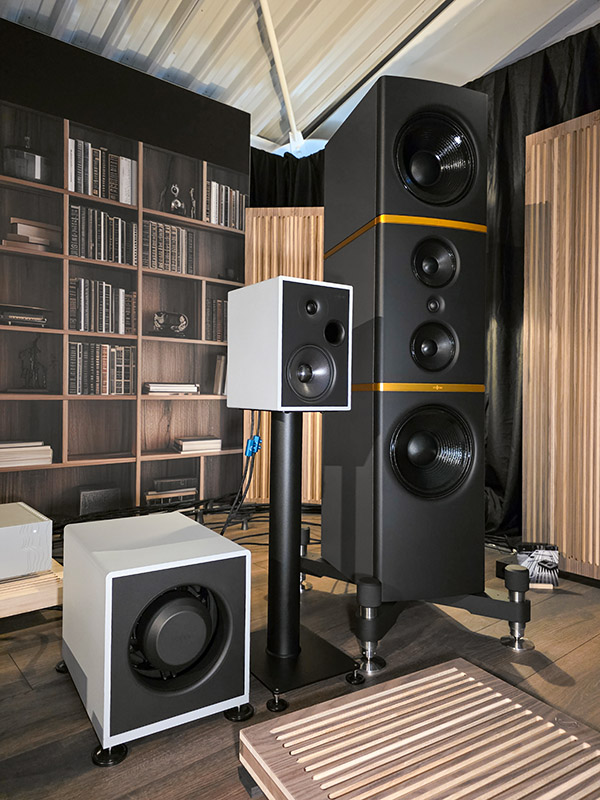
Stenheim Reference Ultime Two SX speakers ($249,000/pair, including Reference platforms), Alumine Two SE speakers ($24,500/pair, including Classic stands), and an Alumine Subwoofer ($19,900) completed the system.
So I walked into room 4.2 F213 expecting to love the Reference model (approx. $28,500), paired with the Thales Simplicity II tonearm ($9900) and the new Thales Magnifier phono preamplifier ($42,000, all prices approximate, converted from Euros). But, as in several rooms at Munich, the turntable sat idle; streamed files had taken its place. I was politely told to return the next day for a full audition of Thales’s latest analog machine.
Also in the system were the X-quisite GT MC cartridge ($15,000), a Goldenberg Classic MC cartridge ($2100), a VORO MC cartridge ($8100); a Pink Faun Scion streamer ($20,000); and Master Fidelity electronics: the NADAC L preamplifier ($32,000), NADAC D DAC ($33,500), and NADAC C clock ($37,500).
Boulder amplification included the 1110 preamplifier ($24,000), 1151 mono power amplifiers ($47,000/pair), 508 phono preamplifier ($5900), 812 preamplifier-DAC ($9450), and 861 stereo power amplifier ($9450).
Stenheim Reference Ultime Two SX speakers ($249,000/pair, including Reference platforms), Alumine Two SE speakers ($24,500/pair, including Classic stands), and an Alumine Subwoofer ($19,900) completed the system.
 A full loom of Hemingway cables included Beta, Sigma, and Alpha XLR interconnects ($7800/pair, $14,000/pair, $5500/pair); a Creation S Digital RCA ($11,000); a Z-Core RJ45 Ethernet cable ($1500); Beta speaker cables ($16,000/pair); and Beta, Alpha, and Sigma Schuko power cables ($5500, $2800, $9700). Equipment racks were supplied by Audys.
When I returned the next day, the Thales Reference turntable was spinning a worn copy of Roberta Flack’s Killing Me Softly. Paired with the Stenheim speakers and Boulder amplification, the Thales conveyed Flack’s soul-pop classic with impressive separation and deep layering, the music flooding the room as if transferred directly from the recording studio to this Munich salon. - Ken Micallef
A full loom of Hemingway cables included Beta, Sigma, and Alpha XLR interconnects ($7800/pair, $14,000/pair, $5500/pair); a Creation S Digital RCA ($11,000); a Z-Core RJ45 Ethernet cable ($1500); Beta speaker cables ($16,000/pair); and Beta, Alpha, and Sigma Schuko power cables ($5500, $2800, $9700). Equipment racks were supplied by Audys.
When I returned the next day, the Thales Reference turntable was spinning a worn copy of Roberta Flack’s Killing Me Softly. Paired with the Stenheim speakers and Boulder amplification, the Thales conveyed Flack’s soul-pop classic with impressive separation and deep layering, the music flooding the room as if transferred directly from the recording studio to this Munich salon. - Ken Micallef
Ken and I both covered this room. My goal was to revisit the sound of Boulder gear—I recently reviewed the Boulder 1151 monoblocks—and check out the new Stenheim Alumine Sub and Master Fidelity NADAC L line-stage preamplifier. The active Alumine Sub (tentative price, €17,500), which is a two-driver isobaric design with twin 10" high-excursion drivers and acoustic suspension alignment, was designed to complement Stenheim's line of Alumine loudspeakers as well as work with all speaker brands. It includes onboard digital signal processing with the potential to address room acoustics by adjusting frequency, gain, and phase. Complete with a 1200W amplifier, its parameters can be adjusted by app or its own dedicated webpage. The two-driver isobaric design serves, in part, to minimize distortion and maximize dynamics. Frequency range is 20Hz–200Hz, and weight is 77lb.
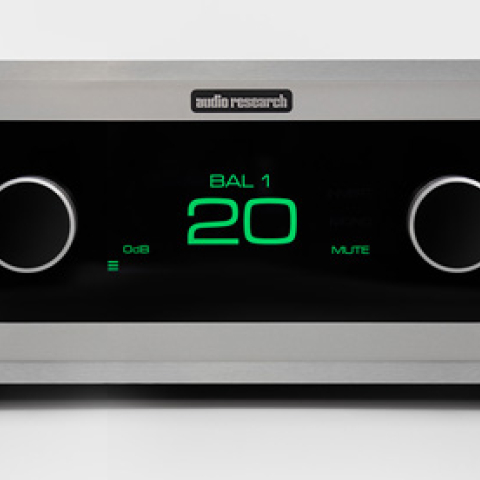
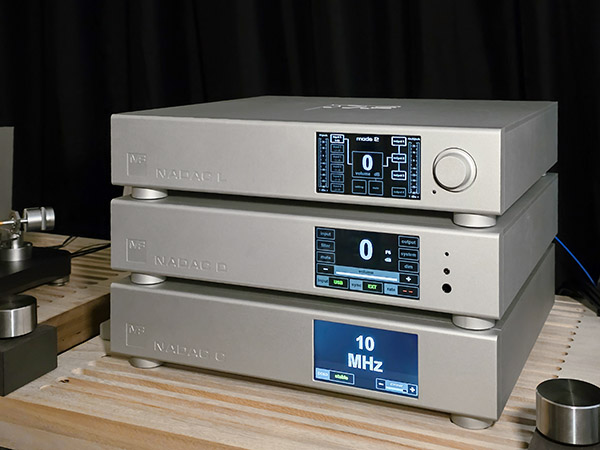 The Master Fidelity NADAC L preamplifier ($30,524) includes a lossless precision analog attenuator whose JFET-like CMOS ASIC architecture adjusts in 1dB steps over a range of 60dB. Click-free (which I consider a major plus), it boasts a channel imbalance of less than 0.1dB. The preamp also includes a custom-made toroidal transformer, high-capacity and tonally neutral capacitor arrays, and multistage linear regulators. You can find a lot more information here.
 If Ken's goal was initially thwarted by digital playback, my time was immediately enhanced by his beloved analog. On Steven Lubin's recording of Beethoven Piano Concertos, accompanied by The Academy of Ancient Music under the direction of Christopher Hogwood, the system transitioned from full orchestra fortes to the most delicate passages with aplomb. While the last iota of textural definition was absent—that, for all I know, may be due to the recording itself—bass was as tight and full as instrumental colors were convincing. This was one mighty fine system.
Kudos to the room designer, whose intentionally hazy backdrop was so convincing that I could virtually smell the pipes of jacket-suited men lounging in the library of their exclusive men's club. May the ghosts of the Amherst College library haunt me no longer. - Jason Victor Serinus
If Ken's goal was initially thwarted by digital playback, my time was immediately enhanced by his beloved analog. On Steven Lubin's recording of Beethoven Piano Concertos, accompanied by The Academy of Ancient Music under the direction of Christopher Hogwood, the system transitioned from full orchestra fortes to the most delicate passages with aplomb. While the last iota of textural definition was absent—that, for all I know, may be due to the recording itself—bass was as tight and full as instrumental colors were convincing. This was one mighty fine system.
Kudos to the room designer, whose intentionally hazy backdrop was so convincing that I could virtually smell the pipes of jacket-suited men lounging in the library of their exclusive men's club. May the ghosts of the Amherst College library haunt me no longer. - Jason Victor Serinus
So I walked into room 4.2 F213 expecting to love the Reference model (approx. $28,500), paired with the Thales Simplicity II tonearm ($9900) and the new Thales Magnifier phono preamplifier ($42,000, all prices approximate, converted from Euros). But, as in several rooms at Munich, the turntable sat idle; streamed files had taken its place. I was politely told to return the next day for a full audition of Thales’s latest analog machine.
Also in the system were the X-quisite GT MC cartridge ($15,000), a Goldenberg Classic MC cartridge ($2100), a VORO MC cartridge ($8100); a Pink Faun Scion streamer ($20,000); and Master Fidelity electronics: the NADAC L preamplifier ($32,000), NADAC D DAC ($33,500), and NADAC C clock ($37,500).
A full loom of Hemingway cables included Beta, Sigma, and Alpha XLR interconnects ($7800/pair, $14,000/pair, $5500/pair); a Creation S Digital RCA ($11,000); a Z-Core RJ45 Ethernet cable ($1500); Beta speaker cables ($16,000/pair); and Beta, Alpha, and Sigma Schuko power cables ($5500, $2800, $9700). Equipment racks were supplied by Audys.Ken and I both covered this room. My goal was to revisit the sound of Boulder gear—I recently reviewed the Boulder 1151 monoblocks—and check out the new Stenheim Alumine Sub and Master Fidelity NADAC L line-stage preamplifier. The active Alumine Sub (tentative price, €17,500), which is a two-driver isobaric design with twin 10" high-excursion drivers and acoustic suspension alignment, was designed to complement Stenheim's line of Alumine loudspeakers as well as work with all speaker brands. It includes onboard digital signal processing with the potential to address room acoustics by adjusting frequency, gain, and phase. Complete with a 1200W amplifier, its parameters can be adjusted by app or its own dedicated webpage. The two-driver isobaric design serves, in part, to minimize distortion and maximize dynamics. Frequency range is 20Hz–200Hz, and weight is 77lb.
The Master Fidelity NADAC L preamplifier ($30,524) includes a lossless precision analog attenuator whose JFET-like CMOS ASIC architecture adjusts in 1dB steps over a range of 60dB. Click-free (which I consider a major plus), it boasts a channel imbalance of less than 0.1dB. The preamp also includes a custom-made toroidal transformer, high-capacity and tonally neutral capacitor arrays, and multistage linear regulators. You can find a lot more information here.
If Ken's goal was initially thwarted by digital playback, my time was immediately enhanced by his beloved analog. On Steven Lubin's recording of Beethoven Piano Concertos, accompanied by The Academy of Ancient Music under the direction of Christopher Hogwood, the system transitioned from full orchestra fortes to the most delicate passages with aplomb. While the last iota of textural definition was absent—that, for all I know, may be due to the recording itself—bass was as tight and full as instrumental colors were convincing. This was one mighty fine system.
Kudos to the room designer, whose intentionally hazy backdrop was so convincing that I could virtually smell the pipes of jacket-suited men lounging in the library of their exclusive men's club. May the ghosts of the Amherst College library haunt me no longer. - Jason Victor Serinus