Alexander didn't outright second-guess my slight preference, but I don't think it made him happy either. "You and Herb Reichert are the only ones I'm aware of who like my models with the vents blocked," he emailed me. He was referring to Herb's two-thumbs-up review of Tekton's Impact Monitor, in which Herb mentioned blocking the Impacts' ports with "Wigwam Outlast Weather Shield socks." For all I know, Herb's socks may well sound better than my pool noodles. Maybe we should have a shootout, with burlap sacks, 600-thread-count Egyptian cotton sheets, or comically oversized ball gags.
But seriously—back to Alexander's point. He said that Jason Bonham, a well-regarded drummer and John Bonham's son, had recently purchased a pair of Tekton 1812 speakers, telling Alexander, "I'm a drummer, and I want to buy speakers from a drummer." (Tekton's founder is a percussionist of regional repute.)
"Jason purchased the biggest and loudest model we offer," Alexander noted. "We've garnered a reputation for high-output, big-sounding loudspeakers, and that's what my following has come to expect from me. Good sound is subjective, and some might not like the sound of the Moabs running wide open, but that's the spirit of the design."
Precisely because good sound is subjective, it's cool that the Tektons' ports provide users with some sound-shaping options.
 Like a butterfly, like a bee
Before I could listen critically, I had to give them time to break in; Alexander recommended that I let them play at least 40–50 hours: "They're like starched shirts when they're new," he said. For setting them up, Tekton suggests a 7'-or-larger equilateral triangle as a starting point. When finished, I had the towers 7'10" apart, my chair almost 9' away from the speaker plane. Per the company's instructions, I made sure the speakers were level front to back and side to side, aimed so that they crossed at a point about 4' behind me.
For six weeks, I listened to the Moabs Be and nothing else, through amplifiers including a PrimaLuna Evo 400 integrated, a Krell FPB 200c, and a Balanced Audio Technology REX 500 (review forthcoming). For the final two weeks of my evaluation, I switched back and forth between the Moabs Be and the OG version.
I'd always loved the expansive midrange and upper-bass purity that the latter produces, and so it was with the new version. It's just that there was audibly more of it this time. Case in point: My Dutch shepherd often keeps me company in the listening room, where nothing seems to spook him—he learned long ago to just tune out the music. But when I played "Pillar I," from the Grammy-nominated album Seven Pillars by Sandbox Percussion (24/96 FLAC, Aki Rhythm Productions/Qobuz), his ears shot up and he cocked his head in surprise. I agree with the dog: The Moabs painted the snares and kicks and bells on this standout track with great vividness and realism.
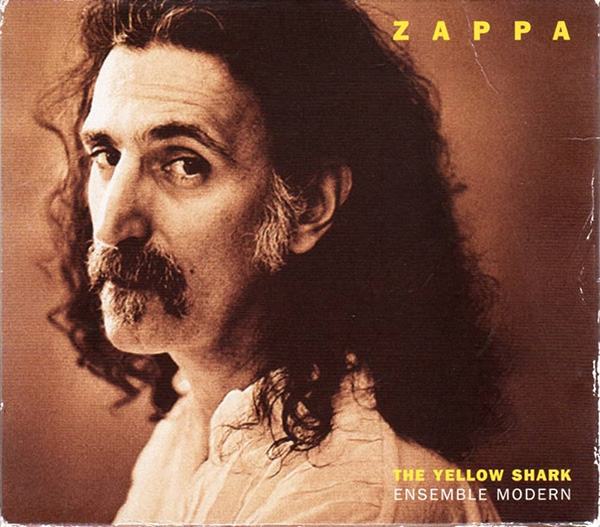 True to their creator, the Moabs—both iterations—like percussion of all kinds. The newer speakers reproduced Frank Zappa's "The Girl in the Magnesium Dress" from The Yellow Shark (24/44.1 MQA, Barking Pumpkin/Tidal), a piece for mallet instruments, with so much color and panache that I played it twice in a row for the pleasure of the sonics. I've rarely heard the piece sound more "right."
It was the same with Philip Glass's "North Star" from Vitreous Body (16/44.1 FLAC, Orange Mountain Music/Tidal) performed by Slagwerkgroep Den Haag. The sonorous bells rang out with velocity and precision, and I could almost see the ultralong reverb tails fading away on yonder side of my front wall.
I asked Eric Alexander what brought about those pinpointable, suspended-in-air notes. "What you're hearing is the low-mass, high-BL motor strength relationship (footnote 3) contained within the midrange design, coupled to the perfect beryllium piston," he replied. "It's like that Muhammad Ali line: 'Float like a butterfly, sting like a bee.'"
With the Moabs Be, I often heard outstanding instrument separation. It was evident on Tool's "Chocolate Chip Trip" from Fear Inoculum (24/96 MQA, RCA/Tidal) with drums that extended more than 3' beyond the outer flanks of each tower. The speakers delighted me again with the recording of a bird fluttering away during the intro of "Song of the Stars" from Spiritchaser by Dead Can Dance (16/44.1 FLAC, 4AD/Tidal). Right out the window to my left it went, almost virtual reality.
True to their creator, the Moabs—both iterations—like percussion of all kinds. The newer speakers reproduced Frank Zappa's "The Girl in the Magnesium Dress" from The Yellow Shark (24/44.1 MQA, Barking Pumpkin/Tidal), a piece for mallet instruments, with so much color and panache that I played it twice in a row for the pleasure of the sonics. I've rarely heard the piece sound more "right."
It was the same with Philip Glass's "North Star" from Vitreous Body (16/44.1 FLAC, Orange Mountain Music/Tidal) performed by Slagwerkgroep Den Haag. The sonorous bells rang out with velocity and precision, and I could almost see the ultralong reverb tails fading away on yonder side of my front wall.
I asked Eric Alexander what brought about those pinpointable, suspended-in-air notes. "What you're hearing is the low-mass, high-BL motor strength relationship (footnote 3) contained within the midrange design, coupled to the perfect beryllium piston," he replied. "It's like that Muhammad Ali line: 'Float like a butterfly, sting like a bee.'"
With the Moabs Be, I often heard outstanding instrument separation. It was evident on Tool's "Chocolate Chip Trip" from Fear Inoculum (24/96 MQA, RCA/Tidal) with drums that extended more than 3' beyond the outer flanks of each tower. The speakers delighted me again with the recording of a bird fluttering away during the intro of "Song of the Stars" from Spiritchaser by Dead Can Dance (16/44.1 FLAC, 4AD/Tidal). Right out the window to my left it went, almost virtual reality.
 Comparing the OG Moabs to the Be version, there often wasn't a huge difference when I played decades-old rock recordings that are sonically a bit dark—think Morphine, or Bowie's Berlin Trilogy, or early Black Sabbath. But the newer towers muscled their way to the fore when I cued up brighter- and crisper-sounding albums: Michael Jackson's Thriller, Marian Hill's Unusual, Sting's Ten Summoner's Tales, anything by Yello. Electronica and synth-pop always sounded especially taut and snappy on the Moabs Be. Braincase by Electric Mantis (16/44.1 FLAC, Electric Mantis/Tidal), a marriage of dreamy keyboard textures and brutal subsonic beats, has become a favorite. The sonic strengths of the Tekton towers have more than a little to do with that.
Summing it
Comparing the OG Moabs to the Be version, there often wasn't a huge difference when I played decades-old rock recordings that are sonically a bit dark—think Morphine, or Bowie's Berlin Trilogy, or early Black Sabbath. But the newer towers muscled their way to the fore when I cued up brighter- and crisper-sounding albums: Michael Jackson's Thriller, Marian Hill's Unusual, Sting's Ten Summoner's Tales, anything by Yello. Electronica and synth-pop always sounded especially taut and snappy on the Moabs Be. Braincase by Electric Mantis (16/44.1 FLAC, Electric Mantis/Tidal), a marriage of dreamy keyboard textures and brutal subsonic beats, has become a favorite. The sonic strengths of the Tekton towers have more than a little to do with that.
Summing it
Spoiled? Me? Yes, okay, a little. During almost all of 2023, I'd been listening to superb high-end speakers that are several times as pricey as the Tektons. While the Moabs left none in the dust, neither did the others easily outclass the Moabs. On metrics like timbre, pace, transient quickness, and soundstaging, the beryllium-adorned Tektons play with the big boys. Their signature tends toward big, brash, and meaty—all good traits in my book. They're more than a little like my Focal Scala Utopia Evos that way, and also like the Maestros, the Scalas' larger brethren, which I reviewed in Stereophile's See November 2023 issue. Whether the Moabs' bass performance is as authoritative and ultimately satisfying as those far more expensive speakers is debatable. I found their bottom end quick, ample, and punchy. But with or without sealed ports, to me the lowest octave sounded just a tad less controlled, with a bit more overhang, than I've heard from upper-crust competitors.
In 2018, Eric Alexander told Stereophile, "Tekton Design hangs its hat on affordable hi-fi." It's good to see that he and his outsized skills aren't afraid to leave that self-imposed pigeonhole. The Moab OGs were and remain one of high-end audio's superior value propositions. Their beryllium-studded counterparts can't lay the same claim, but I have no qualms about recommending them to buyers who demand the best that Tekton Design has to offer.
Footnote 3: "BL" is the cross product of the magnetic flux density and the length of the voice-coil wire in the magnetic gap. The result of that calculation is called "force factor," and it's a measure of the strength of the magnetic motor.
Like a butterfly, like a beeBefore I could listen critically, I had to give them time to break in; Alexander recommended that I let them play at least 40–50 hours: "They're like starched shirts when they're new," he said. For setting them up, Tekton suggests a 7'-or-larger equilateral triangle as a starting point. When finished, I had the towers 7'10" apart, my chair almost 9' away from the speaker plane. Per the company's instructions, I made sure the speakers were level front to back and side to side, aimed so that they crossed at a point about 4' behind me.
True to their creator, the Moabs—both iterations—like percussion of all kinds. The newer speakers reproduced Frank Zappa's "The Girl in the Magnesium Dress" from The Yellow Shark (24/44.1 MQA, Barking Pumpkin/Tidal), a piece for mallet instruments, with so much color and panache that I played it twice in a row for the pleasure of the sonics. I've rarely heard the piece sound more "right."
Comparing the OG Moabs to the Be version, there often wasn't a huge difference when I played decades-old rock recordings that are sonically a bit dark—think Morphine, or Bowie's Berlin Trilogy, or early Black Sabbath. But the newer towers muscled their way to the fore when I cued up brighter- and crisper-sounding albums: Michael Jackson's Thriller, Marian Hill's Unusual, Sting's Ten Summoner's Tales, anything by Yello. Electronica and synth-pop always sounded especially taut and snappy on the Moabs Be. Braincase by Electric Mantis (16/44.1 FLAC, Electric Mantis/Tidal), a marriage of dreamy keyboard textures and brutal subsonic beats, has become a favorite. The sonic strengths of the Tekton towers have more than a little to do with that.
Summing itSpoiled? Me? Yes, okay, a little. During almost all of 2023, I'd been listening to superb high-end speakers that are several times as pricey as the Tektons. While the Moabs left none in the dust, neither did the others easily outclass the Moabs. On metrics like timbre, pace, transient quickness, and soundstaging, the beryllium-adorned Tektons play with the big boys. Their signature tends toward big, brash, and meaty—all good traits in my book. They're more than a little like my Focal Scala Utopia Evos that way, and also like the Maestros, the Scalas' larger brethren, which I reviewed in Stereophile's See November 2023 issue. Whether the Moabs' bass performance is as authoritative and ultimately satisfying as those far more expensive speakers is debatable. I found their bottom end quick, ample, and punchy. But with or without sealed ports, to me the lowest octave sounded just a tad less controlled, with a bit more overhang, than I've heard from upper-crust competitors.
Footnote 3: "BL" is the cross product of the magnetic flux density and the length of the voice-coil wire in the magnetic gap. The result of that calculation is called "force factor," and it's a measure of the strength of the magnetic motor.