The T+A team decided to leave spatial audio to the likes of Apple (AirPods Pro II, AirPods Max) and Bose (QuietComfort Ultra). I won't pout, but except for critical-listening situations, spatial audio can be a plus. It gets the sound out of your head and seemingly in front of you, like in the real world (footnote 3). T+A currently has no plans to incorporate this digital trickery even in a next-generation product. "We don't think that spatialized audio is really high end," Amft noted with a shrug. "It's nice and useful for gaming but changes the original recording too much, and that isn't our idea of an accurate design."
As is common for premium wireless headphones, the Solitaire T has its own smartphone app. It's a pretty barebones affair. The EQ presets (Bass boost, Treble boost, Speech, Vitalize, and Relax) are fine, but disappointingly, the app won't let you create your own EQ curve. This is possible with high-end Bluetooth headphones, including the Focal Bathys.
When I tapped the app's FAQ option, levity ensued. I was taken to a page on the T+A website with just three questions and answers. The first one is "Is it possible to activate the transparency mode during a phone call/video call?" The entire answer is "Yes, it's possible." I like this German matter-of-factness!
Taking her for a spin
Every time I receive a new product for review, my brain makes demands. "Wow me," it says. "Excite me. Now." The Solitaire T didn't immediately play ball. Some headphones lure you in with a little extra thickness in the bass and the kind of upper-midrange performance that delivers gobs of detail but ultimately turns fatiguing. The T may not bowl you over if you audition it for 10 minutes at a retail store or audio show. But over time—hours, not days—their superior performance becomes evident. At least, that's how it played out for me. Why the slow reveal? This is purely speculative, but it may have something to do with how the Harman curve has conditioned our headphone listening. Since its introduction in 2012, the Harman standard has been used as a guide to voice many fine headphones. In a nutshell, with the Harman curve, manufacturers make the frequencies below 100Hz roughly 4 to 8dB louder. The 3–7kHz region likewise receives a considerable boost. I couldn't detect this signature on the Solitaire T. To my ears, the sound was neither cold nor warm, and to the neutral side of the Harman curve. I'd characterize the midrange as clean and snappy, even brisk, yet somehow gentle at the same time. Kickdrums hit with appealing force and tautness but didn't sound fattened. At home, I paired the easily driven, 64 ohm Solitaire T with several reputable headphone amplifiers: the hybrid $800 LSA Hyperdrive 2, the $1200 RME ADI-2 DAC FS, and the $4500 McIntosh MHA100. The T+As responded as well-designed wired headphones should—scaling up with better gear, exhibiting none of the signs of DSP-heavy correction or artificial enhancement.
But most of my listening took place during flights, car and train rides, walks, and in hotel rooms. Depending on the environment, I frequently switched between Bluetooth in HQ mode and the USB-C wired option.
 One of the best experiences I had with the T came during an otherwise unenjoyable 14-hour flight. Two albums impressed and energized me so much that I played them back to back twice over: The Offense of the Drum by Arturo O'Farrill & the Afro Latin Jazz Orchestra (24/48 FLAC, Motema/Qobuz), and Arturo Sandoval's Collection (16/44.1 FLAC, Concord/Qobuz). Buckets of swing and swagger. Muy caliente Afro-Cuban rhythms. Off-the-charts musicianship. My only problem: being buckled to a seat and having to restrain my limbs.
A few days later, in the still of my hotel room, I chose something moodier and more hushed: the dreamy, often beatless electronica of Lance Gurisik's Cull Portal (24/44.1 FLAC, 33 Sides/Qobuz). The tracks titled "Cull" (parts I–III) are based on a few swelling chords repeated with slow variations across the 18-minute triptych. The piano and synth sounds combine with lamentations from a melancholy sax and a string quartet. Think Aphex Twin and Floating Points channeled through Keith Jarrett at his most subdued. I thrilled to the colors, textures, and transformations.
If the recording has one shortcoming, it's that the strings sound a bit ragged, sometimes borderline piercing. The Solitaire T did that aspect justice too. They gave me what was there without smoothing or sonic flattery.
The T wasn't shy about reproducing grittier stuff, as I found when I went on a grunge and punk bender with Nirvana's Nevermind (24/96 FLAC, Geffen/Tidal), X's Wild Gift (16/44.1 FLAC, Fat Possum/Qobuz), and The Menzingers' After the Party (24/48 FLAC, Epitaph/Qobuz). Power and drive. Intensity spiced with sweetness.
One of the best experiences I had with the T came during an otherwise unenjoyable 14-hour flight. Two albums impressed and energized me so much that I played them back to back twice over: The Offense of the Drum by Arturo O'Farrill & the Afro Latin Jazz Orchestra (24/48 FLAC, Motema/Qobuz), and Arturo Sandoval's Collection (16/44.1 FLAC, Concord/Qobuz). Buckets of swing and swagger. Muy caliente Afro-Cuban rhythms. Off-the-charts musicianship. My only problem: being buckled to a seat and having to restrain my limbs.
A few days later, in the still of my hotel room, I chose something moodier and more hushed: the dreamy, often beatless electronica of Lance Gurisik's Cull Portal (24/44.1 FLAC, 33 Sides/Qobuz). The tracks titled "Cull" (parts I–III) are based on a few swelling chords repeated with slow variations across the 18-minute triptych. The piano and synth sounds combine with lamentations from a melancholy sax and a string quartet. Think Aphex Twin and Floating Points channeled through Keith Jarrett at his most subdued. I thrilled to the colors, textures, and transformations.
If the recording has one shortcoming, it's that the strings sound a bit ragged, sometimes borderline piercing. The Solitaire T did that aspect justice too. They gave me what was there without smoothing or sonic flattery.
The T wasn't shy about reproducing grittier stuff, as I found when I went on a grunge and punk bender with Nirvana's Nevermind (24/96 FLAC, Geffen/Tidal), X's Wild Gift (16/44.1 FLAC, Fat Possum/Qobuz), and The Menzingers' After the Party (24/48 FLAC, Epitaph/Qobuz). Power and drive. Intensity spiced with sweetness.
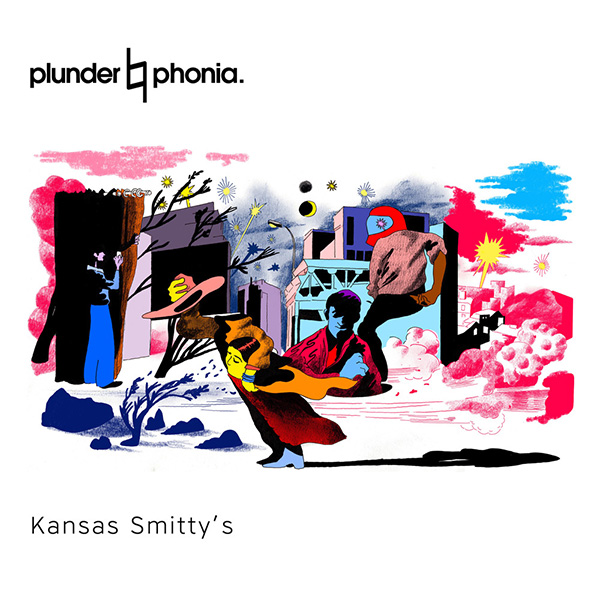 I also treated myself to a big helping of Kansas Smitty's, a groove-happy jazz outfit from London. I love their recording of Jelly Roll Morton's "Bump" (off Plunderphonia, 16/44.1 FLAC, 7k!/Tidal). It makes for a great hi-fi demo because the whole track hangs on a laid-back, bouncing snare beat, with drummer Jas Kayser letting her sticks skitter across the drumhead in a controlled cascade.
The Solitaire T nailed the diminishing energy of each tiny bounce. I also recommend listening to the band's "Jungle Blues," not just because it's fantastically fun and festive but for the aural pleasure of the crash cymbal and its long reverb tail. The Solitaire T didn't quite give me the gossamer, airy upper mids and highs of the HiFiMan HE1000se and Audeze LCD-4—open-back planar magnetic headphones I favor at home. But the way they render fine details, such as the ebbing sparkle of that cymbal, is really satisfying.
I also treated myself to a big helping of Kansas Smitty's, a groove-happy jazz outfit from London. I love their recording of Jelly Roll Morton's "Bump" (off Plunderphonia, 16/44.1 FLAC, 7k!/Tidal). It makes for a great hi-fi demo because the whole track hangs on a laid-back, bouncing snare beat, with drummer Jas Kayser letting her sticks skitter across the drumhead in a controlled cascade.
The Solitaire T nailed the diminishing energy of each tiny bounce. I also recommend listening to the band's "Jungle Blues," not just because it's fantastically fun and festive but for the aural pleasure of the crash cymbal and its long reverb tail. The Solitaire T didn't quite give me the gossamer, airy upper mids and highs of the HiFiMan HE1000se and Audeze LCD-4—open-back planar magnetic headphones I favor at home. But the way they render fine details, such as the ebbing sparkle of that cymbal, is really satisfying.
 I've long been a sucker for fretless electric-bass parts when they're played with soul and lyricism. The incomparable John Giblin on John Martyn's Grace and Danger is a great example of the style I mean; so is Mick Karn on Japan's Tin Drum album. A lesser-known luminary is Robert Boucher, who took the instrument to great heights on Bruce Cockburn's Dancing in the Dragon's Jaws (16/44.1 FLAC, True North/Qobuz). On "Incandescent Blue," Boucher is locked in tight with drummer Bob DiSalle. Via the Solitaire T, the bass sounds like a million bucks: supple and purring, delicate but full of body, like a ripe plum.
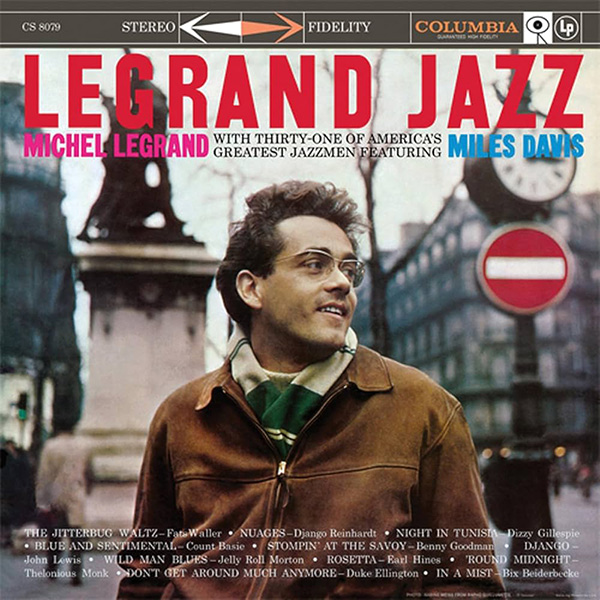
Great headphones are excavation devices, presenting troves of detail. The T+A cans did this (dad joke warning) to a T. On Legrand Jazz by Michel Legrand (24/192 FLAC, Universal and Decca/Qobuz), Ben Webster's tenor sax is the livest thing going. His playing is pure seduction: the blue mood, the mocha-brown tone, the golden glow of the horn. The T picked up lots of fine nuances. I could hear the spittle in Webster's mouthpiece—kinda gross, kinda cool.
I also held the Solitaire T's sonic magnifying glass over two Robert Wyatt albums: Ruth Is Stranger than Richard (16/44.1 FLAC, Domino/Qobuz) and Shleep (ibid.). In the studio, Wyatt often doubles his vocals, first taping his reedy baritone and then placing a soft, melodically identical falsetto on top of it. Even over Bluetooth, it was easy to separate the vocals, to follow one or the other.
I've long been a sucker for fretless electric-bass parts when they're played with soul and lyricism. The incomparable John Giblin on John Martyn's Grace and Danger is a great example of the style I mean; so is Mick Karn on Japan's Tin Drum album. A lesser-known luminary is Robert Boucher, who took the instrument to great heights on Bruce Cockburn's Dancing in the Dragon's Jaws (16/44.1 FLAC, True North/Qobuz). On "Incandescent Blue," Boucher is locked in tight with drummer Bob DiSalle. Via the Solitaire T, the bass sounds like a million bucks: supple and purring, delicate but full of body, like a ripe plum.
Great headphones are excavation devices, presenting troves of detail. The T+A cans did this (dad joke warning) to a T. On Legrand Jazz by Michel Legrand (24/192 FLAC, Universal and Decca/Qobuz), Ben Webster's tenor sax is the livest thing going. His playing is pure seduction: the blue mood, the mocha-brown tone, the golden glow of the horn. The T picked up lots of fine nuances. I could hear the spittle in Webster's mouthpiece—kinda gross, kinda cool.
I also held the Solitaire T's sonic magnifying glass over two Robert Wyatt albums: Ruth Is Stranger than Richard (16/44.1 FLAC, Domino/Qobuz) and Shleep (ibid.). In the studio, Wyatt often doubles his vocals, first taping his reedy baritone and then placing a soft, melodically identical falsetto on top of it. Even over Bluetooth, it was easy to separate the vocals, to follow one or the other.
 Across the finish line
As far as I know, the Solitaire T is the most expensive noise-canceling headphone around. For $1700 ($1849 if you get the new Cognac finish), you could buy both of T+A's closest competitors, the Focal Bathys and the Levinson No. 5909. That's no shocker. Since 1978, T+A has built a reputation on designing high-end gear, whatever the cost. As a matter of principle, T+A keeps prices tied to production costs, but budget-friendliness isn't part of the corporate mission. Excellence rarely comes cheap. But that's price. How about value ? Considering how excellent the Solitaire T's wired performance is, you can pit the product against other top-notch headphones that cost multiple thousands. I'm not saying the T+A would win, but it'd be competitive.
The Solitaire T doesn't preen. Nothing leaps out or feels overplayed. The bass isn't overblown or showy. The music receives no varnish. It's just ... there. That's what makes these T+A 'phones arresting. In all my months with them, I found them thoroughly wunderbar—well-executed, well-voiced, and well worth a listen.
Footnote 3: Admittedly, timbral accuracy may suffer a bit with spatial audio, and instruments can sound disembodied. For casual listening, gaming, and watching movies, however, I'm on board.
Every time I receive a new product for review, my brain makes demands. "Wow me," it says. "Excite me. Now." The Solitaire T didn't immediately play ball. Some headphones lure you in with a little extra thickness in the bass and the kind of upper-midrange performance that delivers gobs of detail but ultimately turns fatiguing. The T may not bowl you over if you audition it for 10 minutes at a retail store or audio show. But over time—hours, not days—their superior performance becomes evident. At least, that's how it played out for me. Why the slow reveal? This is purely speculative, but it may have something to do with how the Harman curve has conditioned our headphone listening. Since its introduction in 2012, the Harman standard has been used as a guide to voice many fine headphones. In a nutshell, with the Harman curve, manufacturers make the frequencies below 100Hz roughly 4 to 8dB louder. The 3–7kHz region likewise receives a considerable boost. I couldn't detect this signature on the Solitaire T. To my ears, the sound was neither cold nor warm, and to the neutral side of the Harman curve. I'd characterize the midrange as clean and snappy, even brisk, yet somehow gentle at the same time. Kickdrums hit with appealing force and tautness but didn't sound fattened. At home, I paired the easily driven, 64 ohm Solitaire T with several reputable headphone amplifiers: the hybrid $800 LSA Hyperdrive 2, the $1200 RME ADI-2 DAC FS, and the $4500 McIntosh MHA100. The T+As responded as well-designed wired headphones should—scaling up with better gear, exhibiting none of the signs of DSP-heavy correction or artificial enhancement.
One of the best experiences I had with the T came during an otherwise unenjoyable 14-hour flight. Two albums impressed and energized me so much that I played them back to back twice over: The Offense of the Drum by Arturo O'Farrill & the Afro Latin Jazz Orchestra (24/48 FLAC, Motema/Qobuz), and Arturo Sandoval's Collection (16/44.1 FLAC, Concord/Qobuz). Buckets of swing and swagger. Muy caliente Afro-Cuban rhythms. Off-the-charts musicianship. My only problem: being buckled to a seat and having to restrain my limbs.
A few days later, in the still of my hotel room, I chose something moodier and more hushed: the dreamy, often beatless electronica of Lance Gurisik's Cull Portal (24/44.1 FLAC, 33 Sides/Qobuz). The tracks titled "Cull" (parts I–III) are based on a few swelling chords repeated with slow variations across the 18-minute triptych. The piano and synth sounds combine with lamentations from a melancholy sax and a string quartet. Think Aphex Twin and Floating Points channeled through Keith Jarrett at his most subdued. I thrilled to the colors, textures, and transformations.
I also treated myself to a big helping of Kansas Smitty's, a groove-happy jazz outfit from London. I love their recording of Jelly Roll Morton's "Bump" (off Plunderphonia, 16/44.1 FLAC, 7k!/Tidal). It makes for a great hi-fi demo because the whole track hangs on a laid-back, bouncing snare beat, with drummer Jas Kayser letting her sticks skitter across the drumhead in a controlled cascade.
I've long been a sucker for fretless electric-bass parts when they're played with soul and lyricism. The incomparable John Giblin on John Martyn's Grace and Danger is a great example of the style I mean; so is Mick Karn on Japan's Tin Drum album. A lesser-known luminary is Robert Boucher, who took the instrument to great heights on Bruce Cockburn's Dancing in the Dragon's Jaws (16/44.1 FLAC, True North/Qobuz). On "Incandescent Blue," Boucher is locked in tight with drummer Bob DiSalle. Via the Solitaire T, the bass sounds like a million bucks: supple and purring, delicate but full of body, like a ripe plum.
Great headphones are excavation devices, presenting troves of detail. The T+A cans did this (dad joke warning) to a T. On Legrand Jazz by Michel Legrand (24/192 FLAC, Universal and Decca/Qobuz), Ben Webster's tenor sax is the livest thing going. His playing is pure seduction: the blue mood, the mocha-brown tone, the golden glow of the horn. The T picked up lots of fine nuances. I could hear the spittle in Webster's mouthpiece—kinda gross, kinda cool.
Across the finish lineAs far as I know, the Solitaire T is the most expensive noise-canceling headphone around. For $1700 ($1849 if you get the new Cognac finish), you could buy both of T+A's closest competitors, the Focal Bathys and the Levinson No. 5909. That's no shocker. Since 1978, T+A has built a reputation on designing high-end gear, whatever the cost. As a matter of principle, T+A keeps prices tied to production costs, but budget-friendliness isn't part of the corporate mission. Excellence rarely comes cheap. But that's price. How about value ? Considering how excellent the Solitaire T's wired performance is, you can pit the product against other top-notch headphones that cost multiple thousands. I'm not saying the T+A would win, but it'd be competitive.
Footnote 3: Admittedly, timbral accuracy may suffer a bit with spatial audio, and instruments can sound disembodied. For casual listening, gaming, and watching movies, however, I'm on board.