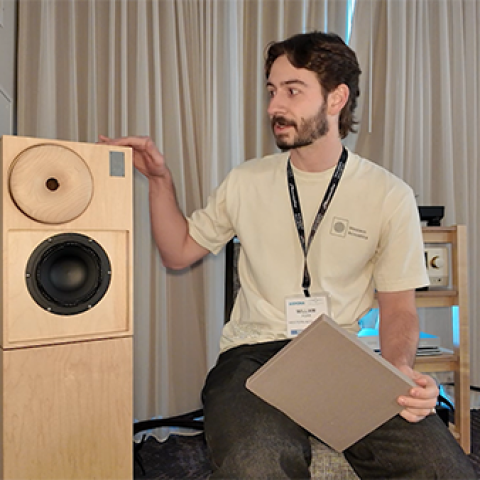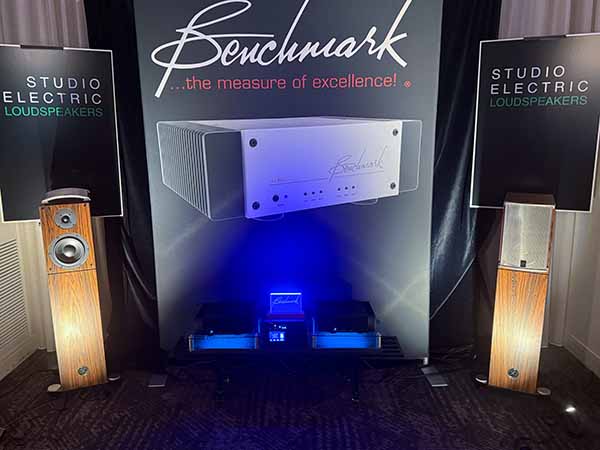
A pair of M6 speakers is too dear for my pauper's budget, at least if we're talking about the Magico M6s that have been on my dream list since I first heard them years ago. But the Studio Electric M6s? They're certainly more attainable than the $180,000 Magicos.
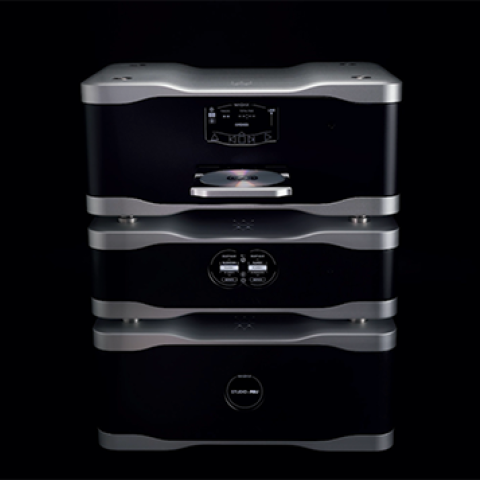
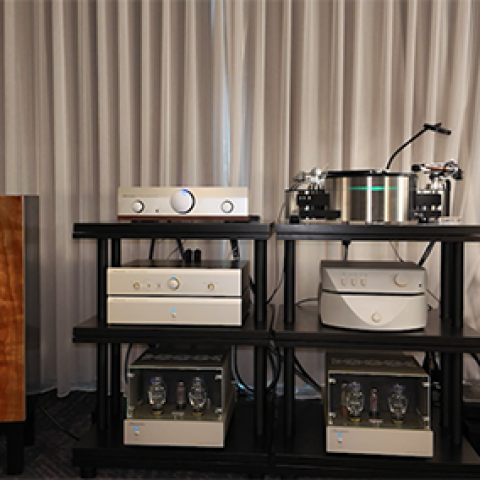
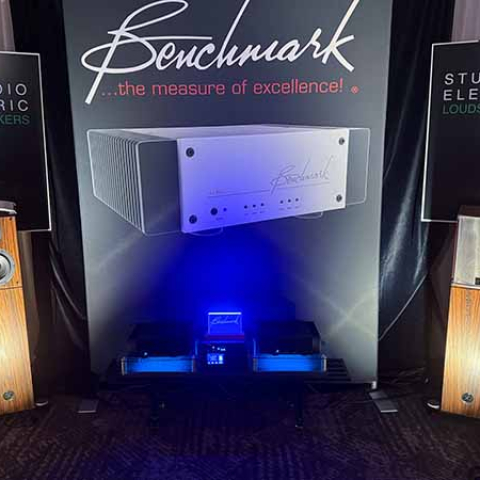
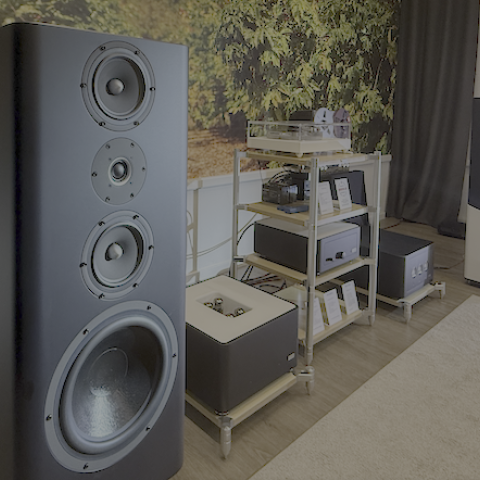
Try $5900-$6900/pair, depending on finish. Do the Studio Electric M6s sound as bodacious and majestic as the curved, carbon-clad megabuck Magico speakers? I wish. Do they sound really, really good though? Hell yeah—especially when coupled with clean, meticulously engineered electronics like the Benchmark stack in the Studio Electric room at AXPONA 2026 that consisted of a DAC3 B ($1899, fed by a MacBook Pro via USB), an LA4 line stage ($2950), and an AHB2 power amplifier ($3499).
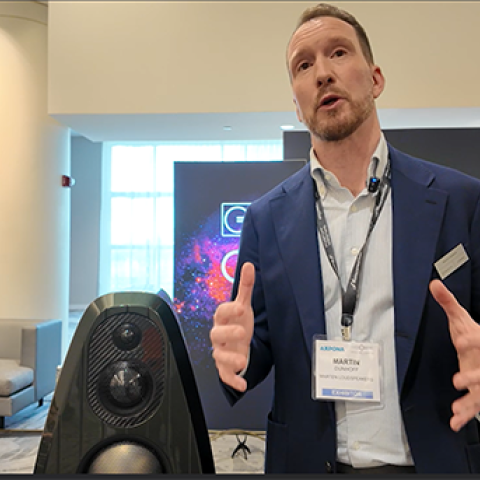
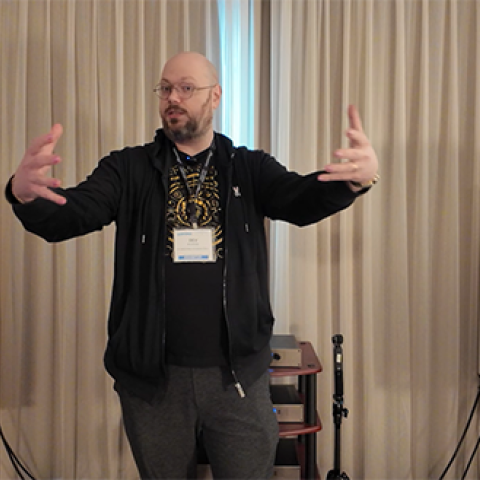
Studio Electric speakers are built by founder and designer Dave MacPherson in his facility in Holland, Michigan. I asked him whether there are possible issues with calling his speakers M6s. "Yeah—people looking for M6 speakers are probably going to end up on Magico's website," he conceded. He's thinking about adding an X to the model designation. That could work—although I remembered later that there's already an M6X DAC, from Musical Fidelity. (High-end audio needs a bigger alphabet.)
The speakers that MacPherson long designed under his own name were highly regarded in the pro-sound world. "I'm probably giving away my age, but one year we had Bette Midler, Cheap Trick, REO Speedwagon, Merle Haggard, and Motörhead out with our speakers at the same time," he told me. His products also made it into New York City's Lincoln Center, Chicago's Orchestra Hall, and the Stuttgart Opera House. MacPherson speakers were, for a while, the go-to for sound reinforcement of "orchestras that were doing pop shows where they had to mic things," the designer said.
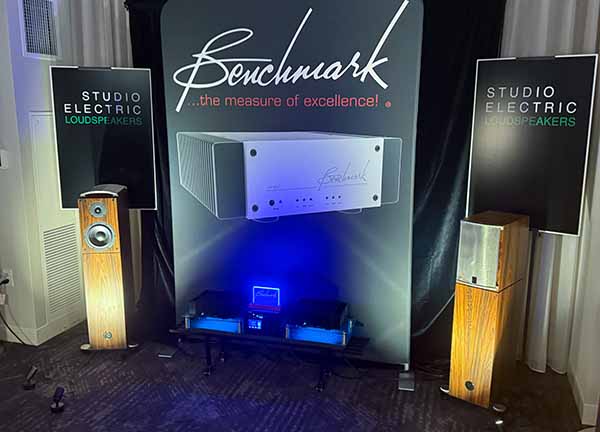 Nineteen years ago, MacPherson pivoted to making speakers for the home, selling them under the Studio Electric name. They're all voiced the same, at least from 80Hz up. He uses identical mid- and high-frequency drivers in the M4 and M5 bookshelf speakers, and now in the M6 floorstanders. Available this summer, each M6 adds a 7" wavecor down-firing woofer that extends the low frequencies to 40Hz.
With the Fletcher-Munson curves in mind, MacPherson applies what he called "an American version of the BBC dip" to his crossover design, pulling down the frequency response around 3kHz rather than the British standard of 2kHz. He found that in live mixing, cutting the 3kHz frequency band was the best way to make a show loud without inducing irritation and fatigue.
MacPherson's on to something with that approach. His new Studio Electric floorstanders, 38" tall and weighing 45lb each, acquitted themselves well across genres. They sounded lively, and sometimes, well, electric. "Watermelon Man" by Gordon Goodwin's Big Phat Band (originally from 2008's Act Your Age, on Immergent) and AC/DC's "Come and Get It" (originally from 2000's Stiff Upper Lip, on EastWest) were delivered with a combination of punch and sweetness.
M6? M6X? No matter what MacPherson calls them, I call them a potential win for someone with a sub-$10K speaker budget and a hankering for animated sound.
Nineteen years ago, MacPherson pivoted to making speakers for the home, selling them under the Studio Electric name. They're all voiced the same, at least from 80Hz up. He uses identical mid- and high-frequency drivers in the M4 and M5 bookshelf speakers, and now in the M6 floorstanders. Available this summer, each M6 adds a 7" wavecor down-firing woofer that extends the low frequencies to 40Hz.
With the Fletcher-Munson curves in mind, MacPherson applies what he called "an American version of the BBC dip" to his crossover design, pulling down the frequency response around 3kHz rather than the British standard of 2kHz. He found that in live mixing, cutting the 3kHz frequency band was the best way to make a show loud without inducing irritation and fatigue.
MacPherson's on to something with that approach. His new Studio Electric floorstanders, 38" tall and weighing 45lb each, acquitted themselves well across genres. They sounded lively, and sometimes, well, electric. "Watermelon Man" by Gordon Goodwin's Big Phat Band (originally from 2008's Act Your Age, on Immergent) and AC/DC's "Come and Get It" (originally from 2000's Stiff Upper Lip, on EastWest) were delivered with a combination of punch and sweetness.
M6? M6X? No matter what MacPherson calls them, I call them a potential win for someone with a sub-$10K speaker budget and a hankering for animated sound.
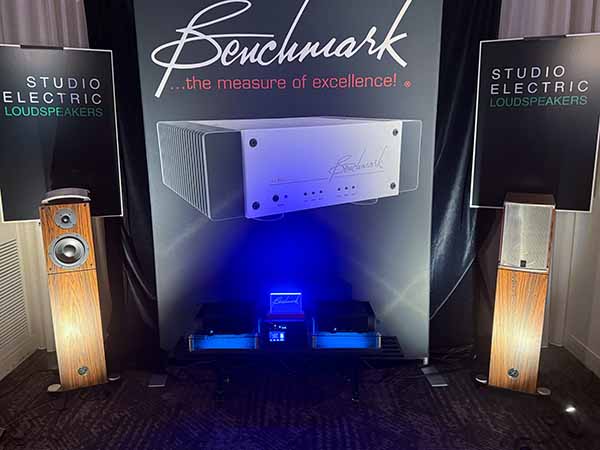
Nineteen years ago, MacPherson pivoted to making speakers for the home, selling them under the Studio Electric name. They're all voiced the same, at least from 80Hz up. He uses identical mid- and high-frequency drivers in the M4 and M5 bookshelf speakers, and now in the M6 floorstanders. Available this summer, each M6 adds a 7" wavecor down-firing woofer that extends the low frequencies to 40Hz.
With the Fletcher-Munson curves in mind, MacPherson applies what he called "an American version of the BBC dip" to his crossover design, pulling down the frequency response around 3kHz rather than the British standard of 2kHz. He found that in live mixing, cutting the 3kHz frequency band was the best way to make a show loud without inducing irritation and fatigue.