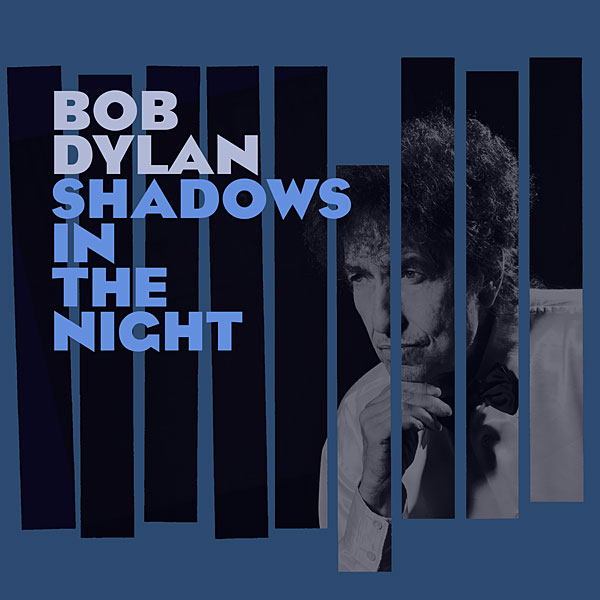
It seems likely that Frank Sinatra, who famously stuck both feet in his mouth, by calling rock 'n' roll a “rancid-smelling aphrodisiac” created by “cretinous goons,” had a similar feeling about Bob Dylan: an uppity hippie poet with a nasal voice and unruly hair, who was music’s future and the antithesis of Frank’s 60s booze and broads-soaked Rat Pack. It also seems likely that along the way Bobby probably murmured a few unkind things about Frank and his establishment entourage. But if you live long enough…though in some ways it seems natural that Dylan, who’s never been shy about paying homage to the Great American Songbook, would eventually come around to the work of someone who was as single minded about his art as Dylan remains today. Shadows in the Night, which I have been listening to in vinyl form, and whose title is a nod to Frank’s “Strangers in the Night,” the title of a 1966 hit single and Sinatra’s most commercially successful album ever, is another of Dylan’s left field miracles.
Back before the ring-a-ding-ding Reprise records, where the brass blew and the fingers snapped, Francis Albert made a lot of overtly sad records for Capitol. Which in turn undoubtedly inspired the upbeat punchy Reprise period. While In The Wee Small Hours (1955), and No One Cares (1959) were landmarks of this Frank subset—both with unbelievable cover art suggesting Frank, of all people, was suffering and alone—none were more oh-woe-is-me than Where Are You? (1957). Bob Dylan, who besides being the greatest singer/songwriter of all time and THE Iron Man of the lonesome highway—he’s appearing somewhere tonight guaranteed!—has clearly spent some time (on the bus?) absorbing Frank’s weepy period. Four tunes on Shadows in the Night come from Where Are You? and the six others are tunes that Sinatra covered at some point in his career. Anyone who thought that Dylan’s Christmas record of a few years back was crazy and way out, needs to clap their ears upon this fabulous, yet very short set. At this late date—the man is 73— any new Dylan record is bound to reignite the old, “but what about his voice?” discussion, yet here that one my finally be put to rest. As much, or perhaps even more than his songwriting gifts, Dylan’s most breathtaking art has always been his ability to wrap his voice, never great even when young and supple, around songs and make them compelling. No one sings Dylan, for example, better than Dylan. Perhaps never in his entire recorded catalog have his interpretative abilities shone more brightly than here when he launches into that most gorgeous and nostalgic of all Rodger’s & Hammerstein baubles, “Sam and Janet,” aka “Some Enchanted Evening.”
This record and the Christmas album, where he didn’t try to sing or emote even a tenth as much as he does on Shadows, do impart an unsettling feeling, like stepping into a parallel dimension where Bob Dylan is somehow digging into Sinatra tunes. And yet he nails it over and over again. Part of the success, again, is the odd regretful tinge he gives his voice. And then there’s his five piece working band, supplemented by horns in spots, that includes guitarists Charlie Sexton and Stu Kimball, bassist Tony Garnier, drummer George Receli and on pedal steel, Donny Herron, whose solos and accompaniment play a big part in this record’s success. Produced by Dylan (as Jack Frost) and recorded by Al Schmitt, the voice is rightly the focus here, so much so that Dylan’s breathing is clearly audible on “What’ll I Do.” While nothing here quite equals his version of “Some Enchanted Evening,” he closes the record with the much covered “That Lucky Old Sun.” While Frankie Laine initially took it to #1 in 1949, the year it was written, and Louis Armstrong and Sinatra released competing singles that same year, the best known modern versions are from Ray Charles and Jerry Lee Lewis. Again, Dylan takes it slow and really feels it, aided by horns. In the end, as whacked as it sounds, Dylan makes tunes that are obscure in Sinatra's repertoire work, which begs the questions: what can’t he do and what’s next?