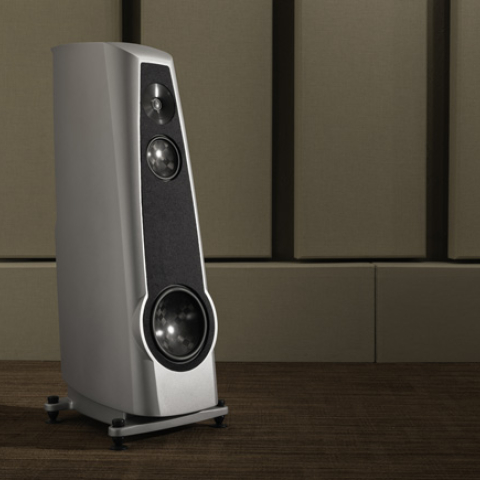
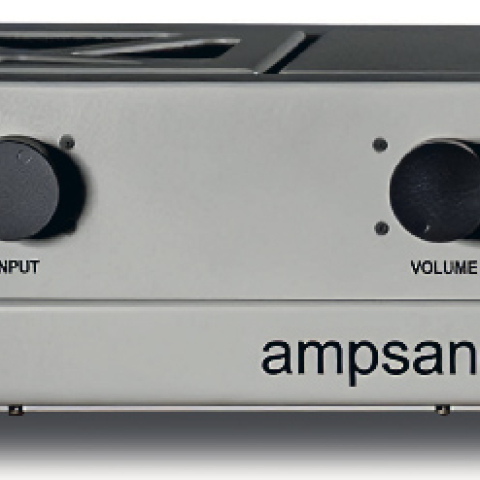
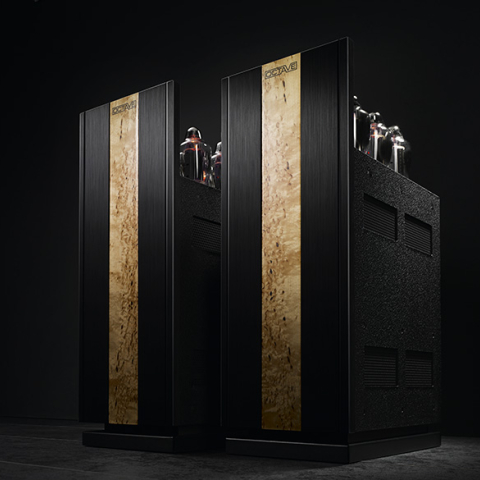
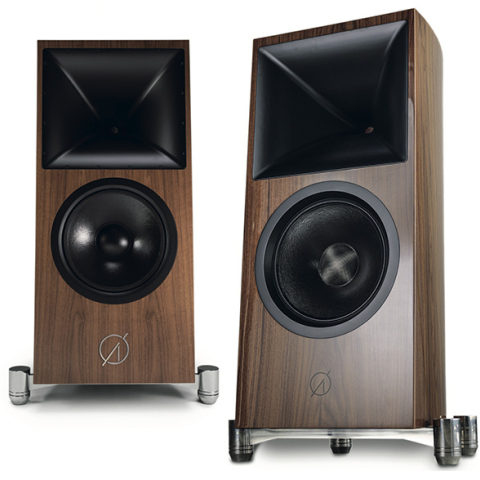
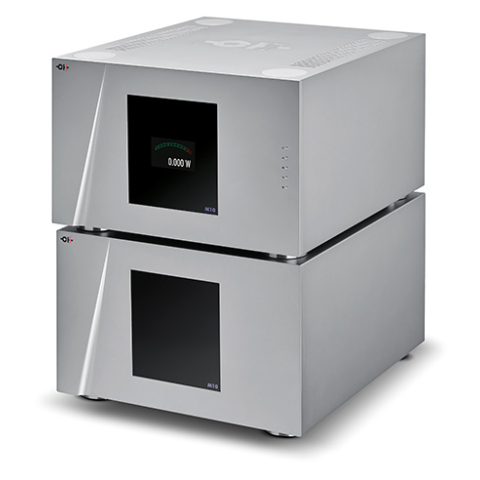
Helpless against such beauty, and partly in anticipation of the TD3.8s' eventual arrival, I purchased a U280 SC. In my room, the synergy between the Mexican tube (ch)amp and the TD3.8s was apparent from the get-go. The music flowed easily, beautifully, without a hint of strain. But it wasn't perfect. I now felt that heft and authority were on the skimpy side compared to what I'd heard before. After a few weeks of belly-aching and telling myself it was all in my head, I called Bruce Ball to get his take. He wasn't surprised. Essentially, he relayed the old Doublemint chewing gum motto ("double your pleasure, double your fun"), pointing out that at the shows where I'd heard the 3.8s, they'd been driven by two U280 SC amplifiers. On paper and in practice, the 89dB-sensitive Raidhos are certainly happier with 100W of Ultralinear power per channel than with 50. A short-term loan of a second Margules amp was arranged, and a week later I had the duo side by side, set up as monoblocks. Power was now more than adequate, even in triode mode.
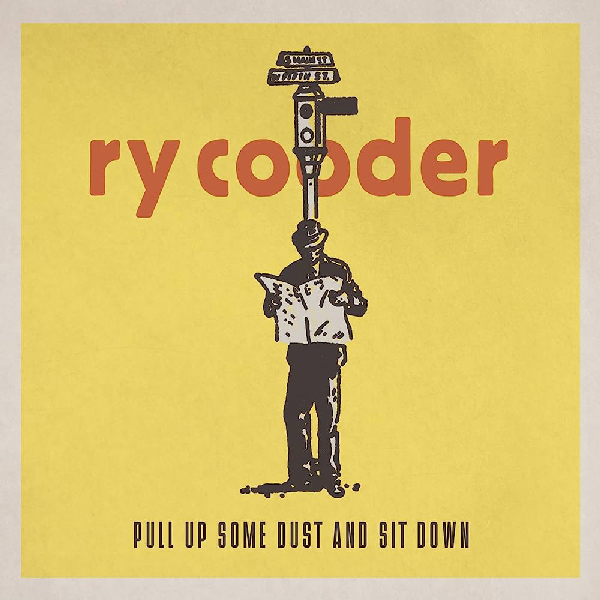 Timbrally, the speakers were at their best when I was sitting almost 12' away. There, Ry Cooder's voice on "John Lee Hooker for President" from Pull Up Some Dust and Sit Down (24/96 MQA, Nonesuch/Tidal) sounded true to life, with riveting body and presence. But when I moved a few feet closer, I somehow felt closer, too—closer to the music, more able to mind-meld with it.
In the end, after I extensively Goldilocksed it, the drivers were 10'2" from my pinnae and 6'8" apart measured from the speakers' centers. Toe-in was minimal, about five or six degrees. The outer flanks of the TD3.8s were, coincidentally, 3'8" from the sidewalls; the very backs of the speakers stood 4'9" from the front wall. This meant that I sat almost 5' from the dual 3' × 3' skyline diffusers behind me. There, I graduated from cloud eight to cloud nine.
Sound as a bell
Timbrally, the speakers were at their best when I was sitting almost 12' away. There, Ry Cooder's voice on "John Lee Hooker for President" from Pull Up Some Dust and Sit Down (24/96 MQA, Nonesuch/Tidal) sounded true to life, with riveting body and presence. But when I moved a few feet closer, I somehow felt closer, too—closer to the music, more able to mind-meld with it.
In the end, after I extensively Goldilocksed it, the drivers were 10'2" from my pinnae and 6'8" apart measured from the speakers' centers. Toe-in was minimal, about five or six degrees. The outer flanks of the TD3.8s were, coincidentally, 3'8" from the sidewalls; the very backs of the speakers stood 4'9" from the front wall. This meant that I sat almost 5' from the dual 3' × 3' skyline diffusers behind me. There, I graduated from cloud eight to cloud nine.
Sound as a bell
Depending on the source material, the Focal Scala EVOs, my current reference speakers, can be a touch resonant or forward in the top end. While normally the words "ribbon tweeter" and "laid-back" don't belong in the same sentence, the TD3.8s have a slightly rounder, softer signature above 7 or 8kHz than the Scalas do. Also like the Focals, they plunge you deep into the music. I heard for the first time that the piano in the intro of Steven Wilson's "First Regret," the opening track of Hand Cannot Erase (24/96 FLAC, Kscope/ Qobuz), is processed through a detuner, and that a slight tremolo effect has been added. Davitt Sigerson's downtempo "Break My Heart," from his self-titled 1980 debut disc (16/44.1 FLAC, ZE/Tidal), features a screaming electric-guitar part throughout the entire song, calling to mind an Adrian Belew wannabe having an aneurysm. Even after hearing the track a couple of hundred times over the years, I can't quite decide if it's masterful or ridiculous. Nonetheless, the song, a narrative about a tryst with a mysterious woman aboard a European Wagons-Lits train, remains a favorite.
Deep inside the Simplon pass
The light will switch from red to green.
I'll peel you like a tangerine.
Break my heart. It bursts with decadence and sleazy glamor, and the Raidhos rendered it with gusto, adding or subtracting nothing.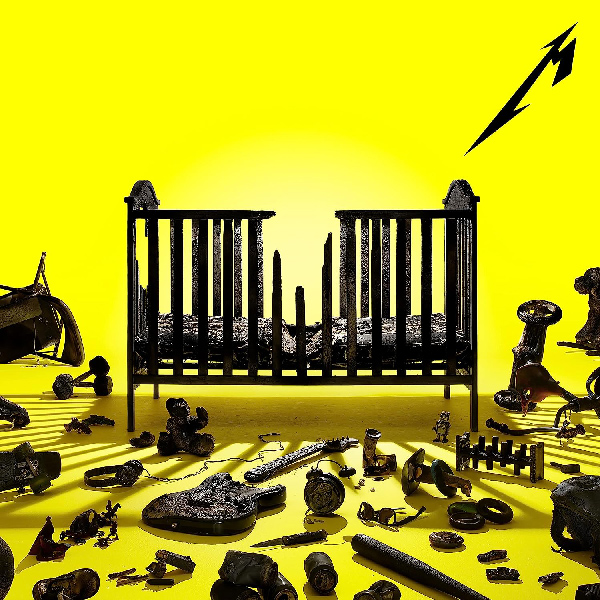 Metallica's new 72 Seasons (24/96 FLAC, Blackened/Qobuz), so very cleanly produced by the band and Greg Fidelman, also sounded rawking. "Too Far Gone?" is the standout track. Somehow, Metallica not only helps keep distorted-guitar riffage alive as a genre; the band also makes it sound creative and relevant. There'd been times when I felt the TD3.8s were overly polite with hard-hitting rock, but two little switches showed me I was wrong. With the Margules amps flicked to Ultralinear mode instead of triode, the Raidhos sounded alive and exciting when playing roiling metal beats and other aggro material, such as Control Machete's sledgehammer of a hip-hop track "Si Señor" (16/44.1 FLAC, Motor/Tidal). The delicateness, thankfully, was still there: for instance, the final crash-cymbal hit on "Too Far Gone?" disappeared into the ether with a long, exceedingly lovely tail. The Raidhos don't match the terrifically fun brute force and boisterousness I've heard from, say, Klipsch's Jubilee horns or Troy Audio's Acapulco speakers, but I think they may be better all-rounders.
Riding my metal-mania mood, I cued up a few Rammstein songs. Many of the band's recordings have the main guitar part doubled and panned hard-left and -right; good examples are "Bück Dich" and "Küss Mich (Fellfrosch)," off Sehnsucht (16/44.1 FLAC, Slash/Tidal). You hear either a single part recorded twice to a digital multitrack machine or PC, or the same part digitally copied with deliberate timing differences—and often pitched up/down by a barely perceptible six or seven cents. The technique produces a wall-of-sound effect, making the axe part seem a mile wide. With the Raidhos, it became a fun game: Is the minutely delayed guitar positioned in the left or the right channel? Which channel has the part with the subtly lower pitch?
Next, I played "Chorale," an Anthony Fiumara–composed tribute to Philip Glass performed by the Dutch ensemble Slagwerk Den Haag. It's a hyperdynamic recording of rich sonorous bells and other resonant percussion instruments. The album is called Vitreous Body (24/48 FLAC, Orange Mountain/Qobuz), no doubt a reference to Glass's oeuvre (vitreous means glass-like). The bells and their incredibly long reverb t(r)ails were, again, beautifully delivered, with a subtle, sumptuous shimmer.
Metallica's new 72 Seasons (24/96 FLAC, Blackened/Qobuz), so very cleanly produced by the band and Greg Fidelman, also sounded rawking. "Too Far Gone?" is the standout track. Somehow, Metallica not only helps keep distorted-guitar riffage alive as a genre; the band also makes it sound creative and relevant. There'd been times when I felt the TD3.8s were overly polite with hard-hitting rock, but two little switches showed me I was wrong. With the Margules amps flicked to Ultralinear mode instead of triode, the Raidhos sounded alive and exciting when playing roiling metal beats and other aggro material, such as Control Machete's sledgehammer of a hip-hop track "Si Señor" (16/44.1 FLAC, Motor/Tidal). The delicateness, thankfully, was still there: for instance, the final crash-cymbal hit on "Too Far Gone?" disappeared into the ether with a long, exceedingly lovely tail. The Raidhos don't match the terrifically fun brute force and boisterousness I've heard from, say, Klipsch's Jubilee horns or Troy Audio's Acapulco speakers, but I think they may be better all-rounders.
Riding my metal-mania mood, I cued up a few Rammstein songs. Many of the band's recordings have the main guitar part doubled and panned hard-left and -right; good examples are "Bück Dich" and "Küss Mich (Fellfrosch)," off Sehnsucht (16/44.1 FLAC, Slash/Tidal). You hear either a single part recorded twice to a digital multitrack machine or PC, or the same part digitally copied with deliberate timing differences—and often pitched up/down by a barely perceptible six or seven cents. The technique produces a wall-of-sound effect, making the axe part seem a mile wide. With the Raidhos, it became a fun game: Is the minutely delayed guitar positioned in the left or the right channel? Which channel has the part with the subtly lower pitch?
Next, I played "Chorale," an Anthony Fiumara–composed tribute to Philip Glass performed by the Dutch ensemble Slagwerk Den Haag. It's a hyperdynamic recording of rich sonorous bells and other resonant percussion instruments. The album is called Vitreous Body (24/48 FLAC, Orange Mountain/Qobuz), no doubt a reference to Glass's oeuvre (vitreous means glass-like). The bells and their incredibly long reverb t(r)ails were, again, beautifully delivered, with a subtle, sumptuous shimmer.
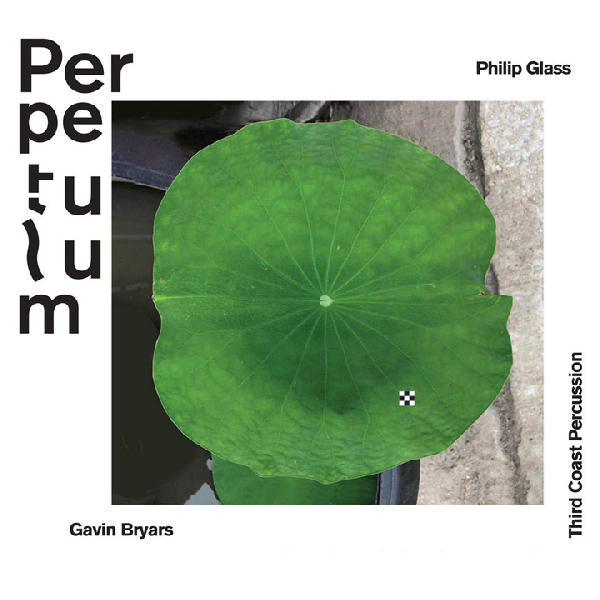 Now I was on the hunt for other recordings that would put the Raidhos' prowess with transients and decay to the test. Third Coast Percussion's "Ordering-instincts" on Perpetulum (16/44.1 FLAC, Orange Mountain/Qobuz) features various sharp-sounding wood and metal percussion instruments, including heavy bells. My fondness for this track reminded me of the bon mot attributed to Alan Parsons: "Audiophiles don't use their equipment to listen to your music; they use your music to listen to their equipment." Well, guilty, in this case—not that the recording isn't a dizzying soundscape that deserves our appreciation regardless of its demo-disc capabilities.
When all is said and done
Now I was on the hunt for other recordings that would put the Raidhos' prowess with transients and decay to the test. Third Coast Percussion's "Ordering-instincts" on Perpetulum (16/44.1 FLAC, Orange Mountain/Qobuz) features various sharp-sounding wood and metal percussion instruments, including heavy bells. My fondness for this track reminded me of the bon mot attributed to Alan Parsons: "Audiophiles don't use their equipment to listen to your music; they use your music to listen to their equipment." Well, guilty, in this case—not that the recording isn't a dizzying soundscape that deserves our appreciation regardless of its demo-disc capabilities.
When all is said and done
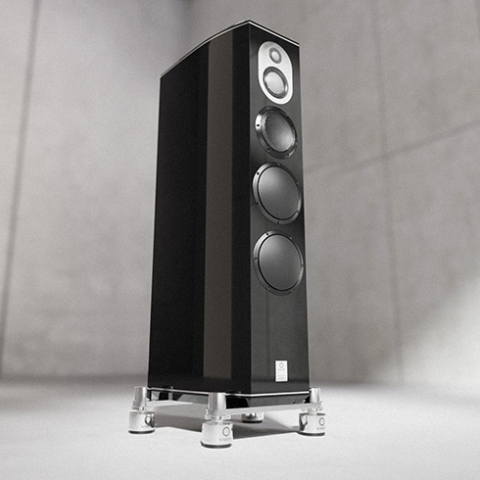
The TD3.8s are time-stealers. Often, while listening to them, an hour disappeared in seconds. Perhaps more than any other speakers I've auditioned at home, the TD3.8s made me want to turn off all the lights in the room, to be alone in the dark, transported by the music. Into the music. These speakers are lavish in both sonics and appearance—so, on second thought, leave those lights on. "Mindbendingly good" was one of the first notes I scribbled after I began playing music through them. Copper wire was born when two Dutchmen fought over a penny, so, true to my birthplace, the Raidhos' price gives me pause. In this ultraluxury range, I can think of other deeply impressive loudspeakers I'd put on my shortlist. The $76,000/pair Focal Maestro Utopia EVO springs to mind; the $94,000/pair Magico M3; the $91,000/pair MBL 101 E MKII Radialstrahler; even the tremendous Klipschorn Jubilee (for $87,500) you could go crazy, buy five, and put together the most bitchin' Dolby rig ever, footnote 5) All these products are soul-stirring—and so are the TD3.8s. The Raidhos trump the competition with the forward-projecting, 3D nature of their spatial signature, an often startling trait I couldn't get enough of and will sorely miss now that they're gone. I also found the TD3.8s to be standouts in making music sound fully engaging at moderate levels (although this wasn't a practical benefit to me personally: I like to turn it up to 11).
We are spoiled for choice, and Steely Dan was wrong: You can buy a thrill. If, after hearing the Raidhos, you find your self-control yielding to a severe case of YOLO, I'll be the first to understand.
Footnote 5: Please don't do this.
Timbrally, the speakers were at their best when I was sitting almost 12' away. There, Ry Cooder's voice on "John Lee Hooker for President" from Pull Up Some Dust and Sit Down (24/96 MQA, Nonesuch/Tidal) sounded true to life, with riveting body and presence. But when I moved a few feet closer, I somehow felt closer, too—closer to the music, more able to mind-meld with it.
In the end, after I extensively Goldilocksed it, the drivers were 10'2" from my pinnae and 6'8" apart measured from the speakers' centers. Toe-in was minimal, about five or six degrees. The outer flanks of the TD3.8s were, coincidentally, 3'8" from the sidewalls; the very backs of the speakers stood 4'9" from the front wall. This meant that I sat almost 5' from the dual 3' × 3' skyline diffusers behind me. There, I graduated from cloud eight to cloud nine.
Depending on the source material, the Focal Scala EVOs, my current reference speakers, can be a touch resonant or forward in the top end. While normally the words "ribbon tweeter" and "laid-back" don't belong in the same sentence, the TD3.8s have a slightly rounder, softer signature above 7 or 8kHz than the Scalas do. Also like the Focals, they plunge you deep into the music. I heard for the first time that the piano in the intro of Steven Wilson's "First Regret," the opening track of Hand Cannot Erase (24/96 FLAC, Kscope/ Qobuz), is processed through a detuner, and that a slight tremolo effect has been added. Davitt Sigerson's downtempo "Break My Heart," from his self-titled 1980 debut disc (16/44.1 FLAC, ZE/Tidal), features a screaming electric-guitar part throughout the entire song, calling to mind an Adrian Belew wannabe having an aneurysm. Even after hearing the track a couple of hundred times over the years, I can't quite decide if it's masterful or ridiculous. Nonetheless, the song, a narrative about a tryst with a mysterious woman aboard a European Wagons-Lits train, remains a favorite.
The light will switch from red to green.
I'll peel you like a tangerine.
Break my heart. It bursts with decadence and sleazy glamor, and the Raidhos rendered it with gusto, adding or subtracting nothing.
Metallica's new 72 Seasons (24/96 FLAC, Blackened/Qobuz), so very cleanly produced by the band and Greg Fidelman, also sounded rawking. "Too Far Gone?" is the standout track. Somehow, Metallica not only helps keep distorted-guitar riffage alive as a genre; the band also makes it sound creative and relevant. There'd been times when I felt the TD3.8s were overly polite with hard-hitting rock, but two little switches showed me I was wrong. With the Margules amps flicked to Ultralinear mode instead of triode, the Raidhos sounded alive and exciting when playing roiling metal beats and other aggro material, such as Control Machete's sledgehammer of a hip-hop track "Si Señor" (16/44.1 FLAC, Motor/Tidal). The delicateness, thankfully, was still there: for instance, the final crash-cymbal hit on "Too Far Gone?" disappeared into the ether with a long, exceedingly lovely tail. The Raidhos don't match the terrifically fun brute force and boisterousness I've heard from, say, Klipsch's Jubilee horns or Troy Audio's Acapulco speakers, but I think they may be better all-rounders.
Now I was on the hunt for other recordings that would put the Raidhos' prowess with transients and decay to the test. Third Coast Percussion's "Ordering-instincts" on Perpetulum (16/44.1 FLAC, Orange Mountain/Qobuz) features various sharp-sounding wood and metal percussion instruments, including heavy bells. My fondness for this track reminded me of the bon mot attributed to Alan Parsons: "Audiophiles don't use their equipment to listen to your music; they use your music to listen to their equipment." Well, guilty, in this case—not that the recording isn't a dizzying soundscape that deserves our appreciation regardless of its demo-disc capabilities.
The TD3.8s are time-stealers. Often, while listening to them, an hour disappeared in seconds. Perhaps more than any other speakers I've auditioned at home, the TD3.8s made me want to turn off all the lights in the room, to be alone in the dark, transported by the music. Into the music. These speakers are lavish in both sonics and appearance—so, on second thought, leave those lights on. "Mindbendingly good" was one of the first notes I scribbled after I began playing music through them. Copper wire was born when two Dutchmen fought over a penny, so, true to my birthplace, the Raidhos' price gives me pause. In this ultraluxury range, I can think of other deeply impressive loudspeakers I'd put on my shortlist. The $76,000/pair Focal Maestro Utopia EVO springs to mind; the $94,000/pair Magico M3; the $91,000/pair MBL 101 E MKII Radialstrahler; even the tremendous Klipschorn Jubilee (for $87,500) you could go crazy, buy five, and put together the most bitchin' Dolby rig ever, footnote 5) All these products are soul-stirring—and so are the TD3.8s. The Raidhos trump the competition with the forward-projecting, 3D nature of their spatial signature, an often startling trait I couldn't get enough of and will sorely miss now that they're gone. I also found the TD3.8s to be standouts in making music sound fully engaging at moderate levels (although this wasn't a practical benefit to me personally: I like to turn it up to 11).
Footnote 5: Please don't do this.