Listening
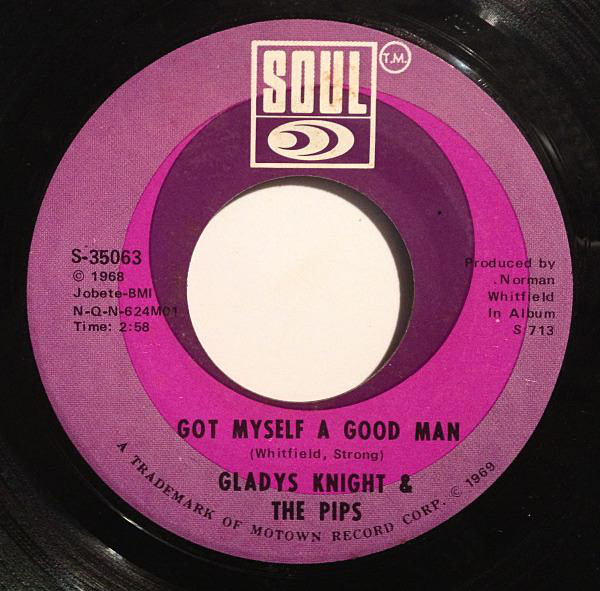
If I expected the Pro-Ject to sound flimsy or polite, I needn't have worried. As soon as I dropped the needle on a 45 of Gladys Knight and the Pips' "Got Myself a Good Man" (Soul S 35063), the congas blasted out of my 1967 Altec Valencias, followed by the tambourine. Soon, the Motown rhythm section locked on. The single sounded dynamically expressive, propulsive, and juicy, just begging to be turned up.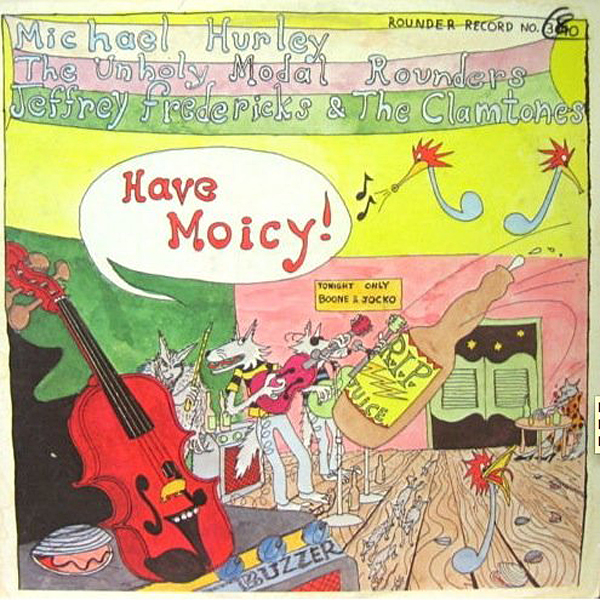 Few records make me as happy as Have Moicy! (Rounder Records 3010), a 1976 collaboration between Michael Hurley, the Unholy Modal Rounders, and Jeffrey Frederick and the Clamtones. This weird piece of folky Americana sounds like a barbecue jam session with banjos, beer, and possibly psilocybin. On "Midnight in Paris," Peter Stampfel—once memorably described as singing like a chicken who's won the lottery—chews up the lyric while Dave Reisch not so much plays his bass as mauls it. His Fender sounded loping and loud, and when Reisch slaps the song's final note, the EVO rendered it delightfully big and ridiculous.
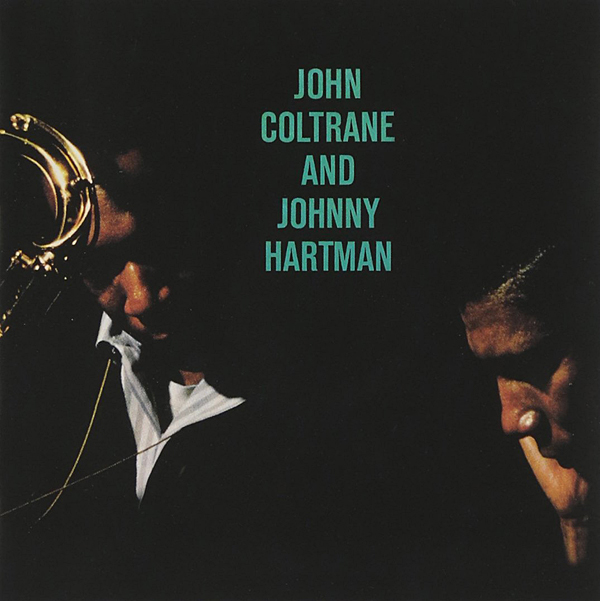 I was particularly impressed by the Sumiko Rainier, which suffers from none of the plasticky or hollow sound afflicting some budget moving magnet cartridges and which captures the timbre and texture of instruments and voices more faithfully than it has a right to at its price. On John Coltrane and Johnny Hartman (Impulse A-40), the most grown-up record ever made, Coltrane's tenor sounded powerful and dark-toned, hanging several feet outside and above the left speaker. And, again, it was big—when called on, the EVO can produce a wide and tall (though not very deep) soundstage.
 The dynamically emphatic Pro-Ject didn't prove quite as outstanding at pace and rhythm. The RPM app on my iPhone told me that it spun at 33.48rpm, or 0.44% fast, similar to every Rega I've owned. The Pro-Ject wasn't sluggish or tentative, but while playing Have Moicy! or the amphetaminic Gladys Knight single, it didn't release the notes with quite the screen-door-hitting-them-on-the-ass urgency of the Planar 3 (which costs nearly twice as much without a cartridge). Also, the Pro-Ject and its cartridge made surface noise more intrusive than many record players I've heard.
 Mats Matter
One of the auxiliary pleasures of owning a turntable, especially one built to a budget, is finding ways to improve its performance and extend its value. Substituting the AudioQuest Wildcat phono cable ($120 for 1.5m length) made the Pro-Ject sound richer and ever-so-slightly warmer—less grainy, too. Then I switched out the felt mat; in my experience, they can rob the sound of liveliness and detail. I had several alternatives on hand, but only the SPEC AP-UD1 ($350) was similar in thickness to the stock mat (which matters because of the Pro-Ject's nonadjustable VTA). I took out an early stereo pressing of Frank Sinatra's Where Are You? (Capitol SW 855), replaced the felt mat with the Japanese aluminum-and-lacquer sheet, and sat down to listen to "Autumn Leaves" again. My mouth must have made an amazed "O" shape, because now Sinatra's voice emanated from between the speakers several feet higher than it had before, Gordon Jenkins's orchestra appeared to move back in relation to the voice, and what sounded like a layer of sonic hash was gone. How did something as seemingly trivial as a mat substitution effect such a positive change? "Turntables are resonance devices," Jonathan Halpern of Tone Imports, which brings SPEC products into the US, told me, "so playing with resonance can impart dramatic changes." And while using a $350 mat on a $500 turntable seems odd, the experiment showed the potential of a well-chosen upgrade.
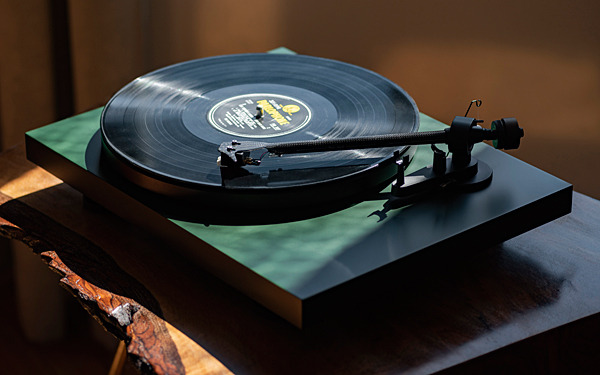 Ultimately, what this record player demonstrated—clearly— is the all-important distinction between sound and music. While listening to it, I was aware of how different it sounded from my much more expensive Garrard 301. What do you give up with a budget turntable compared to a no-holds-barred one? Well, a bit of everything, really—it sounds less precise, less lifelike, less dramatic. But, importantly, while I was aware of the considerable sonic differences between the two turntables, I didn't really miss the Garrard. That's because the Pro-Ject was equally adept at playing music.
One of the records I've been listening to most is Lou Reed's New York (1-25829). For me, its exasperated, end-of-the-world mood resonates with the present moment. I started listening to it constantly in the spring, when I was home alone and sick with COVID; something about the ferocity of Reed's singing and lyrics—some of his best—felt cathartic and freeing. The spare instrumentation—two guitars, a six-string electric upright bass, and drums—allows the lyrics to come to the fore, and the 14 songs on New York unfold like a short story collection. After I lowered the tonearm onto the first track, "Romeo Had Juliet," I sat down and listened to the entire 58-minute song cycle with my eyes closed, getting up only to flip the record.
Ultimately, what this record player demonstrated—clearly— is the all-important distinction between sound and music. While listening to it, I was aware of how different it sounded from my much more expensive Garrard 301. What do you give up with a budget turntable compared to a no-holds-barred one? Well, a bit of everything, really—it sounds less precise, less lifelike, less dramatic. But, importantly, while I was aware of the considerable sonic differences between the two turntables, I didn't really miss the Garrard. That's because the Pro-Ject was equally adept at playing music.
One of the records I've been listening to most is Lou Reed's New York (1-25829). For me, its exasperated, end-of-the-world mood resonates with the present moment. I started listening to it constantly in the spring, when I was home alone and sick with COVID; something about the ferocity of Reed's singing and lyrics—some of his best—felt cathartic and freeing. The spare instrumentation—two guitars, a six-string electric upright bass, and drums—allows the lyrics to come to the fore, and the 14 songs on New York unfold like a short story collection. After I lowered the tonearm onto the first track, "Romeo Had Juliet," I sat down and listened to the entire 58-minute song cycle with my eyes closed, getting up only to flip the record.
 Conclusion
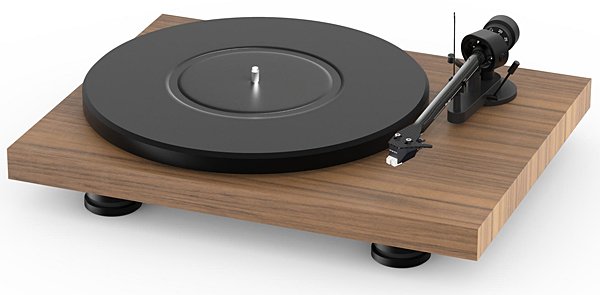
If there's a design parameter more crucial than a hi-fi component's ability to hold our attention and enable us to feel things, I don't know what it is. The Pro-Ject Debut Carbon EVO does this consistently, emphatically, at an attainable price. Recently I spent several months living with a $24,000 DAC that sounded wonderful but nonetheless failed to do this, reminding me that music always trumps sound. That's a reason why—in our age of high-rez streaming services that offer millions of perfect albums in the cloud—we still buy turntables and records. Highly recommended.
If I expected the Pro-Ject to sound flimsy or polite, I needn't have worried. As soon as I dropped the needle on a 45 of Gladys Knight and the Pips' "Got Myself a Good Man" (Soul S 35063), the congas blasted out of my 1967 Altec Valencias, followed by the tambourine. Soon, the Motown rhythm section locked on. The single sounded dynamically expressive, propulsive, and juicy, just begging to be turned up.
Few records make me as happy as Have Moicy! (Rounder Records 3010), a 1976 collaboration between Michael Hurley, the Unholy Modal Rounders, and Jeffrey Frederick and the Clamtones. This weird piece of folky Americana sounds like a barbecue jam session with banjos, beer, and possibly psilocybin. On "Midnight in Paris," Peter Stampfel—once memorably described as singing like a chicken who's won the lottery—chews up the lyric while Dave Reisch not so much plays his bass as mauls it. His Fender sounded loping and loud, and when Reisch slaps the song's final note, the EVO rendered it delightfully big and ridiculous.
I was particularly impressed by the Sumiko Rainier, which suffers from none of the plasticky or hollow sound afflicting some budget moving magnet cartridges and which captures the timbre and texture of instruments and voices more faithfully than it has a right to at its price. On John Coltrane and Johnny Hartman (Impulse A-40), the most grown-up record ever made, Coltrane's tenor sounded powerful and dark-toned, hanging several feet outside and above the left speaker. And, again, it was big—when called on, the EVO can produce a wide and tall (though not very deep) soundstage.
The dynamically emphatic Pro-Ject didn't prove quite as outstanding at pace and rhythm. The RPM app on my iPhone told me that it spun at 33.48rpm, or 0.44% fast, similar to every Rega I've owned. The Pro-Ject wasn't sluggish or tentative, but while playing Have Moicy! or the amphetaminic Gladys Knight single, it didn't release the notes with quite the screen-door-hitting-them-on-the-ass urgency of the Planar 3 (which costs nearly twice as much without a cartridge). Also, the Pro-Ject and its cartridge made surface noise more intrusive than many record players I've heard.
Mats MatterOne of the auxiliary pleasures of owning a turntable, especially one built to a budget, is finding ways to improve its performance and extend its value. Substituting the AudioQuest Wildcat phono cable ($120 for 1.5m length) made the Pro-Ject sound richer and ever-so-slightly warmer—less grainy, too. Then I switched out the felt mat; in my experience, they can rob the sound of liveliness and detail. I had several alternatives on hand, but only the SPEC AP-UD1 ($350) was similar in thickness to the stock mat (which matters because of the Pro-Ject's nonadjustable VTA). I took out an early stereo pressing of Frank Sinatra's Where Are You? (Capitol SW 855), replaced the felt mat with the Japanese aluminum-and-lacquer sheet, and sat down to listen to "Autumn Leaves" again. My mouth must have made an amazed "O" shape, because now Sinatra's voice emanated from between the speakers several feet higher than it had before, Gordon Jenkins's orchestra appeared to move back in relation to the voice, and what sounded like a layer of sonic hash was gone. How did something as seemingly trivial as a mat substitution effect such a positive change? "Turntables are resonance devices," Jonathan Halpern of Tone Imports, which brings SPEC products into the US, told me, "so playing with resonance can impart dramatic changes." And while using a $350 mat on a $500 turntable seems odd, the experiment showed the potential of a well-chosen upgrade.
Ultimately, what this record player demonstrated—clearly— is the all-important distinction between sound and music. While listening to it, I was aware of how different it sounded from my much more expensive Garrard 301. What do you give up with a budget turntable compared to a no-holds-barred one? Well, a bit of everything, really—it sounds less precise, less lifelike, less dramatic. But, importantly, while I was aware of the considerable sonic differences between the two turntables, I didn't really miss the Garrard. That's because the Pro-Ject was equally adept at playing music.
One of the records I've been listening to most is Lou Reed's New York (1-25829). For me, its exasperated, end-of-the-world mood resonates with the present moment. I started listening to it constantly in the spring, when I was home alone and sick with COVID; something about the ferocity of Reed's singing and lyrics—some of his best—felt cathartic and freeing. The spare instrumentation—two guitars, a six-string electric upright bass, and drums—allows the lyrics to come to the fore, and the 14 songs on New York unfold like a short story collection. After I lowered the tonearm onto the first track, "Romeo Had Juliet," I sat down and listened to the entire 58-minute song cycle with my eyes closed, getting up only to flip the record.
ConclusionIf there's a design parameter more crucial than a hi-fi component's ability to hold our attention and enable us to feel things, I don't know what it is. The Pro-Ject Debut Carbon EVO does this consistently, emphatically, at an attainable price. Recently I spent several months living with a $24,000 DAC that sounded wonderful but nonetheless failed to do this, reminding me that music always trumps sound. That's a reason why—in our age of high-rez streaming services that offer millions of perfect albums in the cloud—we still buy turntables and records. Highly recommended.