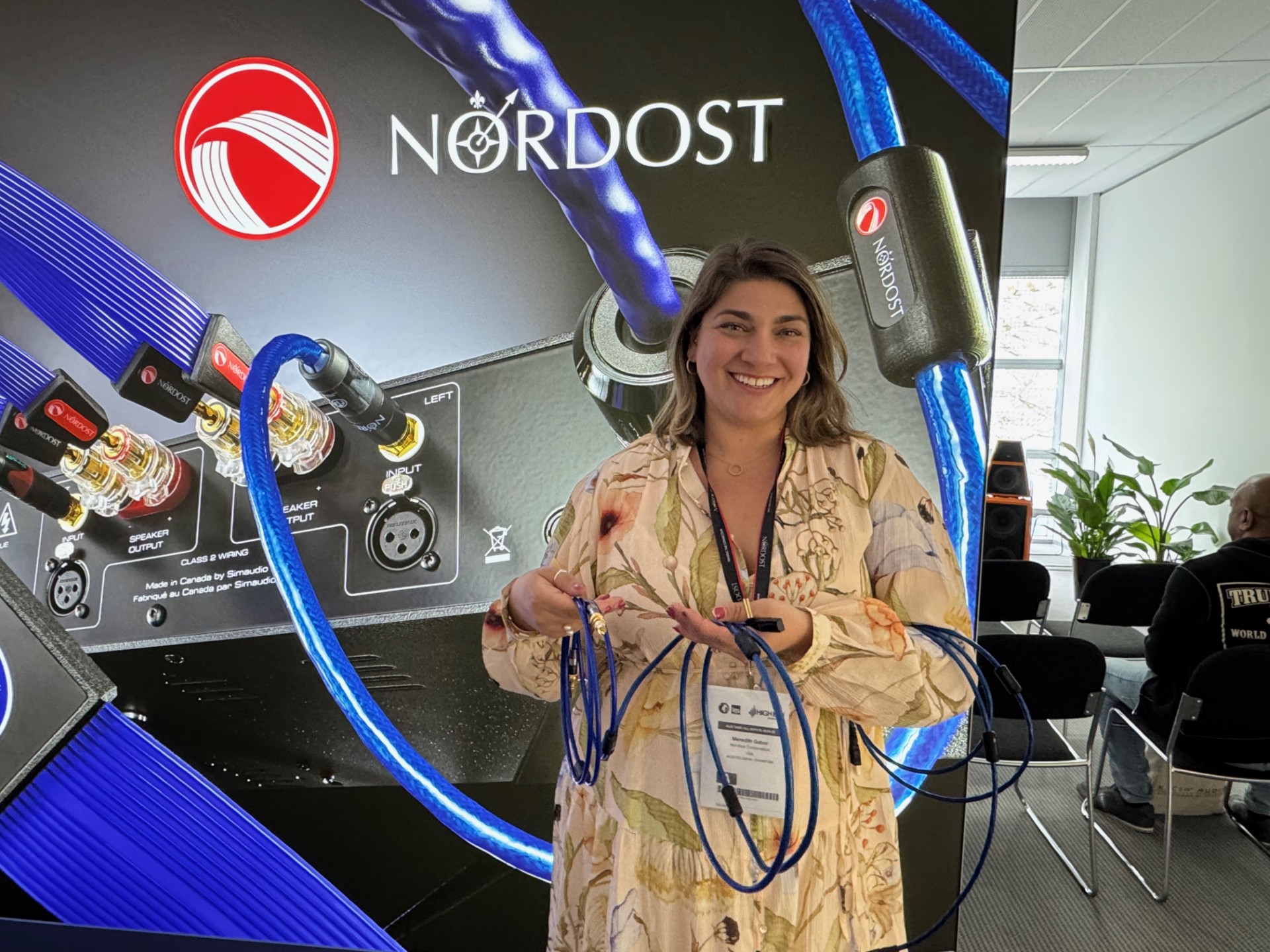
The big news in Nordost land was twofold. First, the company has upgraded its entire entry-level Leif line to the new Leif 3 series. The latest offerings, presented by PR representative Meredith Gabor, include Blue Heaven 3 digital interconnects, Ethernet and USB 2.0 cables, and (soon) a White Lightning 3 tonearm cable.
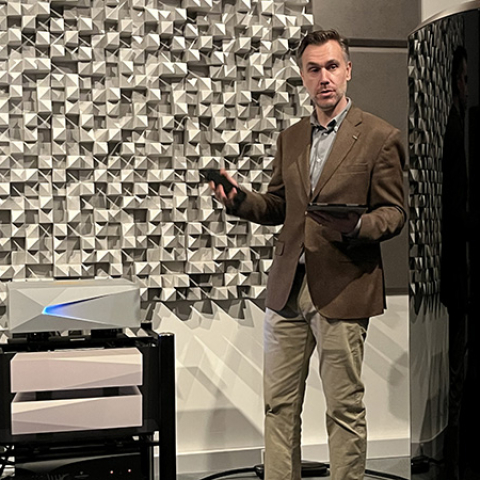
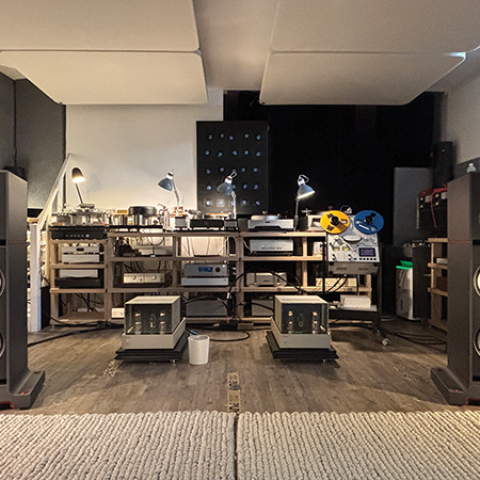
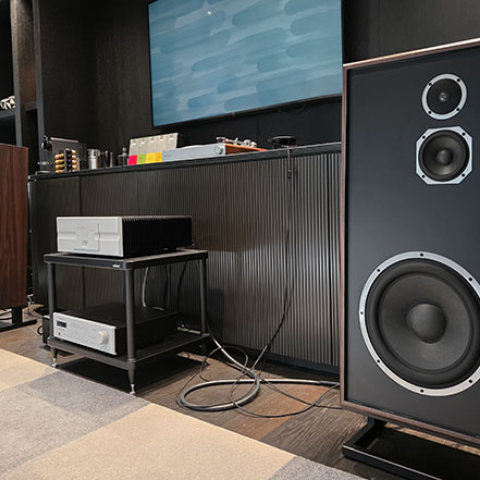
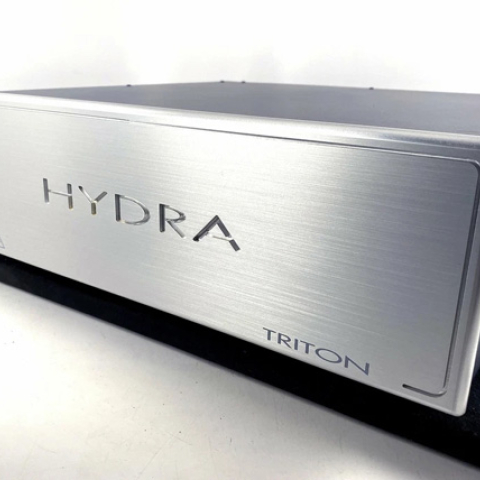
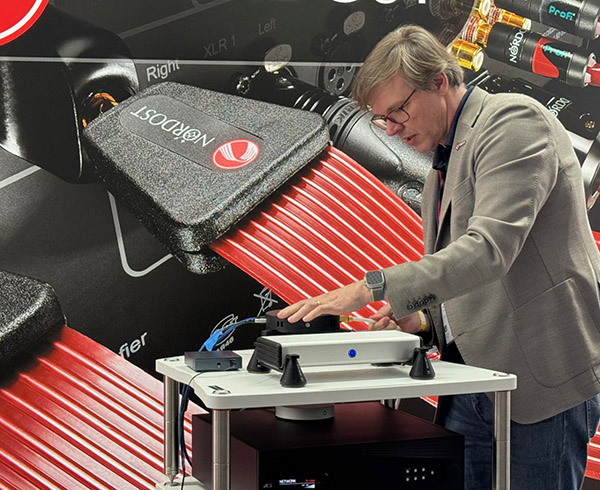 Nordost engineer Dennis Bonotto demonstrated the forthcoming QNet7 network switch, priced at $5500. Far bigger than the original QNet network switch I reviewed about three years ago, the model 7 is a Layer-2 Ethernet device that is claimed to yield improved sound. The rest of the system featured Wilson Audio WATT/Puppy loudspeakers, a Dan D’Agostino Momentum MxV integrated amplifier, a full dCS Rossini stack (Apex player, DAC, and master clock). Also present, though not auditioned, were a VPI Prime turntable and a Krell K-300p phono stage.
According to the Nordost press release, “The new QNet7 is equipped with nine independent, ultra-low-noise power supplies which minimize cross-contamination and ensure clean, interference-free operation.” The original QNet has six internal power supplies—and six different boards rather than QNet7’s eight.
“The real innovation is separating the layers past six,” Bonotto told me in a rush between demonstrations. “The signals are one hundred percent embedded inside the board with very little to no radiation, because radiation introduces crosstalk and interference.”
Bonotto then elaborated further. “The QNET7 is a layer-2 switch, meaning that it handles both layer-1 and layer-2 functionalities. For port 6. we were able to separate those into dedicated circuits. For the record, layer 1 is commonly referred to as “PHY” (physical) as it handles the interface to the physical medium. and layer 2 is formally known as Data Link layer but is very commonly referred to as the “MAC” layer.” One of the QNet7’s ports enables a direct optical connection, obviating the need for a separate optical-to-Ethernet converter. (I’m eager to hear how it sounds.) Another is a special “ultra-low-noise” port for the 100Mbps Ethernet connections preferred by many music servers and streamers.
Nordost engineer Dennis Bonotto demonstrated the forthcoming QNet7 network switch, priced at $5500. Far bigger than the original QNet network switch I reviewed about three years ago, the model 7 is a Layer-2 Ethernet device that is claimed to yield improved sound. The rest of the system featured Wilson Audio WATT/Puppy loudspeakers, a Dan D’Agostino Momentum MxV integrated amplifier, a full dCS Rossini stack (Apex player, DAC, and master clock). Also present, though not auditioned, were a VPI Prime turntable and a Krell K-300p phono stage.
According to the Nordost press release, “The new QNet7 is equipped with nine independent, ultra-low-noise power supplies which minimize cross-contamination and ensure clean, interference-free operation.” The original QNet has six internal power supplies—and six different boards rather than QNet7’s eight.
“The real innovation is separating the layers past six,” Bonotto told me in a rush between demonstrations. “The signals are one hundred percent embedded inside the board with very little to no radiation, because radiation introduces crosstalk and interference.”
Bonotto then elaborated further. “The QNET7 is a layer-2 switch, meaning that it handles both layer-1 and layer-2 functionalities. For port 6. we were able to separate those into dedicated circuits. For the record, layer 1 is commonly referred to as “PHY” (physical) as it handles the interface to the physical medium. and layer 2 is formally known as Data Link layer but is very commonly referred to as the “MAC” layer.” One of the QNet7’s ports enables a direct optical connection, obviating the need for a separate optical-to-Ethernet converter. (I’m eager to hear how it sounds.) Another is a special “ultra-low-noise” port for the 100Mbps Ethernet connections preferred by many music servers and streamers.
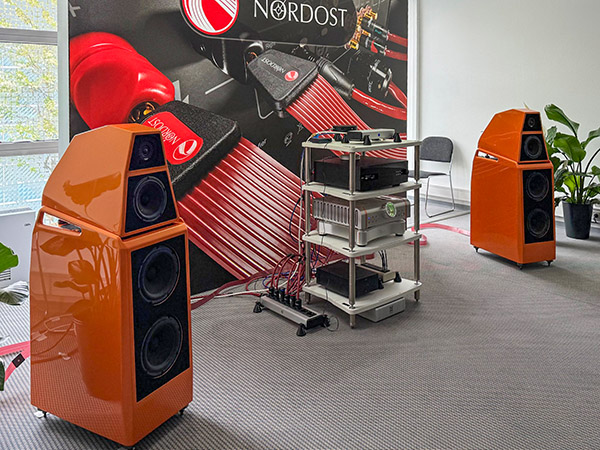 No surprise: the QNet7 delivered tighter bass, more depth, more transparency, and a smoother top than a standard TP-Link switch. Alas, I did not hear the all-important comparison between the original QNet and the QNet7. A review is in order.
Nordost engineer Dennis Bonotto demonstrated the forthcoming QNet7 network switch, priced at $5500. Far bigger than the original QNet network switch I reviewed about three years ago, the model 7 is a Layer-2 Ethernet device that is claimed to yield improved sound. The rest of the system featured Wilson Audio WATT/Puppy loudspeakers, a Dan D’Agostino Momentum MxV integrated amplifier, a full dCS Rossini stack (Apex player, DAC, and master clock). Also present, though not auditioned, were a VPI Prime turntable and a Krell K-300p phono stage.
According to the Nordost press release, “The new QNet7 is equipped with nine independent, ultra-low-noise power supplies which minimize cross-contamination and ensure clean, interference-free operation.” The original QNet has six internal power supplies—and six different boards rather than QNet7’s eight.
No surprise: the QNet7 delivered tighter bass, more depth, more transparency, and a smoother top than a standard TP-Link switch. Alas, I did not hear the all-important comparison between the original QNet and the QNet7. A review is in order.