 Other engineering goodies
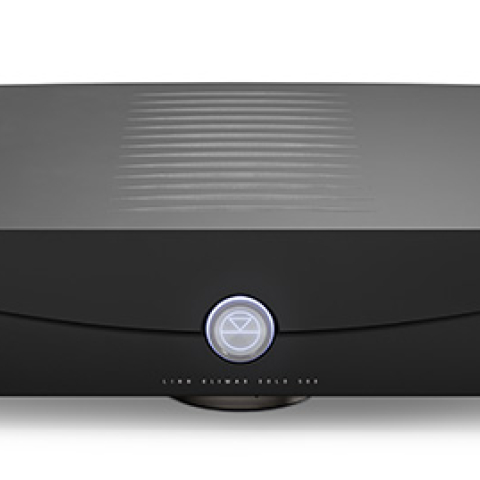
I asked Roscoe how much power the Klimax Solo 800 outputs in class-A before switching to class-B and if the number fluctuates with the ohm rating of loudspeakers. "By controlling bias current at the optimum value, the Klimax Solo 800 suffers far lower distortion than an amp which operates in class-A up to a higher, more arbitrary power level. I would therefore say that the changeover power level from class-A to class-B is not relevant for the Solo 800 because you will simply not hear it. "We've thought about each stage of the amplifier, paid lots of attention to every tiny little detail, and followed really good engineering practice, as we've done everything we can to minimize distortion by choosing the lowest distortion topologies. ... The Klimax Solo 800 has eight pairs of parallel devices, eight on each side, that share all the current. This reduces the amount of distortion that you get in each of those devices. In addition, we apply a little correction signal for any distortion that manages to creep in at the output. In short, we adjust distortion inside the amplifier to the absolute lowest that we can, and then reduce that tiny distortion still further with the error-correction loop. That's a big part of how we end up with such high performance in the amplifier. "The way we've mechanically coupled the devices to the heatsink enables us to share the heat very nicely across those devices so that we have very low differential between the junction temperature inside the transistors and the heat on the heatsink," Roscoe said. "That results in a good thermal interface between the transistor and the metal. Even when the transistors work extremely hard, they run at a nice, low temperature."
The amp's support feet, derived from those on Linn's flagship Klimax DSM network music player, are machined stainless steel with an impressed silicone O-ring to aid isolation. Their height ensures that Linn's natural convection cooling process functions as intended. Nonetheless, Rodger gave me the okay to try aftermarket feet, noting that during the design process, Linn listened with its own feet and "very standard interconnects and speaker cable." More on this topic follows. Linn doesn't think the Klimax Solo 800's Utopik power supply requires external power conditioning, and Rodger doesn't think the monoblock will feed back noise into the line. "That said, if an end user wants to employ a high-end [power] conditioner, and they like what it does to the sound of the whole system, we have a saying in Scotland: 'Fill your boots,' which means 'that's your prerogative, so go for it.'"
 Happiness
I've been blessed lately with a succession of superb amplifiers for review. Given such an embarrassment of riches, I wondered whether the comparatively lightweight Linns could hold their own. It didn't take long to find out that they did, as different as they sounded from the others. From first listen, the Linn Klimax Solo 800 impressed as one of the most neutral monoblocks I've reviewed. Dynamics were considerable if not overwhelming in their extremes, resolution was very fine, and color differentiation was notable. Every recording of great artistry I heard sounded coherent, ordered, perfectly in place, and musical to a T. A case in point: On Gidon Kremer and Kremerata Baltica's "Kaddish-Prelude" from the recently released and reviewed Songs of Fate with soprano Vida Miknevičiūtė (24/96 WAV download, ECM; footnote 6), the natural sound of percussion and instruments won me over immediately. Everything sounded as I know it to sound in live performance without added glitz, glamour, or edge.
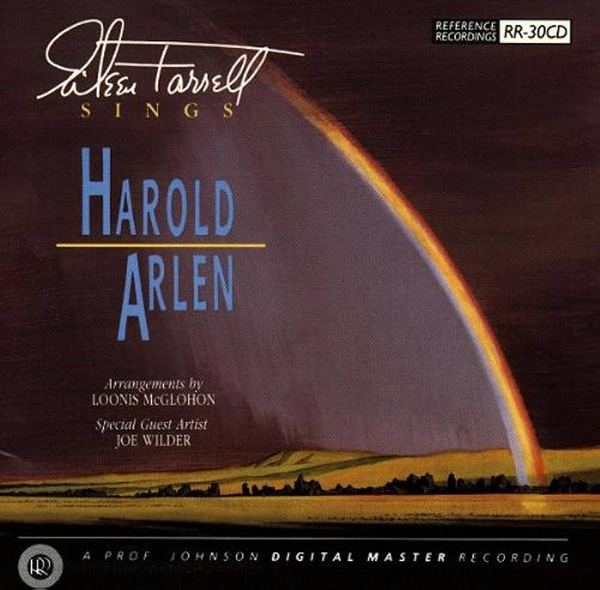 On another day, I ventured into baritone territory (and beyond), going all French mélodie with the very different voices of Gérard Souzay and Pierre Bernac followed by Victoria de los Ángeles, Régine Crespin (footnote 7), Sandrine Piau, Montserrat Caballé, Roland Hayes (caught late in his career), and Eileen Farrell. Farrell, one of Leonard Bernstein's favorite Wagnerians, was singing small-scale French and German songs by Debussy, Poulenc, and Schubert. Before you vocal aficionados conjecture that moving so many heavy amplifiers around has affected more than my back, check out 1960's An Eileen Farrell Song Recital with pianist George Trovillo (24/192 FLAC, Sony (Columbia)/Qobuz) and prepare to be amazed at how musical and idiomatic she can sound in this repertoire. Then consider Farrell's I've Got a Right to Sing the Blues (24/192 FLAC, Sony/Qobuz), also released in 1960, when she was in prime voice, and her late recordings of the American Songbook for Reference Recordings, produced by Tam Henderson (footnote 8), starting with 1989's Eileen Farrell Sings Harold Arlen (16/44.1 FLAC, Reference Recordings/Qobuz). For a chaser, try her remarkably full-voiced, Grammy Award–winning Wagner disc of Brünnhilde's "Immolation Scene" from Götterdämmerung and the Wesendonck Lieder with Leonard Bernstein and the New York Philharmonic, captured in wide-stage, three-dimensional sound (24/192 FLAC, Sony/Qobuz).
A reviewer must eventually return to the tried and true. Bass was quite fine and inner lines fleshed out nicely at the start of Rafael Payare and Orchestre Symphonique de Montreal's oft-referenced recording of Mahler's Symphony No.5 (24/96 FLAC download, Pentatone). Again, the sound's integrity won me over. I've reviewed amplifiers that deliver weightier, denser images but few through which timbres sound so true.
On another day, I ventured into baritone territory (and beyond), going all French mélodie with the very different voices of Gérard Souzay and Pierre Bernac followed by Victoria de los Ángeles, Régine Crespin (footnote 7), Sandrine Piau, Montserrat Caballé, Roland Hayes (caught late in his career), and Eileen Farrell. Farrell, one of Leonard Bernstein's favorite Wagnerians, was singing small-scale French and German songs by Debussy, Poulenc, and Schubert. Before you vocal aficionados conjecture that moving so many heavy amplifiers around has affected more than my back, check out 1960's An Eileen Farrell Song Recital with pianist George Trovillo (24/192 FLAC, Sony (Columbia)/Qobuz) and prepare to be amazed at how musical and idiomatic she can sound in this repertoire. Then consider Farrell's I've Got a Right to Sing the Blues (24/192 FLAC, Sony/Qobuz), also released in 1960, when she was in prime voice, and her late recordings of the American Songbook for Reference Recordings, produced by Tam Henderson (footnote 8), starting with 1989's Eileen Farrell Sings Harold Arlen (16/44.1 FLAC, Reference Recordings/Qobuz). For a chaser, try her remarkably full-voiced, Grammy Award–winning Wagner disc of Brünnhilde's "Immolation Scene" from Götterdämmerung and the Wesendonck Lieder with Leonard Bernstein and the New York Philharmonic, captured in wide-stage, three-dimensional sound (24/192 FLAC, Sony/Qobuz).
A reviewer must eventually return to the tried and true. Bass was quite fine and inner lines fleshed out nicely at the start of Rafael Payare and Orchestre Symphonique de Montreal's oft-referenced recording of Mahler's Symphony No.5 (24/96 FLAC download, Pentatone). Again, the sound's integrity won me over. I've reviewed amplifiers that deliver weightier, denser images but few through which timbres sound so true.
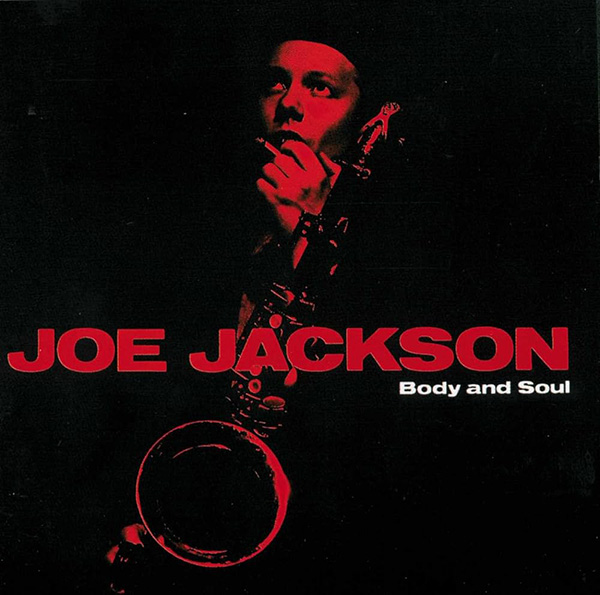 Friend Scott brought over a fresh playlist of oldies. I am not a fan of Joe Jackson's "The Verdict" from Body and Soul (16/44.1 FLAC, EMI/Qobuz), whose sonics reflect its early digital provenance; Scott, though, loved its wide soundstage and jangly energy. I really dug the digital transfer of tenor saxophonist Ike Quebec's 1962 "Loie" (Rudy Van Gelder Edition/2007 Digital Remaster), from Bossa Nova Soul Samba (16.44.1 FLAC, Blue Note Records/Qobuz), and "Don't Take Your Love from Me" from his 1962 record Blue & Sentimental (24/96 FLAC, Blue Note Records/Qobuz). The latter won me over with the sax's warmth and natural bite on top and the rich timbre of Grant Green's guitar.
Another listening session, this one with Dr. Gary Forbes, found me revisiting René Marie's "This is (Not) a Protest Song" from Sound of Red (24/96 FLAC, Motema Music/Qobuz). The first time we played this, with different amplification and the SFP modules in the optical network, my response was ho hum. This time, the clarity, warmth, and beauty of her voice through the Linns made me a convert to the Church of René. An hour later, we ended our audition with the marvelous Catherine Russell (whom I've interviewed and seen live). I've never heard her sound as good. If you have only time and bandwidth to take one thing away from this review, head to your system and stream Ms. Russell's "You've Got the Right Key but the Wrong Keyhole" from Harlem on My Mind (24/96 FLAC, Jazz Village/Qobuz). It could serve as a political anthem of sorts.
Friend Scott brought over a fresh playlist of oldies. I am not a fan of Joe Jackson's "The Verdict" from Body and Soul (16/44.1 FLAC, EMI/Qobuz), whose sonics reflect its early digital provenance; Scott, though, loved its wide soundstage and jangly energy. I really dug the digital transfer of tenor saxophonist Ike Quebec's 1962 "Loie" (Rudy Van Gelder Edition/2007 Digital Remaster), from Bossa Nova Soul Samba (16.44.1 FLAC, Blue Note Records/Qobuz), and "Don't Take Your Love from Me" from his 1962 record Blue & Sentimental (24/96 FLAC, Blue Note Records/Qobuz). The latter won me over with the sax's warmth and natural bite on top and the rich timbre of Grant Green's guitar.
Another listening session, this one with Dr. Gary Forbes, found me revisiting René Marie's "This is (Not) a Protest Song" from Sound of Red (24/96 FLAC, Motema Music/Qobuz). The first time we played this, with different amplification and the SFP modules in the optical network, my response was ho hum. This time, the clarity, warmth, and beauty of her voice through the Linns made me a convert to the Church of René. An hour later, we ended our audition with the marvelous Catherine Russell (whom I've interviewed and seen live). I've never heard her sound as good. If you have only time and bandwidth to take one thing away from this review, head to your system and stream Ms. Russell's "You've Got the Right Key but the Wrong Keyhole" from Harlem on My Mind (24/96 FLAC, Jazz Village/Qobuz). It could serve as a political anthem of sorts.
Some will question the price of these innately musical, highly refined amplifiers. I gave up trying to figure out why quality products cost what they do years ago and leave pronouncements of "good value" to those willing to stick their necks out farther than I am. Given how far my neck already sticks out, I stick to reporting what I hear and how it makes me feel. If a product reproduces music in ways that bring me joy, I say so, irrespective of its cost. For musical flow and truth in reproduction, the Linn Klimax Solo 800 mono power amplifier joins a select list of the finest monoblocks I've had the joy to review. It may be the lightest first-class class-AB amplifier of the lot, but it's also one of the best. Try to visit a Linn dealer or show where they're set up properly and mated with components and cabling of comparable quality, run them through their paces, and then write the next paragraphs in your own words. I'm confident your own account will complement my own and my Class A recommendation
Footnote 4: The bolding is Linn's. Footnote 5: My copious thanks to Scott Campbell for helping with this and obviating the need to run back and forth between the detached music room and the second floor office multiple times during each switch.