Photos by Chuck Francis
For thoughts about cables generally and reviewing methodology, see Martin Colloms's essay "Colloms on Cables."
Ray Kimber founded his enterprise (footnote 1) in the late 1970s, and for the last half-century has withstood the ravages of this difficult market. He first got involved in cable technology while addressing the problems of induced interference in audio connections where high-power installation lighting was involved, especially early thyristor-controlled systems.
He found that standard braided shielding was effective with regards to induced noise but that such methods impaired sound quality. As an alternative, he began trials with variations on the classic twisted-pair conductor geometry, which is self-screening to some degree, avoiding the need for an external shield. This approach proved promising for sound quality and was the first step on the road to novel, more complex braided constructions where both sound quality and electromagnetic noise rejection could be improved.
Here in the UK, distributor and sometime audio designer Russ Andrews has hosted the Kimber product range for decades, with judicious selection and occasional fine tuning of the cable recipe tailored for local market circumstances. Russ is a good listener, and he has been able to choose from a broad range of Ray's designs those that are most applicable to the UK, satisfying picky, critical purchasers. I checked Russ's online catalog and noted no fewer than149 Kimber products or products that utilize Kimber technology.
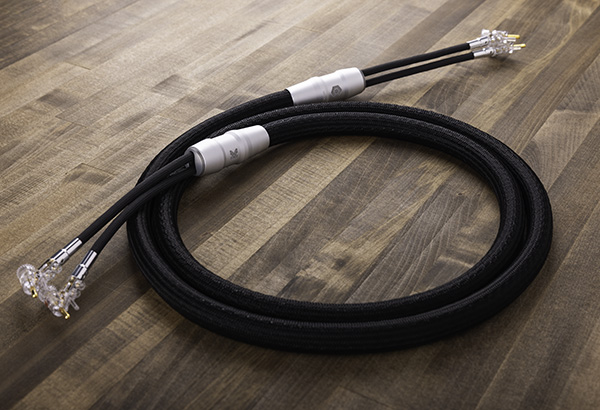 Kimber Carbon 18Ll Loudspeaker Cable
Packed in a sturdy Pelican transit crate, this substantially built loudspeaker cable ($8400 for a 6m pair) is quite rigid, with a large bending radius, so before ordering, be sure to take into account the intended routing and make sure there is enough slack for all the required bends.
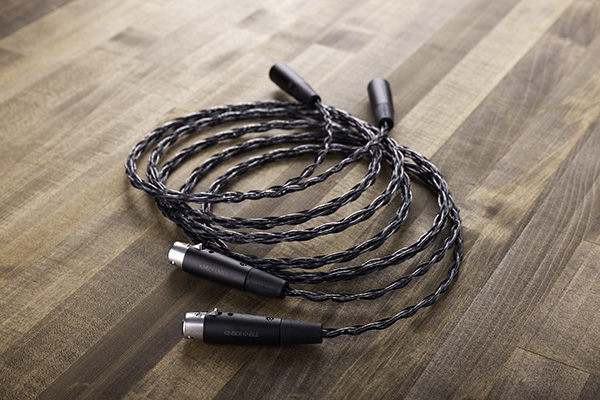 Kimber Carbon Balanced Interconnect
Constructed as a durable open weave wrapped in black Teflon, this cable ($840 for a 2m pair) is similar to the Carbon speaker cables but without the central core. The design does not require shielding or an external jacket, so the Carbon interconnect is reasonably pliable. Tough FEP insulation is extruded around high-purity VariStrand bunches of copper conductors. Each channel section is a form of twisted pair; these channels are then woven together into a single stereo cable. In theory, this construction should help control electrical noise induction by eliminating the usual loop formed by physically separated L and R channels. My first impression: neutrality. I heard no sins of commission or omission. Once the listener finds that sense of equilibrium in the replay, abandoning the search for obvious artefacts, the cable's sheer musicality became apparent. Natural orchestral string sections were set in expansive yet focused images with satisfying depth and perspective. Soloists were well placed on a generous soundstage. There is a sense of stability and calm as the musical performances take precedence.
 Bob Dylan's "Man in the Long Black Coat" from Old Mercy (24/176 FLAC download, Columbia, served up via Roon) had beautiful presence and immediacy. Again, focus was especially good. "Storm Comin'," from the album Bright Morning Stars by the exquisite Canadian folk trio Wailin' Jennys (24/44.1 CD rip, Red House Records RHR CD 234), was rendered with presence and drama, crisp characterful bass, and, not least, exquisite vocals. Jan Garbarek's "Evenly They Danced," from the album Rites (CD, ECM 1685/86), was rendered accurately, with Jan's saxophone lead set in satisfying perspective within that familiar, sumptuous ECM acoustic. There's something special about Rites; it's so subtly and deeply layered that each product assessment requiring analytical concentration is an opportunity to discover new shadings of performance, atmosphere, and microdetail.
This high-end cable is seemingly minimalist, physically unimposing, and easy to install. In its context, it's a good value. Recommended.
Bob Dylan's "Man in the Long Black Coat" from Old Mercy (24/176 FLAC download, Columbia, served up via Roon) had beautiful presence and immediacy. Again, focus was especially good. "Storm Comin'," from the album Bright Morning Stars by the exquisite Canadian folk trio Wailin' Jennys (24/44.1 CD rip, Red House Records RHR CD 234), was rendered with presence and drama, crisp characterful bass, and, not least, exquisite vocals. Jan Garbarek's "Evenly They Danced," from the album Rites (CD, ECM 1685/86), was rendered accurately, with Jan's saxophone lead set in satisfying perspective within that familiar, sumptuous ECM acoustic. There's something special about Rites; it's so subtly and deeply layered that each product assessment requiring analytical concentration is an opportunity to discover new shadings of performance, atmosphere, and microdetail.
This high-end cable is seemingly minimalist, physically unimposing, and easy to install. In its context, it's a good value. Recommended.
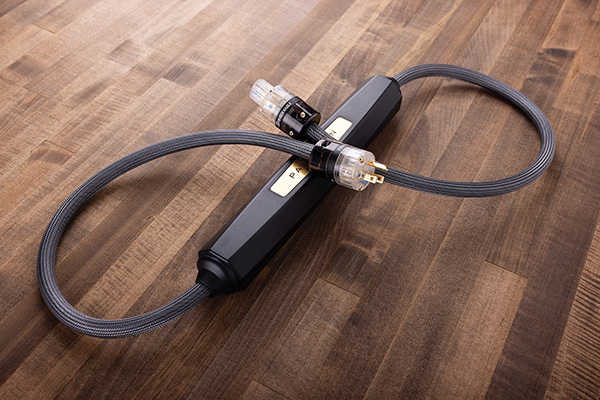
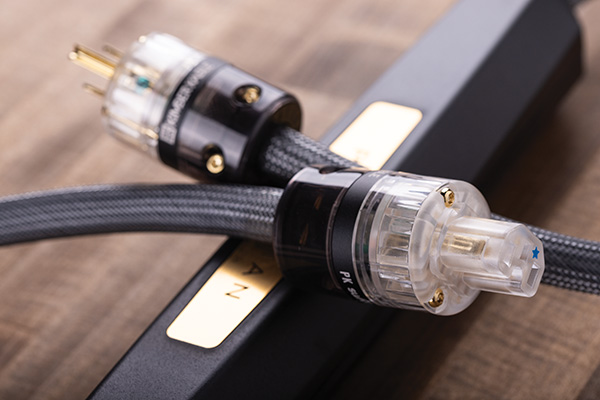 Kimber Summit Series PK10 Palladian Power Cable
Built with a massive, heavy-molded polymer loading unit at about the halfway point, with contents we can only guess at, this stiff, heavy cable needs to be carefully dressed, so be sure to order enough length to allow sufficient slack for grappling with connectors, and do not plan to hang it on rack-mounted equipment unless supported in some manner; otherwise it is likely to drag itself out of the relevant sockets. Rather it should be dimensioned such that much of its length may lie on the floor or on cable supports.
Footnote 1: Kimber Kable, 2752 S. 1900 W. Ogden, UT 84401. Tel: (801) 621-5530. Email: info@kimber. com. Web: kimber.com.