 Onward
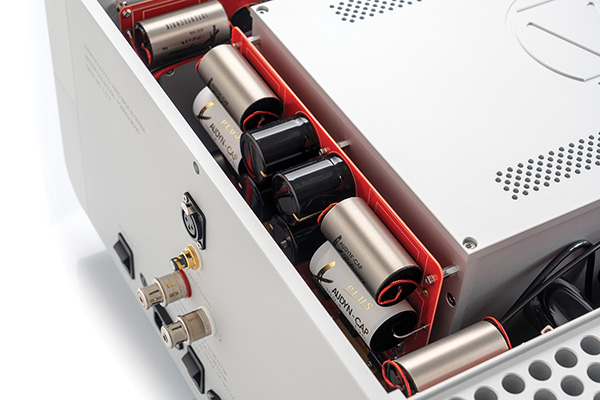
I thought the POWERa monos sounded mighty fine powered by the Stromtank, sounding best when their power conditioning was turned off, but I was also aware that current limitations imposed by the S 2500 Quantum MKII might squash dynamics. Not that I expected to use anywhere near each monoblocks' 3600W into 4 ohms in my 16' × 20' × 9.25' listening room. With wall power, the POWERa monoblocks sounded best with their internal power conditioning engaged. It's not that they didn't sound quite good without power conditioning—my wall power provides far smoother sound than it did before the wire upgrade, and bass is tighter. Nonetheless, engaging power conditioning made the sound even smoother, the noisefloor lower, the top-to-bottom focus tighter. The POWERa's internal power conditioning allowed the inner glow of instruments and voices to emerge with no sense of dynamic constraint. I reserved the double bank of dedicated duplex outlets for the POWERa's, plugged the Stromtank (which continued to feed front-end components) into one of the other outlets, and used the Acoustic Revive RTP-6 to power several other products. This was as close to my usual power setup as I could get.
My first listen came within an hour of installation, before power cables had settled in and wiring changes were complete. Setup was less than ideal, with no attention paid to whether the internal power conditioners were on or off. Nonetheless, my first impression proved accurate. The sound was as natural as I've come to expect from D'Agostino, Audio Research, VTL, and a host of other top-flight companies that specialize in amplification, if perhaps a little closer to neutral than some—but there was something that set them apart. "These amps give me more of everything I value from the D'Agostino Progression M550s," I thought. "There's greater color saturation, more presence, and stronger bass. There's more there there." As I got my power act together and fine-tuned the system (as I always do, as a matter of course), the POWERa monoblocks surpassed that initial assessment. By a lot. I queued up an old standby, Yello's "Electrified II" from Toy (24/48 MQA, Polydor 0602547879851/Tidal). Whoa! Even more than the soundstage, which covered the width of the room and extended far up, what stood out was the strength and solidity of deep bass—and beyond. Everything from the pounding beat to Dieter Meier's recitation and Malia's vocals seemed to have greater presence. For visceral impact, swiftness of attack, and sheer, apparent accuracy, the POWERa monoblocks top every other monoblock, stereo amp, or integrated I've reviewed (footnote 7). Ditto for color saturation, shading, dynamics, and the ability to portray the most complex passages without a hint of compression.
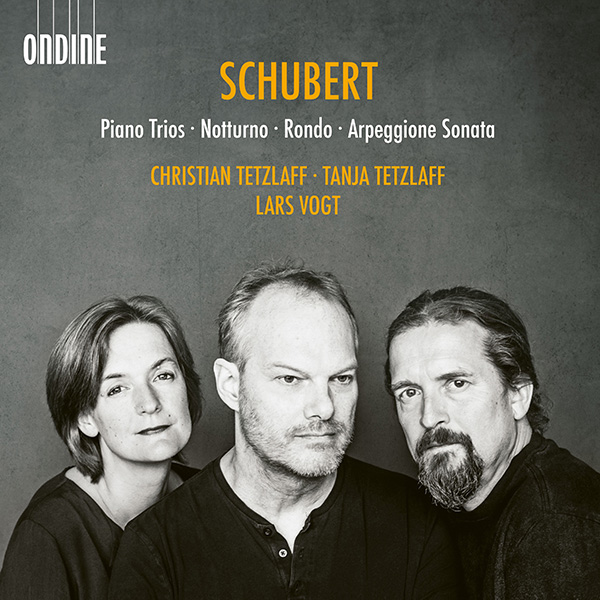 This "presence" was not limited to large-scale works. Listening to the deeply moving second movement of Franz Schubert's Piano Trio No.2, on the recording Schubert: Chamber Works with cellist Tanya Tetzlaff, her violinist brother Christian Tetzlaff, and the late pianist Lars Vogt (24/96 WAV, Ondine 1394), I was struck as much by the cello's rich, haunting eloquence as by the piano's poetry. Dynamics were tremendous, and Schubert's mix of pain, resignation, and affirmation was more shattering than I have heard it (footnote 9).
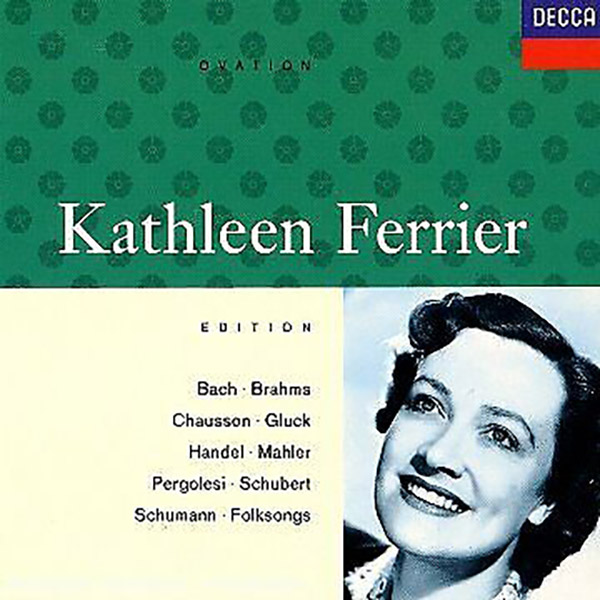 Ferrier's performance of this song stands apart from all others. The metronome imposes no restraints on her treatment of Dante Gabriel Rossetti's lyrics. "Your hands lie open in the long fresh grass," she sings with rapt stillness. After intoning the words "'Tis visible silence, still as the hour-glass" as though they were the holiest of revelations, she pauses. Universes of meaning, the wisdom of the ages, the confessions of countless lovers—all resonate in that silence.
 A shout out to the immersive deep bass on Ryuichi Sakamoto's "20210310," from 12 (24/96 FLAC, Milan Qobuz), which sounds fabulous through the POWERa's. So do the distinct colors of original instruments on the Chiaroscuro Quartet's recent recording Mozart: The Prussian Quartets (24/96 WAV, BIS 7318599925585). I listened to this recording carefully when I reviewed it a few months back, but it never displayed colors as convincing, distinct, and realistic as through the POWERa's.
Returning to voices: If you want to hear how a great singer projects radiant sounds high in their range, go no farther than soprano Elisabeth Schumann's 1934 recording of Josef Strauss's "Sphären-Klänge" (Music of the Spheres), from the invaluable ICON box set, Silver Thread of Song (16/44.1 FLAC, Warner Classics/Qobuz), where the POWERa's convey her infectious joy, glowingly sweet, disembodied high notes, and boundless personality like no other amps I've heard.
A shout out to the immersive deep bass on Ryuichi Sakamoto's "20210310," from 12 (24/96 FLAC, Milan Qobuz), which sounds fabulous through the POWERa's. So do the distinct colors of original instruments on the Chiaroscuro Quartet's recent recording Mozart: The Prussian Quartets (24/96 WAV, BIS 7318599925585). I listened to this recording carefully when I reviewed it a few months back, but it never displayed colors as convincing, distinct, and realistic as through the POWERa's.
Returning to voices: If you want to hear how a great singer projects radiant sounds high in their range, go no farther than soprano Elisabeth Schumann's 1934 recording of Josef Strauss's "Sphären-Klänge" (Music of the Spheres), from the invaluable ICON box set, Silver Thread of Song (16/44.1 FLAC, Warner Classics/Qobuz), where the POWERa's convey her infectious joy, glowingly sweet, disembodied high notes, and boundless personality like no other amps I've heard.
In recent amplifier reviews, I've often omitted direct comparisons due to major price discrepancies. Here, such discrepancies are unavoidable, but I'll make a comparison anyway. My reference D'Agostino Progression M550 mono—the least expensive monoblock in the D'Agostino line—cost less than half the Karan POWERa monoblock's considerable price. Nothing in the D'Agostino line, short of the top-level Relentless Epic 1600 Mono Amplifier (even more expensive at $349,500/pair, rated at 3000W into 4 ohms), can come close to matching the POWERa's output (footnote 10). Power for its own sake means little, however; what matters is the ability to harness power to achieve higher musical ends. Here is where the POWERa excels. Even without amp stands or a silent battery power source, the POWERa outperformed the Progression M550 in my system. More transparency, more resolution, more midrange and low-end weight and substance, more color saturation—the ability to harness power to reach deeper into the musical fabric and extract emotional truth—more and better are the bywords of the POWERa.
The Karan Acoustics POWERa monoblocks are big, heavy, extremely powerful, and extremely expensive. Yet, thanks to their sliding-bias class-A design, they will likely not tax your power grid every time you turn them on. What they give you in return for your investment, in the context of a similarly high-achieving system—I should say, what they've given me—is sound that has taken me closer to the transformative visceral, emotional, mental, and spiritual impact of great artists performing great music than anything I've heard in my system previously. The Karan is a phenomenal achievement, a benchmark for what can be achieved, at least in my modestly sized listening room. If you treasure greatness in audio reproduction and have the means to purchase a pair, seek them out. If you do not have the means, be careful: I, for one, do not wish to get their sound out of my head.
Footnote 7: To the naysayers and cynics who think, "Oh sure. Serinus sees the POWERa price tag and how much it weighs and immediately proclaims it 'the best,' I respond: If you have the means to visit a Karan dealer or audition these monoblocks at a show at which setup constraints do not compromise sound quality, please go and listen for yourself. I fully expect you to discover that the POWERa deserves the accolades.