With the KC62's EQ set for Room, the low-pass turnover point set at 60Hz, and the output level set just below 9 o'clock, the Falcon's 6dB, 160Hz dip pulled up to almost flat (–2dB). Response at 40Hz came up a full 6dB, enough to match the 100Hz, 1kHz, and 10kHz baseline. Below 40Hz, response dropped off at 12dB/octave. Now, the entire 40–200Hz range was +0/–3dB, which I thought nicely balanced the Falcon's mid- and high-frequency character. The Falcon's new geometric center made musical instruments sound more like themselves.
This was the flattest 40Hz–200Hz response I have ever achieved in my room, with any speaker. The effect of this flatness was not subtle. With the LS3/5a, the focus, impact, and fundamental tone of plucked bass notes—by Dave Holland, Charlie Haden, and Charles Mingus—were dramatically improved. With the KC62 dialed in, midrange presence and spaciousness were improved in ways that made it easier for me to look into the soundspace and stay focused on performances. Instruments and voices sounded bigger, more physical, and easier to "see" with the KC62 engaged.
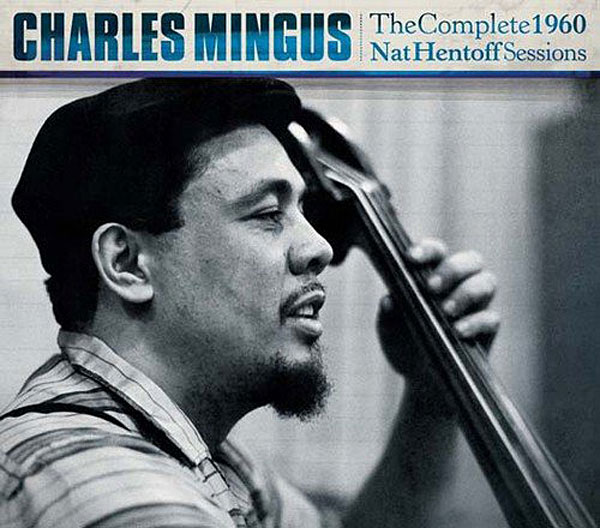 After an hour of listening to Charles Mingus The Complete 1960 Nat Hentoff Sessions (16/44.1 FLAC, Solar Records/ Tidal), I dropped the KC62's output level by one click, which made the little KEF subwoofer disappear completely and made all the bass appear to be coming from the Falcon boxes.
With the Falcon LS3/5a, I was listening with the MOSFET AVM Ovation A 6.2 ME integrated amplifier (see my review elsewhere in this issue). For the studies below, I switched to separates—Rogue Audio's RP-7 preamp driving the Parasound Halo a21 amplifier—because in my system, the KEF LS50s and the Magnepan .7s sound more dynamic and more sharply focused with the Parasound.
After an hour of listening to Charles Mingus The Complete 1960 Nat Hentoff Sessions (16/44.1 FLAC, Solar Records/ Tidal), I dropped the KC62's output level by one click, which made the little KEF subwoofer disappear completely and made all the bass appear to be coming from the Falcon boxes.
With the Falcon LS3/5a, I was listening with the MOSFET AVM Ovation A 6.2 ME integrated amplifier (see my review elsewhere in this issue). For the studies below, I switched to separates—Rogue Audio's RP-7 preamp driving the Parasound Halo a21 amplifier—because in my system, the KEF LS50s and the Magnepan .7s sound more dynamic and more sharply focused with the Parasound.
 With KEF LS50s
I've always considered KEF's LS50s to have a just-right geometric center to their bandwidth. I assumed their carefully engineered, music-favoring bass-mid-treble balance played the major part in their popularity. What I've liked most about the LS50s was how they played piano music with exceptional (for a standmount) corporality. My only complaint with the original LS50 is that I do not perceive it as an easy-flowing or exceptionally transparent transducer. The first thing I notice when I put my (non-Meta) LS50s in the system is their slight tightness and a hint of opacity, which my peeps say is cured in the Meta version. I wondered if the KC62 sub might ameliorate that, too. Except for a pointed 6dB dip at 125Hz, and a slightly broader 4dB rise at 800Hz, the KEF LS50s measure amazingly flat in my room (±3dB, 50Hz–12kHz). Without a subwoofer, they produce equal (baseline) levels at 60Hz, 100Hz, 1kHz, and 12kHz. I figured the LS50s would match up easily with the KC62 sub, but only if I kept the low-pass frequency really low.
I started these pas de deux experiments with the turnover at 40Hz and the level control at noon. Right away, this setup measured nicely, being down just 1dB at 40Hz. (Without the KC62, the LS50s were –9dB at 40Hz.) But what also happened was, in normal phase, the KC62 sub created a sharp 6dB peak at 50Hz. When I reversed phase, that peak turned into a 6dB dip. So, before I started moving the woofer box, or turning its knobs, or worrying, I stopped measuring and began auditioning music tracks, listening to both phase options.
 One especially helpful album was Ceremony by Swedish singer, composer, and keyboardist Anna von Hausswolff (16/44.1 FLAC Zebralution/Tidal). With phase set to 0°, bass did not seem overly full; rhythmic flow was more liquid than usual, and the soundstage had expanded in every direction. In dramatic contrast, the reversed phase setting played lean, closed in, and empty-sounding.
The KC62 sub also seemed to loosen up the LS50's flow and ameliorate that "hint of opacity." With the sub connected, the LS50 was more clean-glass transparent through the midrange and high frequencies. This is what happens when a subwoofer and satellite blend properly. I wondered how much more transparent my setup might have been with the new Meta LS50s.
I also wondered what would happen if I ran the LS50s through the KC62's high-pass filter and rolled them off below 60Hz—which is the lowest frequency at which the LS50s were flat, at baseline. Without the sub, the LS50s were –9dB at 40Hz, –22dB at 31Hz, and –30dB at 20Hz.
I will spare you the details of my experiments. Suffice it to say I preferred the LS50s running through the KC62's high-pass filter set to 40Hz. Relative to baseline, response was now +2dB at 40Hz, –5dB at 31Hz, and down just 20dB at 20Hz! Midrange clarity improved even more. But what impressed me most was how now, with the LS50s running through the high-pass filter, subtle changes in rhythm and tempo became more obvious. After getting nice measurements, I put on a variety of piano recordings and used them to tweak the woofer's level. I turned it down until the keyboard's upper, mid, and lower registers connected seamlessly. With the KC62 sub, the LS50s sounded more relaxed, tonally even, and natural.
With tall Maggies
One especially helpful album was Ceremony by Swedish singer, composer, and keyboardist Anna von Hausswolff (16/44.1 FLAC Zebralution/Tidal). With phase set to 0°, bass did not seem overly full; rhythmic flow was more liquid than usual, and the soundstage had expanded in every direction. In dramatic contrast, the reversed phase setting played lean, closed in, and empty-sounding.
The KC62 sub also seemed to loosen up the LS50's flow and ameliorate that "hint of opacity." With the sub connected, the LS50 was more clean-glass transparent through the midrange and high frequencies. This is what happens when a subwoofer and satellite blend properly. I wondered how much more transparent my setup might have been with the new Meta LS50s.
I also wondered what would happen if I ran the LS50s through the KC62's high-pass filter and rolled them off below 60Hz—which is the lowest frequency at which the LS50s were flat, at baseline. Without the sub, the LS50s were –9dB at 40Hz, –22dB at 31Hz, and –30dB at 20Hz.
I will spare you the details of my experiments. Suffice it to say I preferred the LS50s running through the KC62's high-pass filter set to 40Hz. Relative to baseline, response was now +2dB at 40Hz, –5dB at 31Hz, and down just 20dB at 20Hz! Midrange clarity improved even more. But what impressed me most was how now, with the LS50s running through the high-pass filter, subtle changes in rhythm and tempo became more obvious. After getting nice measurements, I put on a variety of piano recordings and used them to tweak the woofer's level. I turned it down until the keyboard's upper, mid, and lower registers connected seamlessly. With the KC62 sub, the LS50s sounded more relaxed, tonally even, and natural.
With tall Maggies
I am a longtime fan of Magnepan's .7 quasi-ribbon panel speakers, which deliver colossal sound spaces and an exquisitely detailed midrange. In my room, from 80Hz to about 3kHz, the .7s measure extremely flat (+3dB/–4dB). Another reason they work well here is because of their balanced frequency response: The geometric center of their bass-mid-high frequency balance is defined by how sharply (and symmetrically) they roll off at 80Hz and 12kHz.
Maggie people are always complaining about how impossible it is to find a subwoofer that merges invisibly with their beloved panel speakers. Apparently their ears are sensitive to the difference (in radiation and power response) between a tall quasi-ribbon dipole that dispenses broad sheets of pressurized air, and a little box with a round "huffer" puffing air, down somewhere near their ankles.
 When I first reviewed the .7s, I tried two of Magnepan's own dipolar planar DWM Bass Panels and found them to be more of a nuisance than a comfort. They kept bleeding into my midrange, sounding either drowsy or distressed.
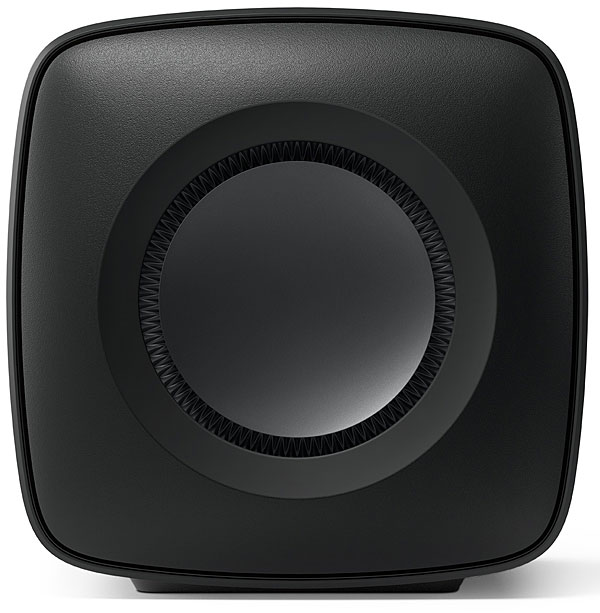
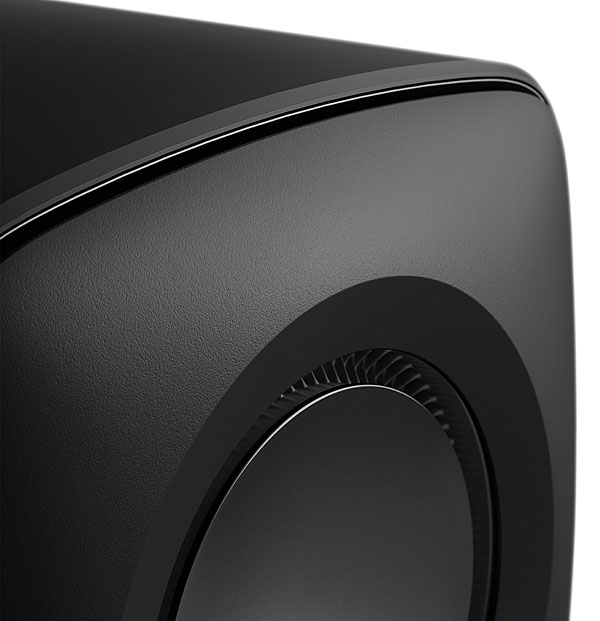
When I volunteered to review the KEF KC62, I assumed it would work with KEF's LS50s. I also had a feeling it would work with the Magnepan .7s. I am pleased to say it did, but it took some time and patience to make that happen.
As usual, I started by double-checking measurements of the .7s without the sub. My measurements indicated that I needed the KC62 to kick in quickly below 80Hz and not bleed into the short 3dB bump at 100Hz. To affect that, I started by running the Maggies first through the KEF with the high-pass filter set to 70Hz, but it sounded thick and bumped up the bump by 3dB. When I moved the high-pass turnover down to 60Hz and set the level by ear, it all came together frequency-wise. With these settings, the response was perfectly flat from 40Hz to 90Hz, rolling off gently to –10dB at 30Hz, but I did not like how the KC62's circuitry was diminishing the ease and natural transparency of the .7's midrange and ribbon highs. That setup measured almost perfectly, but the sound felt staid, artificial, and homogenized. I reconfigured everything and let the Magnepans run full range.
When I first reviewed the .7s, I tried two of Magnepan's own dipolar planar DWM Bass Panels and found them to be more of a nuisance than a comfort. They kept bleeding into my midrange, sounding either drowsy or distressed.
When I volunteered to review the KEF KC62, I assumed it would work with KEF's LS50s. I also had a feeling it would work with the Magnepan .7s. I am pleased to say it did, but it took some time and patience to make that happen.
As usual, I started by double-checking measurements of the .7s without the sub. My measurements indicated that I needed the KC62 to kick in quickly below 80Hz and not bleed into the short 3dB bump at 100Hz. To affect that, I started by running the Maggies first through the KEF with the high-pass filter set to 70Hz, but it sounded thick and bumped up the bump by 3dB. When I moved the high-pass turnover down to 60Hz and set the level by ear, it all came together frequency-wise. With these settings, the response was perfectly flat from 40Hz to 90Hz, rolling off gently to –10dB at 30Hz, but I did not like how the KC62's circuitry was diminishing the ease and natural transparency of the .7's midrange and ribbon highs. That setup measured almost perfectly, but the sound felt staid, artificial, and homogenized. I reconfigured everything and let the Magnepans run full range.
 Instead of measuring this setup, with the full-range Maggies plus the KC62, I listened to two albums, Ito Ema playing J. S. Bach's Goldberg Variations (MA CD M024A), and Alexandre Desplat's Isle of Dogs (Original Score) (16/44.1 FLAC Abkco Records/Tidal), an album I always really enjoy. With the Ito Ema, I rough-set the sub level and turnover point till I was happy with the weight of the piano's left-hand register. Then I switched to Isle of Dogs for finer tuning.
Desplat's Isle of Dogs is sonically complex. To get the sound right, I made subtle, one-click-at-a-time adjustments, alternating between subwoofer level and crossover frequency. Repeat-playing "Shinto Shrine" and "Six Months Later + Dog Fight," I used my ears to get the correct density and volume of tone, but the best sound and final precise sub-sat tuning came from paying special attention to Isle of Dogs' dense harmonic textures. On this album, kettle drums, plucked bass, low reeds, and chanting male voices dominate the soundscape with a strong, tactile presence. When Isle's distinctive textures came into their sharpest focus, I knew the woofer was set correctly.
With the .7s and the KC62s chanting in unison, I became more enthralled than ever with the force, form, and blatant charm of this splendid Alexandre Desplat soundtrack.
In sum
Instead of measuring this setup, with the full-range Maggies plus the KC62, I listened to two albums, Ito Ema playing J. S. Bach's Goldberg Variations (MA CD M024A), and Alexandre Desplat's Isle of Dogs (Original Score) (16/44.1 FLAC Abkco Records/Tidal), an album I always really enjoy. With the Ito Ema, I rough-set the sub level and turnover point till I was happy with the weight of the piano's left-hand register. Then I switched to Isle of Dogs for finer tuning.
Desplat's Isle of Dogs is sonically complex. To get the sound right, I made subtle, one-click-at-a-time adjustments, alternating between subwoofer level and crossover frequency. Repeat-playing "Shinto Shrine" and "Six Months Later + Dog Fight," I used my ears to get the correct density and volume of tone, but the best sound and final precise sub-sat tuning came from paying special attention to Isle of Dogs' dense harmonic textures. On this album, kettle drums, plucked bass, low reeds, and chanting male voices dominate the soundscape with a strong, tactile presence. When Isle's distinctive textures came into their sharpest focus, I knew the woofer was set correctly.
With the .7s and the KC62s chanting in unison, I became more enthralled than ever with the force, form, and blatant charm of this splendid Alexandre Desplat soundtrack.
In sum
In my listening room, KEF's sleek, small KC62 sub merged successfully with three high-quality loudspeakers—including KEF's own LS50. In each case, the KC62 subwoofer did more than add bass: It took an already great speaker and made it greater. Isn't that what a subwoofer is supposed to do?
After an hour of listening to Charles Mingus The Complete 1960 Nat Hentoff Sessions (16/44.1 FLAC, Solar Records/ Tidal), I dropped the KC62's output level by one click, which made the little KEF subwoofer disappear completely and made all the bass appear to be coming from the Falcon boxes.
With KEF LS50sI've always considered KEF's LS50s to have a just-right geometric center to their bandwidth. I assumed their carefully engineered, music-favoring bass-mid-treble balance played the major part in their popularity. What I've liked most about the LS50s was how they played piano music with exceptional (for a standmount) corporality. My only complaint with the original LS50 is that I do not perceive it as an easy-flowing or exceptionally transparent transducer. The first thing I notice when I put my (non-Meta) LS50s in the system is their slight tightness and a hint of opacity, which my peeps say is cured in the Meta version. I wondered if the KC62 sub might ameliorate that, too. Except for a pointed 6dB dip at 125Hz, and a slightly broader 4dB rise at 800Hz, the KEF LS50s measure amazingly flat in my room (±3dB, 50Hz–12kHz). Without a subwoofer, they produce equal (baseline) levels at 60Hz, 100Hz, 1kHz, and 12kHz. I figured the LS50s would match up easily with the KC62 sub, but only if I kept the low-pass frequency really low.
One especially helpful album was Ceremony by Swedish singer, composer, and keyboardist Anna von Hausswolff (16/44.1 FLAC Zebralution/Tidal). With phase set to 0°, bass did not seem overly full; rhythmic flow was more liquid than usual, and the soundstage had expanded in every direction. In dramatic contrast, the reversed phase setting played lean, closed in, and empty-sounding.
The KC62 sub also seemed to loosen up the LS50's flow and ameliorate that "hint of opacity." With the sub connected, the LS50 was more clean-glass transparent through the midrange and high frequencies. This is what happens when a subwoofer and satellite blend properly. I wondered how much more transparent my setup might have been with the new Meta LS50s.
I am a longtime fan of Magnepan's .7 quasi-ribbon panel speakers, which deliver colossal sound spaces and an exquisitely detailed midrange. In my room, from 80Hz to about 3kHz, the .7s measure extremely flat (+3dB/–4dB). Another reason they work well here is because of their balanced frequency response: The geometric center of their bass-mid-high frequency balance is defined by how sharply (and symmetrically) they roll off at 80Hz and 12kHz.
When I first reviewed the .7s, I tried two of Magnepan's own dipolar planar DWM Bass Panels and found them to be more of a nuisance than a comfort. They kept bleeding into my midrange, sounding either drowsy or distressed.
When I volunteered to review the KEF KC62, I assumed it would work with KEF's LS50s. I also had a feeling it would work with the Magnepan .7s. I am pleased to say it did, but it took some time and patience to make that happen.
Instead of measuring this setup, with the full-range Maggies plus the KC62, I listened to two albums, Ito Ema playing J. S. Bach's Goldberg Variations (MA CD M024A), and Alexandre Desplat's Isle of Dogs (Original Score) (16/44.1 FLAC Abkco Records/Tidal), an album I always really enjoy. With the Ito Ema, I rough-set the sub level and turnover point till I was happy with the weight of the piano's left-hand register. Then I switched to Isle of Dogs for finer tuning.
Desplat's Isle of Dogs is sonically complex. To get the sound right, I made subtle, one-click-at-a-time adjustments, alternating between subwoofer level and crossover frequency. Repeat-playing "Shinto Shrine" and "Six Months Later + Dog Fight," I used my ears to get the correct density and volume of tone, but the best sound and final precise sub-sat tuning came from paying special attention to Isle of Dogs' dense harmonic textures. On this album, kettle drums, plucked bass, low reeds, and chanting male voices dominate the soundscape with a strong, tactile presence. When Isle's distinctive textures came into their sharpest focus, I knew the woofer was set correctly.
In my listening room, KEF's sleek, small KC62 sub merged successfully with three high-quality loudspeakers—including KEF's own LS50. In each case, the KC62 subwoofer did more than add bass: It took an already great speaker and made it greater. Isn't that what a subwoofer is supposed to do?