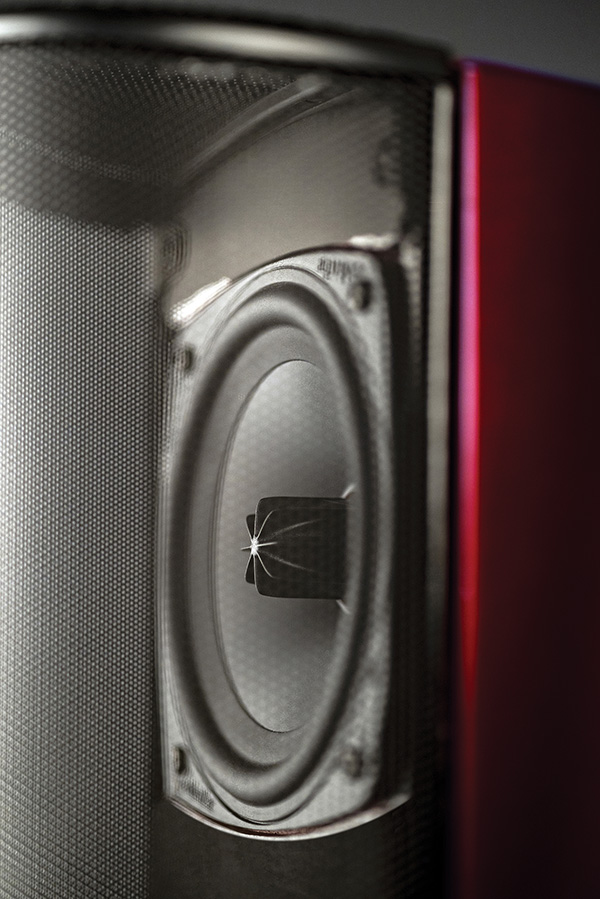
 I did some further experimentation with the speaker positions and subwoofer levels, but Chris's and Stephen's choices gave the optimal balance from the low bass through to the lower midrange. I then installed the spikes to the aluminum bases and started my auditioning. Amplification was provided by the Parasound JCA100 Tribute monoblocks I reviewed in June 2024; the source was, first, a PS Audio DirectStream MK2 D/A processor fed USB data from my Roon Nucleus+ server, then, when that was returned to the manufacturer, an MBL N31 CD player/DAC converting Ethernet data from the Nucleus+.
Listening
I did some further experimentation with the speaker positions and subwoofer levels, but Chris's and Stephen's choices gave the optimal balance from the low bass through to the lower midrange. I then installed the spikes to the aluminum bases and started my auditioning. Amplification was provided by the Parasound JCA100 Tribute monoblocks I reviewed in June 2024; the source was, first, a PS Audio DirectStream MK2 D/A processor fed USB data from my Roon Nucleus+ server, then, when that was returned to the manufacturer, an MBL N31 CD player/DAC converting Ethernet data from the Nucleus+.
ListeningAs usual with my loudspeaker reviews, I started my critical listening with the diagnostic test tones on the magazine's Editor's Choice CD (Stereophile STPH016-2; no longer available). The 1/3-octave warble tones extended cleanly and evenly from 200 to 125Hz, with then the 100Hz and 50Hz bands a little quieter than the 80Hz, 63Hz, and 40Hz bands. As is always the case, the 32Hz tone was boosted by the lowest-frequency mode in my room. The 25Hz tone was easily audible at my normal listening level, but the 20Hz tone was suppressed. Something in the right speaker vibrated strongly with the 63Hz warble tone; I could prevent this by pressing a hand against the enclosure. (My samples had been previously reviewed for another publication, so maybe something, perhaps the corresponding passive radiator, worked loose in shipping. In any case, the vibration wasn't audible when I was playing music.) The half-step–spaced tonebursts on Editor's Choice were reproduced evenly, but listening to the sidewalls with a stethoscope while I played these tones, I did notice some liveliness just below 1kHz in an area level with the tweeter. With the half-step tonebursts, there was no trace of the 63Hz resonance. The dual-mono pink-noise track on Editor's Choice was reproduced as a narrow central image, without any apparent splashing to the sides at any frequencies. Although my ear height is a few inches below the T66's tweeter axis, the tonal quality didn't change appreciably if I moved my head higher. If I slouched, the balance started to sound a little hollow.
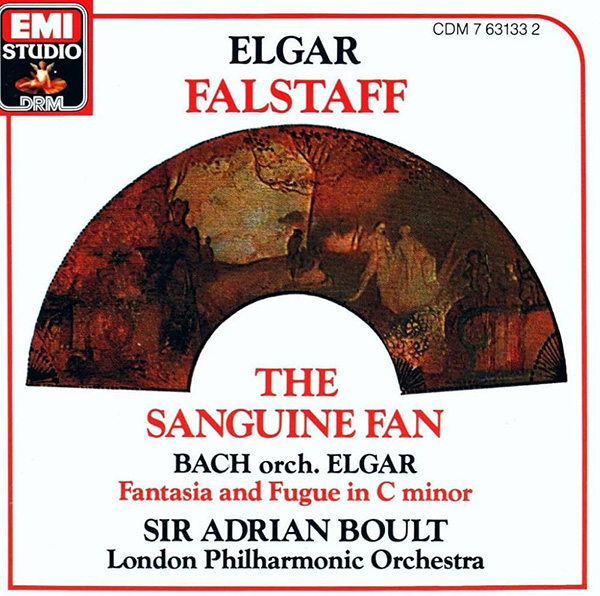 The latter offered benefits and drawbacks. The high frequencies worked well with well-recorded orchestral albums, like Sir Adrian Boult and the London Philharmonic Orchestra's 1974 performance of Elgar's arrangement of Bach's Fantasia & Fugue in C Minor (16/44.1 ALAC ripped from CD, EMI Studio CDM 7 63133 2), adding space to the soundstage. However, with an early digital recording, like Elgar's overture In the South (Alassio), with the Scottish National Orchestra conducted by Sir Alexander Gibson from 1983 (16/44.1 ALAC, Chandos 6652), the T66s weren't forgiving of this recording's already gritty-sounding violins. In this respect, the smoother-balanced PS Audio D/A processor proved to be a better partner with the GoldenEar speakers than the MBL N31, despite its lower measured resolution.
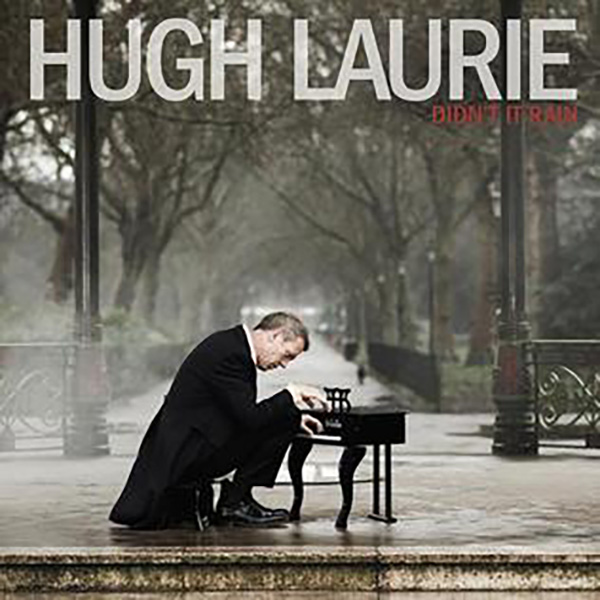
Chris and Stephen had used several vocal recordings when they optimized the setup of the speakers in my room, and the T66s consistently excelled when it came to reproducing voices. I hadn't played Hugh Laurie's New Orleans–styled album Didn't It Rain (16/44.1 ALAC, Warner Bros 535893) in too long a time. Whether it was Laurie's gruff baritone on "Careless Love" or Gaby Moreno's plaintive pipes on "The Weed Smoker's Dream," the GoldenEars placed the singers palpably in the room with me. Piano recordings are very revealing of midrange problems, and the sound of Laurie's closely miked piano was commendably free from coloration.
The latter offered benefits and drawbacks. The high frequencies worked well with well-recorded orchestral albums, like Sir Adrian Boult and the London Philharmonic Orchestra's 1974 performance of Elgar's arrangement of Bach's Fantasia & Fugue in C Minor (16/44.1 ALAC ripped from CD, EMI Studio CDM 7 63133 2), adding space to the soundstage. However, with an early digital recording, like Elgar's overture In the South (Alassio), with the Scottish National Orchestra conducted by Sir Alexander Gibson from 1983 (16/44.1 ALAC, Chandos 6652), the T66s weren't forgiving of this recording's already gritty-sounding violins. In this respect, the smoother-balanced PS Audio D/A processor proved to be a better partner with the GoldenEar speakers than the MBL N31, despite its lower measured resolution.
Chris and Stephen had used several vocal recordings when they optimized the setup of the speakers in my room, and the T66s consistently excelled when it came to reproducing voices. I hadn't played Hugh Laurie's New Orleans–styled album Didn't It Rain (16/44.1 ALAC, Warner Bros 535893) in too long a time. Whether it was Laurie's gruff baritone on "Careless Love" or Gaby Moreno's plaintive pipes on "The Weed Smoker's Dream," the GoldenEars placed the singers palpably in the room with me. Piano recordings are very revealing of midrange problems, and the sound of Laurie's closely miked piano was commendably free from coloration.
 Just before I started listening to the T66s, I had been producing sessions at Manhattan's Sear Sound Studio for a forthcoming album of works composed by Sasha Matson. The singers on Matson's Little Woodstar, an homage to 47 endangered North American species performed by a vocal quintet and a studio orchestra (24/96 WAV), were reproduced without coloration, and the clarity with which the complicated counterpoint between their parts was presented was enthralling. A tip of the hat to First Soprano Aubrey Johnson, whose purity of tone was perfectly reproduced by the GoldenEars.
I have not been a fan of loudspeakers with a high-order woofer alignment (footnote 1); the tradeoff with the powerfully extended low frequencies such speakers offer can be a lack of articulation with bass instruments. That wasn't the case with the T66s. The rhythm section on another of Sasha Matson's compositions, the symphonic Fillmore Street, was the incomparable Melissa Slocum on double bass and the equally empathetic Alvester Garnett on drums. On the GoldenEars, the sounds of Slocum's bass and Garnett's kickdrum were sufficiently well-differentiated, as were the passages where tuba and double bass played in unison. The 12:00 setting worked with most of the music I played, but in the introduction to Fillmore Street's second movement, where a multitracked vintage Moog synthesizer is accompanied by timpani and an orchestral bass drum, I turned the subwoofers down a little to keep the balance from becoming too rich.
Just before I started listening to the T66s, I had been producing sessions at Manhattan's Sear Sound Studio for a forthcoming album of works composed by Sasha Matson. The singers on Matson's Little Woodstar, an homage to 47 endangered North American species performed by a vocal quintet and a studio orchestra (24/96 WAV), were reproduced without coloration, and the clarity with which the complicated counterpoint between their parts was presented was enthralling. A tip of the hat to First Soprano Aubrey Johnson, whose purity of tone was perfectly reproduced by the GoldenEars.
I have not been a fan of loudspeakers with a high-order woofer alignment (footnote 1); the tradeoff with the powerfully extended low frequencies such speakers offer can be a lack of articulation with bass instruments. That wasn't the case with the T66s. The rhythm section on another of Sasha Matson's compositions, the symphonic Fillmore Street, was the incomparable Melissa Slocum on double bass and the equally empathetic Alvester Garnett on drums. On the GoldenEars, the sounds of Slocum's bass and Garnett's kickdrum were sufficiently well-differentiated, as were the passages where tuba and double bass played in unison. The 12:00 setting worked with most of the music I played, but in the introduction to Fillmore Street's second movement, where a multitracked vintage Moog synthesizer is accompanied by timpani and an orchestral bass drum, I turned the subwoofers down a little to keep the balance from becoming too rich.
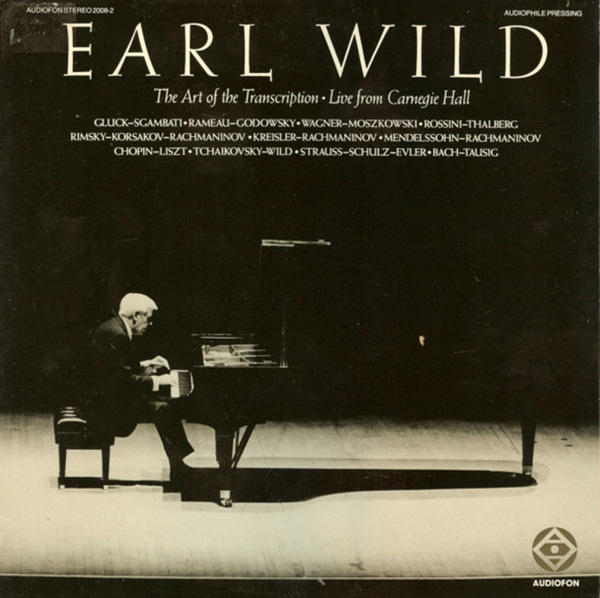 Conversely, with Earl Wild's Art of the Transcription: Live from Carnegie Hall (24/192 ALAC, from LP, Audiofon Records CD 72008-2), which was recorded in 1981 by Peter McGrath, I increased the subwoofer level by a couple of notches; the Baldwin piano's left-hand register on the extraordinary arrangement of Bach's Toccata and Fugue in D Minor deserved the enrichment. As with the Hugh Laurie tracks, the sound of Wild's instrument was delightfully free from midrange coloration (though the T66s' tweeters weren't forgiving of the record clicks on this needle drop).
 Summing up
As I had with the other GoldenEar speakers I have reviewed, I enjoyed my time with the T66s. Other than that slightly hot high end, which will require care taken with system matching and setup and will have less of an effect in rooms that are larger or have a significantly lower reverb time than mine, these full-range speakers neatly stepped out of the way of the music. And when I take the affordable price into consideration, I have no hesitation in recommending the T66 highly.
Footnote 1: See fig.3 in the measurements. The high-order alignment is due to the high-pass filter below the tuning frequency.