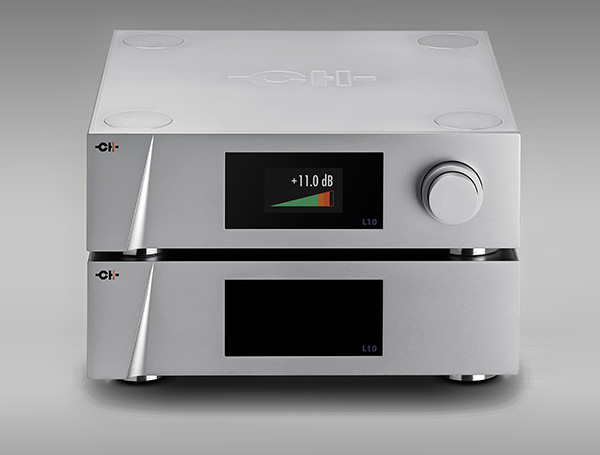
 DC offset, the ground switch, and spikes encore
Next, we listened to sound before and after calibration for DC offset. With DC offset compensated, three of Wolff's favorite test tracks—Kham Meslien's "Ta confiance" from the album
Fantômes... Futurs (24/48 FLAC, Heavenly Sweetness/Qobuz), Rachael Yamagata's album version of "Duet" with Ray LaMontagne, from
Elephants ... Teeth Sinking Into Heart (16/44.1 FLAC, Warner Records/Qobuz), and Jamie Woon's "Skin" from
Making Time (16/44.1 FLAC, Polydor Records/Qobuz)—sounded more intimate, natural, clear, present, sharply defined, detailed, and dynamic. Compensating for DC offset yielded superior sound.
Wolff then addressed the rear panel's ground switch. There are two positions, "Linked" and "Opened." When mixing components from multiple companies (as in my system), only listening can reveal which ground setting is best.
"We have done a lot internally to drop the noisefloor," he said. "The grounding scheme is one of the critical areas. As readers may know, pin 1 of XLRs and the outer shield of RCA connections carry signal ground. In most components, either nothing or just a little is done to separate signal (audio) ground from chassis ground. In all cases, interconnects between multiple components share signal ground references that manifest as noise or reduced resolution. Each represents a separate ground loop.
"If you have a complete CH Precision system, you can limit signal ground's reference to chassis ground to one point (think star grounding) by referencing signal ground to chassis ground in only one location (the "Linked" setting). 99.9% of the time, this point will sound best on the L10 and L1 with the switch set to Linked and the switch on other CH components set to 'Opened.'
"Since you have a mixed system with multiple components from other companies that do not use CH's type of noise-reducing grounding scheme, connecting them together will at some point create some degree of ground loops. Trial and error is the only way to tell whether 'Linked' or 'Opened' sounds best." In my case, lifting the ground—the "Opened" position—delivered more air and depth.
Days after Wolff departed, I flexed my muscles, gritted my teeth, pushed the huge Stromtank in front of my system this way and that, and traded the positions of the L10 power supply and the dCS Varèse left-channel DAC. This provided enough room to enable Wolff, on a return visit, to install spikes under the power supply. That second set of spikes further improved sound. Once I heard the difference, there was no going back—nor was there any need to. All my components sounded happy.
After this, the L10 operated flawlessly and silently. Yet I found myself lacking the perspective facilitated by intimate knowledge of a reference system's sound due to changes in amplification. I am accustomed to the
Dan D'Agostino Momentum M400 MxV monoblocks, but during the time the L10 was in the system, I moved from the D'Agostinos to a pair of
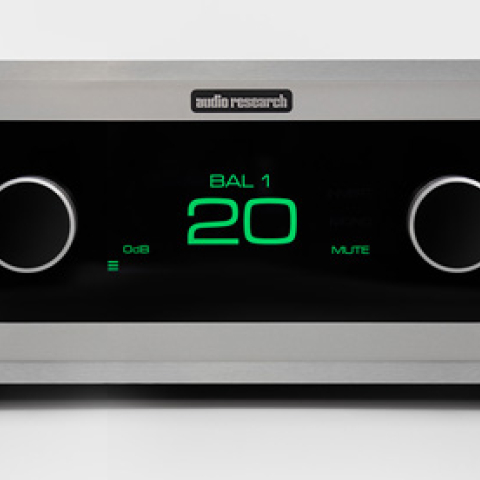
Audio Research 330Ms and on to the four "mighty fortress is our God" boxes that comprise the CH Precision M10 monoblocks. Things settled down once the M10s were in place, since moving them was not an option. Then before I could finish the listening for this review, my customary reference preamplifier, the
D'Agostino Relentless, left the roost temporarily because it was needed elsewhere.
To add to the confusion, in reaction to a prompt from Giolas, a former Wilson Audio Specialties employee, the driver-position adjustments on my
Wilson Alexia V loudspeakers changed. Then Steve Huntley of high-end distributor AXISS Audio visited to install five excellent Nihon Onkyo Engineering AGS diffusers, which further tamed room reflections.
All these changes improved the transparency and beauty of the sound, but once they were in place, I found I had lost
my place, ie, my reference. I was sonically adrift.
Eventually, with the help of a known reference, my husband David James Bellecci, I was liberated from Reviewer Adrift Syndrome when we installed my reference D'Agostino monoblocks atop the (unplugged) CH Precision M10s. Further liberation came when I installed my other reference preamplifier, the
Soulution 727, and compared the sound. More follows.
 What is the L10's sound?
If you want to hear the sound of one hand clapping, listen elsewhere. But if you want to hear the sound of one hand clapping against the other so clearly and distinctly that you can count the fingers on each hand and approximate the size of the palm, you must hear the L10.
That is not to imply that the L10 is cold and analytical. Not by any means. CH Precision's apparent determination to give every bit, no matter how fleeting, its full due delivers a level of clarity and detail that rivals the best preamps I have ever heard.
Just today, with the
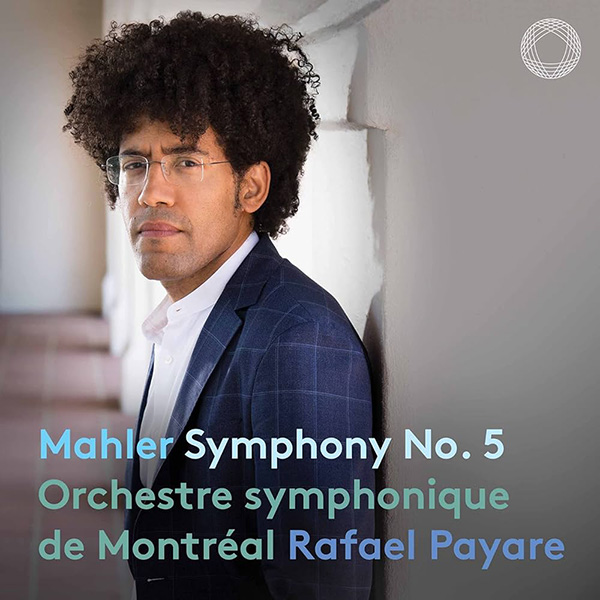
D'Agostino M400 MxV monoblocks installed, I listened to one of my favorite full-range, sock-it-to-me-all-at-once tracks, the first movement of Mahler Symphony No.5 performed by the Orchestre symphonique de Montréal under Rafael Payare (24/96 FLAC download, Pentatone). This music's bottom octaves sounded more focused, natural, strong, and in correct proportion to those above them than I recall from 587 previous auditions. If, ultimately, instrumental colors were less saturated and dynamic contrasts a bit less impactful than I've heard them on other occasions, the ability to hear instruments so clearly drew me deeper into the music and performance.
During one of Wolff's visits to adjust settings on the M10s, I suggested we cue up something ultrademanding. Wolff replied, "How about Mahler's Third Symphony?" Forswearing, for once, the usual suspects, I cued up the recent recording from Osmo Vänskä and the Minnesota Orchestra (24/96 FLAC, BIS/Qobuz). Alas, though the recording was fine, the performance was not up to standard. The opening trombone line sounded so workaday pedestrian that I hit "Pause," turned my head, and noted Wolff 's similarly dismayed reaction. I exclaimed, "Next!"
Wolff suggested Pierre Boulez's 2003 recording of the Mahler 3 with the Vienna Philharmonic (16/44.1 FLAC, Deutsche Grammophon/Qobuz). Once we heard how shallow the bass was, he proposed a safe choice: Michael Tilson Thomas's contemporaneous DSD-native recording with the San Francisco Symphony (24/96 FLAC, SFS Media/Qobuz). We couldn't stream the recording in its native DSD, but it still sounded wonderful. I was especially struck by the strength of bass and clarity of detail captured by the Tritonus recording team of Andreas Neubronner, Dawn Frank, and Peter Laenger. Thanks to the L10, I heard much more detail than I did when I first auditioned the SACD version.
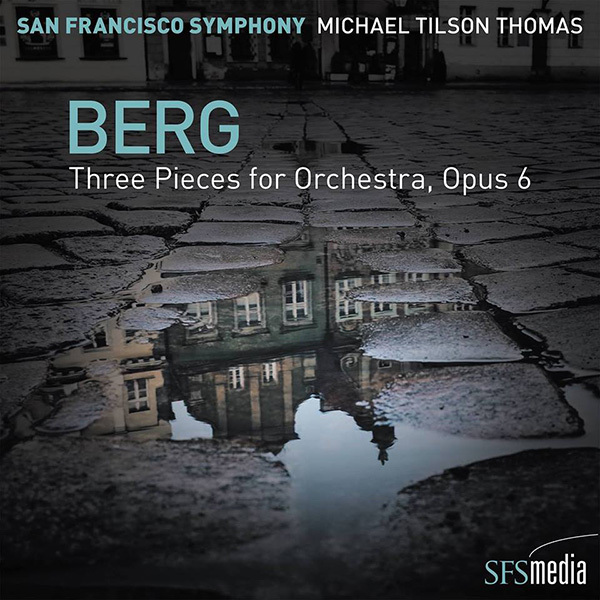
Eager to revisit another complex old San Francisco Symphony/MTT fave, I returned to a recording I reviewed in 2017, Alban Berg's
Three Pieces for Orchestra (24/192 FLAC, SFS Media/Qobuz). I was so stunned by the detail in the horn section—detail I had previously heard only from a prime seat in Davies Symphony Hall—that I emailed former San Francisco Symphony engineer Jack Vad to congratulate him on his achievement. Again, as much as the M10s contributed to the experience, I could not have appreciated their accomplishment without the mediation of the L10.
It was at this point that Wolff finished the procedure compensating for DC offset. He cued up several of his current test tracks. The first was bassist Kham Meslien's "Ta confiance." Meslien's instrument sounded fabulous: solid, deep, complete—everything I might want from a recording of double bass.
Jamie Woon's "Skin" was another of Wolff 's choices. This is a great track for exploring a system's ability to balance soft, intimate vocals and modest, tasteful accompaniment with strong, deep bass. The sound was superb.
Back in 2018, during the centenary of Debussy's death, two major labels released star-studded recordings of his sonatas. The first,
Debussy: Sonates & Trios (24/96 WAV, Erato/Download), includes performances on modern instruments from Renaud Capuçon, Emmanuel Pahud, Edgar Moreau, Bertrand Chamayou, Marie-Pierre Langlamet, and Gérard Caussé. The second,
Debussy: Les Trois Sonates, The Late Works, presents performances on period instruments by Isabelle Faust, Alexander Melnikov, Jean-Guihen Queyras, Javier Perianes, Xavier de Maistre, Antoine Tamestit, Magali Mosnier, and Tanguy de Williencourt.
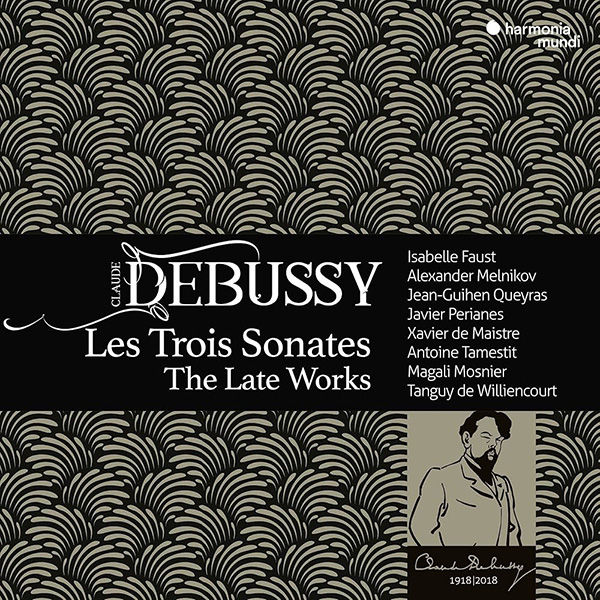
When I first auditioned these recordings more than seven years ago, they seemed sufficiently similar in sound and interpretation that I stuck with Erato's assemblage of modern instruments and ignored Harmonia Mundi's lighter-sounding period-instrument assemblage. This time, however, in the
Trio Sonata for Flute, Viola, and Harp, I was thrown off guard by the immense contrast between (a) the sound of Langlamet's modern harp and de Maistre's érard style Louis XVI harp from the end of the 19th century, and (b) the different artistic emphases, choices, and instrumental balances. I love it when a component is so good—so revealing—that it forces me to reassess the achievements of artists and engineers.
Abundant choice
Well past the 11th hour, my friend Scott Campbell helped me hoist the
Soulution 727 preamp onto my rack, supported by Wilson Pedestals. The Soulution preamp costs about 7% more than the CH Precision. I've never considered it a bass champ, but its air, clarity of detail, liquidity, musicality, and magic in the upper octaves are second to none.
We listened to
Love and Loss from the Rudersdal Chamber Players (24/352.8 WAV download, OUR Records) and three reference standbys—
Mahler Symphony No.4 from Les Siècles and François-Xavier Roth (24/96 WAV download, Harmonia Mundi), the aforementioned Mahler Symphony No.5 from Montréal and Payare, and Ike Quebec's "Minor Impulse" from
Blue and Sentimental (24/192 FLAC, Blue Note/Qobuz). The 727 placed instruments farther back on a remarkably transparent and coherent soundstage, convincingly surrounded by air. Colors were gratifyingly intense and uncolored, images possessed a musical liquidity reminiscent of tube gear, and the flow and emotional impact were like what I hear and feel from a prime seat in an excellent hall.

The 727 presented a rather different window on musical truth than the L10 did. Similarly priced preamps come from Constellation, Gryphon, Vitus, and (for tubes) VAC. Flagship amplifiers from Boulder and D'Agostino—my reference Relentless—cost far more. (Pricewise, the four-chassis "true monaural" version of the L10, at $138,000 in standard finishes, is a better match with the Boulder and the D'Agostino flagships.)
What dreams are made of
After listening to the CH Precision line preamplifier with three different sets of monoblocks, I remain in awe of its clarity, transparency, and commitment to musical truth. It offers a stunningly detailed portal to musical art. Cheap it ain't, but if you've got the bucks and a desire to move as close to the source as possible, it deserves a prominent place on a short list of must-hear preamplifiers. With at least a dozen dealers from Atlanta to Vancouver, it's available to show those so motivated to discover how far cutting-edge audio technology has progressed in the 21st century. With your favorite amplification, it could well prove to be the preamp of your dreams.