Setup considerations
Given the dimensions of my Grand Prix Monza amp stands and the 218's lack of protruding support feet—it only has four thin round (presumably felt) pads beneath it—I placed the 218 atop the Wilson Audio Pedestals I customarily use. This was essential because without the Pedestals or other suitable equipment supports, the corners of the amps would not have cleared the corners of the stands. I could have placed the amps on the floor without support feet, but that would have left them exposed to vibrations from my bamboo floor, putting them at a disadvantage to my reference and other amps. During my time with the 218s, one of the amps began to buzz. Sometimes the noise was low, sometimes it was a bit louder, and occasionally both amps buzzed. Changing power cables made no difference. Plugging them into other receptacles didn't help. I do not hear this noise with my reference amps. Regardless, even when it was present, the noise never interfered with listening, and the amps sounded so good that I doubt anything serious was wrong with them.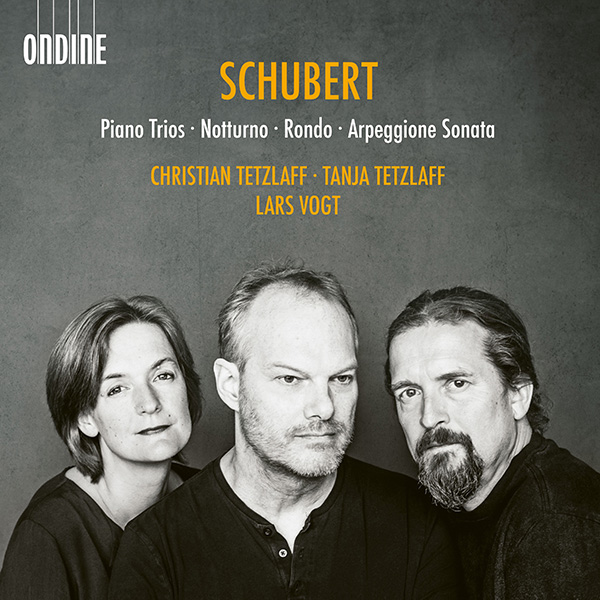 Listening 1
Even as I began writing this review, I continued to listen to the Burmester 218s, again and again. I couldn't help myself. I kept wanting to hear more.
My listening session of July 6 left me in shock. I began with the second movement, Andante con moto, from Schubert's late Piano Trio No.2 in E flat major, D. 929 (Op.100), movingly performed by violinist Christian Tetzlaff, cellist Tanja Tetzlaff, and pianist Lars Vogt on their two-CD recording, Schubert Chamber Works (24/96 WAV download, Ondine). Through the 218s, the sound was so beautiful, and the dynamic contrasts so arresting, that one movement became three (footnote 3). With each note, I could feel how much attention and heart the three musicians devoted to a recording made as Vogt was experiencing serious pain from the cancer that took his life the following year. The poignancy and joy that pulsate through the Second Piano Trio, which Schubert wrote one year before his death, are magnified by the conditions under which the recording was made. I cannot listen to this recording without sitting in awe of the near-transcendent strength and affirmation of the creative impulse as illness intensifies and the life force is waning.
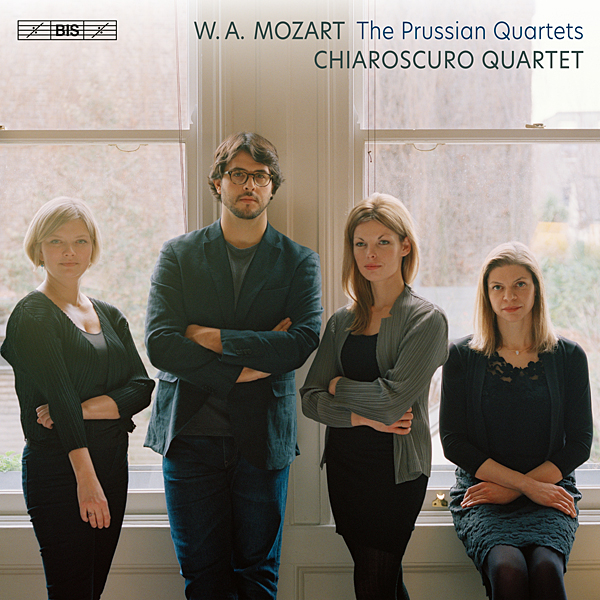 To contrast the sounds of modern instruments with those from the 18th century, I switched to another recording I've reviewed, the Chiaroscuro Quartet's SACD of Mozart's Prussian Quartets (24/96 FLAC download, BIS). I recall distinctly how the quartet's period instruments with gut strings sounded when I first played the files over two years ago. Through the Burmesters, the relatively thin sound of Claire Thirion's cello, designed by Carlo Tononi in 1720, was so much more pronounced that it blew me away. No one could mistake Thirion's instrument for the richer, meatier sound of Tetzlaff 's modern cello. As with the Schubert, the sound of a familiar recording was so transformed—so much more accurately reproduced—by the Burmester 218s that I continued to listen to movement after movement, deadline be damned (footnote 4).
I then went on a different sort of treasure hunt. Having just received high-resolution files for the hot-off-the-press CD Sommernachtskonzert Schönbrunn 2024 (24/96 WAV download, Sony), the Vienna Philharmonic's annual Summer Night Concert performed by Andris Nelsons and the Wiener Philharmoniker outside Vienna's Schönbrunn Palace on June 7, 2024, I compared Vienna's take on Smetana's "The Moldau (Vltava)" with that on Semyon Bychkov and the Czech Philharmonic's recent SACD of Ma Vlast (24/96 FLAC download, Pentatone). The differences were striking. Not only did Vienna's live outdoor recording have far more air (including the sounds of a gentle breeze) than the Czech's, which was recorded in the Dvorák Hall of the Rudolfinum in Prague; Vienna's wind instruments also possessed more seductive, contrasting colors.
As for the violins, there was no mistaking Vienna's incomparable silk for the Czech's steel. About 10 minutes in, Vienna's percussion, recorded by Teldex Studio Berlin's René Möller, trumped by a mile Prague's percussion.
Power cords and absolute polarity
To contrast the sounds of modern instruments with those from the 18th century, I switched to another recording I've reviewed, the Chiaroscuro Quartet's SACD of Mozart's Prussian Quartets (24/96 FLAC download, BIS). I recall distinctly how the quartet's period instruments with gut strings sounded when I first played the files over two years ago. Through the Burmesters, the relatively thin sound of Claire Thirion's cello, designed by Carlo Tononi in 1720, was so much more pronounced that it blew me away. No one could mistake Thirion's instrument for the richer, meatier sound of Tetzlaff 's modern cello. As with the Schubert, the sound of a familiar recording was so transformed—so much more accurately reproduced—by the Burmester 218s that I continued to listen to movement after movement, deadline be damned (footnote 4).
I then went on a different sort of treasure hunt. Having just received high-resolution files for the hot-off-the-press CD Sommernachtskonzert Schönbrunn 2024 (24/96 WAV download, Sony), the Vienna Philharmonic's annual Summer Night Concert performed by Andris Nelsons and the Wiener Philharmoniker outside Vienna's Schönbrunn Palace on June 7, 2024, I compared Vienna's take on Smetana's "The Moldau (Vltava)" with that on Semyon Bychkov and the Czech Philharmonic's recent SACD of Ma Vlast (24/96 FLAC download, Pentatone). The differences were striking. Not only did Vienna's live outdoor recording have far more air (including the sounds of a gentle breeze) than the Czech's, which was recorded in the Dvorák Hall of the Rudolfinum in Prague; Vienna's wind instruments also possessed more seductive, contrasting colors.
As for the violins, there was no mistaking Vienna's incomparable silk for the Czech's steel. About 10 minutes in, Vienna's percussion, recorded by Teldex Studio Berlin's René Möller, trumped by a mile Prague's percussion.
Power cords and absolute polarity
After I told Jim Austin about the buzzing emanating from the amps, he suggested I try different power cords, including those supplied by Burmester. In the process of retrieving those Burmester cords from the shipping boxes, I slipped while dismounting a storage crate and crashed to the floor. Nothing was broken, but my left foot and back ordered me to delay switching power cables until I could twist and bend without adding insult to injury. As lovely as the system sounded with the Burmester cords—they excelled in color and intimacy—instruments in both string quartets sounded smaller and lighter-bodied than before. The soundstage shrank, and depth and air decreased. In the bigger-boned Smetana, the opening dance of winds, intended to portray the sounds of the gentle streams that eventually join to create the Moldau river, sounded less colorful and compelling, and the music's bass foundation was in need of a gym membership. When the percussion got going close to 10 minutes in, the difference in slam was noticeable. As fine as Burmester's power cables may be—they'll save you a pretty penny over AudioQuest Dragon or Nordost Odin 2—they can't compare with the best the high-end has to offer, at least not in my system, with the Burmester 218s.
Shortly before deadline, a surprising suggestion arrived by email. "We would also recommend using the phase control on the [pre]amplifier when in mono bridged mode (I think the D'Agostino Relentless preamp has one?) due to the XLR connection circuit," it read. "You'll find that it could focus the sound a little better."
As the email suggested, reversing phase was as easy as pushing the polarity button on the Relentless preamp; it could also be done on the Vivaldi Apex DAC. While I've experimented with phase many times before—anyone who knows Peter McGrath knows how frequently he reverses phase while playing other engineers' recordings—I've always found the difference subtle.
Not now, however. Through the 218 monoblocks, the changes were obvious. They were not, however, as Burmester suggested. In normal phase, the soundstage was wide and convincing with left-center-right presented as one flowing and coherent whole. Colors were saturated and deep, bass was full and timbrally correct, and music sounded like music. In reverse phase, left did not flow into right, colors were muted, and the presentation felt covered by a scrim. Transparency was lost. This experiment affirmed that the wonderful sound I'd heard through these amplifiers since day one was the sound their engineering team had hoped I'd hear (footnote 5).
The sound, part 2
Let me return, then, to the day friend Scott Campbell and I installed the Burmester 218s. Scott, who was invited to choose the first music, opted for Ike Quebec's "Minor Impulse," from Blue and Sentimental (24/192 FLAC, Blue Note/Qobuz). Bass was impressively firm; images were solid, the soundstage huge, colors pronounced. By track's end, we both felt that we'd received everything the music had to offer.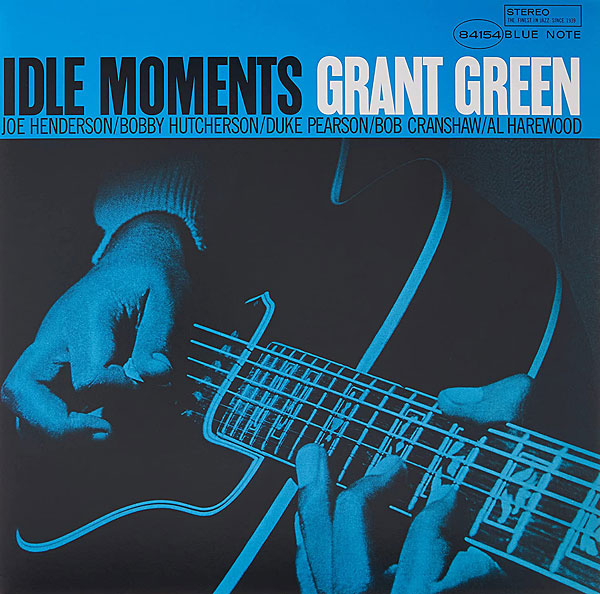 Scott found Grant Green's Idle Moments (24/192 FLAC, Blue Note/Qobuz) even more revealing. I enjoyed how relaxed the music sounded; it sounded very much as I had heard it through other components at AXPONA. I grooved on the abundant natural beauty of the midrange, which has a touch of whiteness at its core that somehow proves an asset. Next we moved on to our most demanding test, and together marveled at the strength, control, and timbral accuracy of bass in the first movement of Mahler's Symphony No.5 performed by Rafael Payare and Orchestre symphonique de Montréal (24/96 WAV download, Pentatone). We looked at each other and simultaneously said something like, "Damn, these are really great amps." Then we both let out a sigh and lamented that our time for listening that afternoon would end much too soon.
As the days progressed, I realized that my comparison of Burmester's power cables with AudioQuest Dragon and Nordost Odin 2 power cables had raised another question: Since Burmester's power cables came up a bit short, did the company's supplied XLR "Y" adapter cable shortchange what two 218s can ultimately communicate? The only way to find out was to switch to a single stereo Burmester 218 and listen.
We were not surprised to hear a narrower soundstage, less dynamic contrast, and less powerful bass; that's what I typically experience when I switch from two bridged stereo amps (in mono) to a single stereo amp (in stereo). But: Far more significant was that transparency, intimacy, and midrange beauty increased. In the deeply felt Andante con moto from Schubert's late Piano Trio No.2 in E flat major, the cello's subtlety and delicacy reached out from the soundstage, and the violin's commentary on the piano's melody tore at my heartstrings. The trio's sometimes turbulent expression of Schubert's struggle and pain was so raw, unfiltered, and beautiful that all I could do was sit in mute witness. Never had this music touched me as much as it did during this listening session.
If I have any criticism of Burmester's accomplishments, it is not of the 218 itself; it is that for audiophiles who can afford a pair to use as monoblocks, better adapter cables would surely bring out even more of their ultimate potential.
Comparisons
Scott found Grant Green's Idle Moments (24/192 FLAC, Blue Note/Qobuz) even more revealing. I enjoyed how relaxed the music sounded; it sounded very much as I had heard it through other components at AXPONA. I grooved on the abundant natural beauty of the midrange, which has a touch of whiteness at its core that somehow proves an asset. Next we moved on to our most demanding test, and together marveled at the strength, control, and timbral accuracy of bass in the first movement of Mahler's Symphony No.5 performed by Rafael Payare and Orchestre symphonique de Montréal (24/96 WAV download, Pentatone). We looked at each other and simultaneously said something like, "Damn, these are really great amps." Then we both let out a sigh and lamented that our time for listening that afternoon would end much too soon.
As the days progressed, I realized that my comparison of Burmester's power cables with AudioQuest Dragon and Nordost Odin 2 power cables had raised another question: Since Burmester's power cables came up a bit short, did the company's supplied XLR "Y" adapter cable shortchange what two 218s can ultimately communicate? The only way to find out was to switch to a single stereo Burmester 218 and listen.
We were not surprised to hear a narrower soundstage, less dynamic contrast, and less powerful bass; that's what I typically experience when I switch from two bridged stereo amps (in mono) to a single stereo amp (in stereo). But: Far more significant was that transparency, intimacy, and midrange beauty increased. In the deeply felt Andante con moto from Schubert's late Piano Trio No.2 in E flat major, the cello's subtlety and delicacy reached out from the soundstage, and the violin's commentary on the piano's melody tore at my heartstrings. The trio's sometimes turbulent expression of Schubert's struggle and pain was so raw, unfiltered, and beautiful that all I could do was sit in mute witness. Never had this music touched me as much as it did during this listening session.
If I have any criticism of Burmester's accomplishments, it is not of the 218 itself; it is that for audiophiles who can afford a pair to use as monoblocks, better adapter cables would surely bring out even more of their ultimate potential.
Comparisons
Over the next weeks, as I continued to fine-tune my system and enjoy the Burmesters more and more, Scott and I compared them to the two other pairs of in-house monoblocks. Our conclusion: The Burmester 218s reside in a sweet middle spot between the D'Agostino M400 MxV monoblocks and Accuphase A-300 monoblocks.
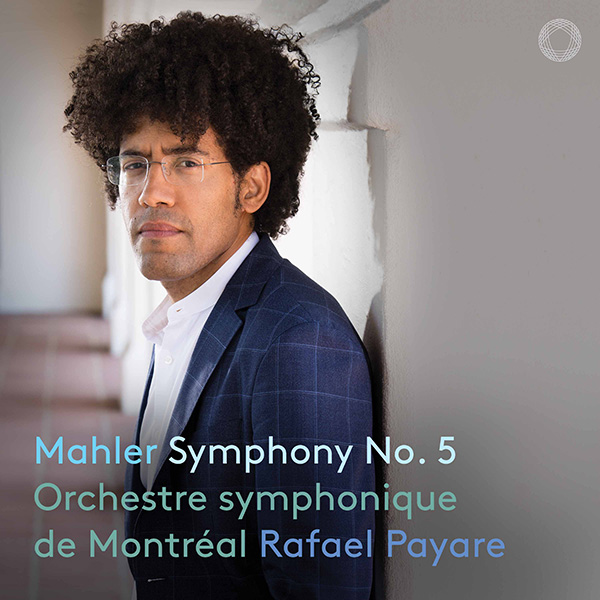 The D'Agostinos are more transparent; they bring a marvelous liquidity and luminescence to strings that conveys greater detail. Their treble is a bit brighter, their midrange a mite leaner but beautiful, rich, and saturated with color, and their bass less strong yet perfectly controlled and pitched. They possess an up-front, you-are-there clarity and richness that is uniquely mesmerizing. When I played the "Adagietto" from Payare's Mahler Five through the D'Agostinos, strings flowed like water, cellos sounded irresistibly colorful, and hushed phrases were often breathtaking.
The Accuphase A-300 monoblocks, too, have a sound of their own. Their bass is phenomenal, and their other strength, the beauty of their pronounced midrange, has been equaled by few amplifiers I've reviewed. Their treble is not, to my ears, rolled off, but it is of the smoother, gentler sort that makes for smiles all around.
The Burmester 218 combines the best qualities of both monoblocks. Its treble is quite smooth, its midrange natural and beautifully fleshed out, and its bass as balanced, controlled, and voiced as everything above it. When put to the test, their ability to resolve fine detail and convey subtle gradations in color, pacing, and dynamics is up there with the best. Ultimately, their sound is so natural and complete that, amidst the miracle of music, analytical thoughts inevitably cede to satisfaction, smiles, and wonder.
Conclusion
The D'Agostinos are more transparent; they bring a marvelous liquidity and luminescence to strings that conveys greater detail. Their treble is a bit brighter, their midrange a mite leaner but beautiful, rich, and saturated with color, and their bass less strong yet perfectly controlled and pitched. They possess an up-front, you-are-there clarity and richness that is uniquely mesmerizing. When I played the "Adagietto" from Payare's Mahler Five through the D'Agostinos, strings flowed like water, cellos sounded irresistibly colorful, and hushed phrases were often breathtaking.
The Accuphase A-300 monoblocks, too, have a sound of their own. Their bass is phenomenal, and their other strength, the beauty of their pronounced midrange, has been equaled by few amplifiers I've reviewed. Their treble is not, to my ears, rolled off, but it is of the smoother, gentler sort that makes for smiles all around.
The Burmester 218 combines the best qualities of both monoblocks. Its treble is quite smooth, its midrange natural and beautifully fleshed out, and its bass as balanced, controlled, and voiced as everything above it. When put to the test, their ability to resolve fine detail and convey subtle gradations in color, pacing, and dynamics is up there with the best. Ultimately, their sound is so natural and complete that, amidst the miracle of music, analytical thoughts inevitably cede to satisfaction, smiles, and wonder.
Conclusion
A bridged pair of Burmester 218s excels in every aspect of music reproduction. Their sound on every piece I auditioned was world-class, no matter how dynamic and taxing the music. Because the 218s enabled me to sink deeper into old favorites and fall in love with new music in record time, listening to them was a consistent joy. I hope music lovers in search of the amplifier of their dreams find the previous paragraphs sufficient to motivate them to either read the rest of this review or look up their nearest Burmester dealer and make an appointment to take a deep, long listen to the 218 in both stereo and mono configurations. After doing so in session after session, all I wanted to do is listen more and deeper still. I wish my pair was still here. When all is said and done, the Burmester 218 is one of the finest amplifiers I've been privileged to review. I hope it measures as well as it sounds; even if it doesn't, it will surely be one of my top contenders for Amplifier of the Year.
In a word, superb.
Footnote 3: The D'Agostino Relentless preamplifier also deserves ample credit for allowing me to hear these dynamic contrasts. Footnote 4: In all fairness, enhancements to my streaming network and room treatment, combined with the arrival of the Innuos Statement Next-Gen music server/streamer and PhoenixNET network switch, Vivaldi Apex DAC/upsampler/clock, D'Agostino Relentless preamp, and Stromtank S-4000 MKII XT, contributed to the changes in image size and weight, resolution, and timbral accuracy I heard through the Burmesters. Footnote 5: Because polarity varies from one recording to the next and even within the same recording, the effects of absolute phase inversion are likely to vary, too.—Jim Austin
Given the dimensions of my Grand Prix Monza amp stands and the 218's lack of protruding support feet—it only has four thin round (presumably felt) pads beneath it—I placed the 218 atop the Wilson Audio Pedestals I customarily use. This was essential because without the Pedestals or other suitable equipment supports, the corners of the amps would not have cleared the corners of the stands. I could have placed the amps on the floor without support feet, but that would have left them exposed to vibrations from my bamboo floor, putting them at a disadvantage to my reference and other amps. During my time with the 218s, one of the amps began to buzz. Sometimes the noise was low, sometimes it was a bit louder, and occasionally both amps buzzed. Changing power cables made no difference. Plugging them into other receptacles didn't help. I do not hear this noise with my reference amps. Regardless, even when it was present, the noise never interfered with listening, and the amps sounded so good that I doubt anything serious was wrong with them.
Listening 1Even as I began writing this review, I continued to listen to the Burmester 218s, again and again. I couldn't help myself. I kept wanting to hear more.
To contrast the sounds of modern instruments with those from the 18th century, I switched to another recording I've reviewed, the Chiaroscuro Quartet's SACD of Mozart's Prussian Quartets (24/96 FLAC download, BIS). I recall distinctly how the quartet's period instruments with gut strings sounded when I first played the files over two years ago. Through the Burmesters, the relatively thin sound of Claire Thirion's cello, designed by Carlo Tononi in 1720, was so much more pronounced that it blew me away. No one could mistake Thirion's instrument for the richer, meatier sound of Tetzlaff 's modern cello. As with the Schubert, the sound of a familiar recording was so transformed—so much more accurately reproduced—by the Burmester 218s that I continued to listen to movement after movement, deadline be damned (footnote 4).
I then went on a different sort of treasure hunt. Having just received high-resolution files for the hot-off-the-press CD Sommernachtskonzert Schönbrunn 2024 (24/96 WAV download, Sony), the Vienna Philharmonic's annual Summer Night Concert performed by Andris Nelsons and the Wiener Philharmoniker outside Vienna's Schönbrunn Palace on June 7, 2024, I compared Vienna's take on Smetana's "The Moldau (Vltava)" with that on Semyon Bychkov and the Czech Philharmonic's recent SACD of Ma Vlast (24/96 FLAC download, Pentatone). The differences were striking. Not only did Vienna's live outdoor recording have far more air (including the sounds of a gentle breeze) than the Czech's, which was recorded in the Dvorák Hall of the Rudolfinum in Prague; Vienna's wind instruments also possessed more seductive, contrasting colors.
After I told Jim Austin about the buzzing emanating from the amps, he suggested I try different power cords, including those supplied by Burmester. In the process of retrieving those Burmester cords from the shipping boxes, I slipped while dismounting a storage crate and crashed to the floor. Nothing was broken, but my left foot and back ordered me to delay switching power cables until I could twist and bend without adding insult to injury. As lovely as the system sounded with the Burmester cords—they excelled in color and intimacy—instruments in both string quartets sounded smaller and lighter-bodied than before. The soundstage shrank, and depth and air decreased. In the bigger-boned Smetana, the opening dance of winds, intended to portray the sounds of the gentle streams that eventually join to create the Moldau river, sounded less colorful and compelling, and the music's bass foundation was in need of a gym membership. When the percussion got going close to 10 minutes in, the difference in slam was noticeable. As fine as Burmester's power cables may be—they'll save you a pretty penny over AudioQuest Dragon or Nordost Odin 2—they can't compare with the best the high-end has to offer, at least not in my system, with the Burmester 218s.
Let me return, then, to the day friend Scott Campbell and I installed the Burmester 218s. Scott, who was invited to choose the first music, opted for Ike Quebec's "Minor Impulse," from Blue and Sentimental (24/192 FLAC, Blue Note/Qobuz). Bass was impressively firm; images were solid, the soundstage huge, colors pronounced. By track's end, we both felt that we'd received everything the music had to offer.
Scott found Grant Green's Idle Moments (24/192 FLAC, Blue Note/Qobuz) even more revealing. I enjoyed how relaxed the music sounded; it sounded very much as I had heard it through other components at AXPONA. I grooved on the abundant natural beauty of the midrange, which has a touch of whiteness at its core that somehow proves an asset. Next we moved on to our most demanding test, and together marveled at the strength, control, and timbral accuracy of bass in the first movement of Mahler's Symphony No.5 performed by Rafael Payare and Orchestre symphonique de Montréal (24/96 WAV download, Pentatone). We looked at each other and simultaneously said something like, "Damn, these are really great amps." Then we both let out a sigh and lamented that our time for listening that afternoon would end much too soon.
As the days progressed, I realized that my comparison of Burmester's power cables with AudioQuest Dragon and Nordost Odin 2 power cables had raised another question: Since Burmester's power cables came up a bit short, did the company's supplied XLR "Y" adapter cable shortchange what two 218s can ultimately communicate? The only way to find out was to switch to a single stereo Burmester 218 and listen.
Over the next weeks, as I continued to fine-tune my system and enjoy the Burmesters more and more, Scott and I compared them to the two other pairs of in-house monoblocks. Our conclusion: The Burmester 218s reside in a sweet middle spot between the D'Agostino M400 MxV monoblocks and Accuphase A-300 monoblocks.
The D'Agostinos are more transparent; they bring a marvelous liquidity and luminescence to strings that conveys greater detail. Their treble is a bit brighter, their midrange a mite leaner but beautiful, rich, and saturated with color, and their bass less strong yet perfectly controlled and pitched. They possess an up-front, you-are-there clarity and richness that is uniquely mesmerizing. When I played the "Adagietto" from Payare's Mahler Five through the D'Agostinos, strings flowed like water, cellos sounded irresistibly colorful, and hushed phrases were often breathtaking.
The Accuphase A-300 monoblocks, too, have a sound of their own. Their bass is phenomenal, and their other strength, the beauty of their pronounced midrange, has been equaled by few amplifiers I've reviewed. Their treble is not, to my ears, rolled off, but it is of the smoother, gentler sort that makes for smiles all around.
The Burmester 218 combines the best qualities of both monoblocks. Its treble is quite smooth, its midrange natural and beautifully fleshed out, and its bass as balanced, controlled, and voiced as everything above it. When put to the test, their ability to resolve fine detail and convey subtle gradations in color, pacing, and dynamics is up there with the best. Ultimately, their sound is so natural and complete that, amidst the miracle of music, analytical thoughts inevitably cede to satisfaction, smiles, and wonder.
A bridged pair of Burmester 218s excels in every aspect of music reproduction. Their sound on every piece I auditioned was world-class, no matter how dynamic and taxing the music. Because the 218s enabled me to sink deeper into old favorites and fall in love with new music in record time, listening to them was a consistent joy. I hope music lovers in search of the amplifier of their dreams find the previous paragraphs sufficient to motivate them to either read the rest of this review or look up their nearest Burmester dealer and make an appointment to take a deep, long listen to the 218 in both stereo and mono configurations. After doing so in session after session, all I wanted to do is listen more and deeper still. I wish my pair was still here. When all is said and done, the Burmester 218 is one of the finest amplifiers I've been privileged to review. I hope it measures as well as it sounds; even if it doesn't, it will surely be one of my top contenders for Amplifier of the Year.
Footnote 3: The D'Agostino Relentless preamplifier also deserves ample credit for allowing me to hear these dynamic contrasts. Footnote 4: In all fairness, enhancements to my streaming network and room treatment, combined with the arrival of the Innuos Statement Next-Gen music server/streamer and PhoenixNET network switch, Vivaldi Apex DAC/upsampler/clock, D'Agostino Relentless preamp, and Stromtank S-4000 MKII XT, contributed to the changes in image size and weight, resolution, and timbral accuracy I heard through the Burmesters. Footnote 5: Because polarity varies from one recording to the next and even within the same recording, the effects of absolute phase inversion are likely to vary, too.—Jim Austin