Reference

Sort By:  Post Date TitlePublish Date

PDM, PWM, Delta-Sigma, 1-Bit DACs
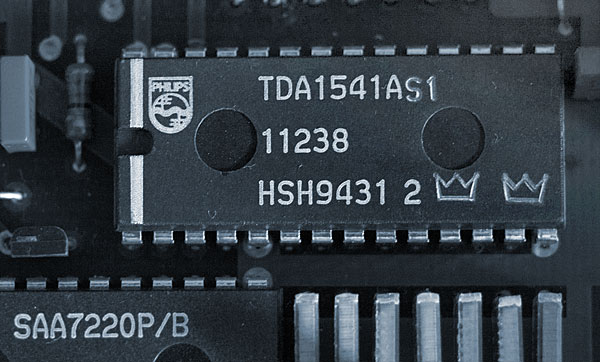
Editor's Note: One-bit DAC chips in the 21st century, where the analog output signal is reconstructed from a very high-rate stream of pulses, are ubiquitous. But a quarter-century ago, those chips were only just beginning to stream from the chip foundries. In this feature, we aggregate Stereophile's 1989 coverage of the then-new technology, starting with Peter van Willenswaard on the basics.—John Atkinson.

1989 may well become the year of the D/A converter (DAC). CD-player manufacturers have, almost without exception, launched research projects focusing on this problem area of digital audio; many of these projects are already a year old. This is, however, by no means the only imperfection keeping us away from the high-quality sound we have come to suspect is possible with digital audio media, and maybe not even the most important.

Absolute Phase: Fact or Fallacy?

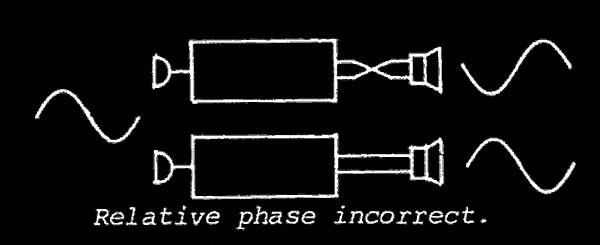
Natural sounds produce different waveshapes during their positive and negative phases, and playback-system polarity reversal often changes the reproduced sound. Does this mean our ears are phase-responsive, or is there something else here we've been overlooking?

There has been much discussion recently among perfectionists about the importance of what is called "absolute phase" in sound reproduction. Basically, the contention has been that, since many musical sounds are asymmetrical (having different waveforms during positive and negative phases), it is important that a system make the proper distinctions between positive (compression) and negative (rarefaction) phases in playback.

Lossy Compression: the Sonic Dangers

Editor's Introduction: In 2013, lossy compression is everywhere—without lossy codecs like MP3, Dolby Digital, DTS, A2DP, AAC, apt-X, and Ogg Vorbis, there would be no Web audio services like Spotify or Pandora, no multichannel soundtracks on DVD, no Bluetooth audio, no DAB and HDradio, no Sirius/XM, and no iTunes, to quote the commercial successes and no Napster, MiniDisc, or DCC, to quote the failures. Despite their potential for damage to the music, the convenience and sometimes drastic reduction in audio file size have made lossy codecs ubiquitous in the 21st century. Stereophile covered the development of lossy compression; following is an article from more than two decades ago warning of the sonic dangers.—Editor

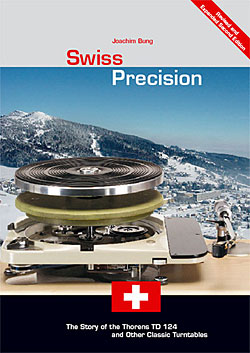
Book Review: Swiss Precision: The Story of the Thorens TD 124 and Other Classic Turntables

Swiss Precision: The Story of the Thorens TD 124 and Other Classic Turntables
by Joachim Bung. Published by Joachim and Angelika Bung, Schmitten, Germany (info@td-124.de), 2008. Hardcover, 288 pages, four-color, ISBN 978-3-00-021162-1. Price: €59 plus overseas mailing.
Advertisement
Advertisement
Advertisement