Reference

Sort By:  Post Date TitlePublish Date

Analog vs Digital: Home-Brew Science at the Edge of the Art
Publisher's note: The following article, from the early days of Compact Disc, is presented with no claim for absoluteness. (In fact, just as we go to press in the spring of 1986, we received a manuscript from Philip Greenspun, Product Review Editor of Computer Music Journal (Cambridge, MA), who had precisely the opposite result when comparing CD to analog versions of the same recording, though it was unclear that his test procedures were as thorough as in the tests by these authors.) The tests described are neither single- nor double-blind, and the author's decision to forego conversation while listening to the same products does not by any means guarantee lack of mutual influence—especially because their musical tastes are so well known to each other. Moreover, repeating the test with different phono equipment, a different CD player, and a different replica of the master tape would likely yield somewhat different results.

Nevertheless, I think the basic conclusion is sound: good CD reproduction is remarkably close to a fairly good version of master tape sound; there's a good chance that it's more accurate than what you'll get from the average cartridge, tonearm, and turntable.
Blind Listening at Harman International

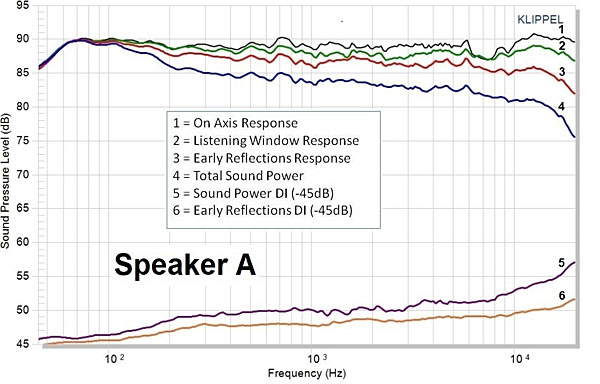
Revel began demonstrating prototypes of the Performa F228Be, reviewed elsewhere in this issue, at the Consumer Electronics Show and other audio events in 2015, though they had yet to settle on the model name. The most salient feature that distinguished the F228Be-to-be from the established Performa3 F208 was the new beryllium tweeter, and while it sounded more than okay under show conditions, I always heard a bit of brightness and harshness. I knew it was still a work in progress, but I wasn't very eager to want to take it home.

Zen & the Art of A/D Conversion

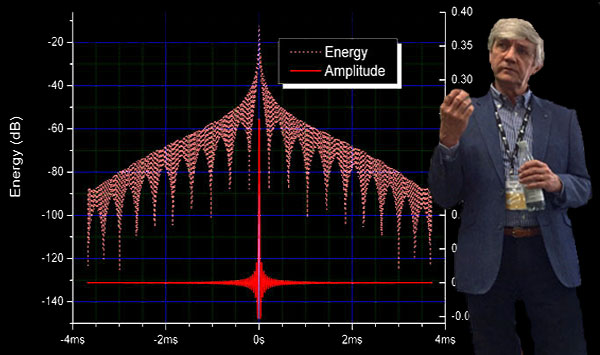
In a series of recent feature articles for Stereophile, Jim Austin has examined how the controversial MQA codec works: "MQA Tested, Part 1," "MQA Tested Part 2: Into the Fold," "MQA Contextualized," "MQA, DRM, and Other Four-Letter Words," and, most recently, "MQA: Aliasing, B-Splines, Centers of Gravity." I doubt there is a Stereophile reader who is unaware of the fracas associated with MQA, and I have been repeatedly criticized on web forums for describing its underlying concept as "elegant."

But elegant it is, I feel.

MQA: Aliasing, B-Splines, Centers of Gravity

The right thing at the wrong time is the wrong thing.—Joshua Harris

The sampling theory formulated by Claude Shannon in the late 1940s had a key requirement: The signal to be sampled must be band-limited—that is, it must have an absolute upper-frequency limit. With that single constraint, Shannon's work yields a remarkable result: If you sample at twice that rate—two samples per period for the highest frequency the signal contains—you can reproduce that signal perfectly. Perfectly. That result set the foundation for digital audio, right up to the present. Cue the music.

MQA, DRM, and Other Four-Letter Words

In an article published in the March 2018 Stereophile, I wrote that critics have been attacking MQA, the audio codec developed by J. Robert Stuart and Peter Craven, by accusing it of being lossy. The critics are right: MQA is, in fact, a lossy codec—that is, not all of the data in the original recording are recovered when played back via MQA—though in a clever and innocuous way. For MQA's critics, though, that's not the point: They use lossy mainly for its negative emotional associations: When audiophiles hear lossy, they think MP3.

MQA Contextualized

When you come to a fork in the road, take it.—Yogi Berra

Over one busy week in 1986, Karlheinz Brandenburg laid the foundation of a technology that a few years later would upend the record business. Brandenburg, a PhD student in electrical engineering at the Friedrich-Alexander University Erlangen-Nuremberg, was figuring out how to code digital music efficiently enough that it could be delivered over digital telephone lines. A patent examiner had concluded that what the application proposed was impossible, so over a week of late nights, Brandenburg produced the proof of concept and more. It was another decade before the technology—MPEG-2 level III, more commonly known as MP3—would find its true home, the Internet.

MQA Tested Part 2: Into the Fold

Loss is nothing else but change, and change is Nature's delight.—Marcus Aurelius

Master Quality Authenticated (MQA), the audio codec from industry veterans Bob Stuart and Peter Craven, rests on two pillars: improved time-domain behavior, which is said to improve sound quality and what MQA Ltd. calls "audio origami," which yields reduced file size (for downloads) and data rate (for streaming). Last month I took a first peek at those time-domain issues, examining the impulse response of MQA's "upsampling renderer," the output side of this analog-to-analog system (footnote 1). This month I take a first look at the second pillar: MQA's approach to data-rate reduction. In particular, I'll consider critics' claims that MQA is a "lossy" codec.

MQA Tested, Part 1

I don't think I've ever seen an audio debate as nasty as the one over Master Quality Authenticated (MQA), the audio-encoding/decoding technology from industry veterans Bob Stuart, formerly of Meridian and now CEO of MQA Ltd., and Peter Craven. Stuart is the company's public face, and that face has been the target of many a mud pie thrown since the technology went public two years ago. Some of MQA's critics are courteous—a few are even well-informed—but the nastiness on-line is unprecedented, in my experience.

MQA: Questions and Answers

Author's Note: We are grateful to Stereophile for the opportunity to address some frequently repeated technical questions appearing in comments to articles. Recently this has included misunderstandings about noise calculation, dynamic range, resolution, definition, music spectra, channel capacity, lossless processing and temporal aspects of digital channels.

To simplify this document we have grouped the topics and set them as questions and answers either as response, tutorial or axiom. Some months ago we published a comprehensive Q&A for an online forum and to avoid repetition we occasionally refer to topics already discussed there (see [37] in the "References" sidebar).—J. Robert Stuart

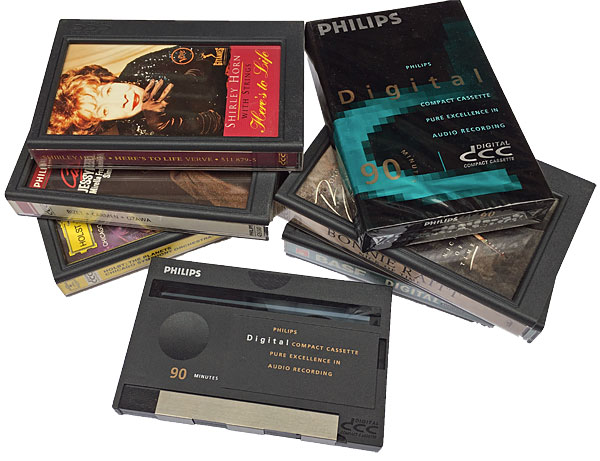
PASC & Philips' DCC

Editor's Note: In the 21st Century, lossy audio data compression, in the form of MP3 and AAC files, Dolby Digital and DTS-encoded soundtracks, and YouTube and Spotify streaming, is ubiquitous. But audiophiles were first exposed to the subject a quarter-century ago, when Philips launched its ill-fated DCC cassette format. What follows is Stereophile's complete coverage on both DCC and its PASC lossy-compression encoding from our April 1991 issue.—John Atkinson
Advertisement
Advertisement
Advertisement