Floor Loudspeaker Reviews

Sort By:  Post Date TitlePublish Date

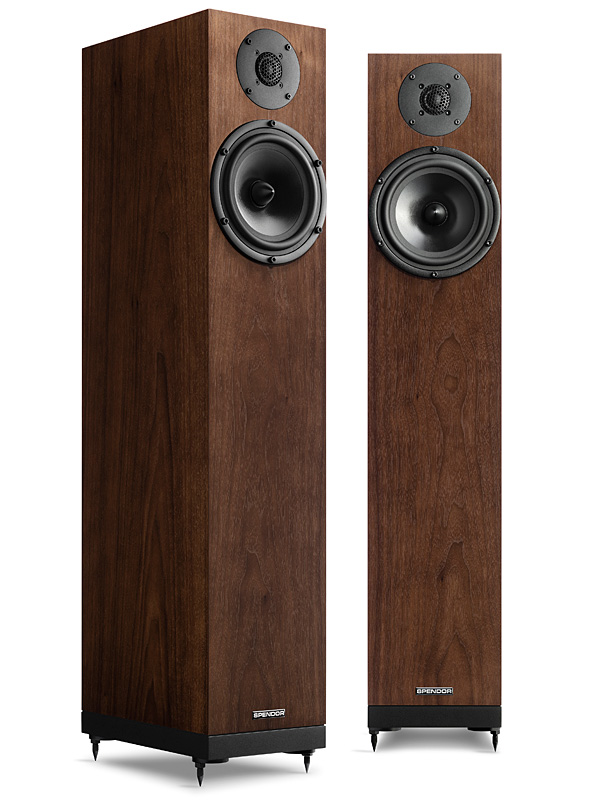
Spendor A7 loudspeaker

As Stereophile's lone New York City bachelor, I sometimes search for amore on Internet dating sites. One such encounter led me to Park Slope, Brooklyn, where I met a woman who, I soon learned, was at the top of the food chain of Manhattan's gold-encrusted arts community.

The single child of an upper-Westchester family, Jane So (not her real name) assists her employer in curating fine art for the city's premier galleries and museums. Her job also includes gifting her employer's millions to charitable organizations and the like. But in her off hours, when the boss isn't watching, Jane enjoys a bit of kink. As she told me over dinner, "Ken, I'm not looking for anything serious. I have several men who visit me during the week."

It dawned on me: I had stumbled into New York's subterranean sex world.

Q Acoustics Concept 500 loudspeaker

Q Acoustics was founded in the UK in 2006, but has appeared on the radar of US buyers only in the last few years. Until recently, Q has aimed its efforts at the budget sector, earning enthusiastic reviews and commercial success.

But during that time the company also been quietly working on a product considerably more upscale, though still affordable in a marketplace now glutted with products at if-you-have-to-ask prices. The result is the Concept 500 ($5999.99/pair), first seen in the UK in 2017 and recently made available here. But you won't find it at your local audio shop (if you still have one); in the US it's currently sold only online, through Q Acoustics' US website, with a 30-day, money-back guarantee that includes shipping costs—both ways.

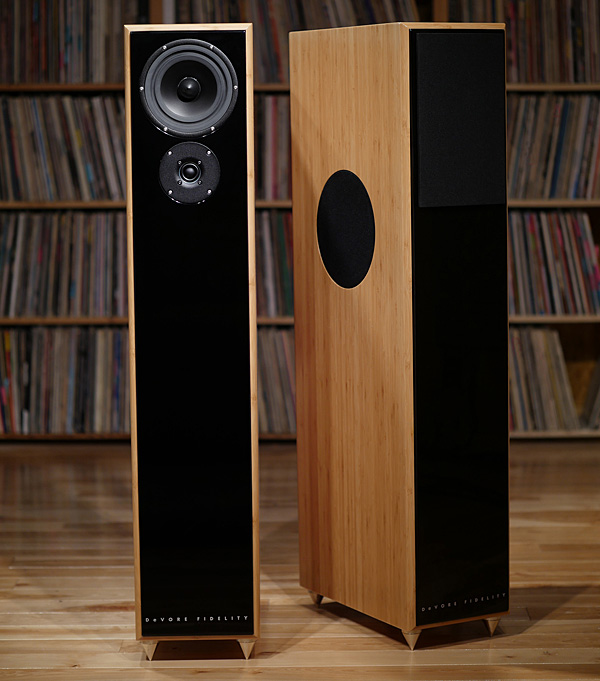
DeVore Fidelity Gibbon X loudspeaker

In 2008, a pair of DeVore Fidelity's Gibbon Nine loudspeakers arrived at my home for a Follow-Up review. Within weeks, I wrote a check for them. That put me in good company: Several other reviewers who reviewed the Nines also bought their review pairs.

Ten years later, the Gibbon Nines are still my main speakers. That's the longest I've ever kept a pair of speakers in my main system, not counting the Polk Audio 7Bs I bought in 1980, when I was 16.

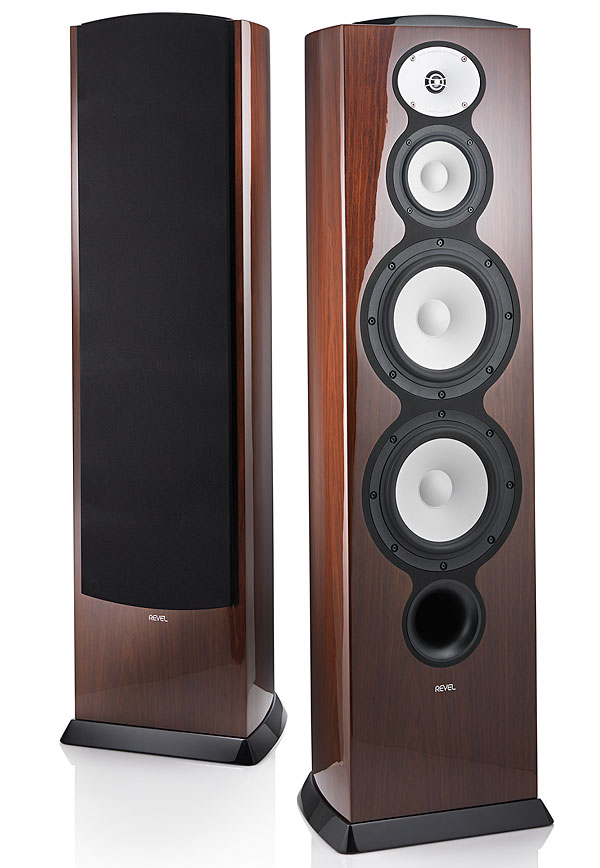
Revel Performa F228Be loudspeaker

I had a moment of revelation in 2000, when I first set up a pair of Revel's original Ultima Studio loudspeakers in my living room. It wasn't just my awareness that Revel's next-to-top-of-the-line loudspeaker was outstandingly good—it seemed to perfectly match my space and my ears. From the first day, I knew these would be keepers and I purchased the review samples.

Revel's Ultima Studio2 arrived in 2008, and though it performed even better than the original, the impression it made on me wasn't quite revelatory, and my praise was somewhat restrained—something for which Fred Kaplan justly chided me in his enthusiastic Follow-Up review in December 2009. To this day, the Ultima Studio2 and Revel's top model, the Salon2, remain Revel's standard bearers. Meanwhile, I wonder when there will be a Studio3.

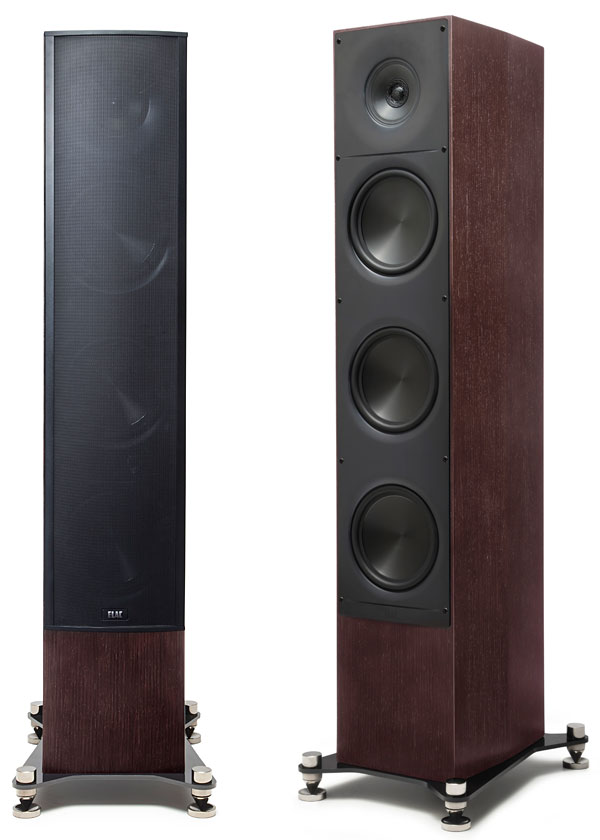
Elac Adante AF-61 loudspeaker

German manufacturer Elac had a significant North American presence in the 1960s and '70s, primarily with its Miracord automatic turntables. While it eventually disappeared from the US market, Elac never ceased to be a player in Europe, where it eventually shifted its primary focus from turntables to loudspeakers.

When Elac decided to reenter the US market a few years ago, its success was hardly assured. Faced with hundreds of brand names and thousands of models fighting for attention, it hired veteran speaker guru Andrew Jones to improve the odds. In his previous work, first for KEF and then for TAD and Pioneer, Jones had built a solid reputation on designing well-received, cost-no-object speakers as well as high-value budget designs.

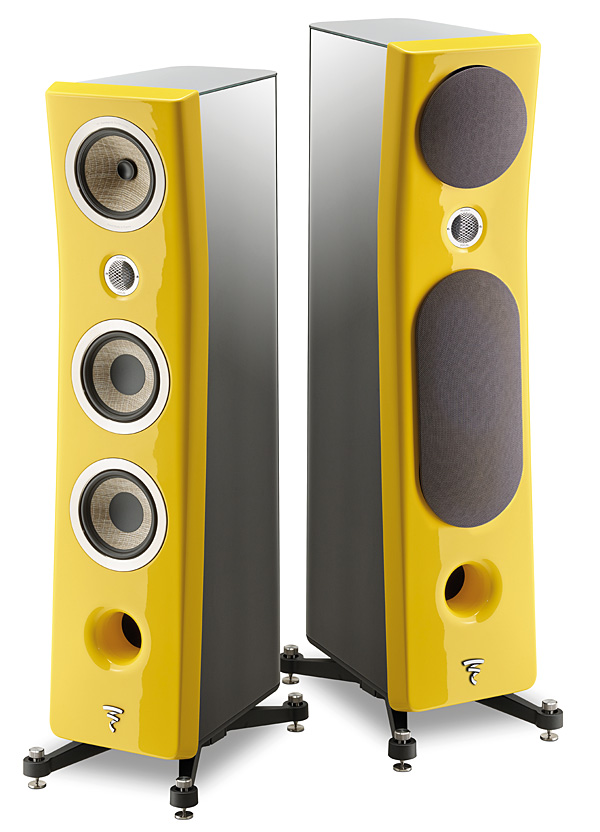
Focal Kanta No.2 loudspeaker

"Any color, so long as it's black." That was the choice famously offered by Henry Ford to buyers of his Model T. Some makers of loudspeakers, notably GoldenEar Technology, follow the same dictum.

Not Focal. The Kanta No.2 ($9999/pair) is available with a cabinet finished in High Black Lacquer or Walnut veneer, with baffles finished in a variety of colors, including High Glass Carrara White and Gauloise Blue. The review samples had black cabinets and white baffles, which made me think of the two-tone cars that were the rage in the 1950s and '60s—and which may be coming back.

Tidal Audio Akira loudspeaker

Doug White, of Philadelphia-area retailer The Voice That Is, has been a fixture at US audio shows the past few years, where he always gets great sound using loudspeakers from Tidal Audio. (There is no connection between the German audio manufacturer and the music-streaming service owned by Jay Z and Sprint.) In early 2017, Herb Reichert, Jana Dagdagan, and I visited White and spent a delightful afternoon listening to Tidal's then-new Akira loudspeakers. I promised myself to review the Akira, which costs a wallet-straining $215,000/pair, when my schedule opened up. As things turned out, it was more than a year before that opportunity presented itself.

Paradigm Persona 5F loudspeaker

Since its founding in 1982, Paradigm has developed and sold high-value loudspeakers. When my wife and I acquired our weekend house in 1992, I selected a pair of Paradigm Esprit/BP speakers for our audio system there. Shortly thereafter, however, I wanted to take my big step into multichannel, and it seemed that the Esprits' bipolar radiation would present problems for multichannel sound in my relatively small room. Back then, Manhattan still had many audio salons; after shopping around, I replaced the Esprit/BPs with Paradigm's Reference Studio/60 v.2s, and in 2004 stepped up to the Studio/60 v.3s.

Sonus Faber Aida loudspeaker

In 1959, in their musical revue At the Drop of a Hat, the British musical-comedy team of Flanders and Swann sang their "Song of Reproduction." It's not about sex. The song mocks audiophiles (you thought this was something recent?) for how we spend "all of that money to get the exact effect of an orchestra actually playing in their sitting room." Before launching into the song, Flanders quips, "Personally, I can't think of anything I should hate more than having an orchestra playing in my sitting room!"

dbx Soundfield 1A loudspeaker

The unsung sage who first observed that high-end audio is a solitary vice was probably not implying that audiophiles are antisocial; he was merely acknowledging the fact that a decent stereo stage is usually only audible from one place in the entire listening room—the so-called sweet spot. Stray from that spot, and the whole soundstage shifts to one side, spaciousness collapses, and images become vague and unstable. This is the antisocial aspect: only one member of a group can hear good stereo at any one time. (The gracious host at a listenfest will take a secondary seat, allowing his guests to take turns sitting in the sweet spot.)
Advertisement
Advertisement
Advertisement