Digital Processor Reviews

Sort By:  Post Date TitlePublish Date

dCS Rossini v2.0 firmware upgrade

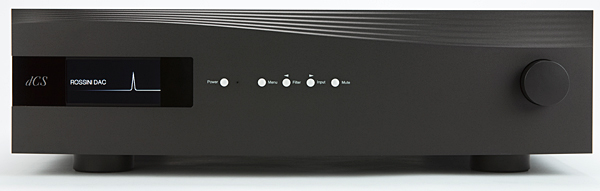
British digital-audio specialists dCS (Data Conversion Systems) has been on a roll. Since the September 2015 introduction of the Rossini DAC ($23,999), the single-box Rossini Player ($28,499), and the Rossini Clock ($7499), they've released a number of new products and software/firmware updates. In 2016 came network firmware updates that established dCS DACs and Players as Roon endpoints. 2017 brought improved (v1.05) software for the Rossini DAC and Player, and 2018 an update to process MQA, followed by the October 2018 introduction of the Rossini upsampling SACD Transport ($23,500—see John Atkinson's review in the May 2019 Stereophile). Then, in January 2019, dCS released their Rossini v2.0 software, which applies to both the Rossini DAC and the Rossini Player, and which is offered free to Rossini owners.

Jitterbuggin'

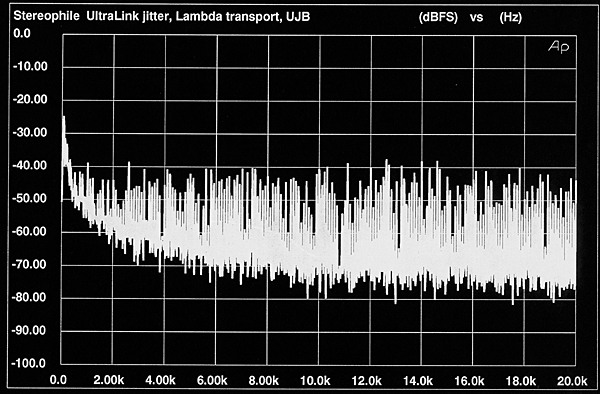
If there's one buzzword in high-end audio for the 1990s, it's undoubtedly jitter. "Jitter" describes timing variations in the clock controlling the ones and zeros that represent the analog audio signal. If that clock isn't stable to an extraordinarily precise degree, the sound quality of the digital processor will be degraded.

A CD transport/digital processor combination introduces jitter in three ways: 1) the transport puts out a jittered signal; 2) the S/PDIF or AES/EBU interface between the transport and processor creates jitter; and 3) the digital processor adds its own jitter to the clock. These additive factors are largely responsible for the great range in sound quality we hear from different transports and interfaces.

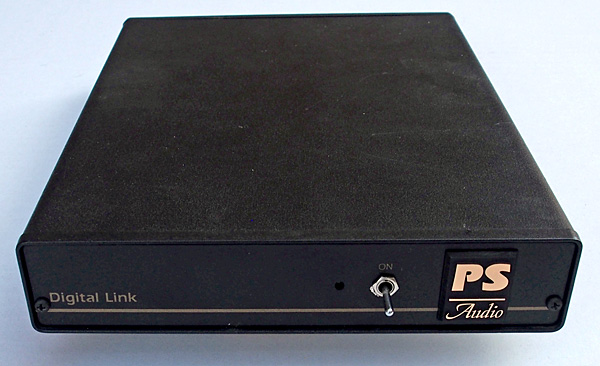
Gramophone Dreams #28: PS Audio & HiFiMan

Every time I review a digital-to-analog converter, my memory drifts to the spring of 1983, when the first Compact Discs arrived at Tower Records in New York City. They appeared in the opera section. Sitting next to big, thick boxed sets of opera LPs, these new discs looked truly compact. A few months later, boxed sets of popular opera LPs, in almost untouched condition, began selling in the Tower Annex for $1/disc.

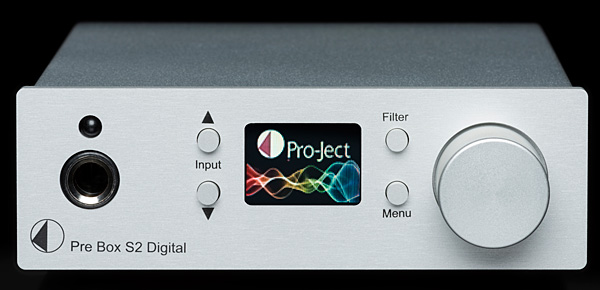
Pro-Ject Pre Box S2 Digital D/A headphone amplifier

I first met Pro-Ject Audio Systems' founder and president, Heinz Lichtenegger, in 2016, at the US launch of the Austrian company's The Classic turntable. His passion for all things hi-fi was so intense I thought his head might explode. Gleeful in his mission to bring high-end audio to the people at less than typical high-end prices, Lichtenegger and Pro-Ject can fairly claim bragging rights for their entry-level Debut Carbon (DC) ($460 and up), one of the world's best-selling turntables.

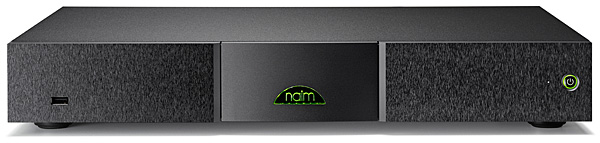
Naim ND5 XS 2 media player

The late Julian Vereker, the sharp-minded former racing driver who founded Naim Audio and designed its first products, did so because he wanted audio amplification of a quality he felt no one else was making at the time, reasoning that if he wanted such a thing, so might others. Thus came about Naim's first domestic-audio product, the distinctive NAP200 solid-state amp (1973).

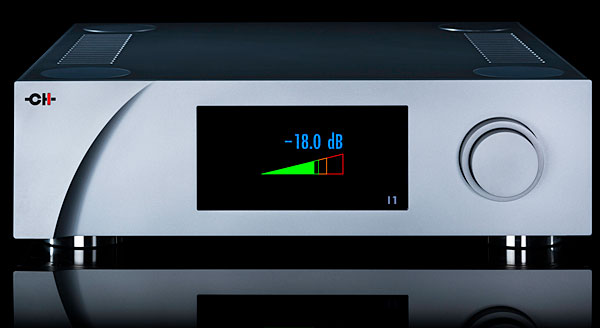
CH Precision I1 Universal integrated amplifier

"The sound was to die for," I wrote shortly before my resurrection. I was taking notes about the sound of CH Precision's D1 SACD and CD Drive (now $38,000) and C1 D/A Controller (base price $32,000), in the demo room of Michael Woods's Elite Audio Systems, at the California Audio Show, just three months after the 2015 edition of the Munich High End show. CH Precision's L1 dual-mono, solid-state preamplifier (now $58,000), M1 dual-mono power amp ($104,000), and X1 external power supply ($17,000) had helped deliver "fantastic sound."

iFi Audio Pro iDSD D/A processor/headphone amplifier

On the first page of the owner's manual for iFi Audio's Pro iDSD tubed/solid-state multibit DAC and headphone amplifier, the British company unabashedly describes it as "a 'state of the art' reference digital to analog converter" and "a wireless hi-res network player or the central DAC in an expensive high-end home system." As if in an afterthought, it continues: "The on-board balanced headphone section means high-end headphones can also be directly connected to it." The manual doesn't describe the headphone "section" as "state of the art," so I'm deducing that the Pro iDSD is really more a fancy-pants DAC than a high-tone headphone amp.

Chord Electronics Qutest D/A processor

Back in the mid-1990s, I believed that the design of D/A processors was fundamentally a solved problem. The resistor-ladder, multi-bit DAC chips of the 1980s, with their linearity errors, had been replaced by sigma-delta types that had minimal linearity error down to the lowest signal levels. All that remained for the designers of PCM D/A chips was to increase resolution and dynamic range to the theoretical limits, and to improve the mathematical precision of oversampling digital filters to match the performance of the 20- and 24-bit recordings that had just begun to be released.

Mytek Liberty D/A processor

I've never aspired to owning a BMW 7-series, or a Martin D-45, or a Rolex Submariner: BMW's far less expensive 3-series models capture my imagination by bordering on the affordable, likewise Martin's D-18—and as long as I live, I'll never understand the appeal of expensive wristwatches. Bling's not my thing.

True to form, when I visited the Mytek display at High End 2018, in Munich, my attention was drawn to the brand-new Mytek Liberty DAC and its three-figure price: for $995, one could now own the equivalent of the original Mytek Brooklyn D/A processor, without that model's phono preamp—this according to the company's Adam Bielewicz, who served as my product-line guide on that sunny May day.

Advertisement
Advertisement
Advertisement