Digital Processor Reviews

Sort By:  Post Date TitlePublish Date

Chord Chordette Gem D/A processor
There's home cooking on one side of the hedge and fast food on the other, and the world moves farther from the former and nearer to the latter with each passing day. So it goes in domestic audio, where virtually every new milestone of the past quarter-century has pointed far more toward convenience than toward quality.

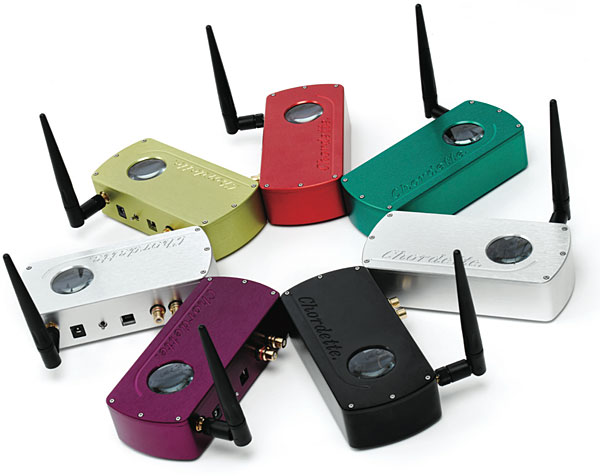
Depressed? Don't be. Those of us in the perfectionist community have a history of dealing with such things, howsoever slowly and inefficiently. (footnote 1). We're getting better at it, too, year by year. An example: Chord Electronics, of sunny southern England, has now brought to market their Chordette Gem D/A converter ($799) which they offer as an affordable means of getting perfectionist-quality sound from computer-music files.
dCS Debussy D/A processor

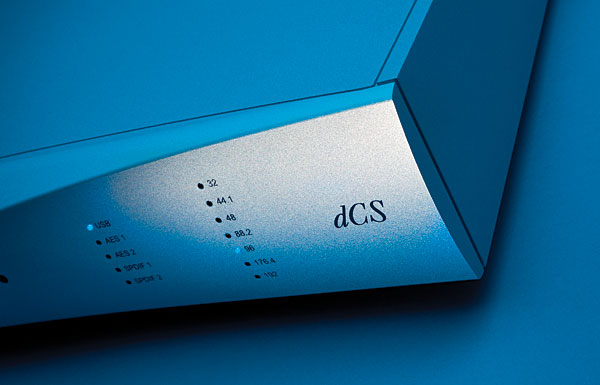
Don't have $80,000 to drop on dCS's four-component Scarlatti SACD stack that I reviewed in August 2009, or $17,999 for their Puccini SACD/CD player that John Atkinson raved about in December 2009? Even if you do, the new Debussy D/A processor ($10,999) might be a better fit for your 21st-century audio system. Sure, you don't get an SACD transport—or any kind of disc play, for that matter—but the odds today are that you already have a player you like that's got an S/PDIF output that can feed the Debussy.

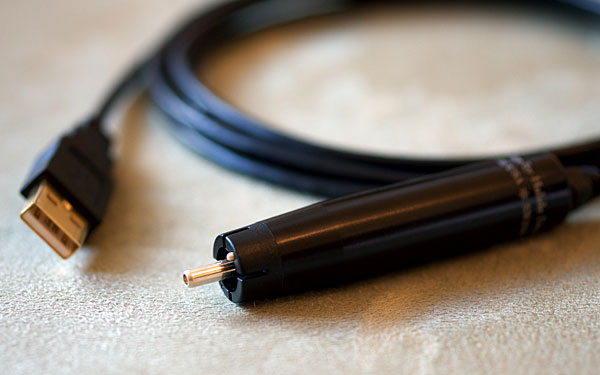
Halide Design S/PDIF Bridge USB-S/PDIF converter

The weekly Vote! Page is one of the most popular features of the Stereophile website, and the August 22 question, "Should Stereophile review more or fewer computer-audio products?", generated a record number of responses. No less than 88% of those responding asked for more coverage of products that allow a computer to be a legitimate source of music in a high-end context. Just 7% of readers wanted less coverage.

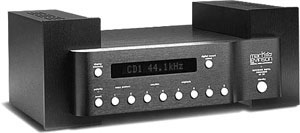
Mark Levinson No.30.5 Reference digital processor

The arrival of the Mark">http://www.stereophile.com/digitalprocessors/mark_levinson_no30_referen… Levinson No.30 digital processor more than 2½ years ago marked a turning point in digital-audio reproduction. Although the No.30's $13,950 price tag put it out of reach of all but a few audiophiles, its stunning performance suggested that much more musical information was encoded on our CDs, waiting to be recovered by better digital processors. Further, it was inevitable that this level of performance would become less expensive over time. I was more excited by the No.30 than I've been over any other audio product. In fact, its musical performance was so spectacular that it alone occupied the Class A category in Stereophile's "Recommended Components."

YBA Design WD202 D/A headphone amplifier

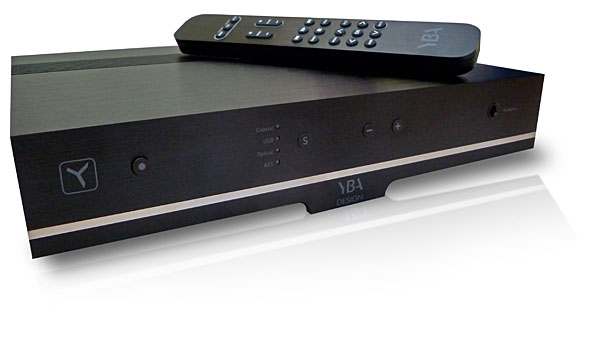
YBA Design's new WD202 D/A processor and headphone amplifier showed up while I was turning the pages of Don and Jeff Breithaupt's Precious and Few: Pop Music of the Early '70s, recommended by John Marks in his October 2009 "Fifth Element" column. Each page drips with great examples of why the 1970s often wind up on the wrong end of the culture stick (the Osmonds, anyone? Terry Jacks?).

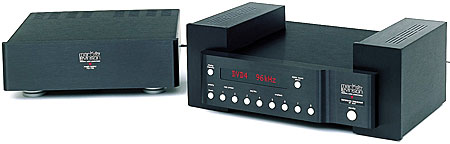
Mark Levinson No.30 Reference Digital Processor

Over the past two and a half years, I've auditioned and reviewed a number of digital audio products. It has been a fascinating experience both to watch digital playback technology evolve and to listen to the results of various design philosophies. The road to more musical digital audio has been a slow and steady climb, with occasional jumps forward made possible by new techniques and technologies. Making this odyssey even more interesting (and confounding), digital processors seem to offer varying interpretations of the music rather than striving toward a common ideal of presenting what's on the disc without editorial interjection.

Lindemann & Stello USB-S/PDIF converters

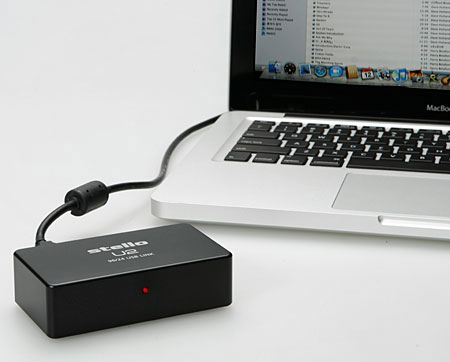
As someone who wrestled endlessly with the nine-pin serial ports and the RS-232 protocol with which early PCs came fitted (footnote 1), I welcomed the Universal Serial Bus (USB) interface when I first encountered it a decade ago, on the original Apple iMac. Plug it in. Don't worry. Be happy. The computer peripherals work as they should, which was often not the case with RS-232. It was a given, therefore, that the then-new USB port would be seen as a natural means of exporting audio data from a PC (footnote 2), but the first generation of USB-connected audio devices offered disappointing performance.

Bryston BDA-1 D/A converter

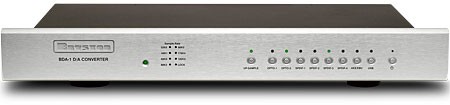
In February 2009, I reviewed Bryston Ltd.'s first CD player, the $2695 BCD-1, and was very impressed by what I heard. The BDA-1 ($1995) is the Canadian company's first standalone DAC. It's slim, only 2.75" high, with the engraved company name, model number, and infrared sensor grouped at the extreme left of a front panel of polished aluminum. Farther to the right are two columns of four LEDs each that comprise the sample-rate indicator, which identifies the selected input's signal frequency and whether the BDA-1 has locked to it. Closer to the center is the Upsample control, which governs the conversion of the incoming digital signal synchronously to 192kHz or 176.4kHz. The Upsample LED turns green for 192kHz, red for 176.4kHz. Digital sources are selected by pressing one of eight pushbuttons just right of center: two TosLink, four S/PDIF (coaxial), one AES/EBU XLR, and one USB 1.1, the last accepting only signals with sample rates at or below 48kHz. An LED above each pushbutton lights green for an incoming PCM datastreams and red for other types, including multichannel Dolby Digital streams.
Advertisement
Advertisement
Advertisement