Digital Processor Reviews

Sort By:  Post Date TitlePublish Date

HRT Music Streamer+ USB D/A Converter

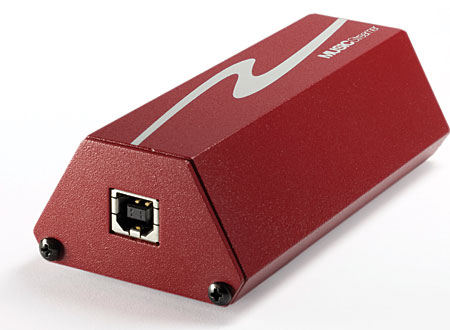
Every now and then an affordable product comes along that's so good, even wealthy shoppers want it. Past examples in domestic audio include the Rega">http://www.stereophile.com/turntables/184rega">Rega RB300 tonearm, the original Quicksilver Mono amplifier, the Grace F9E phono cartridge—even Sony's unwitting CD player, the original PlayStationhttp://www.stereophile.com/cdplayers/708play">PlayStation;. Based on word of mouth alone, one might add the HRT Music Streamer+ to that lauded list.

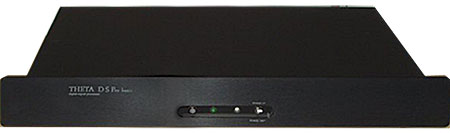
Theta Digital DSPro Basic D/A processor

As an equipment reviewer, I find it helpful to talk to audiophiles and music lovers about their systems and upgrade plans. Fortunately, Stereophile's computer supplier and troubleshooter, Michael Mandel, also happens to be an avid audiophile. I say "fortunately" because I rarely get a chance to talk to people who put down their hard-earned money for hi-fi components. Instead, I usually converse with equipment designers, technicians, and marketing types, hardly people who reflect the buying public. It is thus a valuable education to get feedback from real-world consumers to find out what kind of products they want, their priorities, and how much they're willing to spend for certain levels of performance. They have a view distinctly different from that of the often jaded reviewer who is used to enjoying the best (albeit temporarily) without agonizing over its cost.

VTL Reference D/A processor

I find it more than a little ironic that in 1990 the only two digital-to-analog converters to employ a new state-of-the-art DAC also use vacuum tubes. Many in the audio community consider tubes an anachronism, and find it surprising and humorous that they are still used in newly designed audio products. The fact remains, however, that these two tubed digital processors achieve the best digital playback currently available—and by a wide margin. Moreover, their respective designers' technical savvy and passion for building leading-edge products is reflected in their choice of these superlative and very expensive new DACs. Is it mere coincidence that both designers also chose vacuum tubes to realize their vision of no-compromise digital playback?

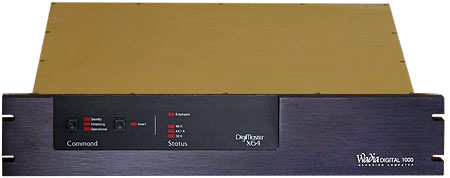
Wadia Digital 1000 Decoding Computer

Rather a mouthful, the name of this digital decoder is derived from that of the designer, Robert Wadia Moses. The "computer" part of the title relates to the custom digital filter function generated by a set of 32-bit microprocessors: for simplicity's sake, I shall abbreviate the name to "WD1000." A more expensive version, called the '2000, sells for $6995, and carries some additional features and details. The resampling rate is increased to 64x in the '2000, with the additional optical and digital input switching and the main power supplies each contained in separate additional enclosures.

Wavelength Cosecant v3 USB digital/analog converter

While my enthusiasm for the long-discontinued Sony">http://www.stereophile.com/cdplayers/708play">Sony PlayStation 1 remains high (see the July 2008 Stereophile), I freely acknowledge that not every high-end audio enthusiast wants a CD player with an injection-molded chassis, a Robot Commando handset, and a remarkable lack of long-term reliability: Yes, the Sony sounds wonderful, but sound isn't everything.

Cambridge Audio Azur DacMagic D/A converter

In 1989, Cambridge Audio, then run by Stan Curtis—who is still active in hi-fi— introduced their DAC 1. At about the same time, within a few weeks of each other, Arcam introduced their Delta Black Box and Musical Fidelity their Digilog. I forget who was first among the three. Arcam, I think. But the DAC race was on, led by the British. (There was even a DAC called the Dacula.) US companies got into the DAC race, too—at higher prices, of course.
Advertisement
Advertisement
Advertisement