CD Player/Transport Reviews

Sort By:  Post Date TitlePublish Date

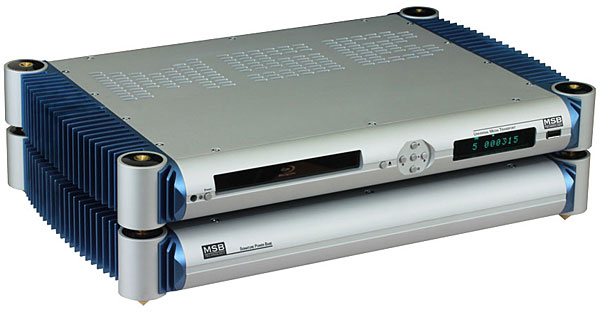
NAD Masters Series M50 Digital Music Player & M52 Digital Music Vault
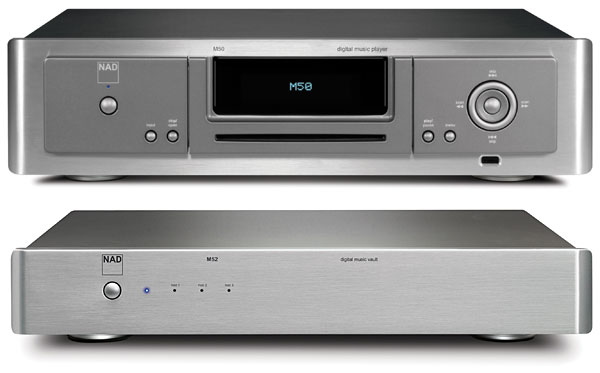
"Physical discs are so 20th century," I wrote back in 2006, when I began experimenting with using, in my high-end rig, a computer as a legitimate source of music. These days I rarely pop a disc into my Ayre Acoustics C-5xeMP disc player, unless it's an SACD I want to hear, or a CD I haven't yet ripped into my library. But many audiophiles, even if attracted to the idea of using a file-based system as a primary music source, do not want a computer in their listening rooms. Nor do they want to be bothered by the fact that a computer demands too intimate a relationship with its user.
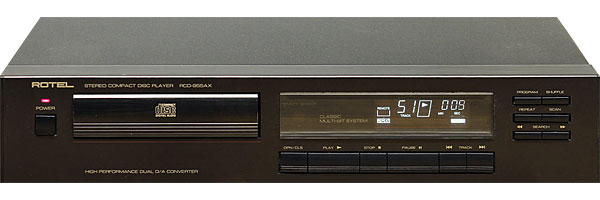
Rotel RCD-955AX and RCD-965BX CD players

On the mantel sat a stuffed Culo snake from Nuevo Laredo, with a red rubber tongue in freeze-frame flick. Above the bookcase hung the mounted head of a wild poi dog, killed in self-defense in Sri Lanka with only a Phillips-head screwdriver. A table-lamp made from a shellac'd, puffed-up frog wearing a sombrero and playing the contrabassoon bathed the room in a soft cream glow.

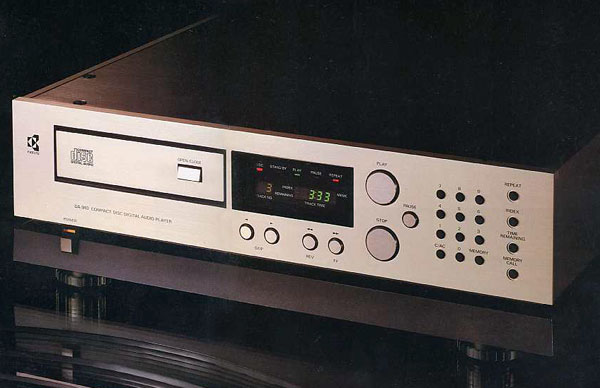
Kyocera DA-910 CD player

Those of our readers who are still anti-CD are going to be offended by what I am about to say. Partly because they do not want it to be true, but mainly because it is. I shall utter the heresy anyway: the Compact Disc is, right now, doing more for the cause of high-end audio than anything that has ever come along before!

There, I've said it. Now I shall explain it.

Parasound Halo CD 1 CD player

For the high-performance audio market, it makes a lot of sense to process digital audio data via sophisticated software running on a dedicated personal computer. Which brings us to Parasound's Halo CD 1 CD player ($4500). Some might find it questionable to release today, as one's first digital-disc player, a machine that plays only "Red Book" CDs, rather than a universal or near-universal (non–Blu-ray) player.

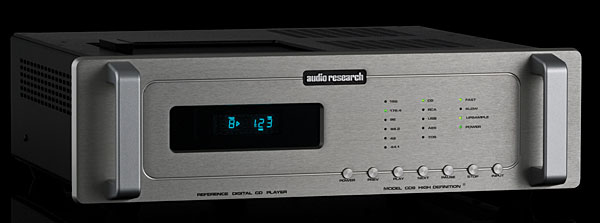
Audio Research Reference CD9 CD player/DAC

Now entering its fourth decade, the Compact Disc player seems to have reached a stage of maturity where the best models within a given price range will sound pretty much alike. The technology of the Compact Disc itself is set, its possibilities and limitations are well understood; and the designers of CD players who figure out how to stretch the former and finesse the latter wind up at about the same sonic place (again, for the same price), even if they've taken different routes to get there.

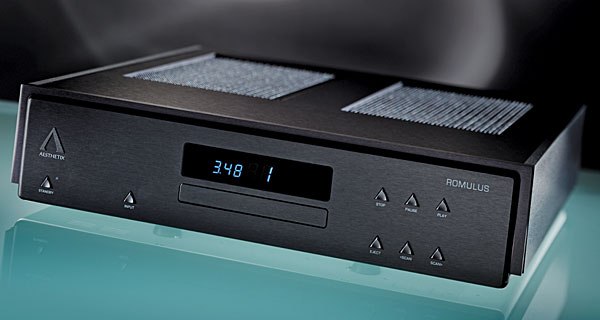
Aesthetix Saturn Romulus DAC/CD player

Tubes?

In a CD player?

Century-old technology embedded in a modern digital design?

I realize that Aesthetix's Saturn Romulus is not the first disc player or D/A processor with tubes, nor will it be the last—but does combining these technologies even make sense? Are audiophiles working at cross purposes to themselves, looking for modern perfection but preferring a little old-school sweetening here and there?

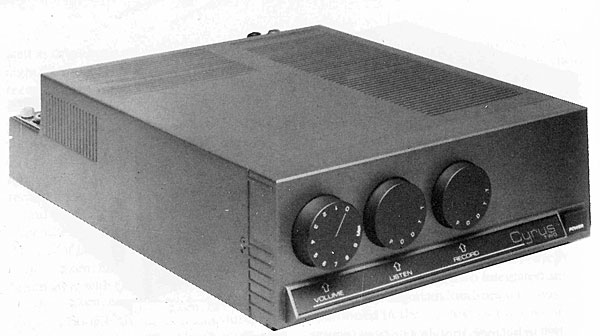
The Mission System

Since its founding just over ten years ago, Mission Electronics has grown to become one of the largest "real" hi-fi companies in the UK. Although their product line originally consisted of three relatively conventional loudspeakers, it rapidly grew to encompass high-end pre- and power amplifiers, cartridges, tonearms, and turntables, and, in the mid 1980s, a system concept based on CD replay and relatively inexpensive electronics: the Cyrus amplifiers and tuner.

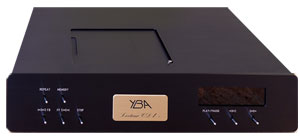
YBA CD 1 Blue Laser CD player

ybacd101.jpgI'm about to out YYves-Bernard André as one of the great unknown tweakers of high-end audio. (My own predilection for stepping into uncharted tweakwaters is well known.) Yves-Bernard, his wife and partner Ariane Moran, and importer/distributor Daniel Jacques of Audio Plus Services seemed perfectly sanguine about letting the cat out of the bag. And why not? In a singular way, the YBA audio solution encompasses both the supertweak and the more-casual-about-equipment music lover.

The YBA CD 1 Blue Laser (or Lecteur CD 1, as it's known at home in France) breaks new ground. It is very French in that it's individualistic in the extreme, and perfectly embodies current thinking chez YBA regarding music playback in the home. Its design dates back to 1991, a point Yves-Bernard takes pains to point out in the manual.

Advertisement
Advertisement
Advertisement