CD Player/Transport Reviews

Sort By:  Post Date TitlePublish Date

Hegel Music Systems Mohican CD player
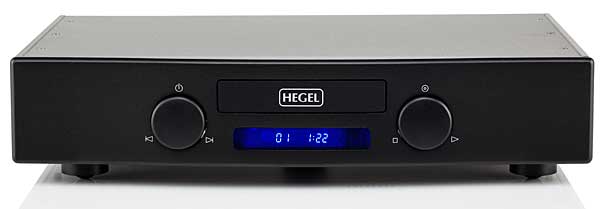
Someone on Audio Asylum wrote, "When it comes to hi-res audio, Herb is a babe in the woods." This is true, though probably not in the way this person imagined. High-resolution master David Chesky has been my friend forever, and I used to write for his website HDtracks.com. Todd Garfinkle, founder of and producer for M•A Recordings, and Kavichandran Alexander, of Water Lily Acoustics, are not only valued friends, but I own most of their stunning recordings. In short, I'm no stranger to SACD or 24-bit/192kHz playback. But compared to most audiophiles, I've been a bit slow in appreciating the intricacies and virtues of hi-rez computer audio.
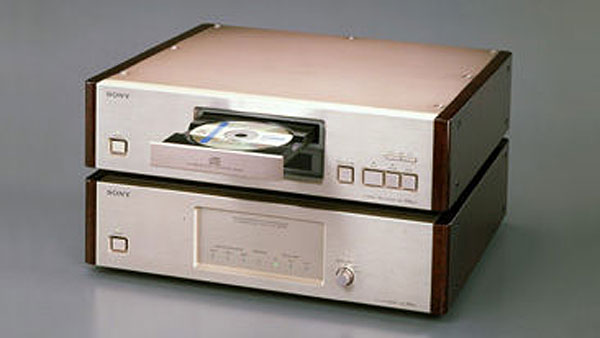

Sony CDP-R1/DAS-R1 CD player

Two of the most cherished terms in the lexicon of high end are "no holds barred" and "cost no object." These are usually applied, together, to the most expensive version of something currently on the market. But is either term really appropriate for an audio product? The answer is a flat, unequivocal No. No consumer product has ever conformed to the real meaning of those terms, and it is unlikely that one ever will.

NAD 5425 CD player

One of my favorite parts of writing for Stereophile is reading all the heartfelt letters our readers take the time to write me. There's nothing I like better than to kick off my boots, stretch out on the futon-couch, and let the groovy love vibes just shine off the pages. Time doesn't always permit a reply, but for now...AS in MD: thanks! RP in CA: sure, why not? And SH in IN: I've tried that, but it chafed.

NAD 5000 CD player

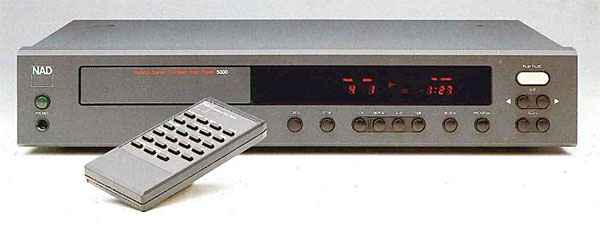
The $499 NAD 5000 looks nothing like most inexpensive CD players. Its plastic trim doesn't look cheap. It doesn't look expensive either, but it certainly won't be embarrassed to show its face in polite company. The front panel is neatly arranged and easy to interpret and use. It's the smallest and lightest of the present company of players—the only obvious physical reflections of its low-budget heritage. Inside, however, NAD has done a lot to put your money where it counts.

EAR Acute Classic CD player

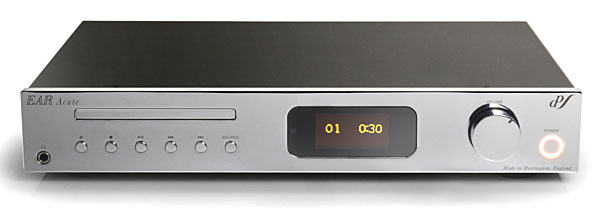
In Stereophile's January 2016 issue, I began a series of reviews of $10,000 CD players and transport-DAC combinations: an informal and serial survey, the goal of which was to gather, over time, the likeliest candidates for one's Last CD Player Ever. My choice of $10,000 as the target price was more or less arbitrary, although, in retrospect, that's about what I've invested in my go-to combination of turntable, tonearm, and pickup head—so, who knows? Maybe my subconscious was acting out.

Bang & Olufsen Beogram CD-X CD player

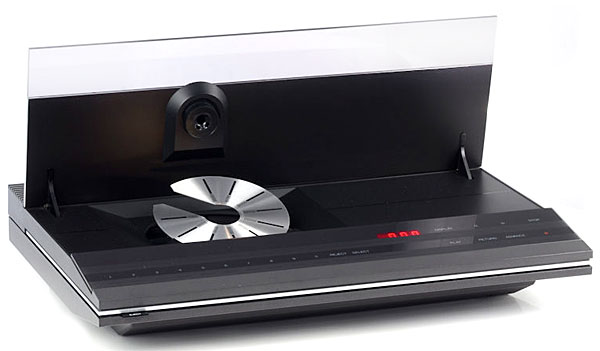
The Danish Bang & Olufsen firm is the undisputed leader in audio when it comes to dramatic product styling and ease and versatility of use. Their designs have won more design awards than those of any other audio firm, and each new lineup of B&O models seems to offer even more control convenience than the last batch. Sonically, none of their components to date has been any better than "very good," and some have done significantly less well than that. In reviewing them, we have had to compare them with their pricewise competition among the brands we normally think of as "high-end," and B&O's components have not stood that comparison very well.

dCS Rossini Player & Rossini Clock

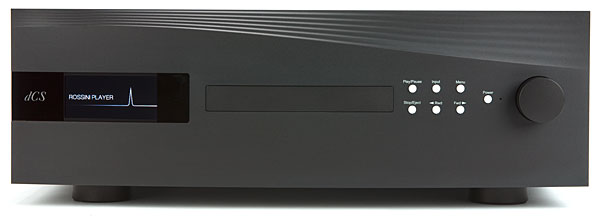
It has been 20 years since I first became aware of the British company Data Conversion Systems, which manufactures audio products under the dCS brand. Rather than use off-the-shelf conversion chips, the groundbreaking dCS Elgar D/A converter, which I reviewed in our July 1997 issue, featured a then-unique D/A design that they called a Ring DAC. This featured a five-bit, unitary-weighted, discrete DAC running at 64 times the incoming data's sample rate—2.822MHz for 44.1kHz-based data, 3.07MHz for 48kHz-sampled data and its multiples—with upsampling and digital filtering and processing implemented in Field Programmable Gate Arrays (FPGAs). Oversampling to a very high sample rate allows the word length to be reduced without losing resolution, and use of a low-bit multi-bit DAC makes for very high accuracy in the analog voltage levels that describe the signal. (If this seems like voodoo, for a given signal bandwidth, bit depth and sample rate are related. To oversimplify, double the rate, and you can reduce the bit depth by one bit while preserving the overall resolution.)

The Mod Squad Prism II CD player

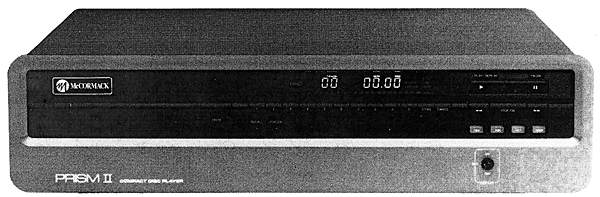
Like its Prism I predecessor, which I reviewed in May 1988, the Mod Squad Prism II is based on a Philips player: the same 16-bit, 4x-oversampling converter, the same general control layout. But The Mod Squad does their own extensive remanufacture, both on the internal circuitry and on the cosmetics—the latter involving a handsomely sculptured case and metal front trim-panel surrounding Philips's command center.

Sony CDP-X77ES CD player

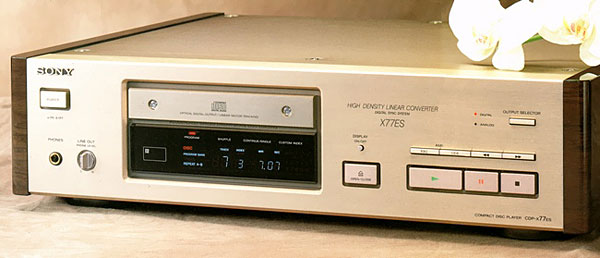
With Sony's latest flagship single-box player ($1700), we find yet another variant on 1-bit D/A technology—High Density Linear Converter, or HDLC. At the heart of this Pulse Length Modulation (footnote 1) D/A technique is Sony's CXD-2552 Pulse D/A converter (two per channel in complementary mode in the CDP-X77ES). This complex LSI chip incorporates a third-order noise shaper, the PLM converter, and a digital sync circuit receiving its input from the system clock.

Sony D-7S portable CD player

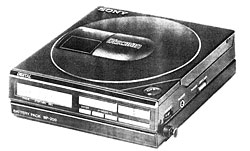
There's a race on between Sony and Matsushita, to determine who can build the smallest battery-operated CD player with the most features. Sony currently holds the lead with its second-generation D-7 ($300), about 30% smaller than the first "pocket" CD, the D-5. Most of the reduction is in height; both players have a horizontal cross-section only slightly larger than the CD itself. The illusion of smallness is further enhanced by an angled front panel with beveled edges.
Advertisement
Advertisement
Advertisement