CD Player/Transport Reviews

Sort By:  Post Date TitlePublish Date

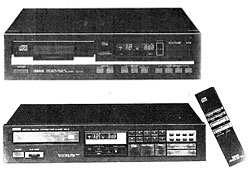
Yamaha CD-X1 & CD-2 CD players

CD player prices continue to go down and, surprisingly, sound quality goes up; the Yamaha CD-X1 is an example of both. It's a front-drawer loader with some interesting innovations. Pushing the Open/Close button opens the drawer; it can be closed either by pushing the same button again or by pressing lightly against the end of the open drawer. (We understand this was done because many such players have been damaged by users trying to force the drawer shut by hand.)

The unit has three operating modes: Auto, Manual and Single. In Auto, play begins as soon as the drawer is closed, or as soon as the AC is turned on if a disc is already loaded. In Manual, play begins only when you press the Play button. Single is the same as Manual except that the unit goes into Pause after playing a single selection. Pressing Pause then plays the next selection.

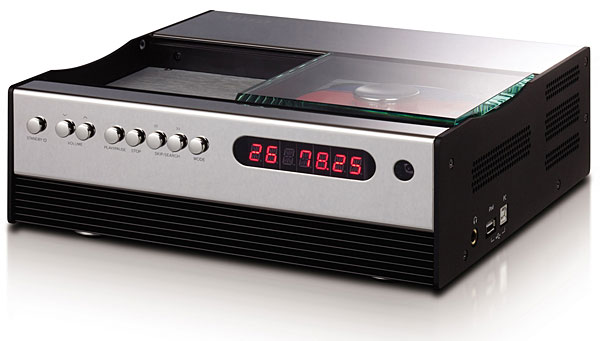
April Music Aura Note V2 CD receiver

Described by manufacturer April Music as an "all-in-one music center," the Aura Note Version 2 ($2500) is a 125Wpc integrated amplifier with a built-in CD player, USB DAC, and FM tuner. The Aura Note is further enhanced by a Bluetooth receiver, a pair of line-level output jacks, and a headphone jack.

The hackneyed but not inappropriate comparison to a Swiss Army knife comes to mind—but where that well-loved tool does a great many things with less than perfection, I've now heard the Aura Note V2 do at least two different things well enough that no excuses need be made on its behalf.

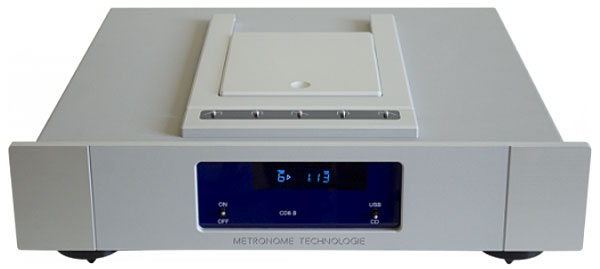
Metronome CD8 S integrated CD player

I don't listen to music when I write, even when I write about listening to music: When there's music playing, it almost always gets my full attention—and I'm no good at multitasking. (And if I'm around music that's awful and I'm powerless to stop it, I have to leave the premises.) A rare exception is when I listen to CDs while proofreading, because proofreading is fairly brainless stuff—and as playback formats go, the Compact Disc isn't the most musically compelling.

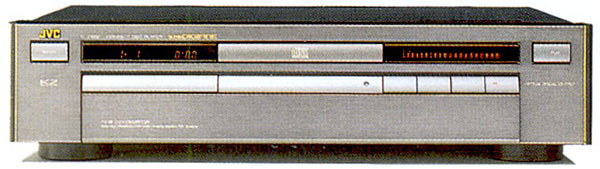
JVC XL-Z1050TN CD player

The $800 JVC XL-Z1050TN 1050 is the Bitstream successor to JVC's popular 18-bit XL-Z1010, which got an enthusiastic thumbs-up from Robert Harley in April 1990 (Vol.13 No.4). Its styling is, in my opinion, much improved over the older player's, with the distinctive brushed-bronze finish of the rest of JVC's XL-Z line. The rear panel sports fixed and variable outputs (footnote 1), as well as Toslink optical and coaxial digital outputs. As with the 1010, the JVC features their proprietary K2 Interface, a circuit that reduces jitter by resampling the pulses with a short-duration gate just ahead of the single-bit JVC JCE-4501 DAC chip.

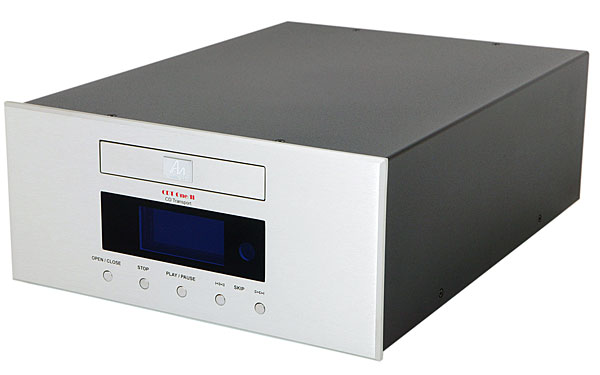
Audio Note CDT One/II CD transport & DAC 2.1x Signature D/A processor

I don't know much about horses, but I've been given to understand that dead ones don't respond to even the severest beating. In light of that, I'll make only this brief statement—Even with the best playback gear of my experience, I don't derive as much pleasure from CDs as I do from LPs.—and move on to a simpler truth: Regardless of what I think, CD players are still a necessity for most music-loving audiophiles.

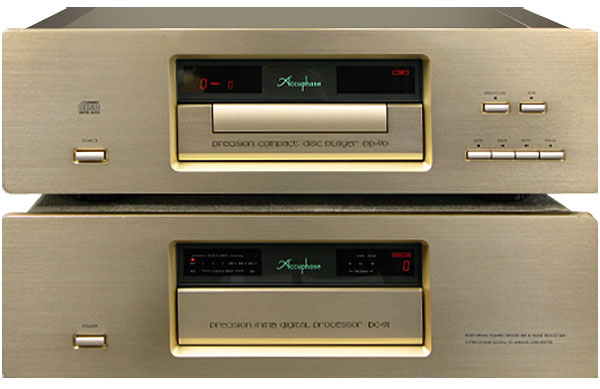
Accuphase DP-90 CD transport & DC-91 D/A processor

In 1995, as the compact disc enters its second decade of commercial reality, it's fair to say that the associated hardware has come of age, exorcising at last the digital gremlins of time-base jitter and quantization noise. Digital-processor maturation is particularly evident in the design of the all-critical D/A processor. The simplistic digital circuitry of yesterday has given way to considerable design sophistication that deals directly with jitter and low-level nonlinearities.

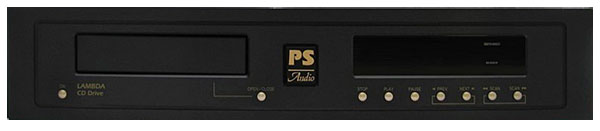
PS Audio Lambda CD transport

It's easy for reviewers to become jaded by the high prices of some audio products. We get the products in our listening rooms—albeit temporarily—without having to part with our own money. Consequently, we get enthusiastic about products that offer real breakthroughs without, perhaps, fully considering their cost.

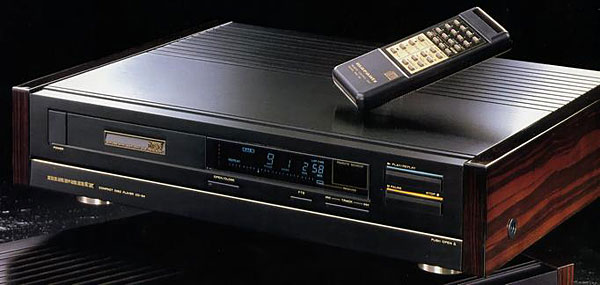
Marantz CD-94 CD player

Let's go back a few years. Well, more than a few, actually. The electronics end of high-end audio consisted of two companies—Marantz and McIntosh. If you were not up to shopping at their stratospheric price level—even though the industry hadn't yet invented components priced to compete with automobiles—you could always fall back on Dynaco, the poor man's high end in kit form. You hooked all this together with two-dollar connecting cables and 16-gauge zip cord purchased from the local electrical supply house, or—if you felt particularly flush—you'd spend a few (very few) bucks more at Fred's Stereo for the cables with the fancy molded plugs. Hoses were used for watering the lawns.

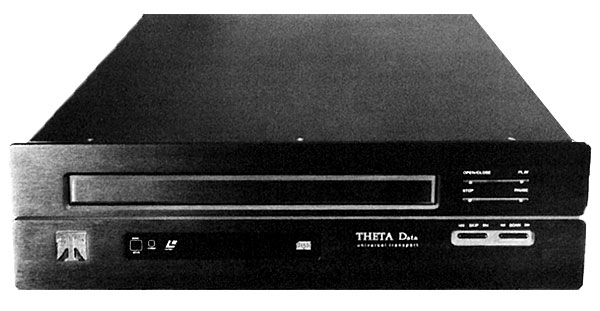
Theta Data universal disc transport

"In the fields of observation, chance favors only the mind that is prepared."

When Louis Pasteur uttered these words more than a hundred years ago, he must have speculated that they would apply equally well to future circumstances as to the events of his day. What he couldn't anticipate, however, was the technology to which his insight now seems so appropriate.

Sony CDP-520ES CD player

Publisher's Note: For the first time since I've published Stereophile, we are running two completely different—and opposed— reports on the same product. Normally, we try to reach some conclusion as to why reviewers come up with opposite views on a product, and resolve the problem prior to publication. In this case, the problem lies in the differing sound systems used for review. Since some readers will have systems like SWW's, and others will have systems more like JGH's, I felt it was valuable to run both reviews.

For the record, SWW's reference system consists of Dayton Wright XG-lO speakers, BEL 1001 amplifiers, a Klyne preamp, a SOTA Star Sapphire turntable, the Well-Tempered Arm (or Sumiko Arm), and a Talisman S cartridge. The sound on analog disc is far preferable to that from CD, being much more alive and present, and with a tendency to exaggerate sibilants. The low end of the system is awesome, the high end extended, and transients are rendered with a great feeling of immediacy and quickness.

Advertisement
Advertisement
Advertisement