Budget Component Reviews

Sort By:  Post Date TitlePublish Date

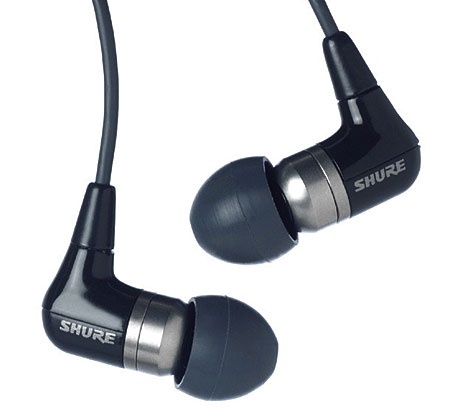
Shure E4 in-ear earphones

In New York and other major cities, I understand, bus accidents are a real problem. Buses turn right and failing to yield to pedestrians. Clueless pedestrians walk in front of buses. I haven't seen any statistics, but I'm guessing that in this era of cell phones and iPods, the problem has gotten worse: not only do such devices distract you, they make it harder to hear warning signs—such as the sound of a municipal bus bearing down on your ass.

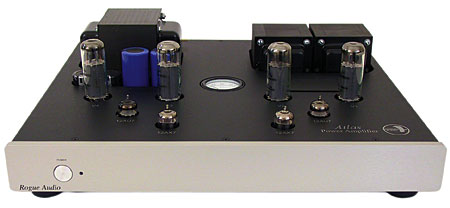
Rogue Audio Atlas power amplifier

When I unpacked the Rogue Audio Atlas, I didn't know how much it cost. After examining its chassis of high-grade steel, its silver-anodized aluminum faceplate, its sleek and slightly rounded edges, and, above all, its two chunk-o'brick transformers—for such a little thing (a foot-and-a-half square by half-a-foot high), it's heavy—I guessed around five grand. Then I called Rogue Audio and learned that it retails for $1395.

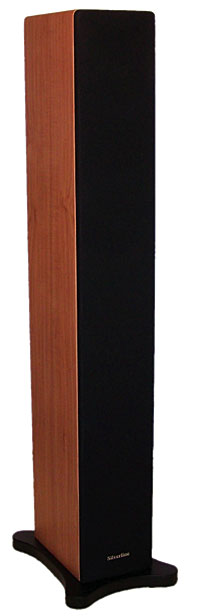
Silverline Audio Technology Prelude loudspeaker

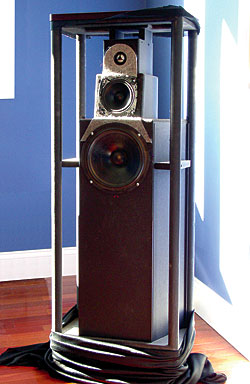
It must be difficult for makers of audio equipment to decide how to best exhibit their products at events such as the annual Consumer Electronics Show. If you're doing a demo, you want it to impress audio journalists and potential dealers, and sometimes just playing music is not enough: you need something extra. A few years ago, Joseph Audio put on a demo, supposedly of their top-of-the-line floorstanding speaker, during which Jeff Joseph removed a cloth that had been draped over what was assumed to be hotel-room furniture. Under that cloth were the speakers that were actually playing: Joseph's new in-wall model, mounted on flat baffles. Wilson Audio Specialties demonstrated their speakers with purportedly ultra-high-end electronics and digital source, then revealed that they were actually using a modestly priced preamp and power amp, and that the source was an Apple iPod.

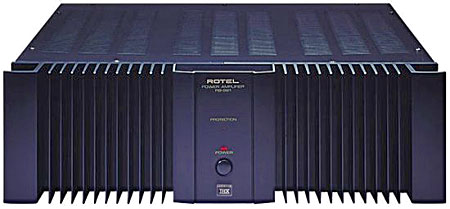
Rotel RB-991 power amplifier

As a reviewer who has focused on seeking out high-quality audiophile gear for cost-constrained readers, I'm embarrassed to say that the flagship RB-991 stereo amplifier is the first Rotel product I've had in my house. (To be fair to myself, this 38-year-old family-owned company did not develop a large US market presence until this last decade.)

Spica TC-60 loudspeaker

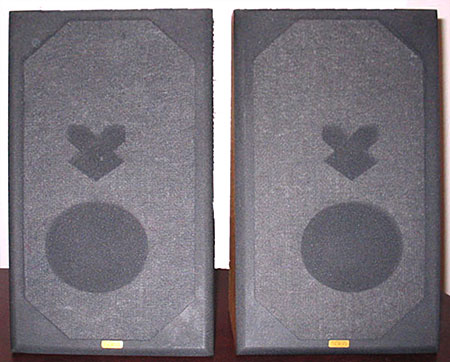
As far as I can tell, Santa Fe–based speaker engineer John">http://www.stereophile.com/interviews/694">John Bau had designed but four commercial loudspeakers before the TC-60 was launched at the 1994 Winter CES: in order of appearance, they were the Spica SC50i (1980), the TC-50http://www.stereophile.com/standloudspeakers/446">TC-50; (1983), the Angelushttp://www.stereophile.com/floorloudspeakers/693">Angelus; (1987), and the SC-30 (1989). None were expensive, and all garnered much praise, both in Stereophile's pages and elsewhere.

Vandersteen 2Ce Signature II loudspeaker

There are three requirements: You must invent a very good loudspeaker that sells for between $1000 and $2000/pair. You have to make enough of them, over a long enough time, to achieve a certain level of brand recognition and market penetration. And you must create a dealer network of reasonable size, with an emphasis on well-promoted specialty shops.

Era Acoustics Design 4 loudspeaker & SUB10 subwoofer

The first time I attended the Las Vegas Consumer Electronics Show, in January 1986, I didn't get there until the second day of the Show. Still, by the beginning of the fourth and final day I'd managed to visit every high-end audio exhibit, and still had time to go back for seconds to the rooms that had sounded the best. Twenty years later, CES has grown so much that it's impossible for a single writer to visit even a quarter of the exhibits in which he might be interested. And even with the sort of team">http://blog.stereophile.com/ces2007/">team reporting Stereophile now practices, covering the Show has become an exercise in applied logistics for the busy journalist: "Should I wait for the free shuttle bus? Should I get a taxi—though I might get caught in Las Vegas's increasing traffic jams, or even just get stuck at the city's interminable traffic lights? Or should I take the new monorail—though that goes nowhere near the hotel in which [insert name of hot company] is demming its products?"

Phase Technology PC80 loudspeaker

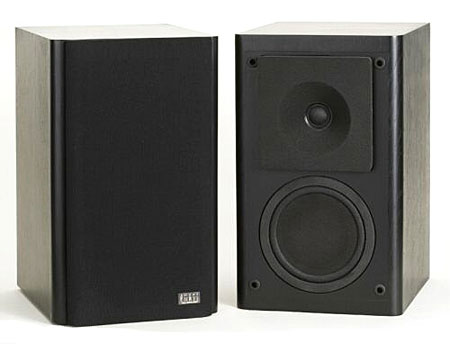
In some ways, building an inexpensive yet musical two-way loudspeaker is a greater design challenge than creating a cost-no-object reference product. Although the latter is a much more complex endeavor, the venerable two-way box seems to bring out the creativity and resources of the designer. Rather than throw money at the product in the form of more expensive drivers, enclosures, or components, the designer of a low-cost two-way is forced to go back to the basics, rethink closely-held tenets, and rely on ingenuity and sheer talent to squeeze the most music from a given cost. Consequently, the inexpensive two-way is the perfect vehicle for designers to develop their skills. If one has mastered this art form, one is much more likely to achieve success when more ambitious designs are attempted.

Dunlavy Audio Labs SC-I loudspeaker

The SC-I ($995/pair) is the smallest model in the "Signature Collection" to come from Dunlavy Audio Labs, the company founded by John">http://www.stereophile.com/interviews/163">John Dunlavy after he left Duntech. The largest model in this series used to be the $4995/pair SC-IV that Robert Deutsch so enthusiastically reviewed last April, and that this month was voted Stereophile's 1994 "Product of the Year." There is now also a huge SC-VIhttp://www.stereophile.com/floorloudspeakers/162">SC-VI; available.

Grado Laboratories SR 125 headphones

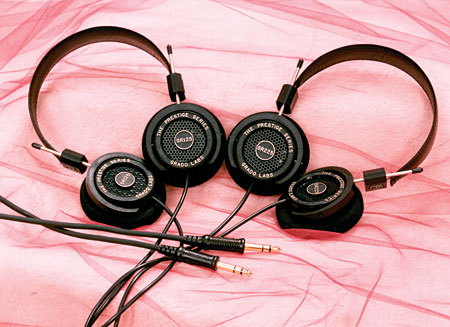
For many years I have used three sets of headphones, all from Grado Laboratories: the Reference">http://www.stereophile.com/headphones/796grado">Reference RS-1 ($695), the SR-125 ($125), and the SR-60http://www.stereophile.com/headphones/532">SR-60; ($60). I've always favored Grado headphones because the minimal-resonance design philosophy that I feel is responsible for the uncolored midrange of their moving-iron cartridges extends throughout their headphone range as well. Recently, however, I've achieved a new perspective regarding the SR-125 'phones that I felt would be of interest to Stereophile readers.

Advertisement
Advertisement
Advertisement