Budget Component Reviews

Sort By:  Post Date TitlePublish Date

Onkyo A-9555 integrated amplifier
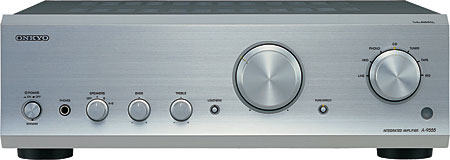
"Onkyo Returns to its Stereo Roots to Debut New Digital Amplifier Technology." This heading of the press release for Onkyo's A-9555 digital integrated amplifier was surely intended to warm the cockles of the two-channel audiophile's heart. Some of us remember the Onkyo Grand Integra amplifiers of the 1980s, which were considered competitive with the big Krells and Mark Levinsons of the day. To refresh my memory, I looked through my Stereophile archives and found the December 1985 issue (Vol.8 No.8), which included Larry Greenhill's review of the Grand Integra M-510, a 300Wpc power amplifier covered in lacquered persimmon wood, weighing 139 lbs, and costing $4200 (about $8000 in 2007 dollars). Larry was most impressed with the M-510, describing it as "a very powerful amplifier with outstanding sonics across the board—power with delicacy."
Entech Number Cruncher 203.2 & 205.2 D/A converters

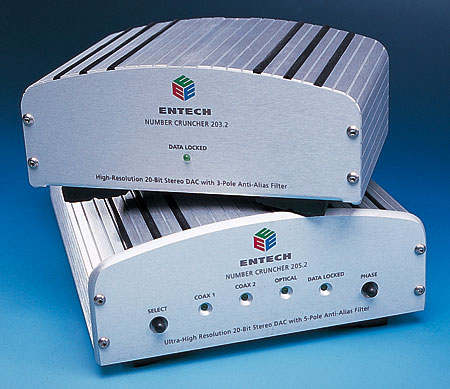
"They're cuuuute!" Not a very professional reaction, but what can I say? When the Monster Cable folks pulled out their new Entech Number Crunchers during a recent visit to Santa Fe, I couldn't help myself. I was edging John Atkinson and Wes Phillips out of the way, using my long arms to reach over...gotta get one! There would be time later for the critical evaluation and cool, detached objectivity—first, I had to get one. The Entechs are the Beanie Babies of the audio world

PSB Alpha B1 loudspeaker

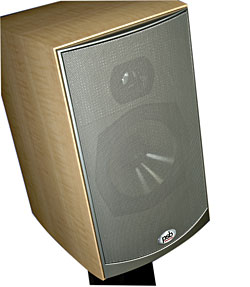
When audiophiles speak of the "Golden Age" of audio components, they almost always are talking about amplifiers and preamplifiers, not loudspeakers. While a very few speaker models have stood the test of time—among them the BBC">http://www.stereophile.com/standloudspeakers/361">BBC LS3/5a, the Vandersteen">http://www.stereophile.com/floorloudspeakers/914">Vandersteen 2, the original">http://www.stereophile.com/artdudleylistening/706listening">original Quad electrostatic and the Quad">http://www.stereophile.com/floorloudspeakers/416">Quad ESL-63, some of the Magnepans, and the Klipschorn—almost no one would disagree that, taken en masse, the speakers of today outperform not just those of the 1960s and 1970s but even those of the 1980s and 1990s. The advent of low-cost, computerized test equipment, high-quality, inexpensive measuring microphones, and persuasive research into what measured parameters matter most to listeners who are listening for a neutral-sounding, uncolored loudspeaker (footnote 1), has led to an almost across-the-board improvement in speaker sound quality (footnote 2).

Oppo DV-970HD universal player

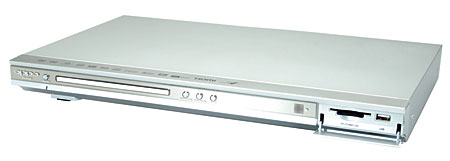
There's an old Spanish proverb: "If six people call you an ass, start braying." A contemporary corollary might be that if enough audiophiles insist a product is the best ever, it behooves the "experts" to check it out. At least, that was John Atkinson's thinking when he suggested I audition the Oppo Digital DV-970HD universal disc player ($149).

Rega P1 record player

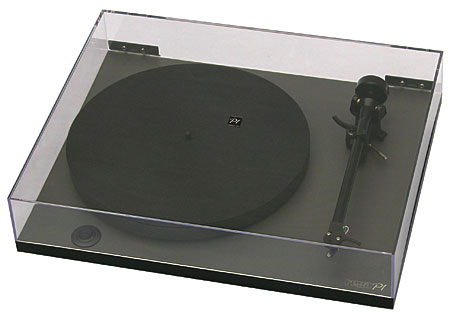
For a word that first appeared in print only 35 years ago, prequel has a lot of impact—if only in a commercial sense. The television series Smallville has become a staple of American broadcasting. Film producers gambled millions on the chance that audiences would want to know what happened when Batman began. And while moviegoers have turned their backs on the apparently awful Hannibal Rising, the book of the same name is doing brisk business indeed.

Roku SoundBridge M1001 network music player

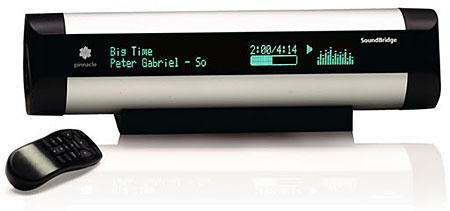
My interest in wireless network music players began during David Hyman's keynote">http://www.stereophile.com/news/11662">keynote speech at Home Entertainment 2003. Then CEO of Gracenote, Inc. (footnote 1), Hyman stunned me with his opinion that CDs and DVDs were already obsolete. Rather than pursue discs with greater storage capacity, Hyman urged industry designers to design music-server units with large hard drives to allow instantaneous access to any digital music track. With all of your music stored on a central hard drive, you could, within seconds, locate a specific track among thousands just by knowing the name of the artist, song, group, composer, year of recording, or even recording venue. Music mixes could be instantly grouped into playlists by the owner.

Aperion Audio Intimus 533-T loudspeaker

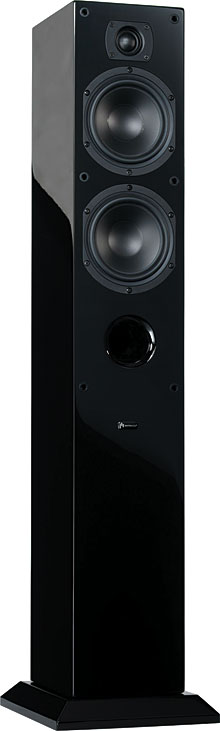
Home Entertainment 2006 in L.A. The weather is fine. The restaurants are cool. The company is très neat. I can't wait to schmooze with manufacturers, writers, dealers, and meet, for the first time, writers of letters to the editor of Stereophile. Play">http://blog.stereophile.com/he2006/060406reina">Play some jazz with John">http://forum.stereophile.com/photopost/showphoto.php/photo/598">John Atkinson and Immedia's Allen">http://blog.stereophile.com/he2006/060406perkins">Allen Perkins—one smokin' drummer since he's been studying with Peter Erskine (Joni Mitchell, Weather Report, Diana Krall). Of course, my prime objective at the Show is to seek out the best-sounding affordable loudspeakers, to keep my review hopper full for the next year.

Snell Type K/II loudspeaker

In some ways, building an inexpensive yet musical two-way loudspeaker is a greater design challenge than creating a cost-no-object reference product. Although the latter is a much more complex endeavor, the venerable two-way box seems to bring out the creativity and resources of the designer. Rather than throw money at the product in the form of more expensive drivers, enclosures, or components, the designer of a low-cost two-way is forced to go back to the basics, rethink closely-held tenets, and rely on ingenuity and sheer talent to squeeze the most music from a given cost. Consequently, the inexpensive two-way is the perfect vehicle for designers to develop their skills. If one has mastered this art form, one is much more likely to achieve success when more ambitious designs are attempted.

Advertisement
Advertisement
Advertisement