Audacious Audio

Sort By:  Post Date TitlePublish Date

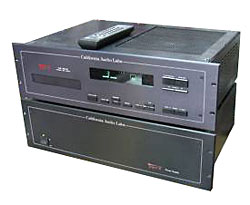
California Audio Labs Tempest II CD player

Snickering was heard from the major consumer electronics purveyors when California Audio Labs came out with the original">http://www.stereophile.com/cdplayers/654">original Tempest, their first CD player using tube output stages. But not from the audiophile community. It was, all things considered, an inevitable product; I'm certainly not the only one who wondered—before the emergence of California Audio Labs—who would be the first to build such a unit. The obvious candidates were Audio Research or Conrad-Johnson. But those companies apparently read the audio tea-leaves and, perhaps perceiving the early high-end hostility toward the new format, apparently decided to bide their time. (With regards to tube players, they're still biding it, though C-J has had a prototype player up and running for some time.)

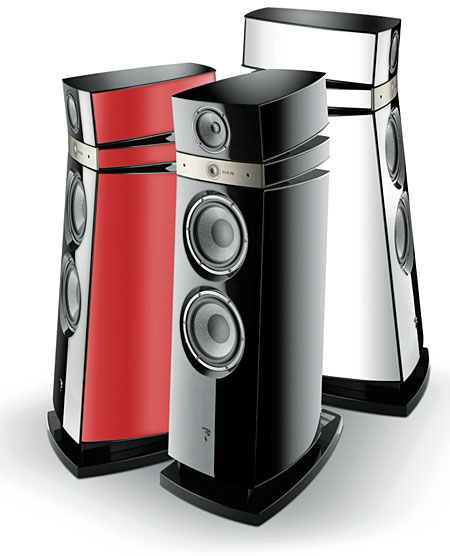
Focal Maestro Utopia III loudspeaker

Considering that the crates they're shipped in are each as large as a Manhattan studio apartment, once they'd been set up in my listening room, Focal's Maestro Utopia III speakers weren't as visually overpowering as I'd anticipated. The elegant dark-gloss front baffles, the gloss-gray side panels, and the fact that the speaker's three subenclosures are vertically arrayed so that the top, midrange section is angled down, significantly reduced their apparent size.

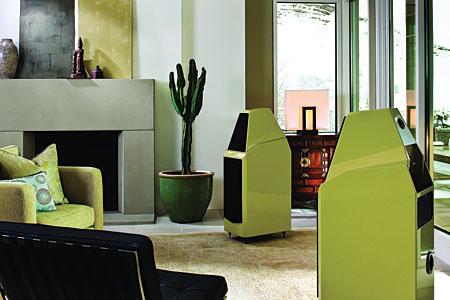
Wilson Audio Sasha W/P loudspeaker

Before last year, I had no more than a professional interest in the products of Wilson Audio Specialties. But before last year I hadn't experienced Wilson's">http://www.stereophile.com/artdudleylistening/listening_86">Wilson's Sophia Series 2 loudspeaker ($16,700/pair)—which, like the wines I tend to order when my wife and I go out to dinner, is the second-cheapest item on their menu. Within weeks of the Sophias' arrival, respect had turned to rapture, like to love, and an entirely new appreciation for Wilson Audio was mine (footnote 1).

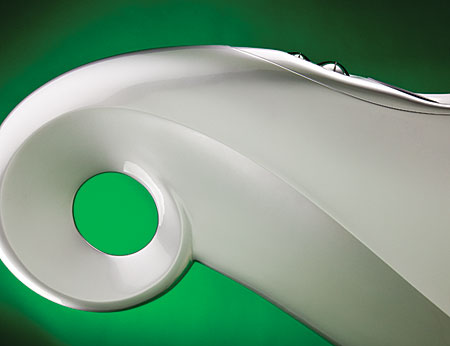
Vivid Audio G1Giya loudspeaker

Over the years that I've been reviewing hi-fi, I've had my share of loudspeakers that drew comments from everyone who visited during the audition period. Some of those comments were about the speakers' appearance—most often about their size—and some were about how good they sounded. Vivid's G1Giya loudspeaker ($65,000/pair), its narrow-baffled, swirling cochlear shape molded from fiber-reinforced composite, elicited more comments of both types than has any other speaker I've reviewed.

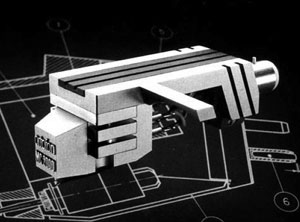
Ortofon MC-2000 MC phono cartridge

Although the idea of a $1000 moving-coil cartridge no longer shocks audiophiles, it is still not exactly what I'd call "Mainstream Hi-Fi." Audio magazine's 1984 Equipment Directory—the most complete such compendium published in the US—lists only 10 models in this price range, not counting the Kiseki Lapis Lazuli at a whopping three-and-a-half grand! I have not tested most of these, nor have I tried any of the current models from the Japanese Koetsu firm, which was first with the gall to put a $1000 price tag on a cartridge. But I have tested a couple of one-granders during the past few years, and was sufficiently unimpressed to be hesitant about testing any more samples of what were beginning to look like nothing more than monumental ripoffs. So when Ortofon sent us the MC-2000, I was naturally less than enthusiastic about trying it.

Spiral Groove Centroid tonearm

Spiral Groove's new Centroid tonearm ($6000) arrived just a few days before press time, so it would be risky to say anything definitive about it. But I will take that risk: using the system described in my">http://www.stereophile.com/turntables/spiral_groove_sg2_turntable/">my review of the SG2 turntable, this may be the best tonearm I've heard. Its sound is different in ways that will open people's ears, and I predict that it will affect the design of every tonearm from now on. The Centroid's design deserves and will await full coverage in its own review, but here are the basics: It's a fluid-damped unipivot design unlike any other that gives the user fine adjustment of all relevant parameters.

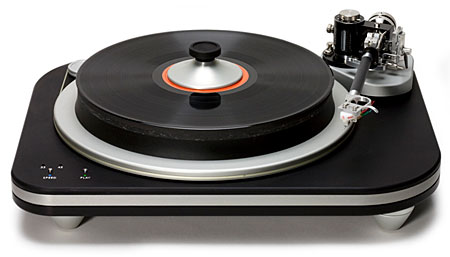
Spiral Groove SG2 turntable

Photograph: TONEAudio Magazine

High-end audio exists at the intersection of art and science. Either discipline can produce a good product, but it takes both to create the very best. The Sonic Frontiers gear I auditioned many years ago, for example, was technically sound, nicely built, and sounded good—just never as sublime as products from, say, Audio Research or VTL. On the other hand, an experienced, insightful designer such as Quicksilver's Michael Sanders can create wonderful products from humble circuits and parts, but be ultimately limited by the underlying technology. But when brilliant design, uncompromised execution, long experience, and artistry all come together, the results can be staggering.

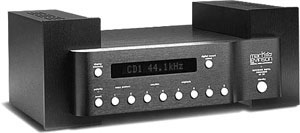
Mark Levinson No.30 Reference Digital Processor

Over the past two and a half years, I've auditioned and reviewed a number of digital audio products. It has been a fascinating experience both to watch digital playback technology evolve and to listen to the results of various design philosophies. The road to more musical digital audio has been a slow and steady climb, with occasional jumps forward made possible by new techniques and technologies. Making this odyssey even more interesting (and confounding), digital processors seem to offer varying interpretations of the music rather than striving toward a common ideal of presenting what's on the disc without editorial interjection.

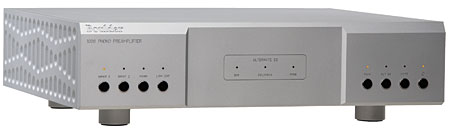
Musical Fidelity AMS Primo line preamplifier

Musical Fidelity's Tri-Vista kWP, introduced in 2003, was an impressive, high-tech, "statement" audiophile preamplifier. Its outboard power supply weighed almost 56 lbs—more than most power amplifiers—and its hybrid circuitry included miniature military-grade vacuum tubes. As I said in my">http://www.stereophile.com/solidpreamps/104mf">my review of it in the January 2004 Stereophile, the kWP's chassis and innards were overbuilt, the measured performance impressive, and any sonic signature imposed on the signal was subtle and, essentially, inconsequential.

Advertisement
Advertisement
Advertisement