Audacious Audio

Sort By:  Post Date TitlePublish Date

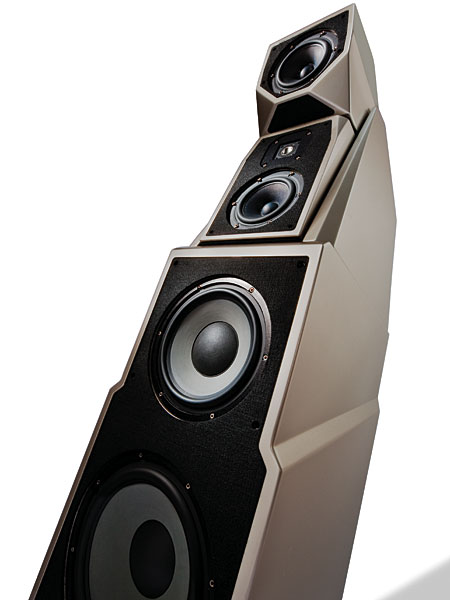
Wilson Audio Specialties MAXX Series 3 loudspeaker

Though taller, narrower, deeper, more gracefully sculpted, and even more mantis-like than the MAXX Series 2 that I reviewedhttp://www.stereophile.com/floorloudspeakers/805wilson">reviewed; in the August 2005 Stereophile, at first glance the Wilson Audio Specialties MAXX Series 3 seems little more than a minor reworking of its predecessor with a major increase in price: from $44,900 to $68,000 per pair. But first looks can be deceiving. Take a closer, longer gaze—or, better yet, spend some time listening (especially if you've spent time with the MAXX 2)—and you'll quickly realize that while the familiar Wilson design concepts remain in play, the MAXX 3 is far more than a minor reworking of an older model.

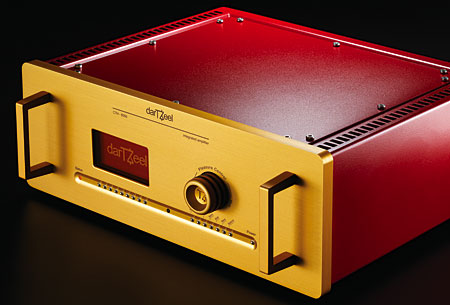
darTZeel CTH-8550 integrated amplifier

As the 2009 Consumer Electronics Show neared its end, I wandered into Blue Light Audio's room, which was dominated by the innards of darTZeel's new NHB-458 monoblocks—think of a 3D "exploded" diagram and you'll be on target. So impressive was that display of brute engineering that I almost didn't notice the amplifier that was actually making the music: the CTH-8550 integrated ($20,300).

dCS Scarlatti SACD/CD playback system

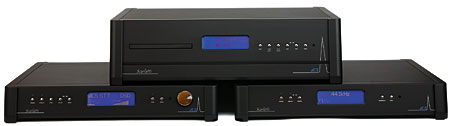
Is anyone in this economy shopping for a four-box, rack-swallowing, two-channel SACD/CD player contending for the state of the art and costing $79,996? dCS is betting that its Scarlatti will attract a small crowd of those wealthy music enthusiasts who, in any economy, reliably pony up for the best. For the rest of us, the Scarlatti will be a spectator sport.

Audio Valve Conductor preamplifier

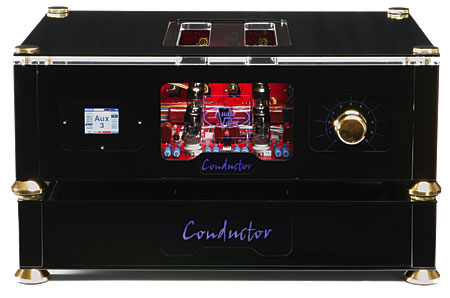
We audio writers have our niches. Mikey loves analog, Artie likes to play with horn speakers and assorted oddball British kit, and I really enjoy reviewing affordable speakers. There's something exciting about hearing the fruits of the labors of a creative designer who's applied his talents to meet a stringent price point and created a speaker that can entice into our hobby the financially challenged music lover.

Avantgarde Acoustic Uno Nano loudspeaker

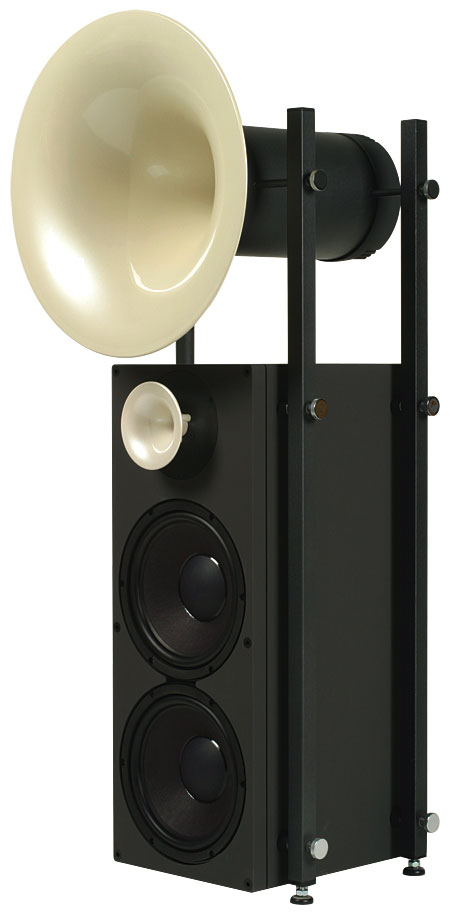
A compact horn loudspeaker. Isn't that an oxymoron, like jumbo shrimp, or military intelligence? From such venerable speakers as the half century-old Altec Voice of the Theater and the Klipschorn, as well as more modern examples like the Avantgarde Acoustic Trio, horns have always been big. The original Avantgarde Uno was the smallest speaker in Avantgarde's line, but it was still visually imposing, with a big horn midrange on top, a horn tweeter below that, and a powered sealed-box subwoofer at the bottom. (I reviewed the Uno 2.0 in Stereophile in August">http://www.stereophile.com/floorloudspeakers/287">August 2000, Vol.23 No.8, and the Uno 3.0 in August">http://www.stereophile.com/floorloudspeakers/287/index11.html">August 2002, Vol.25 No.8.) The Uno and its siblings, the Duo and Trio, are perhaps the antithesis of the in-wall loudspeakers beloved by interior designers. These speakers do not fade into the background—not visually or sonically.

Audio Research SP-10 preamplifier

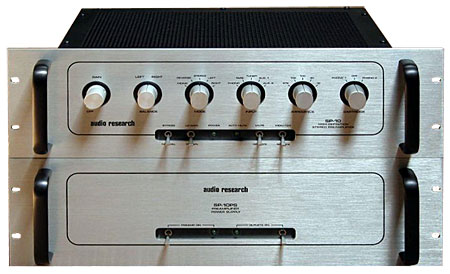
It says something for the state of technology that, after a quarter of a century, there still is no authoritative explanation for why so many high-end audiophiles prefer tubes. Tubes not only refuse to die, they seem to be Coming back. The number of US and British firms making high-end tube equipment is growing steadily, and an increasing number of comparatively low-priced units are becoming available. There is a large market in renovated or used tube equipment—I must confess to owning a converted McIntosh MR-71 tuner—and there are even some indications that tube manufacturers are improving their reliability, although getting good tubes remains a problem.

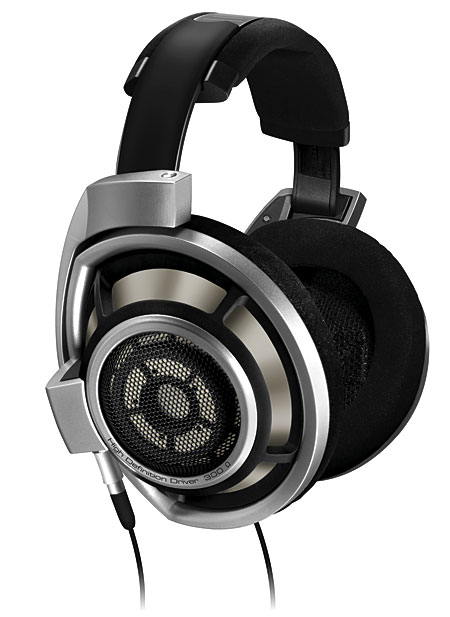
Sennheiser HD800 headphones

Sennheiser's long-awaited (seven years) HD800 sure isn't subtle—at least, not in appearance. The HD800's large earpieces are made from a combination of absorbing composites and functional metal accents, and are huge. Of course, they have to be to house the 56mm ring-radiator transducers—and to mount them so they're firing "back" to your ears from the front. Also not subtle is the price: $1399.95.

Boulder 1021 disc player

As we approach the end of the 21st century's "oughts" decade, many feel that playing music from a discrete physical medium is positively 20th century. Much of my own music enjoyment now comes from computer files, often high-resolution, streamed to my high-end rig via a Logitech Transporter or Bel Canto USB Link 24/96. It is perhaps a paradox, therefore, that high-end audio companies are still devoting so much effort to developing expensive, state-of-the-art disc players. In April I very favorably reviewed Meridian's superb 808i.2 CD player–preamplifier, which costs $16,995 as reviewed, and Michael Fremer is about to review the ultimate Scarlatti SACD playback system from another English company, dCS. The $80,000 price tag of the Scarlatti makes the subject of my review this month, the Boulder 1021, seem relatively affordable at $24,000.

Mark Levinson ML-7A preamplifier

Before launching into Stereophile's first-ever report on a Mark Levinson product, an important point needs to be clarified. Although Mark Levinson products were originally made by Mark Levinson, they are no longer. Au contraire, Mark Levinson products are now being made by Madrigal, Ltd., which bought Mark Levinson Audio Systems' assets and trademark two years ago. Mark Levinson's products, as distinguished from Mark Levinson products, are now being manufactured by a company called Cello. But the subject of this report, the Mark Levinson ML-7A preamplifier, is a product of Madrigal, Ltd., not of Cello. Now that I've made that all perfectly clear, we may proceed.

Musical Fidelity Titan power amplifier

Musical Fidelity's founder, Antony">http://www.stereophile.com/features/575/index3.html">Antony Michaelson, arrived at my house to help me set up the two chassis of his sleek, limited-edition, $30,000 Titan power amplifier. (The task requires at least two people.) A week later, a representative of Musical Fidelity's US importer, KEF America, dropped by to listen and to deliver three of Musical Fidelity's new V-series products: a phono preamp, a DAC, and a headphone amp. All three fit comfortably into a small paper bag; the price of the three was $700.

Advertisement
Advertisement
Advertisement