John Atkinson

Tidal Audio Akira loudspeaker
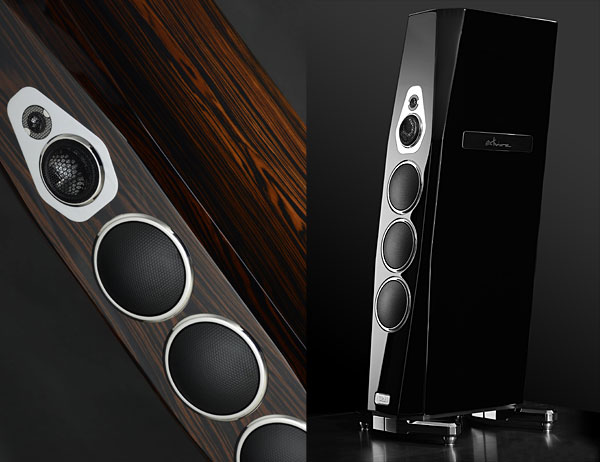
Doug White, of Philadelphia-area retailer The Voice That Is, has been a fixture at US audio shows the past few years, where he always gets great sound using loudspeakers from Tidal Audio. (There is no connection between the German audio manufacturer and the music-streaming service owned by Jay Z and Sprint.) In early 2017, Herb Reichert, Jana Dagdagan, and I visited White and spent a delightful afternoon listening to Tidal's then-new Akira loudspeakers. I promised myself to review the Akira, which costs a wallet-straining $215,000/pair, when my schedule opened up. As things turned out, it was more than a year before that opportunity presented itself.
Continue Reading »

Conspicuous Consumption?

"At what price does a high-end product cease to exist for the 'normal' audiophile?" This question, which I asked in the February 2017 issue, was a follow-up to one I'd asked in our April 2011 issue: "If all someone is offered is a $150,000 pair of speakers . . . that person will walk away from this hobby, or build his or her system by buying only used equipment. Either consumer choice turns the price spiral into a death spiral for manufacturers."
Continue Reading »

JA's Final Report from RMAF

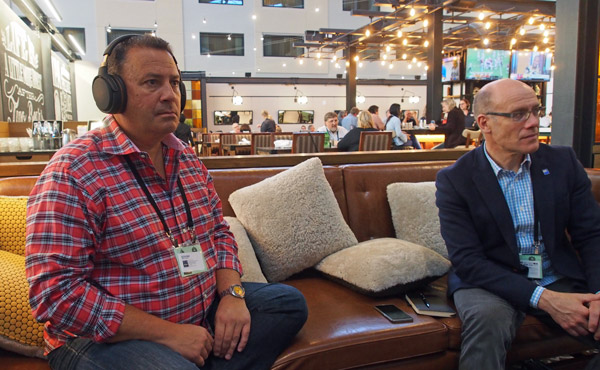
There are always chance encounters at an audio show, and when I went to meet AVTech America's general manager Keith Pray (left) and Hi-Fi News editor Paul Miller (right) to discuss, among other things, November's Hi-Fi News Show in Windsor, England, Audeze CEO Sankar Thiagasamudram was with them holding a sample of the California company's new Mobius head-tracking headphone ($399). The Mobius uses planar-magnetic diaphragms like the upmarket Audeze cans, but once zero'd in the forward direction, will keep the soundstage aimed at that direction when the user moves his head. In this the Mobius is similar to the Smyth Realiser, but is both considerably more affordable and doesn't need an external control unit. This headphone is not aimed at the high-end audio market but is ideal for gamers, who need the stereo soundstage to remain aligned with the image on the screen.
Continue Reading »

JA's First Report from the 2018 RMAF

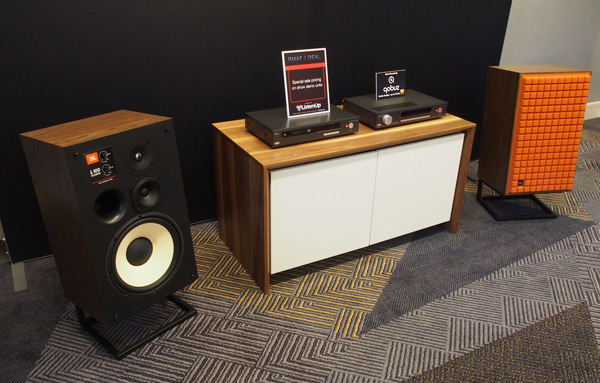
I started my tour of RMAF in the ground-floor room next to the restaurant hosted by Colorado dealer ListenUp. There I did a double-take—wasn't that a JBL Century L100 three-way loudspeaker, with its distinctive Quadrex foam grille? No, this was the L100 Classic ($4000/pair), released by JBL Synthesis to celebrate the 48 years since this speaker was first released. "A modern take on a time-honored legend," said the press release, which is just as well because I was never a fan of the original, even though it was the bestselling loudspeaker in JBL's history.
Continue Reading »

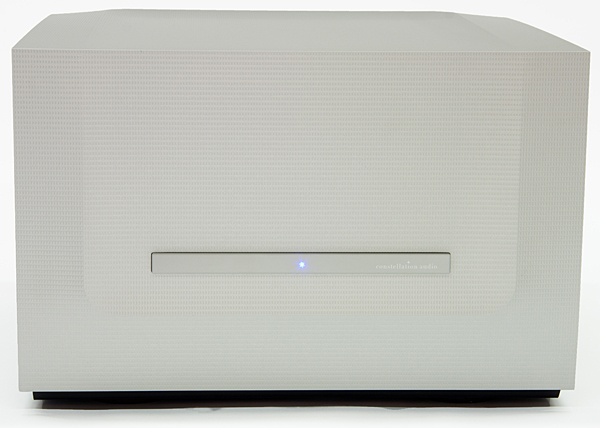
Constellation Performance Centaur II 500 power amplifier

I am finding hard to grasp that it is almost 50 years since I first went to a hi-fi show. That show, held at London's Olympia exhibition center, was notable both for Yamaha's launch of a loudspeaker with a speaker diaphragm shaped like a human ear, and for being the first time I saw the drop-dead gorgeous Transcriptors Hydraulic Reference turntable, which was later featured in the film A Clockwork Orange. The most recent show I attended was AXPONA, held last April in the Chicago suburb of Schaumburg. There I saw no ear-shaped drive-units, but the final room I visited featured sound that the 1969 me could have only fantasized about.
Continue Reading »

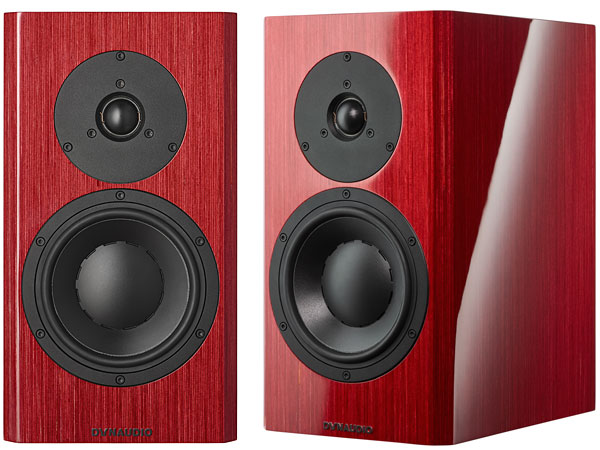
Dynaudio Special Forty loudspeaker

A highlight of my visit to AXPONA, held last April in the Chicago suburb of Schaumburg, was the Dynaudio room, where the two-way, stand-mounted Special Forty loudspeakers ($2999/pair) were being driven by a tubed Octave integrated amplifier. "The stereo image was superb," I wrote in my show report; "even more impressive [were] the solidity and believability of the softly struck bass drum that punctuates the Ramirez Misa Criola." I concluded that this dem "illustrated how matching a relatively small speaker to a smallish room can produce optimal and excellent sound quality."
Continue Reading »

Van the Man

The dingy green-and-ochre poster on the subway-station wall, advertising events at Queens's Forest Hills Stadium, didn't draw attention to itself. But what else is there to do on a subway platform but look at posters? I looked at it. There, near the bottom of the left column, I read: "SEPT 12: VAN MORRISON AND WILLIE NELSON & FAMILY."

Van Morrison. In concert. In Queens.

Continue Reading »

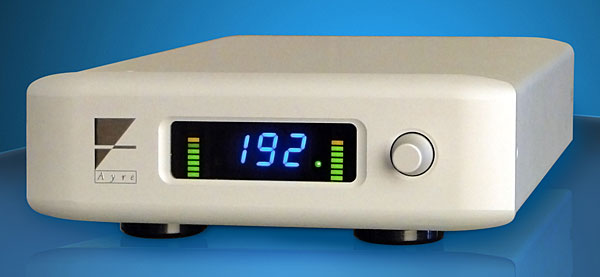
Zen & the Art of A/D Conversion

In a series of recent feature articles for Stereophile, Jim Austin has examined how the controversial MQA codec works: "MQA Tested, Part 1," "MQA Tested Part 2: Into the Fold," "MQA Contextualized," "MQA, DRM, and Other Four-Letter Words," and, most recently, "MQA: Aliasing, B-Splines, Centers of Gravity." I doubt there is a Stereophile reader who is unaware of the fracas associated with MQA, and I have been repeatedly criticized on web forums for describing its underlying concept as "elegant."

But elegant it is, I feel.

Continue Reading »

Parasound P/FET-900 preamplifier

Introduced at the 1988 Summer CES, this preamplifier from San Francisco-based Parasound costs $395 and is manufactured in Taiwan. It does away with mechanical switching for source select and tape functions, replacing it with CMOS integrated-circuit switches similar to those used in the British Linn LK1 and Quad 34 and 44 models. Construction is to a good standard and the circuit is carried on two main pcbs and three small ones. Following a signal from the phono inputs, the MM-only RIAA amplifier is based on discrete FETs, its output joining the line-level signals at the switching ICs, these controlled by DC voltages controlled by front-panel pushbuttons.
Continue Reading »

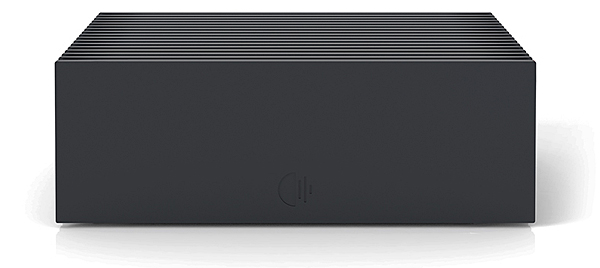
Roon Labs Nucleus+ music server

Sssssshhhhhh—I forget what music was playing, but as the sound faded away, I could hear a loud hissing coming from the 2011 i7 Mac mini I was operating headless with Roon 1.3 to play files over my network. Checking the mini's shared screen on my MacBook Pro revealed that it was completely unresponsive, so I yanked its AC cord, after which it wouldn't boot up.

This was the second time the Mac mini had died. The first time, in 2015, the local Apple Genius Bar had repaired it. This time, the hipster at the Genius Bar turned me away: "We don't offer repair work on vintage computers."

Continue Reading »
Advertisement
Advertisement
Advertisement