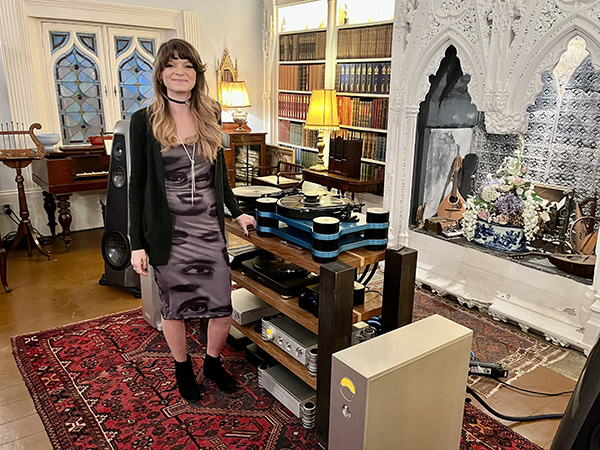
Herb Reichert

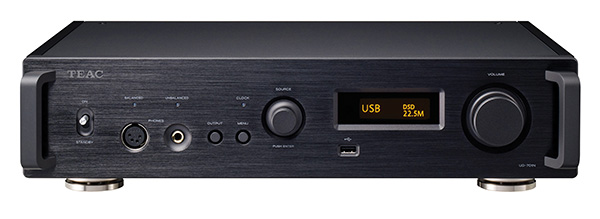
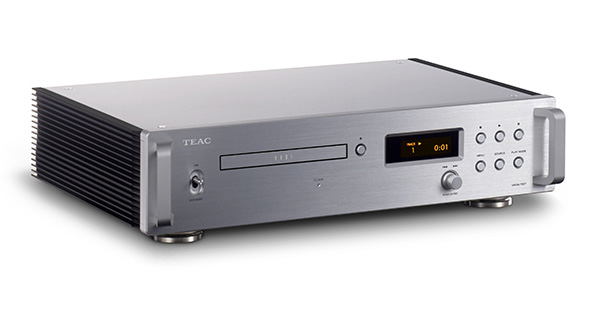
Gramophone Dreams #88: TEAC VRDS-701T CD transport

It's the late 1980s, and I'm soldering tube amplifiers on a plywood bench. I decide on a whim that it's time to break down and buy a CD player to supplement the Dynaco tuner and Dual cassette deck in my workroom music system.

I was a slow starter with digital because of my early take on CD sound: It was emotionally drained with grumbling distortions in the bass and an off-timbre midrange, crowned by a thin, artificial treble, and penetrated by an eerie, unnatural silence whenever the musicians stopped playing. I thought cassettes had higher fidelity and that CDs would be a passing fad, but I kept browsing CDs at Tower Records, and the itch to buy some was getting pretty strong.

One of my friends said, "Maybe it's not the conversion principle that's to blame but something else, like an imperfect CD player?" That interesting thought had not occurred to me, and it obviously occurred to lots of engineers, because they are still trying to improve the quality of CD playback by adjusting the mechanism.

Continue Reading »

Gramophone Dreams #87: Deejay Coolosities, AudioQuest Yosemite tonearm cable, Nagaoka MP-110 phono cartridge

SME’s Kathryn "Kat" Ourlian deejays a turntable shootout. Photo by Michael Trei.

One August night in 1965, I parked in the driveway of my best friend Derf Marko's house and let myself in the back door. As I entered, I could see to the bottom of the basement stairs, where I observed a loud pulsing darkness with plumes of agreeably acrid smoke floating up through the stairwell. Back in the darkness, I heard Derf/Fred and another person making declarative statements in loud unintelligible bursts. When I reached the bottom of the stairs, Marko's basement rec room looked like a trashed-out tiki bar illuminated by a single red Christmas light hanging just above a Dual turntable. The room was dark to a point where it was impossible to walk without stepping on records or to make out who was there and what was going on. I slouched on a couch, closed my eyes, and let my mind follow the sounds of rock drummers wailing like angry cats.

Soon it was obvious: Marko was frantically playing one drum solo after another while some crazy old dude kept hollering for the next solo before the last one finished. The revved-up stranger kept slapping his knees, muttering, and drumming along with each different drummer. Stacks of unsleeved LPs littered the linoleum floor and pink wool couch I was slumping on. But unbelievably, Marko adeptly—without cursing, fumbling, or hesitation—located every solo he wanted.

I found out later that the crazed "old guy" was Ginger Baker!

Continue Reading »

Linear Tube Audio Aero D/A processor

This paragraph from Linear Tube Audio's website description of their new Aero DAC sets the tone for the story I'm about to tell. "After trying various options, we chose the Analog Devices AD1865 R2R DAC chip, which is sometimes called the 'vinyl DAC,' for its organic sound. It is a non-oversampling DAC, with no digital filters. The AD1865 is much-loved by audiophiles and is used by at least one hi-fi company in a flagship DAC costing over $150,000."

Check the forums and you find that the AD1865 chip is also a heavy DIY favorite. Home brewers are attracted to this discontinued, "obsolete" 18-bit chip for its easy implementation and unprocessed, music-friendly sound.

Continue Reading »

Gramophone Dreams #86: Harbeth P3ESR XD loudspeaker and Nelson subwoofer/stand

After lifelike timbres and speed-train momentum, how a loudspeaker projects its energy into my room is the main thing that determines how my sound system feels as I listen to it. When I review loudspeakers, I try to notice the unique tone and force of their "voice" as they speak into my room. Do they stand too close, stick out their chests, and brag loudly in third harmonics? Or do they have small voices that force me to lean in to make out what they're saying?

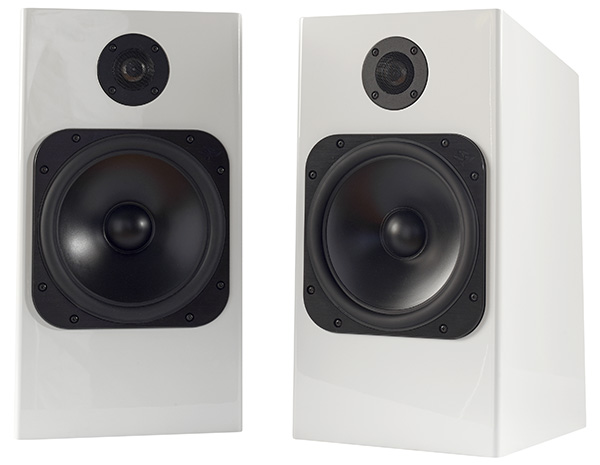
With a miniature box speaker like my reference Falcon Gold Badge LS3/5as or the similarly sized Harbeth P3ESR XDs, which I'm auditioning this month, I have to sit very close to experience any of their direct, "off-the-cone" energy. If my listening position gets too far away or the speakers are positioned too far apart or too far from the wall behind them, the sound thins and loses body.

I didn't need to sit close to those 1947 Altec A5 Voice of the Theatre horns I used to use.

Continue Reading »

June 2024 Classical/International Record Reviews

Será Una Noche: Otra Noche; Bela Fleck: Rhapsody in Blue; Mahler: Symphony No.3 & R. Strauss: Death and Transfiguration; Maya Beiser × Terry Riley: In C; Schubert: String Quartet No.15 in G major D887 • String Quartet No.8 in B flat major D112; Stravinsky: Pétrouchka & Debussy: Jeux, Prélude à l'après-midi d'un faune.
Continue Reading »

Fern & Roby Amp No. 2 integrated amplifier

I know from experience that the manner in which a sound system occupies its environment affects every listening session, its feel and its quality. Which is what first attracted my attention to Fern & Roby products: This is serious, quality audio gear that looks elegant and unpretentious. The component I'm about to describe, Fern & Roby's new, $8500 Amp No. 2 integrated amplifier, is bureau friendly. It looks more stylish than tech-savvy, and it is not big or heavy, but its sound quality would put the sound of many amp farms to shame. A system consisting of an Amp No. 2, a pair of Raven speakers, and a Montrose turntable exemplifies owner-founder Christopher Hildebrand's materials-based, simple-is-better, form-follows-function design ethic.
Continue Reading »

Gramophone Dreams #85: Let the Right Brain In; the Hagerman Audio Labs Piccolo Zero head amp

In the months since I told my Lenco story in Gramophone Dreams #79, two of my friends have bought L75s, and now they're enjoying them more than their shiny movie-star decks. One told me he has put more than $2000 into a Lenco L75 he bought online for $350. When I asked how his hot-rodded Lenco compared to his fancy belt drive, he replied, "You can feel it. The Lenco's motor pulls like a team of Clydesdales. It makes my belt drive feel like a pony pulling a child's cart."

When I asked him what he thought his rebuilt Clydesdale deck, with its new bearing, Jelco tonearm, and Grado Prestige Gold cartridge, was doing that his well-regarded belt drive was not, he replied, in a low, serious voice, "I think it gets more of the first part of a note."

Continue Reading »

Gramophone Dreams #84: dCS Lina D/A processor and Lina Master Clock

I was at least 40' away when I spied my first dCS Lina stack at CanJam. It was black, sitting conspicuously on a table emitting a strong Space Odyssey Monolith vibe. I can't remember which headphones I used, but I do remember how good it felt to face the stack and experience its startling clarity, showing off the bass end of a piano keyboard with a force I could feel in my shoulders. That impactful piano bass plus the stack's matte-finish, neo-Brutalist façade, and feels-like-cashmere volume control, made a strong first impression.

We all know everything sounds like what it looks like—right? It also sounds like what it's made of, who made it, and how much it costs. Well, the $13,500 Lina D/A converter could hardly look more different or feel or cost more different than the $46,500 dCS Vivaldi. The Lina is dCS's lowest priced streaming DAC, so it has to sound less good than my long-term reference Bartók, or the Bartók Apex I reviewed in Gramophone Dreams #75. That's just logical, right?

Continue Reading »

ARCAM Radia A25 integrated amplifier

I've been to a few bowling parties and passed a bottle around a few fire pits, but I've never watched an audiophile unboxing video. Lately though, I have been paying closer attention to my first impressions of each new audio product as it enters my realm.

I'm finding it interesting to notice how a device previously unseen and unheard declares itself one small step at a time as I open its box, feel its heft, observe its form, study its manual, and, finally, wire it into my system. Those start-up experiences, plus my gut feelings during my first moments of music listening, establish a tone of innocent discovery I wish would last the whole month. It never does.

I mention this because my first impressions for my first-ever review of an ARCAM product, the Radia A25 integrated amplifier, were in that "innocent and receptive" mode from the instant I saw the box sitting outside my door.

Continue Reading »

Gramophone Dreams #83: Benz Micro Gullwing SLR, Goldring Ethos phono cartridges, Meze 109 Pro headphones

It was almost Christmas, a perfect, chilly, blue-sky day to visit the Met Museum and see the Manet/Degas show before it ended. On my way, walking north on Madison Avenue, I passed the uptown branch of Gagosian Gallery and noticed a brightly lit poster behind thick glass announcing their exhibition of American artist Brice Marden's last paintings. The title of the show was "Let the painting make you," which sounded like an invite and a challenge, so of course I had to go in. I was in the perfect mood to ride in Gagosian's swanky private elevator and see how a famously serious painter with a six-decade career chose to communicate his last thoughts.
Continue Reading »
Advertisement
Advertisement
Advertisement