Jim Austin

Hoisted on your own petard?

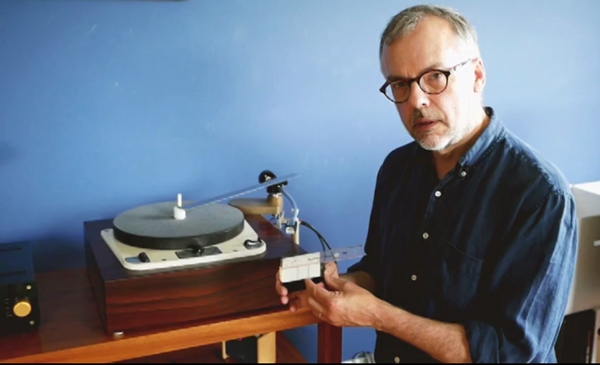
After completing a PhD in electrical engineering at Imperial College London, Floyd E. Toole joined Canada's National Research Council (NRC), where he would stay for more than 26 years doing audio-related research. He continued his research at Harman International after leaving the NRC in 1991. When Toole left Harman in 2007 (footnote 1), Harman kept the work up under NRC alum Sean Olive—which fact surely has much to do with the excellence of their current loudspeaker lineup.
Continue Reading »

Revinylization #7: Lee Morgan's The Cooker

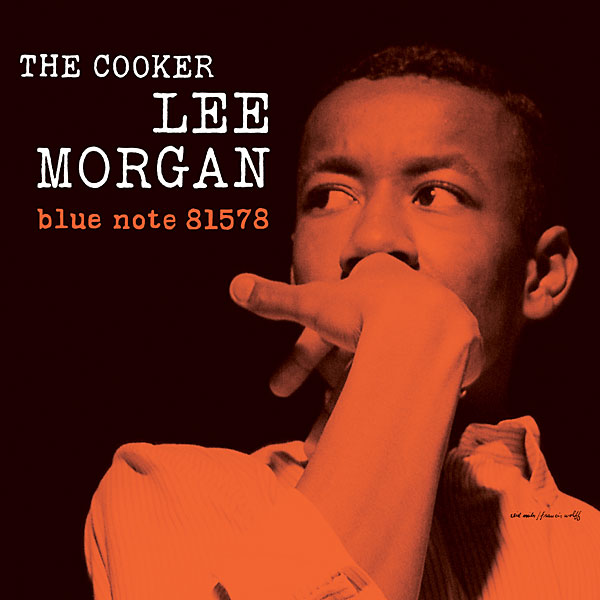
Jazz collecting has an archaeological aspect to it; it's one of my favorite aspects of the hobby. Far more than most other genres, jazz evolved over its first several decades, and it did so on record. Every musician was distinctive, changed from session to session, and interacted with other musicians in ways specific to the ensemble, the time, the place, and the mood. Every record, live or from a studio, is a snapshot of where jazz was precisely then and there. You can get to know musicians' styles, and with practice, you can really hear what's going on.
Continue Reading »

Art Dudley: A Primal Light

Photo: Sasha Matson

In April 14, 1895, Mahler's Symphony No.2, "Resurrection," premiered in Berlin (footnote 1). Mahler wrote a program for this symphony prior to a performance six years later, in Dresden. Here is what he wrote about the first movement, Allegro maestoso:

"We are standing near the grave of a well-loved man. His whole life, his struggles, his sufferings and his accomplishments on earth pass before us. And now, in this solemn and deeply stirring moment, when the confusion and distractions of everyday life are lifted like a hood from our eyes, a voice of awe-inspiring solemnity chills our heart, a voice that, blinded by the mirage of everyday life, we usually ignore: 'What next?' it says. 'What is life and what is death? Will we live on eternally? Is it all an empty dream or do our life and death have meaning?'"

Continue Reading »

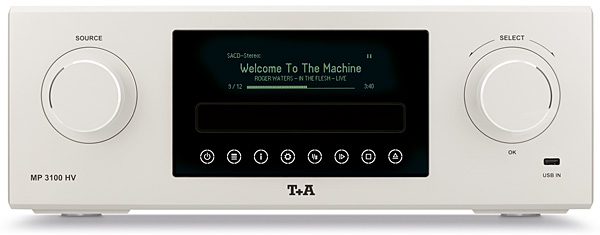
T+A MP 3100 HV SACD player/streaming DAC

At the 2019 AXPONA, I took part in one of my first official meetings, as editor of Stereophile, with members of the manufacturing community: the German company T+A. They were presenting in the room of Texas dealer Lone Star Audio, which was owned by the late Jim Hench. They had a corner hallway to themselves: two rooms and, at the time when I arrived, a hallway table brimming with coffee and pastries. Fortuitous timing.
Continue Reading »

DisConcerted

On Sunday, March 22, at 8pm, the state of New York shut down, governor's orders. Here in the Big City, most stores are closed—even Starbucks, or at least the ones near me. In my neighborhood, up on Broadway, a grocery store is open, and a drugstore, a hardware store, and a couple of bodegas. Some bars and restaurants are open for takeout only, some advertising COCKTAILS TO GO in big black letters painted on bedsheets—New Orleans comes to NYC. (Meanwhile, New Orleans itself, also a coronavirus hotspot, apparently is desolate, the bars closed, a hard thing to picture.)
Continue Reading »

. . . and I feel fine

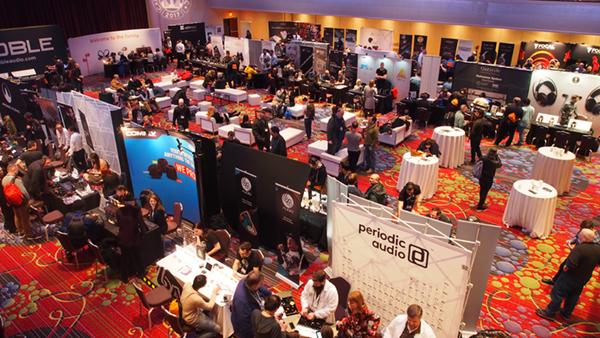
The High End 2020 show, scheduled to take place in Munich in mid-May, was canceled due to concerns about the coronavirus. The California Audio Show, which usually takes place in late July, is also off, although the reason for its cancelation isn't clear. And as we've just learned, AXPONA, the biggest show in the Western Hemisphere, has been postponed from its original dates (around the time this issue hits mailboxes and newsstands) to the second weekend of August.

The reason, of course, is concern about the spread of COVID-19.

Continue Reading »

Hi-Fi Arcana I

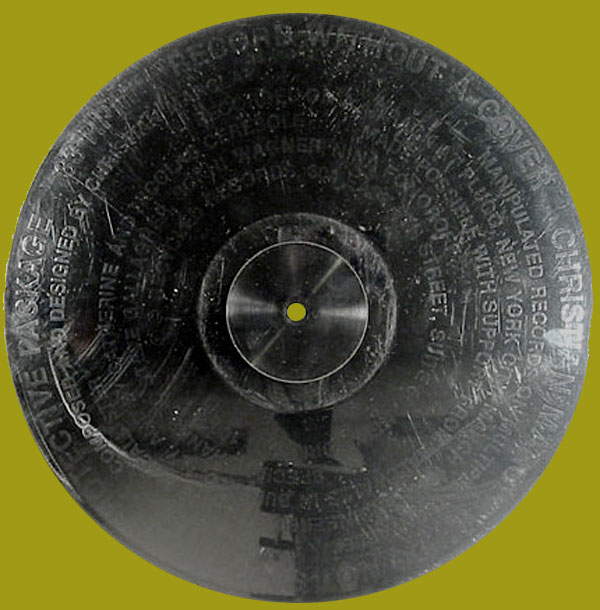
Some Stereophile readers will surely remember—some may even have in their collections—Christian Marclay's 1985 vinyl release Record Without a Cover, surely one of the oddest records ever, right up there with the dying-rabbit record and the seven-inch single that's tinted yellow by the band's actual urine.
Continue Reading »

A High-Resolution Audio Primer

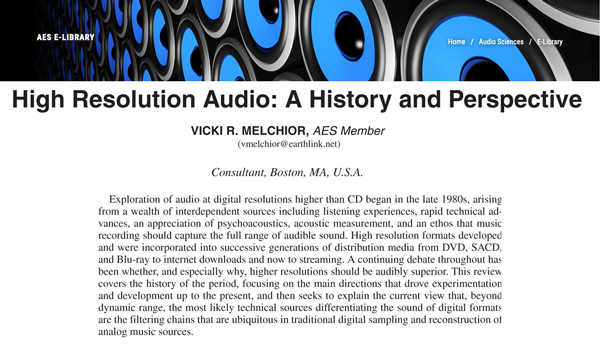
January's Industry Update included a report on a scientific article presented at last year's AES meeting, in which the authors used test tones and a modest audio system (albeit in an anechoic chamber) to prove that listeners can discriminate between high-rez and CD-rez audio. This is important because scientific evidence of an audible difference between high-rez and CD-rez music is considered weak by some, even as anecdotal evidence grows stronger by the day.

As I pondered this, I recalled a recent paper I'd seen in the Journal of the Audio Engineering Society but hadn't yet read. "High Resolution Audio: A History and Perspective," which the AES has made available free online, does precisely what the title says: reviews the history of digital audio beyond CD-rez and frames the issue of high-rez audio's audible superiority on the basis of the available evidence.

Continue Reading »

Let rolling streams their gladness show

In the 1980s, the CD nearly pushed the LP to extinction. Nearly. For all the claims of "Perfect Sound Forever," the main thing offered by the CD was convenience.

Then, in the mid-1990s, the MP3 and the Internet made it easy to extract and distribute the information encoded on a CD. Secret websites raced to be the first to distribute free MP3s of new recordings, sometimes even before they were released. This went on for years, undermining record-company profits, before Napster came along and gave the record industry a high-value lawsuit target: no more suing widows and small children.

Continue Reading »
Advertisement
Advertisement
Advertisement