Digital Processor Reviews

Sort By: Post DateTitle Publish Date

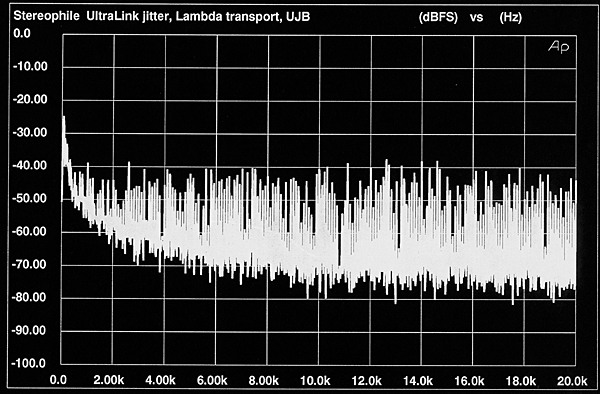
Jitterbuggin'

If there's one buzzword in high-end audio for the 1990s, it's undoubtedly jitter. "Jitter" describes timing variations in the clock controlling the ones and zeros that represent the analog audio signal. If that clock isn't stable to an extraordinarily precise degree, the sound quality of the digital processor will be degraded.


A CD transport/digital processor combination introduces jitter in three ways: 1) the transport puts out a jittered signal; 2) the S/PDIF or AES/EBU interface between the transport and processor creates jitter; and 3) the digital processor adds its own jitter to the clock. These additive factors are largely responsible for the great range in sound quality we hear from different transports and interfaces.

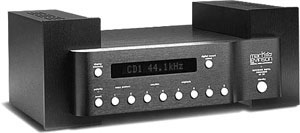
Mark Levinson No.30.5 Reference digital processor

The arrival of the Mark">http://www.stereophile.com/digitalprocessors/mark_levinson_no30_referen… Levinson No.30 digital processor more than 2½ years ago marked a turning point in digital-audio reproduction. Although the No.30's $13,950 price tag put it out of reach of all but a few audiophiles, its stunning performance suggested that much more musical information was encoded on our CDs, waiting to be recovered by better digital processors. Further, it was inevitable that this level of performance would become less expensive over time. I was more excited by the No.30 than I've been over any other audio product. In fact, its musical performance was so spectacular that it alone occupied the Class A category in Stereophile's "Recommended Components."


Theta Digital Cobalt 307 digital processor

One measure of a high-end product designer's talent is the musical success of his top-of-the-line product. This is his statement to the world of what he can accomplish—a kind of "personal best" that defines the upper limits of his talent. Because he knows of no way to make the product better, the component stands as the ultimate testimonial to his skill.

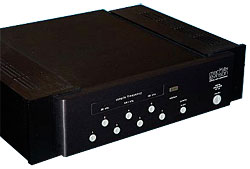
Mark Levinson No.35 D/A processor

When a manufacturer sets out to design and build a product, be it in high-end audio or any other field, the final retail price is usually a prime consideration. Parts and assembly are only part of the equation; there also must be enough buyers to amortize the design and development costs. If the product is to be a flagship model—something a company hopes will give a lift to its entire line—engineers will sometimes throw caution to the winds, designing a product without thought to its ultimate price, which is only set after the design is complete. When Madrigal Audio Laboratories set out to design their No.30 Reference Digital Processor, they appear to have chosen exactly this approach.
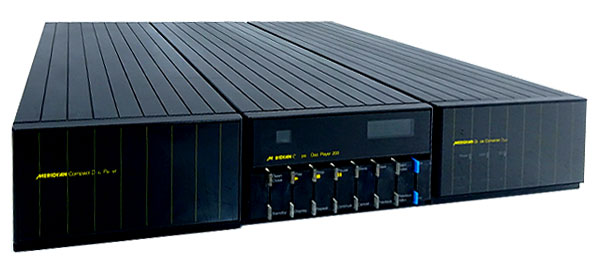
Meridian 263 D/A processor & 200 CD transport

Whoever invented the adage "Good things come in small packages" wasn't into high-end audio. Most high-end products are huge and heavy, with massive power supplies, thick front panels, and battleship build quality. This dreadnought approach is justified if it directly affects the unit's sonic performance (as in the Mark Levinson No.31 transport, for example). In some products, however, the massive build can reflect a shotgun, overkill approach by the designer, or a mere fashion statement.

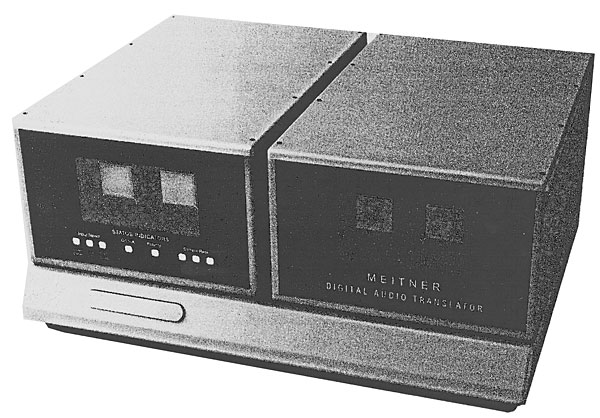
Meitner IDAT D/A processor

There are as many ways of designing a digital-to-analog converter as there are engineers. One approach is to select parts from manufacturers' data books and build the product according to the "application notes" provided by the parts manufacturers. This is the electronic equivalent of a paint-by-numbers kit.


A more creative engineer may add a few tricks of his own to the standard brew. Bigger and better regulated power supplies, careful circuit-board layout, tweaky passive components, and attention to detail will likely make this designer's product sound better than the same basic building blocks implemented without this care. Indeed, the vast range of sonic flavors from digital processors containing very nearly the same parts attests to the designer's influence over a digital processor's sound.

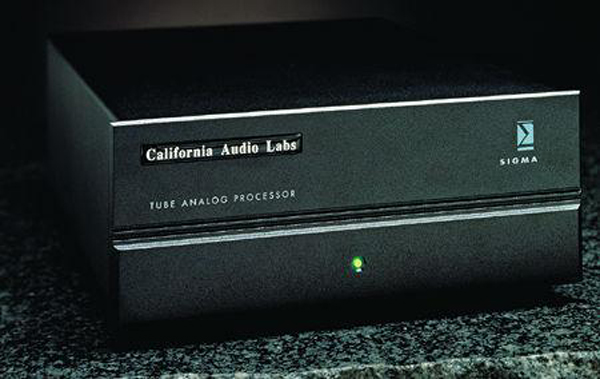
California Audio Labs Sigma D/A processor

Though their first CD player featured a vacuum-tube output stage, California Audio Labs is recently known for making good-sounding, moderately priced solid-state CD players, like the Icon Mk.II that Jack English reviewed in July 1992 (Vol.15 No.7). The Sigma, a $695 tubed D/A converter, furthers their reputation in both areas.
Advertisement
Advertisement
Advertisement