Digital Processor Reviews

Sort By: Post DateTitle Publish Date

PS Audio Digital Link II D/A processor

Looking at the Digital Link II's build quality and circuitry, it's hard to believe that it can sell for $499 at retail. The Digital Link II shares the same appearance as PS Audio's SuperLink and UltraLink processors, but has a 4"-shorter chassis. The ¼"-thick front panel uses PS Audio's familiar touch-sensitive switches that turn the unit on and select between coaxial and optical inputs. LEDs above these switches indicate when the unit is locked to the digital source. A third LED illuminates when power is applied.

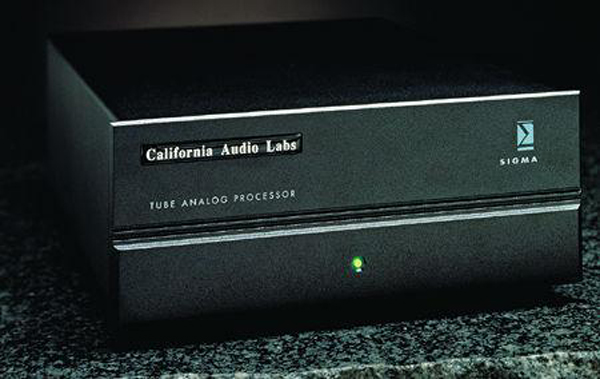
California Audio Labs Sigma D/A processor

Though their first CD player featured a vacuum-tube output stage, California Audio Labs is recently known for making good-sounding, moderately priced solid-state CD players, like the Icon Mk.II that Jack English reviewed in July 1992 (Vol.15 No.7). The Sigma, a $695 tubed D/A converter, furthers their reputation in both areas.

PS Audio UltraLink D/A processor

The night before I started to write this review, PBS began a five-part series on computers called "The Machine that Changed the World." The first episode described the development of the ENIAC (Electronic Numerical Integrator and Accumulator), the first electronic computer. The ENIAC used 18,000 vacuum tubes, had over 500,000 solder joints, required a room 30' by 50', had to be physically reprogrammed with patch cords to perform different tasks, and packed less computing power than today's $4.99 pocket calculator.

Kinergetics KCD-55 Ultra D/A Converter


Since the first digital processor on the market using UltraAnalog DACs appeared (the $12,000 Stax DAC-X1t, reviewed in August 1990, Vol.13 No.8), there has been a proliferation of good-sounding processors using this extraordinary—and expensive—part. Among these are the Audio Research DAC1, Audio Research DAC1-20, VTL Reference D/A, and the groundbreaking Mark Levinson No.30 reviewed last month.

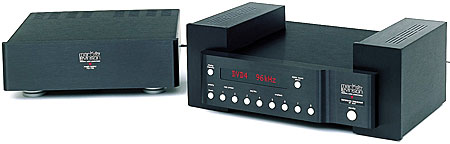
Mark Levinson No.30 Reference Digital Processor

Over the past two and a half years, I've auditioned and reviewed a number of digital audio products. It has been a fascinating experience both to watch digital playback technology evolve and to listen to the results of various design philosophies. The road to more musical digital audio has been a slow and steady climb, with occasional jumps forward made possible by new techniques and technologies. Making this odyssey even more interesting (and confounding), digital processors seem to offer varying interpretations of the music rather than striving toward a common ideal of presenting what's on the disc without editorial interjection.

Theta DS Pro Prime D/A processor

In hindsight, it was inevitable that two sophisticated digital audio technologies—software-based digital filters and Bitstream D/A converters—were destined to be married in one product. The software-based D/A converters offered by Krell, Wadia, and Theta all used multi-bit ladder DACs, and Bitstream-based units have previously relied on off-the-shelf digital filters.

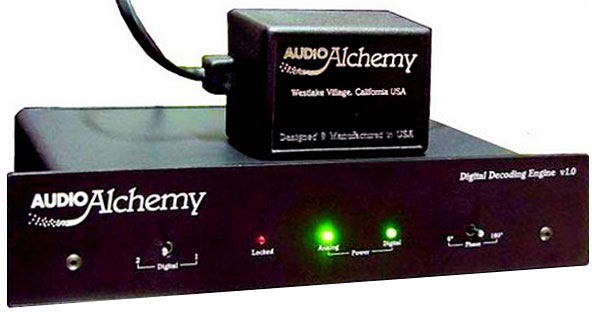
Audio Alchemy Digital Decoding Engine v1.0

No, the $399 price listed in the specification block isn't a misprint. And yes, the Audio Alchemy Digital Decoding Engine v1.0 is indeed a full-function outboard digital processor. And since this is the August issue, not April, you can stop worrying that this review is some kind of joke.


The $399 Digital Decoding Engine is for real.

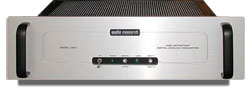
Audio Research DAC1 D/A converter

The past 12 months have seen some remarkable developments in digital playback. Standards of digital musicality are far higher than they were a year ago, both on an absolute performance basis and in terms of what you get at various price levels. No other component category has seen such tremendous gains in value for money or number of new products introduced. It seems hard to believe that since Vol.13 No.6 (12 issues ago), we've reviewed such noteworthy digital processors as the Meridian 203, Proceed PDP 2, Stax DAC-X1t, Theta DSPro Basic, Wadia X-32, Esoteric D-2, PS Audio SuperLink, and VTL D/A. Each of these converters brought a new level of performance to its price point—or, in the case of the Stax and VTL, established a new benchmark of ultimate digital performance.


Just as these units provided stiff competition for previous products, so too will they come under the assault of improving technology. The art of digital processor design is so young that we can continue to expect further improvements coupled with lower prices as designers move up the learning curve.

Wadia Digimaster 2000 Mk.2 digital processors

666wawaWadia2000.1250.jpgDuring my reviews of digital processors in the past year or so, I've made comparisons with the Wadia 2000 Digital Decoding Computer first reviewed by Arnis Balgalvis in Vol.13 No.1. I've felt that, as good as the 2000 is, other processors—many costing less than the 2000's $8500 price tag—are now superior.


However, a visiting Wadia representative looked inside our sample and used the word "ancient" to describe its circuitry in relation to current production. In addition, I was never able to audition the 2000 with a glass fiber-optical interface, standard equipment on Wadia's transports. Similarly, the $2000 Wadia X-32 had undergone a minor circuit revision, including the inclusion of the glass optical input. Consequently, a follow-up of these two excellent processors seemed in order.

Advertisement
Advertisement
Advertisement